
Is a Cattle Feed Processing Plant Worth the Investment?
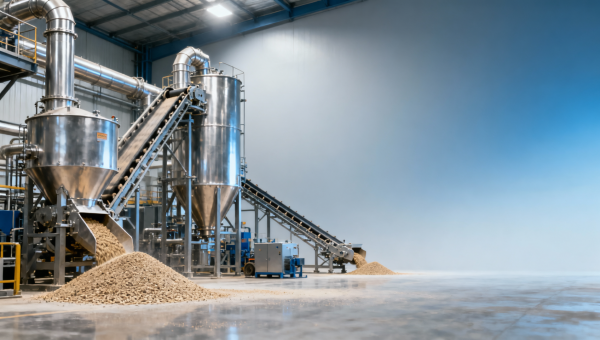
From CAPEX and raw material volatility to throughput, compliance, and payback, deciding whether a cattle feed processing plant is worth the investment demands more than rough estimates. For buyers comparing a poultry feed pellet machine, horizontal ribbon blender feed systems, or a vertical feed mixer machine, this analysis outlines the commercial, technical, and operational factors that shape profitability and long-term plant performance.
For most investors, the short answer is: a cattle feed processing plant can be worth the investment when there is stable feed demand, reliable access to raw materials, disciplined cost control, and equipment sized to actual market needs rather than optimistic projections. It is usually not worth it when buyers underestimate working capital, overbuild capacity, ignore quality compliance, or choose machinery based only on upfront price.
That means the real decision is not simply whether feed manufacturing is profitable in theory, but under what operating conditions a cattle feed plant delivers acceptable margins, manageable risk, and a realistic payback period. For procurement teams, project owners, operators, and financial approvers, the best investment decisions come from linking market demand, formulation flexibility, plant configuration, and total operating cost into one practical model.
What Is the Real Search Intent Behind This Investment Question?
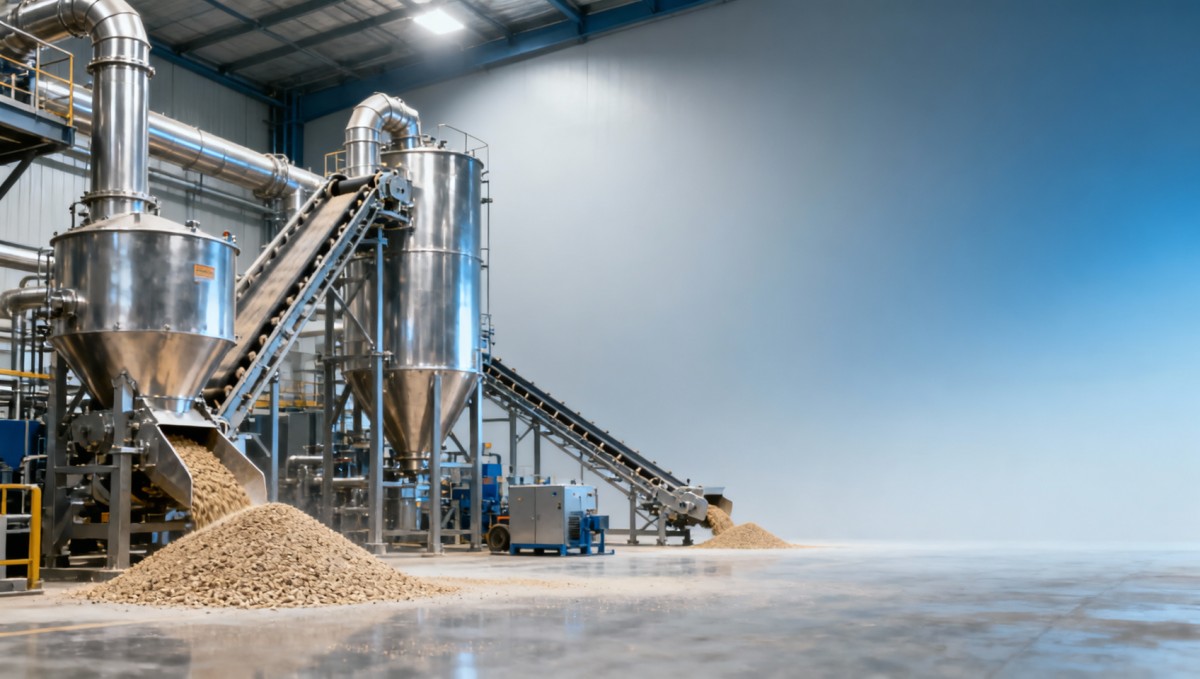
Readers searching for “Is a cattle feed processing plant worth the investment?” are rarely looking for a generic yes-or-no answer. In most cases, they want to evaluate one or more of the following:
- Commercial viability: Will the plant generate enough margin to justify capital expenditure?
- Payback visibility: How long will it take to recover investment under realistic production and sales assumptions?
- Equipment selection: Which setup is more suitable for the intended product mix—mash, pellets, premix, or concentrate feed?
- Operational risk: What can go wrong in sourcing, quality control, maintenance, energy use, or regulatory compliance?
- Scale fit: Should the business build a small plant for internal use, a mid-scale commercial line, or a larger integrated facility?
For the target audience described here—operators, procurement staff, business evaluators, decision-makers, finance approvers, quality and safety personnel, and project managers—the most useful content is practical decision support. They need cost drivers, return logic, equipment implications, risk factors, and signs of a good-fit project versus a weak one.
When Is a Cattle Feed Processing Plant Financially Worth It?
A cattle feed processing plant tends to make financial sense when several conditions align:
- There is consistent local or regional demand from dairy farms, beef producers, cooperatives, or distributors.
- The plant can secure competitive raw material supply such as maize, soybean meal, bran, molasses, minerals, and additives.
- The production plan matches a clear sales model—own-farm consumption, contract production, dealer distribution, or branded commercial feed.
- The selected equipment provides enough throughput and formulation flexibility without creating unnecessary idle capacity.
- Management understands gross margin, conversion cost, logistics cost, and working capital pressure.
In practical terms, profitability does not come from the machine alone. It comes from the spread between raw material cost, processing cost, and achievable selling price—while maintaining acceptable quality and utilization rates.
A plant may be especially attractive in markets where commercial feed is expensive, inconsistent in quality, or difficult to source reliably. In such cases, in-house or locally supplied production can improve margin control and supply stability at the same time.
What Costs Actually Determine Return on Investment?
Many first-time investors focus too heavily on the quoted equipment price. That is only one part of the total investment picture. A proper ROI assessment should include both CAPEX and ongoing operating costs.
Capital expenditure usually includes:
- Feed grinder, mixer, batching system, pellet mill if required, cooler, crumbler, screener, conveyors, packing system
- Steel structure, foundation, dust control, storage bins or silos
- Electrical system, control cabinet, automation interface
- Installation, commissioning, training, spare parts package
- Laboratory or basic quality inspection equipment
Operating expenditure usually includes:
- Raw materials and additives
- Electricity and fuel
- Labor and supervision
- Wear parts, maintenance, and downtime losses
- Packaging, storage, freight, and distribution
- Compliance, sanitation, quality testing, and documentation
For most projects, raw materials dominate cost structure. This is why plants with access to nearby grain supply, oilseed meal, and stable additive sourcing generally outperform plants that rely on fragmented, high-transport procurement channels.
Another major factor is capacity utilization. A plant designed for high output but running at low utilization can quickly become a poor investment. Fixed costs remain, but unit economics weaken. In contrast, a smaller but well-utilized line often produces better early returns.
How Do Throughput, Formulation Flexibility, and Product Type Affect Profitability?
Not every cattle feed business needs the same process line. The correct plant design depends on the feed type, target livestock segment, and expected volume.
Mash feed plants usually require lower initial investment and simpler process design. They can be suitable where pellet demand is low or where cattle operations prefer mash rations. For buyers prioritizing lower CAPEX, this can improve project feasibility.
Pellet feed plants require more equipment and higher energy use, but they may deliver advantages in bulk density, handling, reduced segregation, and marketability. If customers are willing to pay a premium for pellets, the added investment may be justified.
Mixing systems also matter. A horizontal ribbon blender feed system is often preferred where uniformity, shorter batch mixing time, and formulation consistency are critical. A vertical feed mixer machine may be more economical for small-scale operations, though it may not always offer the same efficiency or uniformity as higher-performance horizontal systems.
Although some buyers compare cattle feed lines with a poultry feed pellet machine, the real question is not species labeling but process suitability. The line must match particle size targets, conditioning needs, ingredient behavior, expected batch size, and final product requirements.
Profitability improves when the plant can:
- Handle multiple formulas efficiently
- Switch between ingredient profiles with minimal contamination risk
- Control batching accuracy and mixing uniformity
- Maintain target output without excessive rework or downtime
Which Risks Most Often Turn a Promising Feed Plant into a Weak Investment?
Even in a favorable market, several recurring risks can undermine returns:
1. Overestimating demand
A plant built around optimistic sales forecasts may operate far below nameplate capacity. That weakens payback and creates cash-flow pressure.
2. Underestimating working capital
A feed mill does not run on equipment alone. It needs inventory funding for grains, protein meals, premixes, additives, packaging, and receivables management.
3. Buying the wrong equipment configuration
Choosing a low-cost line that cannot maintain batching accuracy, mixing quality, or wear resistance often leads to hidden cost escalation.
4. Ignoring quality and safety systems
Poor control over moisture, contamination, traceability, and cleaning procedures can damage customer trust and create compliance risk.
5. Weak maintenance planning
Frequent failures in grinders, pellet dies, bearings, conveyors, or dust collection systems can reduce output and disrupt delivery commitments.
6. Exposure to raw material volatility
If input prices fluctuate sharply and the business cannot pass costs through quickly, margins compress.
The strongest projects address these risks at the planning stage rather than after commissioning.
What Do Procurement and Finance Teams Need to Validate Before Approval?
Before approving a cattle feed processing plant, procurement and finance stakeholders should push beyond brochure-level claims and validate the business case in detail.
Key questions include:
- What is the expected daily, monthly, and annual throughput under realistic—not ideal—operating conditions?
- What raw materials are locally available, in what volumes, and at what seasonal price patterns?
- What is the expected formulation range, and how does that affect machine specification?
- What is the projected gross margin per ton?
- What is the total installed project cost, including civil works and utilities?
- What utilization rate is required to break even?
- What is the estimated payback period under conservative, base-case, and strong-demand scenarios?
- What warranty, service response, commissioning support, and spare parts availability does the supplier provide?
Finance approvers should also model downside cases. For example: What happens if raw material cost rises by 10%? What if plant utilization reaches only 60% in year one? What if labor or energy costs increase? These sensitivity checks often reveal whether the investment is resilient or fragile.
How Important Are Compliance, Quality Control, and Plant Safety?
For industrial buyers and long-term operators, compliance is not a secondary issue. It directly affects market access, brand credibility, and operational stability.
A well-run cattle feed processing plant should support:
- Ingredient traceability
- Batch record accuracy
- Cross-contamination control
- Dust management and workplace safety
- Moisture and microbial risk control where relevant
- Consistent formulation and finished product quality
Quality control personnel and safety managers should assess whether the proposed plant layout allows practical cleaning, safe material flow, equipment guarding, dust extraction, and inspection access. A cheaper layout that complicates sanitation or maintenance can become expensive over the life of the plant.
For businesses supplying institutional customers or larger farming groups, quality consistency may be as important as price. Repeat orders are often won through dependable feed performance, not just low quotations.
What Type of Buyer Gains the Most from Investing in a Feed Plant?
A cattle feed processing plant is most likely to deliver value for buyers in the following situations:
- Integrated livestock operators seeking better control over feed cost and supply quality
- Regional distributors wanting to build a branded feed business with local market advantage
- Agricultural cooperatives serving a concentrated farming base with predictable demand
- Existing grain processors expanding into higher-value feed production using current sourcing channels
- Investors in underserved markets where reliable commercial cattle feed remains limited
It may be less suitable for businesses without secured demand, reliable procurement capability, technical operators, or adequate working capital discipline.
How Should Buyers Decide Between a Small, Mid-Scale, or Larger Plant?
The best plant size is the one that fits the market and can maintain efficient utilization. Bigger is not automatically better.
Small-scale plants may suit farms, pilot operations, or regional supply models where internal consumption is the priority and product complexity is limited.
Mid-scale plants often offer a strong balance between investment control and commercial flexibility. They can serve mixed customer groups while avoiding the burden of oversized infrastructure.
Larger plants make sense where demand is established, distribution is strong, and the business can run high throughput consistently enough to justify higher fixed costs and more advanced automation.
The sizing decision should be based on:
- Confirmed demand rather than aspirational sales targets
- Target SKUs and batch frequency
- Local utility reliability
- Labor capability and maintenance support
- Warehouse, logistics, and raw material storage strategy
Final Verdict: Is a Cattle Feed Processing Plant Worth the Investment?
Yes—if the project is built on verified demand, disciplined cost modeling, suitable equipment selection, and realistic operating assumptions. In that context, a cattle feed processing plant can generate attractive long-term value through supply control, margin improvement, better product consistency, and stronger market positioning.
But it is not a guaranteed-return asset. When buyers ignore utilization, raw material sourcing risk, quality systems, or working capital requirements, the project can underperform even with technically sound machinery.
The most reliable way to judge investment value is to evaluate the plant as a complete business system: market demand, formulation needs, process design, CAPEX, OPEX, compliance, maintenance, and payback under multiple scenarios. If those pieces align, the investment is often justified. If they do not, postponing or resizing the project may be the wiser decision.
For decision-makers comparing options such as a poultry feed pellet machine, a horizontal ribbon blender feed setup, or a vertical feed mixer machine, the winning choice is the one that supports the intended cattle feed business model with the lowest total risk—not simply the lowest purchase price.
Related Intelligence
- Commercial Feed PelletU.S.-Iran Strait of Hormuz Tensions Push Feed Pellet Freight Rates Up 8.3%U.S.-Iran Strait of Hormuz tensions spike feed pellet freight rates by 8.3%. Discover how exporters, importers & logistics providers can mitigate risk and adapt fast.
- Commercial Feed PelletVertical Feed Mixer Machine: What Size Do You Need?Vertical feed mixer machine sizing guide: compare batch capacity, daily output, and formula needs. Ideal for horizontal ribbon blender feed buyers, cattle feed processing plant planners, and animal feed mixers wholesale sourcing.
- Commercial Feed PelletAnimal Feed Mixers Wholesale: How to Compare QuotesAnimal feed mixers wholesale guide: compare horizontal ribbon blender feed and vertical feed mixer machine quotes by capacity, compliance, lifecycle cost, and supplier support.
The Morning Broadsheet
Daily chemical briefings, market shifts, and peer-reviewed summaries delivered to your terminal.
