
Floating Fish Feed Plant Cost Guide for 2026
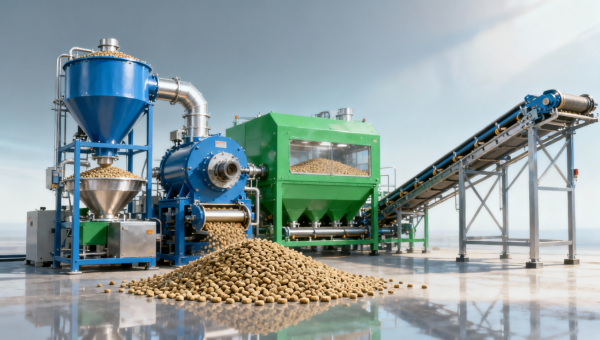
Planning a floating fish feed plant in 2026 is no longer just about comparing machine prices. For most buyers, the real question is: how much capital is realistically required to build a compliant, efficient, and profitable plant—and what hidden costs will affect payback later? In practical terms, a small floating fish feed plant can start from a relatively modest investment, while a medium or fully automated line can require a significantly higher budget once extrusion, drying, dust control, electrical works, quality testing, and site utilities are included. The right budget depends less on headline equipment price and more on capacity target, feed formula, automation level, energy strategy, and regulatory requirements.
This guide is designed for procurement teams, project managers, operators, financial approvers, and business decision-makers who need a usable 2026 cost framework. It focuses on what actually changes project economics: equipment scope, plant layout, raw material handling, utility demand, quality control expectations, and long-term operating efficiency. It also helps readers compare adjacent systems—such as horizontal ribbon blender feed setups, vertical feed mixer machine configurations, poultry feed pellet machine retrofits, and cattle feed processing plant integration—when evaluating whether a floating aquafeed line should be built as a standalone system or as part of a broader feed manufacturing platform.
What does a floating fish feed plant really cost in 2026?
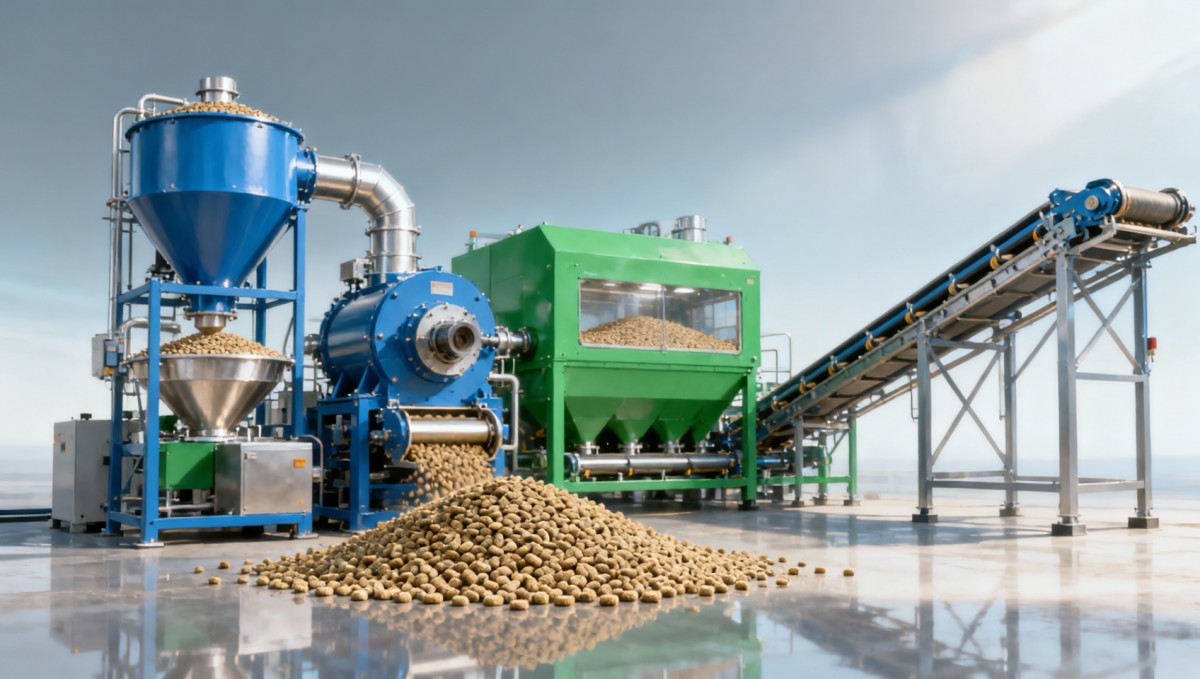
For serious project planning, the most useful answer is a cost range by plant scale rather than a single number. In 2026, buyers should typically expect the following broad investment bands for a floating fish feed plant, depending on region, specification, and supplier scope:
- Small-scale plant: suitable for pilot production, local farms, or entry-stage commercial supply; often includes grinding, mixing, extrusion, drying, cooling, and basic packing.
- Medium-scale commercial plant: designed for stable market supply, more formula flexibility, and better automation; usually requires stronger utility systems, more robust process control, and expanded quality assurance capability.
- Large industrial plant: intended for integrated feed businesses or regional distribution networks; often includes automated batching, multiple storage systems, advanced drying control, bulk handling, and more demanding environmental and compliance features.
What often surprises investors is that the quoted line price may represent only part of the total project budget. Civil construction, installation, steel structure, cable routing, steam or thermal systems, compressed air, generator backup, laboratory equipment, commissioning, and operator training can materially increase total investment. In many projects, these indirect and supporting costs are what push a seemingly affordable line into a much larger capital decision.
Which cost components matter most before you request supplier quotations?
Buyers who only ask for “floating fish feed machine price” often receive incomplete or misleading quotations. A stronger procurement approach is to break the project into cost blocks and verify what is included in each one.
1. Core process equipment
This normally includes raw material receiving, crushing, dosing, mixing, extrusion, drying, cooling, coating if required, screening, and packing. The extruder is usually the cost and performance center of the plant because it directly affects pellet floating rate, output stability, product density, and energy consumption.
2. Mixing and pre-processing systems
In some projects, a horizontal ribbon blender feed system is preferred for better mixing uniformity and higher batch efficiency, especially when formulations include vitamins, micro-additives, oils, or functional ingredients. In smaller or budget-sensitive plants, a vertical feed mixer machine may reduce initial investment, but buyers should assess whether it can consistently meet mixing precision targets for aquafeed.
3. Drying and cooling section
Floating feed quality depends heavily on post-extrusion moisture and temperature control. Dryers with tighter control cost more, but poor drying often causes pellet breakage, mold risk, or reduced shelf stability. This is an area where under-spending can create persistent quality complaints.
4. Utility infrastructure
Electricity load, steam generation, fuel choice, water treatment, and air compression can significantly affect both CapEx and OpEx. In some regions, utility setup may become a larger issue than the machine purchase itself.
5. Installation and commissioning
Mechanical assembly, electrical integration, test runs, and process tuning are often quoted separately. If the supplier does not include commissioning support, the startup period can become longer and more expensive than expected.
6. Compliance and quality assurance
Dust control, noise reduction, worker safety systems, fire prevention, wastewater handling, and laboratory testing should be budgeted early. For commercial buyers serving regulated markets, these are not optional extras.
How do plant capacity and automation level change total investment?
Capacity affects almost every cost variable. A higher-output line does not simply mean “bigger machines”; it typically requires stronger material handling, more stable feeding systems, larger dryers, better control architecture, and more disciplined layout planning. This is why cost does not rise linearly with output.
Automation is another major cost driver. A semi-automatic plant may lower upfront spending, but it usually depends more on operator skill, carries higher inconsistency risk, and may result in lower batch traceability. A more automated line increases capital expenditure, yet it can improve labor efficiency, recipe repeatability, and process visibility. For financial approvers, the key question is not whether automation costs more, but whether it reduces long-term production loss, labor dependency, and product rejection enough to justify the premium.
For example, if a buyer is deciding between a basic floating fish feed line and a more automated system integrated with storage, batching, and packing controls, the second option may offer better return in markets where quality consistency directly influences customer retention and distributor confidence.
What hidden costs are commonly missed in fish feed plant budgeting?
Several cost items are underestimated in early-stage planning:
- Building adaptation: ceiling height, floor loading, drainage, and access routes may require expensive redesign.
- Electrical distribution: transformer upgrades, panel boards, and cable trays can add substantial cost.
- Formula-specific wear parts: abrasive ingredients and high-fat recipes can increase maintenance needs.
- Spare parts inventory: startup reliability often depends on keeping critical spares on site.
- Operator learning curve: poor training can reduce actual output well below rated output.
- Quality failures: pellet sinking, breakage, moisture instability, and contamination can quietly erode profitability.
- Logistics and import duties: international sourcing may reduce machine price but increase lead time and landed cost uncertainty.
These hidden costs matter because they affect the true delivered cost per ton. A cheaper line with unstable performance can become more expensive over time than a well-engineered plant with higher initial CapEx.
Should you build a dedicated floating fish feed line or integrate with other feed systems?
This is an important strategic question for diversified feed businesses. Companies already operating a poultry feed pellet machine setup or a cattle feed processing plant sometimes assume they can extend into floating fish feed with minor upgrades. In reality, floating aquafeed usually requires different extrusion behavior, moisture control, formulation handling, and pellet quality targets.
That said, integration can still create value in the right scenario. Shared raw material storage, grinding systems, packaging zones, utilities, and laboratory resources may reduce total investment. The decision should depend on:
- whether existing mixing accuracy is sufficient for aquafeed formulas,
- whether plant hygiene and cross-contamination controls are adequate,
- whether utility systems can support extrusion and drying loads,
- whether production scheduling can avoid conflicts between product lines, and
- whether the business wants a dedicated aquafeed brand with tighter quality positioning.
If the target market expects premium floating pellets with reliable buoyancy and feed conversion performance, a dedicated line often delivers better technical control. If the goal is controlled market entry with limited risk, selective integration may be more financially prudent.
How can buyers evaluate ROI instead of focusing only on purchase price?
The strongest investment decisions are based on cost per ton of acceptable product, not on machine cost alone. To estimate ROI, buyers should compare:
- expected hourly and annual output under real operating conditions,
- energy consumption per ton,
- labor requirement by shift,
- yield loss and product rejection rate,
- maintenance frequency and spare parts cost,
- market price premium for higher-quality floating feed, and
- time required to reach stable commercial production.
A plant with better extrusion stability, stronger mixing uniformity, and lower moisture variation may produce a higher margin product even if it costs more initially. This is especially relevant for buyers supplying commercial fish farms that closely monitor pellet performance, feed waste, and water quality impact.
Decision-makers should also stress-test the business case against raw material volatility, energy price swings, and lower-than-expected utilization in the first year. A robust project is one that still performs acceptably when assumptions become less favorable.
What should be on your supplier evaluation checklist in 2026?
In 2026, the best supplier is not necessarily the one with the lowest quotation, but the one that can prove process reliability, after-sales support, and transparent scope definition. A practical checklist includes:
- detailed equipment list with brands and specifications,
- clearly defined output conditions and feed formula assumptions,
- power consumption data and utility requirements,
- layout drawings and installation scope,
- training and commissioning support details,
- warranty terms and critical spare parts plan,
- references from similar aquafeed projects,
- quality control recommendations for raw materials and finished pellets,
- compliance support for environmental and workplace safety requirements.
It is also wise to ask whether the supplier has experience integrating different feed preparation systems. For example, if your plant design combines a floating fish feed line with a horizontal ribbon blender feed section or links into an existing cattle feed processing plant, integration experience can reduce future operational friction.
Final decision guidance for fish feed plant investors
A realistic floating fish feed plant cost guide for 2026 must go beyond equipment pricing. The most important insight for buyers is this: the right investment level is the one that aligns plant capacity, feed quality target, compliance needs, and long-term operating economics. Low upfront cost can be attractive, but if it compromises consistency, utility efficiency, or product performance, the project may struggle to deliver sustainable returns.
For procurement teams and business leaders, the best approach is to budget in layers: core machinery, utility systems, installation, quality assurance, compliance, and startup support. Then compare not just supplier price, but total cost of ownership and expected output quality. Whether you are evaluating a standalone floating fish feed plant, a vertical feed mixer machine option for smaller-scale blending, a horizontal ribbon blender feed system for higher precision, or integration with poultry feed pellet machine and cattle feed processing plant infrastructure, the winning decision is the one backed by realistic operating assumptions and measurable ROI.
In short, 2026 plant planning should focus on technical fit, hidden costs, and profitability per ton—not just the initial quote. Buyers who use that framework will make stronger, lower-risk investment decisions.
Related Intelligence
- Commercial Feed PelletU.S.-Iran Strait of Hormuz Tensions Push Feed Pellet Freight Rates Up 8.3%U.S.-Iran Strait of Hormuz tensions spike feed pellet freight rates by 8.3%. Discover how exporters, importers & logistics providers can mitigate risk and adapt fast.
- Commercial Feed PelletVertical Feed Mixer Machine: What Size Do You Need?Vertical feed mixer machine sizing guide: compare batch capacity, daily output, and formula needs. Ideal for horizontal ribbon blender feed buyers, cattle feed processing plant planners, and animal feed mixers wholesale sourcing.
- Commercial Feed PelletAnimal Feed Mixers Wholesale: How to Compare QuotesAnimal feed mixers wholesale guide: compare horizontal ribbon blender feed and vertical feed mixer machine quotes by capacity, compliance, lifecycle cost, and supplier support.
The Morning Broadsheet
Daily chemical briefings, market shifts, and peer-reviewed summaries delivered to your terminal.
