

The Authority in Global Agricultural Chemistry & Bio-Resources
Floating fish feed extruder and pellet stability in transport
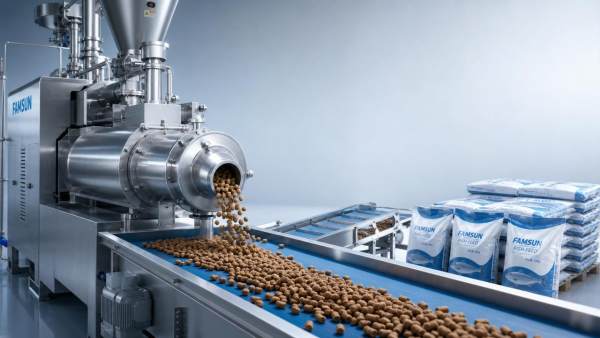
For quality control and safety teams, a floating fish feed extruder is more than a production asset—it directly shapes pellet durability, moisture consistency, and transport resilience. Understanding how extrusion parameters influence pellet stability helps reduce breakage, limit contamination risks, and maintain feed performance across storage and distribution, making process control essential for reliable aquafeed operations. In modern feed and grain processing, transport performance is no longer a secondary issue; it is closely tied to cost control, product integrity, and compliance expectations across increasingly demanding supply chains.
Floating Fish Feed Extruder Fundamentals and Pellet Stability Criteria
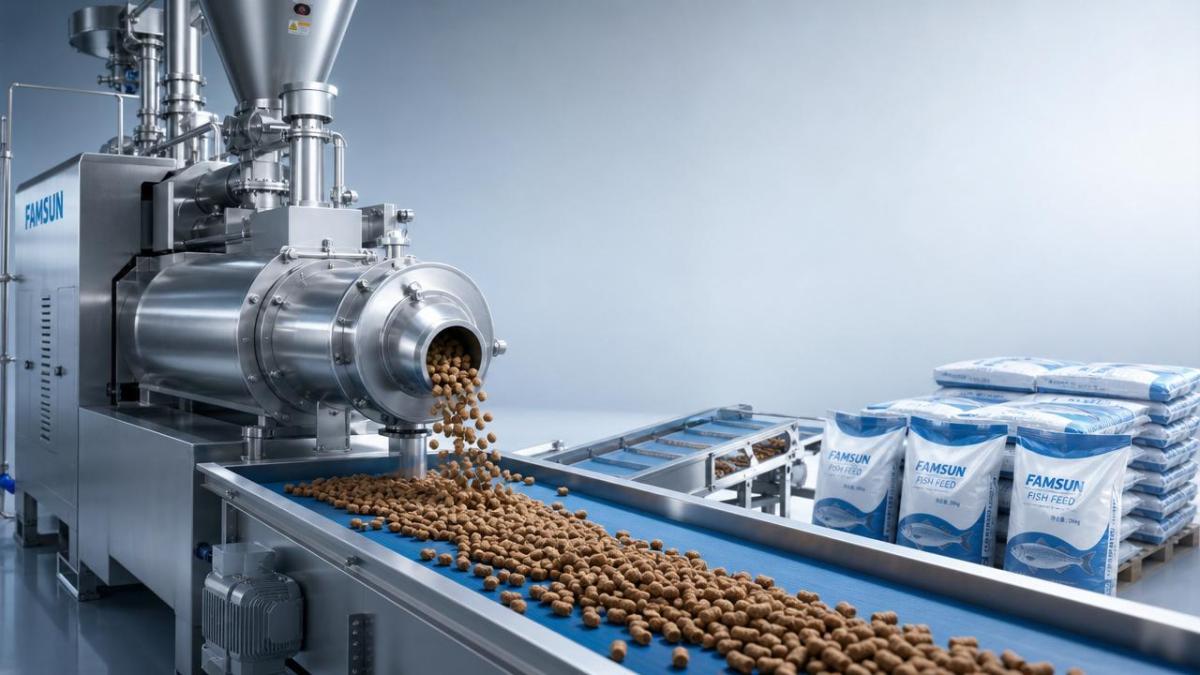
A floating fish feed extruder uses heat, moisture, pressure, and mechanical shear to transform raw feed mash into expanded pellets that float in water for a controlled period. This process supports feeding visibility, intake monitoring, and reduced waste in aquaculture systems. However, flotation alone is not enough. Pellets must also survive cooling, handling, bagging, warehousing, and long-distance transport without excessive fines, cracking, or moisture migration.
Pellet stability in transport generally refers to the ability of finished feed to maintain shape, density, and nutritional uniformity while exposed to vibration, compression, temperature fluctuation, and repeated loading cycles. In practice, the transport performance of extruded floating feed depends on several interacting factors: starch gelatinization, expansion ratio, bulk density, surface hardness, residual moisture, oil application, and post-extrusion cooling efficiency.
Because a floating fish feed extruder creates a porous internal structure, pellet strength must be balanced carefully. Over-expansion may improve floatability but weaken mechanical integrity. Under-processing may increase hardness, yet reduce water stability and digestibility. The operational goal is therefore not maximum expansion, but a controlled structure that protects pellet quality from factory discharge to final farm use.
Current Industry Focus in Feed Transport and Product Integrity
Across aquaculture and broader primary processing sectors, feed producers are giving greater attention to the relationship between extrusion quality and downstream logistics. Rising freight costs, longer shipping routes, and stricter storage standards have made pellet breakage a visible operational risk rather than a minor quality issue. A floating fish feed extruder is now evaluated not only for output rate and energy efficiency, but also for its contribution to consistent pellet performance in real distribution conditions.
This industry context explains why the floating fish feed extruder has become central to both product engineering and risk management. Stable pellets support not only feed conversion performance in water, but also predictable physical quality during shipping, handling, and storage turnover.
Operational Value of a Well-Controlled Floating Fish Feed Extruder
A well-configured floating fish feed extruder creates measurable business value by reducing pellet loss before feed ever reaches the pond or cage. Lower fines content improves bag appearance, reduces sorting during unloading, and helps preserve nutrient uniformity. This matters because segregation during transport can alter the effective composition of each batch, especially when fines accumulate at the bottom of containers or bags.
There is also a direct link between transport stability and safety. Fragile pellets generate dust, and dust can attract moisture, support contamination, or create handling problems in enclosed storage areas. When pellets break excessively, exposed surfaces oxidize faster after oil coating, reducing shelf stability. By contrast, pellets formed under balanced extrusion conditions retain a more uniform outer layer and resist structural damage during routine logistics.
From an efficiency standpoint, extrusion stability improves process consistency across the full line. Better control at the extruder often means less rework at screening, fewer packaging complaints, and more predictable warehouse behavior. In integrated operations, these gains can be as important as throughput. A floating fish feed extruder that produces durable pellets therefore supports cost discipline, quality assurance, and downstream performance at the same time.
Typical Stability Factors Across Formulas, Sizes, and Logistics Conditions
Not all floating feed behaves the same in transport. Pellet stability varies by formulation, pellet diameter, target species, oil level, and route conditions. The table below outlines typical variables that influence how a floating fish feed extruder should be adjusted for reliable transport performance.
This classification highlights a practical point: the best floating fish feed extruder settings are conditional, not universal. Stable results come from matching extrusion energy, steam conditioning, moisture addition, and post-processing to the real-life distribution profile of each feed product.
Process Control Measures That Improve Transport Resilience
Several control measures consistently improve the ability of pellets to withstand storage and shipment. First, raw material uniformity matters. Inconsistent grinding or ingredient moisture can cause unstable expansion inside the floating fish feed extruder, leading to pellets with mixed density and uneven strength. A stable particle size distribution helps create a more homogeneous structure.
Second, conditioning before extrusion must be monitored carefully. Steam quality, mash retention time, and pre-extrusion moisture determine how starch and protein respond under pressure. If conditioning is inadequate, pellets may appear acceptable at discharge but fail under transport stress. If conditioning is excessive, the product may become too soft or structurally inconsistent after drying.
Third, post-extrusion drying and cooling deserve equal attention. A floating fish feed extruder can produce strong pellets, yet poor cooling can still trap internal moisture gradients that later cause cracking or mold risk. The objective is not simply low moisture, but equilibrium moisture and temperature throughout the pellet mass. Reliable screening after cooling also removes weak fragments before bagging, preventing them from compounding fines levels during transport.
- Track pellet durability index together with floatability and bulk density.
- Record extruder pressure, barrel temperature, and specific mechanical energy by batch.
- Measure moisture before extrusion, after drying, and after cooling.
- Validate packaging performance under stacking and vibration conditions.
- Review return complaints for signs of formula-specific fragility.
Practical Direction for Evaluation and Next-Step Optimization
When assessing a floating fish feed extruder, focus on transport outcomes as early as process design. Lab flotation results should be paired with durability testing, compression checks, and short simulated logistics trials. This approach reveals whether pellets remain stable after bagging, palletization, and route vibration, rather than only at the production line exit.
A practical optimization path begins with mapping critical control points: ingredient preparation, conditioning, extrusion, drying, cooling, coating, screening, and packaging. Then compare each point against observed defects such as dust formation, broken pellets, soft texture, or moisture rebound. For many operations, the root cause is not a single machine fault but a mismatch between the floating fish feed extruder settings and the actual transport environment the feed must survive.
The most effective next step is to establish a transport-focused quality standard for each product line. Define acceptable limits for fines, moisture variation, pellet hardness, and package condition after handling simulation. With those benchmarks in place, extrusion teams can tune process parameters with greater precision and maintain pellet quality more consistently across seasons, formulas, and shipping routes. In a market that values both feed performance and supply chain reliability, this disciplined approach turns the floating fish feed extruder into a strategic control point for stable, dependable aquafeed delivery.
Related Intelligence
- Commercial Feed PelletSingapore’s Aquaculture Tech FastTrack Extends to Commercial Feed PelletsAquaculture Tech FastTrack now covers Commercial Feed Pellets — unlock 72-hour Singapore clearance with CNAS test reports. Key for China-Singapore feed exporters, labs & importers.
- Commercial Feed PelletFeed & Grain processing technology that cuts raw material lossFeed & Grain processing technology that cuts raw material loss helps processors improve yield, moisture control, traceability, and ROI—see which systems deliver measurable savings.
- Commercial Feed PelletSinking fish feed machine and the cost of poor water stabilitySinking fish feed machine selection affects feed waste, water quality, and ROI. Learn how better pellet stability cuts hidden aquaculture costs and improves long-term performance.
The Morning Broadsheet
Daily chemical briefings, market shifts, and peer-reviewed summaries delivered to your terminal.
