
China’s LiFePO4 Battery Recycling Enters Deep Water
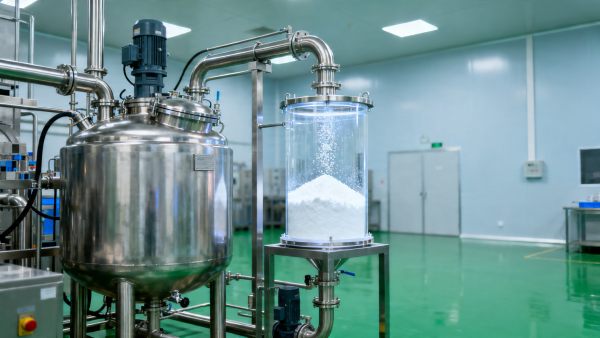
As large-scale retirement of lithium iron phosphate (LiFePO4)动力电池 accelerates in China, a new phosphorus recovery pathway from spent cathode material has entered commercial validation. In Q1 2026, two Guangdong-based enterprises achieved extraction of food-grade phosphate (compliant with GB 1886.330–2021) from retired LiFePO4 batteries—supplying phosphorus for commercial feed pellet supplements and recirculating aquaculture system (RAS) water stabilizers. This route reduces carbon footprint by 42% versus conventional phosphate rock mining and is undergoing preliminary assessment for inclusion in the EU’s Sustainable Procurement White List. Feed additive manufacturers, RAS equipment integrators, and battery recycling stakeholders should monitor implications for raw material sourcing, regulatory alignment, and cross-border supply chain design.
Event Overview
In Q1 2026, two enterprises headquartered in Guangdong Province successfully implemented an industrial-scale process to recover food-grade phosphate from retired lithium iron phosphate (LiFePO4) battery cathode scrap. The recovered phosphate meets the Chinese national standard GB 1886.330–2021 for food additives. It is now being supplied to commercial feed pellet producers as a phosphorus supplement and to RAS (Recirculating Aquaculture System) system operators as a water quality stabilizer. The process demonstrates a 42% lower carbon footprint compared to primary phosphate rock mining. The pathway is currently under preliminary evaluation for inclusion in the European Union’s Sustainable Procurement White List.
Impact on Specific Industry Segments
Commercial Feed Pellet Manufacturers
These firms rely on consistent, traceable, and regulatory-compliant phosphorus sources. The availability of battery-derived food-grade phosphate introduces a new domestic alternative to imported monocalcium phosphate or dicalcium phosphate. Impact manifests in procurement flexibility, cost structure sensitivity to mineral price volatility, and potential for sustainability claims in B2B contracts—especially with EU-facing livestock or aquaculture customers.
RAS System Integrators & Aquaculture Operators
RAS facilities require precise phosphorus dosing to maintain nitrification stability and prevent algal imbalance. Battery-sourced phosphate offers a dual benefit: supply chain localization and documented low-carbon origin. Impact includes reduced reliance on chemical-grade phosphate imports, tighter integration with circular economy reporting frameworks, and alignment with emerging EU environmental criteria for aquaculture inputs.
Lithium Iron Phosphate Battery Recyclers
Historically focused on lithium, cobalt, nickel, and copper recovery, LiFePO4 recyclers face margin pressure due to lower metal values. Phosphorus recovery adds a new revenue stream and improves overall resource utilization rates. Impact centers on process retrofitting requirements, certification overhead (e.g., GB 1886.330–2021 compliance), and differentiation in tender evaluations where ESG metrics are weighted.
Phosphate Rock Importers & Traders
This development does not displace bulk phosphate rock demand for fertilizer, but it introduces a niche, high-value, low-carbon alternative for non-agricultural end uses. Impact appears first in pricing transparency for technical-grade phosphate salts and may influence long-term contract structures with feed and water treatment customers seeking verified Scope 3 emission reductions.
What Relevant Enterprises or Practitioners Should Monitor and Do Now
Track official updates on EU Sustainable Procurement White List status
The preliminary assessment phase carries no binding outcome. Stakeholders should monitor announcements from the European Commission’s Joint Research Centre (JRC) or DG GROW regarding formal listing timelines, verification protocols, and eligibility thresholds—including whether battery-derived phosphates must meet additional traceability or life-cycle assessment (LCA) requirements beyond current GB standards.
Assess technical compatibility and certification readiness for GB 1886.330–2021
Feed pellet and RAS suppliers must verify whether their existing formulation, blending, and quality control systems accommodate this new input. This includes analytical method validation (e.g., heavy metal limits, residual fluorine), documentation of batch traceability from battery feedstock to final product, and internal audit preparedness for third-party food-grade certification bodies.
Distinguish between policy signal and near-term commercial scalability
While the Q1 2026 milestone confirms technical feasibility, current output volumes remain limited to two Guangdong facilities. Enterprises should avoid overestimating near-term availability; instead, prioritize engagement with these early adopters to understand scale-up roadmaps, lead times, and minimum order quantities before revising procurement forecasts.
Prepare cross-functional alignment on sustainability data collection
Any future use of battery-derived phosphate in export-facing products will require auditable carbon footprint data. Procurement, R&D, and EHS teams should jointly define baseline LCA boundaries (e.g., cradle-to-gate), identify required data inputs (e.g., energy source mix at recycling plant), and align with partners on shared reporting templates ahead of customer or regulatory requests.
Editorial Perspective / Industry Observation
From industry perspective, this development is best understood not as an immediate market shift, but as a structural inflection point in materials circularity—particularly for low-cobalt battery chemistries. Analysis shows that phosphorus recovery from LiFePO4 scrap was previously considered economically marginal; its current validation signals maturation in hydrometallurgical selectivity and purification control. Observation suggests this pathway gains strategic relevance only when paired with tightening EU sustainability procurement rules—not as a standalone technology breakthrough. It remains uncertain whether this model will scale beyond Guangdong without broader policy incentives (e.g., extended producer responsibility credits for phosphorus recovery) or harmonized international standards for recycled food-grade minerals.
Current more appropriate interpretation is that this represents an early-stage, geographically concentrated proof point—not yet a replicable benchmark. Its significance lies less in volume and more in signaling how battery recycling value propositions are diversifying beyond critical metals into regulated functional nutrients.
Conclusion: This milestone reflects progress in closing the phosphorus loop within China’s EV battery ecosystem—but its practical impact remains contingent on certification outcomes, export policy developments, and adoption velocity among downstream formulators. For now, it serves as a calibrated signal of shifting resource logic—not an operational trigger.
Information Source: Publicly disclosed milestone announcement (Q1 2026); GB 1886.330–2021 standard documentation; EU Commission sustainable procurement framework guidance (preliminary assessment phase). Note: EU White List inclusion status remains pending formal evaluation and is subject to ongoing observation.
Related Intelligence
- Commercial Feed PelletRed Sea Crisis Drives Up Asia-Europe Freight Costs, Feed Pellet FOB Prices Rise 8–12%Red Sea Crisis drives Asia-Europe freight costs up—Commercial Feed Pellet FOB prices rise 8–12%. Critical insight for exporters, traders & importers navigating supply chain volatility.
- Commercial Feed PelletAksu Cotton Mills at Full Capacity; Cottonseed Protein Export Stability RisesAksu cotton mills hit 100% capacity; cottonseed protein exports surge with Thailand & Saudi FDA approvals—99.2% delivery reliability drives feed ingredient buyers’ interest.
- Commercial Feed PelletGrass Forage Chopper Blade Wear Is Costlier Than It LooksGrass forage chopper blade wear drives hidden costs in fuel, downtime, and silage quality. Compare square baler machine, round baler machine, and wrapper options for smarter ROI.
The Morning Broadsheet
Daily chemical briefings, market shifts, and peer-reviewed summaries delivered to your terminal.
