
2026 CHINASHOP Highlights Botanical Extracts & Clean-Label Food
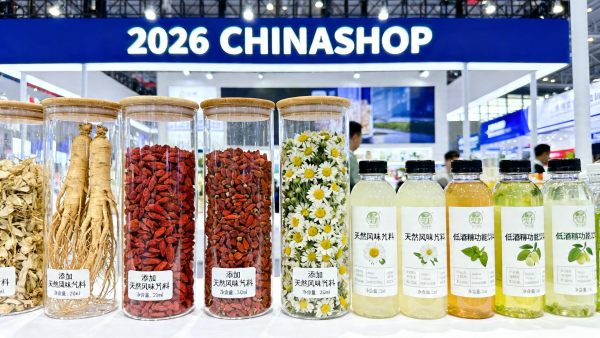
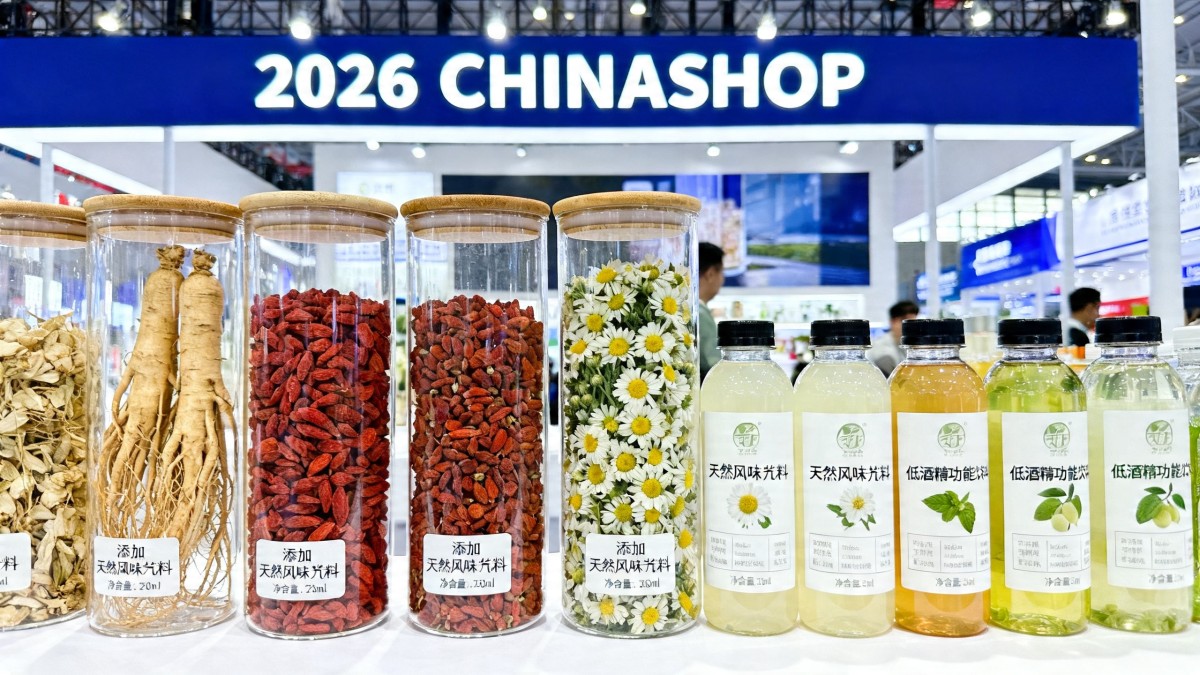
On April 9, 2026, CHINASHOP launched its first dedicated 'Low-Alcohol & Micro-Inebriation Zone' and 'Clean-Label & Health Food Zone', spotlighting botanical extracts and natural ingredients for functional low-alcohol beverages and additive-free flavor bases — drawing attention from international health-focused beverage brands, ingredient buyers, and OEM/ODM service providers.
Event Overview
The 2026 CHINASHOP exhibition opened on April 9, 2026. It featured two newly introduced thematic zones: the 'Micro-Inebriation Zone' and the 'Clean Label & Health Food Zone'. These zones showcased functional low-alcohol beverages and unadulterated flavoring bases containing botanical extracts (e.g., ginseng, hawthorn, goji, chamomile) and other natural ingredients. Among participating Chinese suppliers, 73% hold FSSC 22000 or BRCGS Food certification, enabling rapid response to OEM/ODM inquiries from health-oriented beverage brands in Southeast Asia and the Middle East.
Impact on Specific Industry Segments
Direct Trading Enterprises
These enterprises — especially those exporting to Southeast Asia and the Middle East — face increased demand for certified, traceable natural ingredients. The 73% certification rate among exhibitors signals improved readiness for international compliance, potentially shortening due diligence cycles for overseas buyers.
Raw Material Sourcing Companies
Sourcing firms focused on plant-based actives (e.g., standardized botanical extracts, fermented botanicals, or clean-label sweeteners) may experience intensified competition for verified supply. The emphasis on FSSC 22000/BRCGS-aligned suppliers suggests growing buyer preference for pre-vetted, audit-ready partners over transactional vendors.
Food & Beverage Manufacturers (OEM/ODM)
Manufacturers serving regional health beverage brands may see accelerated sourcing decisions — particularly where formulation compatibility with botanical extracts and clean-label compliance are prerequisites. The presence of certified suppliers at CHINASHOP reduces technical onboarding time for new co-manufacturing partnerships.
Supply Chain Service Providers
Logistics, testing, and regulatory support providers active in cross-border food ingredient trade may observe rising demand for services tied to certification verification, label compliance review (especially for alcohol thresholds and 'no artificial additives' claims), and halal/kosher alignment — particularly for Middle Eastern clients.
Key Points for Relevant Enterprises & Practitioners
Monitor official updates on CHINASHOP’s 2026 zone definitions and post-show buyer feedback
CHINASHOP has not yet published detailed criteria for 'micro-inebriation' product eligibility or clean-label claim validation. Current definitions remain exhibitor-led; formal standards (if any) may emerge in post-event summaries or 2027 planning documents.
Track certification status and regional market alignment of key suppliers
With 73% of participating suppliers holding FSSC 22000 or BRCGS Food certification, procurement teams should verify whether those certifications cover specific product lines (e.g., liquid botanical concentrates vs. dry powders) and align with target markets’ import requirements — especially for GCC or ASEAN countries with evolving food safety regulations.
Distinguish between exhibition-driven interest and operational readiness
The presence of certified suppliers at CHINASHOP reflects capability visibility, not guaranteed scalability or export documentation readiness. Buyers should assess lead times, batch consistency records, and prior export experience — particularly for low-alcohol formulations subject to dual regulatory oversight (food + alcohol).
Prepare for formulation-specific due diligence
Botanical extract applications in low-alcohol contexts often involve stability testing, ethanol migration analysis, and sensory validation. Teams should pre-identify internal or third-party labs capable of supporting these tests — especially when scaling from pilot batches to commercial production.
Editorial Perspective / Industry Observation
From an industry perspective, the introduction of these zones signals a structural shift — not just a trend — in how Chinese ingredient suppliers position themselves within global health beverage value chains. Analysis来看, this is less about novelty and more about institutionalization: the deliberate grouping of certified suppliers around two high-demand, regulation-sensitive categories (low-alcohol functionality and clean-label integrity) suggests growing alignment between domestic capabilities and international commercial expectations. It is better understood as an early-stage signal — one that reflects supplier readiness rather than finalized market demand — requiring ongoing observation across certification renewal cycles, export shipment data, and follow-up buyer surveys from CHINASHOP 2026 participants.
Current observation indicates that the initiative serves primarily as a matchmaking infrastructure upgrade, not a policy mandate or market inflection point. Its significance lies in lowering search costs for international buyers seeking compliant, botanically oriented inputs — but actual order volume and long-term partnership formation remain to be validated beyond the exhibition period.
Conclusion
This CHINASHOP development marks a concrete step toward structured export facilitation for natural-ingredient-based food and beverage solutions — particularly in segments where regulatory clarity, certification credibility, and formulation expertise converge. It is neither a sudden market disruption nor a fully matured channel, but rather an emerging coordination mechanism between Chinese supply capacity and regional health-brand demand. For stakeholders, it is best interpreted as a timely prompt to reassess supplier vetting criteria, certification coverage scope, and technical readiness for botanical-integrated, low-alcohol product development — rather than as an immediate call to pivot strategy.
Source Attribution
Main source: Official CHINASHOP 2026 exhibition announcement (April 9, 2026).
Points requiring continued observation: Post-show buyer engagement metrics, 2027 zone expansion plans, and independent verification of the 73% certification claim across product categories.
Related Intelligence
- Botanical ExtractsIndonesia BPOM Tightens Botanical Extracts Import RulesBotanical extracts import to Indonesia now requires BPOM-compliant GMP + AOAC validation—act before the 1 June 2026 deadline!
- Botanical ExtractsChinese PLM Systems Accelerate Green Transition in Coatings IndustryChinese PLM systems drive green innovation in coatings—enabling botanical extracts like menthol & rosmarinic acid to meet EU EcoLabel and GREENGUARD Gold standards.
- Botanical ExtractsFDA Sets New Toxin Thresholds for 4 Chinese Botanical ExtractsFDA sets strict 0.1 ppb toxin thresholds for echinacea, kudzu, ginkgo & monk fruit extracts — critical for U.S. supplement importers and suppliers.
The Morning Broadsheet
Daily chemical briefings, market shifts, and peer-reviewed summaries delivered to your terminal.
