
Chinese PLM Systems Accelerate Green Transition in Coatings Industry
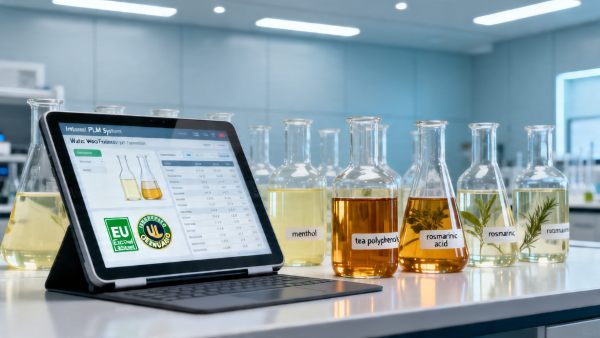
On April 21, industry reports indicated that domestically developed PLM (Product Lifecycle Management) systems are accelerating the adoption of botanical extracts—such as menthol, tea polyphenols, and rosmarinic acid—as sustainable base materials in water-based wood coatings. This shift supports the replacement of petroleum-derived solvents and enables Chinese coating manufacturers to meet stringent international environmental standards, including EU EcoLabel and UL GREENGUARD Gold. Direct trade partners, raw material suppliers, and contract formulators sourcing from or supplying into the global coatings supply chain should monitor this development closely—as it signals a measurable step toward low-carbon, compliance-ready product customization from China.
Event Overview
As reported on April 21, seven Chinese coating manufacturers have achieved stable application of botanical extracts—including menthol, tea polyphenols, and rosmarinic acid—in water-based wood coatings. These formulations have been certified under both EU EcoLabel and UL GREENGUARD Gold. The enabling technology cited is domestically developed PLM software, used to manage and optimize the full product lifecycle—from raw material selection and formulation testing to regulatory documentation and batch traceability.
Which Subsectors Are Affected
Direct Trade Enterprises (Exporters/Importers)
These entities are affected because certified botanical-based coatings now offer verifiable low-carbon credentials for overseas procurement. Impact manifests in shifting buyer expectations: increased demand for documentation transparency (e.g., origin tracing of plant extracts, VOC data, third-party certification alignment), and tighter lead-time requirements for compliant custom formulations.
Raw Material Sourcing & Supply Firms
Firms supplying natural extract intermediates (e.g., standardized mint oil derivatives, green tea extracts) face new qualification pathways. Impact includes heightened scrutiny of extraction methods, solvent residues, and batch consistency—requirements previously less emphasized in non-pharma industrial applications. Certification readiness (e.g., ISO 22000, organic handling certifications) may become a de facto entry criterion.
Coating Formulators & OEM Manufacturers
Manufacturers integrating botanical actives must adapt formulation workflows to accommodate variability in natural feedstocks (e.g., seasonal phytochemical fluctuations) and ensure reproducible performance. Impact centers on stability validation, shelf-life testing under real-world conditions, and digital traceability across multi-tier supplier networks—capabilities increasingly managed via PLM platforms.
Supply Chain Service Providers (Logistics, Testing Labs, Certification Bodies)
These providers see emerging demand for integrated services: botanical ingredient verification, eco-label dossier preparation, and cross-border regulatory alignment support (e.g., EU REACH vs. US TSCA implications for novel plant-based actives). Impact lies in service bundling—where logistics providers may need lab coordination; labs may need expanded botanical analytical capacity.
What Relevant Enterprises or Practitioners Should Focus On Now
Monitor official updates on regulatory recognition of botanical actives in coatings
Current certifications (EcoLabel, GREENGUARD Gold) validate end-product compliance—but do not yet constitute formal regulatory acceptance of specific botanical ingredients as functional substitutes under frameworks like EU CLP or US EPA Safer Choice. Watch for technical guidance documents or positive opinions issued by national chemical agencies.
Track which botanical categories are gaining traction beyond initial use cases
Menthol, tea polyphenols, and rosmarinic acid are confirmed in water-based wood coatings. Current more relevant to watch are scalability indicators: cultivation volume, extraction yield consistency, and pricing trends for these actives—especially relative to synthetic alternatives. Early signals may appear in agricultural commodity reports or specialty chemical trade bulletins.
Distinguish between PLM platform capability and formulation expertise
The reported progress relies on both digital infrastructure (PLM) and deep formulation science. From industry perspective, PLM alone does not guarantee success—it enables data governance and compliance tracking, but stable botanical integration still depends on empirical R&D investment. Procurement or partnership decisions should assess both software maturity and lab-scale validation records.
Prepare for upstream documentation demands in procurement workflows
Buyers requesting EcoLabel/GREENGUARD-certified coatings will increasingly require full ingredient disclosure, including botanical source location, harvest method, and solvent history. Suppliers should begin mapping current documentation gaps—especially for Tier-2 and Tier-3 natural ingredient suppliers—and consider adopting standardized digital material passports where feasible.
Editorial Perspective / Industry Observation
Analysis来看, this development is best understood as an operational signal—not yet a market-wide inflection point. It reflects growing capability among select Chinese manufacturers to align digital process management with green chemistry goals, but remains limited to seven firms and one application segment (water-based wood coatings). Observation来看, the role of domestic PLM systems here is less about replacing foreign software and more about tailoring data structures to local supply chain realities (e.g., fragmented botanical sourcing, rapid certification turnaround needs). From industry angle, sustained relevance hinges on whether this model expands to other coating types (e.g., architectural, industrial maintenance) and whether certification pathways broaden beyond voluntary ecolabels to mandatory regulatory categories.
Conclusion
This report marks a concrete, verified instance of digital infrastructure supporting sustainability-driven reformulation in the coatings sector. It does not indicate a wholesale industry transition, nor does it imply immediate cost parity or scalability across all botanical actives. Rather, it illustrates how targeted software adoption—combined with focused R&D—can accelerate compliance-ready innovation within specific value chains. Currently, it is more appropriately interpreted as a benchmark for traceable, plant-based material integration in regulated export markets—not as a broad-based disruption.
Source Attribution
Main source: Industry report published April 21 (no specific publisher named in provided information).
Points requiring ongoing observation: Expansion beyond the seven reported manufacturers; inclusion of additional botanical actives; extension to non-wood coating applications; formal regulatory recognition of botanical solvents or coalescents under major chemical frameworks.
Related Intelligence
- Botanical ExtractsChinese PLM Systems Accelerate Green Transition in Coatings IndustryChinese PLM systems drive green innovation in coatings—enabling botanical extracts like menthol & rosmarinic acid to meet EU EcoLabel and GREENGUARD Gold standards.
- Botanical ExtractsFDA Sets New Toxin Thresholds for 4 Chinese Botanical ExtractsFDA sets strict 0.1 ppb toxin thresholds for echinacea, kudzu, ginkgo & monk fruit extracts — critical for U.S. supplement importers and suppliers.
- Botanical ExtractsANVISA Expands Botanical Extracts Screening in BrazilANVISA expands botanical extracts screening in Brazil: New pesticide & heavy metal testing required for guava leaf, açaí, guaraná, and more — act now to ensure compliance and avoid shipment rejections.
The Morning Broadsheet
Daily chemical briefings, market shifts, and peer-reviewed summaries delivered to your terminal.
