
FDA Sets New Toxin Thresholds for 4 Chinese Botanical Extracts
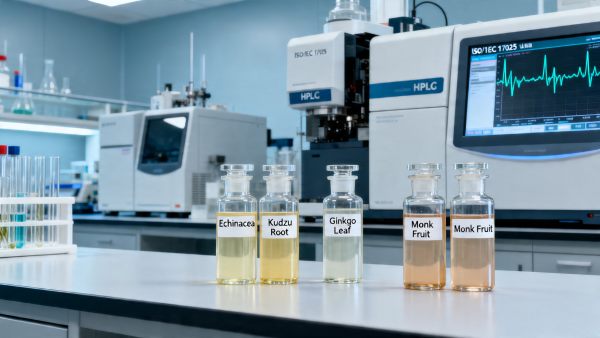
The U.S. Food and Drug Administration (FDA) updated Import Alert 54-19 on April 18, 2026, establishing stricter detection limits for pyrrolizidine alkaloids (PAs), aristolochic acids (AA), and ochratoxin A (OTA) in four botanical extracts primarily sourced from China — echinacea, kudzu root, ginkgo leaf, and monk fruit. This development directly impacts dietary supplement importers, contract manufacturers, and raw material suppliers operating across U.S.-China botanical supply chains.
Event Overview
On April 18, 2026, the FDA revised its Dietary Supplement & Botanical Import Alert 54-19, designating echinacea, kudzu root, ginkgo leaf, and monk fruit extracts as ‘high-risk botanicals for co-occurring toxins’. Effective immediately, importers must submit third-party laboratory reports confirming negative results for PAs, AA, and OTA — each with a detection limit of ≤0.1 ppb. Port-of-entry examination rates for these botanical extracts at U.S. East Coast ports have risen to 41%.
Industries Affected
Direct Trade Enterprises
Importers and exporters handling these four extracts face immediate customs delays and increased documentation burdens. The requirement for certified third-party testing at 0.1 ppb — significantly lower than many current commercial lab capabilities — raises rejection risk and extends clearance timelines.
Raw Material Procurement Firms
Companies sourcing bulk extracts from Chinese manufacturers must now verify upstream analytical capacity and toxin control protocols. Absence of validated PA/AA/OTA mitigation steps — such as selective harvesting, processing controls, or post-extraction purification — may render existing supplier certifications non-compliant.
Contract Manufacturing & Formulation Facilities
U.S.-based dietary supplement manufacturers using these extracts as ingredients are exposed to inbound shipment holds. Inventory planning is affected: untested or inadequately tested lots cannot enter production without retesting or FDA negotiation — increasing working capital pressure and line downtime risk.
Supply Chain Service Providers
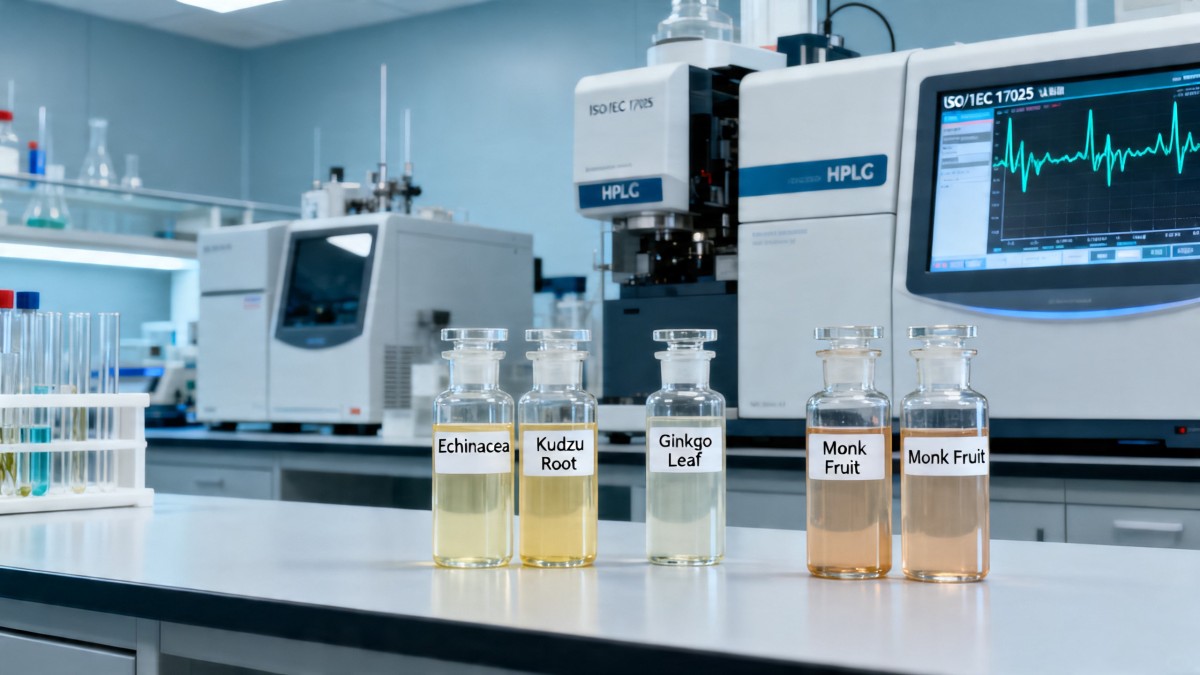
Logistics coordinators, customs brokers, and testing coordination platforms report heightened demand for pre-shipment verification services. However, only labs accredited under ISO/IEC 17025 with demonstrated 0.1 ppb sensitivity for all three analytes meet the new threshold — a narrow pool globally.
Key Focus Areas and Recommended Actions
Monitor official FDA guidance updates and enforcement patterns
The FDA has not yet published technical implementation FAQs or clarified whether transitional allowances apply. Stakeholders should track FDA’s Import Alert database and related compliance bulletins for clarifications on sampling frequency, lot definition, or acceptable alternative methods.
Prioritize verification for the four designated extracts in active procurement
Not all botanical imports are subject to this threshold. Companies should isolate purchasing activity for echinacea, kudzu root, ginkgo leaf, and monk fruit extracts — especially those entering via U.S. East Coast ports — and confirm current test reports explicitly state detection limits of ≤0.1 ppb for PAs, AA, and OTA individually.
Distinguish between policy signal and operational readiness
Analysis来看, the 0.1 ppb requirement reflects an enforcement escalation rather than a scientific consensus shift. Current analytical standards (e.g., AOAC Official Method 2020.01) typically validate down to 0.5–1.0 ppb for OTA and PAs in complex matrices. Stakeholders should assess whether their current labs can reliably achieve and document 0.1 ppb — or whether method validation gaps exist.
Prepare documentation, communication, and contingency plans
Importers should proactively collect full chain-of-custody records, batch-specific extraction and drying parameters, and prior test history. Where possible, initiate parallel testing with two accredited labs to mitigate single-lab failure risk. Maintain direct contact channels with FDA’s Office of Dietary Supplement Programs for urgent case resolution.
Editorial Perspective / Industry Observation
From industry perspective, this update is less a sudden regulatory pivot and more a formalization of long-standing FDA field-level scrutiny. The 41% port hold rate signals immediate operational impact — not just a warning. It is better understood as both a compliance benchmark and a supply chain stress test: it reveals where analytical rigor, traceability, and cross-border documentation alignment remain weakest. Continued monitoring is warranted because the FDA has not indicated whether this threshold will expand to other botanicals — but the precedent is now set.
Conclusion
This action marks a concrete tightening of import requirements for specific Chinese-sourced botanical extracts — one that tests current capabilities across testing infrastructure, supplier qualification, and regulatory coordination. It is best interpreted not as a temporary hurdle, but as an indicator of sustained expectations for ultra-trace toxin control in high-volume dietary supplement inputs.
Information Sources
Main source: U.S. FDA Import Alert 54-19 (updated April 18, 2026); FDA public port examination data (as reported in trade compliance briefings, April 2026).
Note: Ongoing observation is required for potential FDA-issued technical guidance, lab accreditation updates, or expansion to additional botanical categories.
Related Intelligence
- Botanical ExtractsFDA Sets New Toxin Thresholds for 4 Chinese Botanical ExtractsFDA sets strict 0.1 ppb toxin thresholds for echinacea, kudzu, ginkgo & monk fruit extracts — critical for U.S. supplement importers and suppliers.
- Botanical ExtractsANVISA Expands Botanical Extracts Screening in BrazilANVISA expands botanical extracts screening in Brazil: New pesticide & heavy metal testing required for guava leaf, açaí, guaraná, and more — act now to ensure compliance and avoid shipment rejections.
- Botanical ExtractsEU Annex 1 (2026) Requires Sterility Process Validation for Botanical ExtractsEU Annex 1 (2026) mandates sterility process validation for botanical extracts — learn how to comply, avoid shipment rejection, and secure EU market access.
The Morning Broadsheet
Daily chemical briefings, market shifts, and peer-reviewed summaries delivered to your terminal.
