
ECHA Updates Nanomaterial Reporting for Agrochemicals (2026)
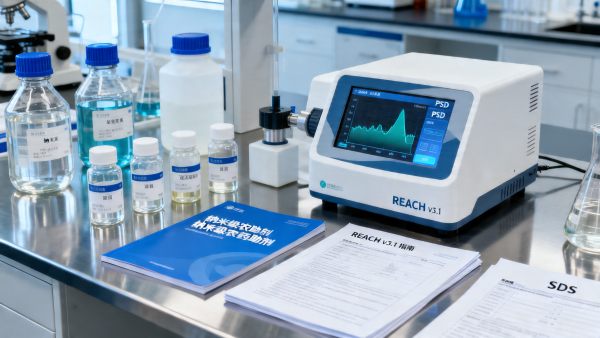
On 19 April 2026, the European Chemicals Agency (ECHA) released the REACH Guidance on Nanomaterials v3.1, introducing mandatory registration and SDS-specific disclosure requirements for nano-formulated agrochemical components—including nano-enabled adjuvants, controlled-release carriers, and smart-release polymers. This update directly affects agrochemical exporters from China and other third countries supplying the EU market.
Event Overview
ECHA formally published the REACH Guidance on Nanomaterials v3.1 on 19 April 2026. The guidance explicitly extends REACH registration and Safety Data Sheet (SDS) reporting obligations to nanoscale forms of agrochemical助剂 (adjuvants),缓释载体 (controlled-release carriers), and智能释放聚合物 (smart-release polymers). Enforcement begins 1 July 2026. Products failing to demonstrate nanoform identification and exposure assessment will be denied EU customs clearance or subject to penalties up to 30% of shipment value. The world’s top 20 agrochemical buyers have initiated pre-compliance screening of supplier nano-disclosures.
Which Subsectors Are Affected
Direct Exporters (Agrochemical Formulators & Blenders)
Exporters supplying finished formulations into the EU must now determine whether any component—especially adjuvants or polymer-based delivery systems—meets ECHA’s definition of a nanomaterial (e.g., particle size distribution, specific surface area, functionalized surface). Non-compliant dossiers may trigger customs rejection or financial penalties, directly impacting shipment timelines and margin stability.
Raw Material Suppliers (Nanocarrier & Polymer Producers)
Suppliers of nano-enabled excipients—including silica-based carriers, polymeric nanoparticles, or surface-modified clays—must now provide nano-specific physicochemical data and exposure scenarios to downstream formulators. Absence of such data impedes REACH dossier completion by their customers, potentially disrupting long-standing supply relationships.
Contract Manufacturing & Toll Blenders
Firms performing formulation, mixing, or packaging services for EU-bound agrochemicals are increasingly liable under REACH’s ‘only representative’ and downstream user obligations. If nanoforms are introduced during processing (e.g., via high-shear dispersion), the toll blender may bear responsibility for nano-characterisation—even if not the product owner.
Supply Chain Compliance Service Providers
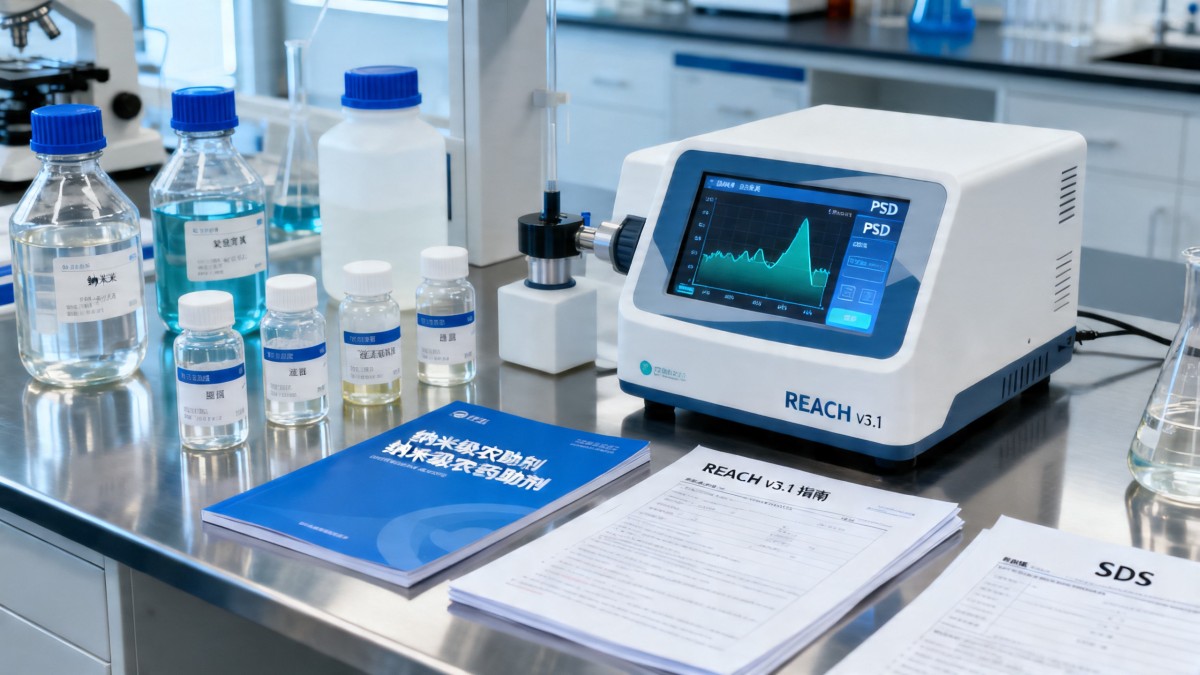
Regulatory consultancies, testing labs, and SDS authoring services face rising demand for nano-specific assessments: particle size distribution analysis (PSD), dissolution kinetics, and occupational exposure banding (OEB) for nanoforms. Their capacity to deliver ISO/IEC 17025-compliant nano-testing reports will become a differentiating factor for clients preparing for 2026 enforcement.
What Relevant Enterprises or Practitioners Should Focus On — And How to Respond Now
Monitor official ECHA implementation notices and Q&A updates
ECHA has indicated that sector-specific FAQs and technical webinars will follow before July 2026. Companies should subscribe to ECHA’s Nanomaterials Newsletter and track updates to the Guidance on Information Requirements and Chemical Safety Assessment (IR&CSA), particularly Chapter R.6 (nanoforms).
Identify high-risk product categories and assess nano-relevance in current portfolios
Focus initial review on formulations containing synthetic amorphous silica, nanocellulose, poly(lactic-co-glycolic acid) (PLGA), or polymer-coated active ingredients. Even if not intentionally nano-engineered, mechanical processing (e.g., micronisation, homogenisation) may generate nanostructured fractions requiring assessment.
Distinguish between regulatory signal and enforceable obligation
The v3.1 guidance is binding upon enforcement but does not introduce new legal text—it interprets existing REACH Annexes VI–XII. Therefore, compliance hinges on demonstrable application of current requirements—not adoption of novel rules. Companies should avoid over-investing in speculative nano-toxicology studies unless exposure scenarios indicate occupational or environmental release.
Prepare documentation and internal communication protocols ahead of 2026 deadline
Assign internal nano-compliance ownership; collect existing particle size, surface area, and agglomeration state data for relevant materials; and draft updated SDS Section 3 (Composition) and Section 11 (Toxicological Information) templates aligned with ECHA’s nano-SDS annex. Initiate dialogue with EU importers to clarify roles in dossier submission.
Editor Perspective / Industry Observation
From industry perspective, this update is less a sudden regulatory shift and more a formalisation of an ongoing enforcement trend: ECHA has progressively tightened nano-disclosure expectations since the 2018 REACH revision, and major EU importers have quietly required nano-data in commercial agreements since 2022. Analysis来看, the July 2026 date signals a transition from voluntary transparency to mandatory accountability—particularly for complex, multi-component formulations where nanoforms were previously treated as ‘black box’ excipients. Current more appropriate understanding is that this is a procedural escalation, not a scientific paradigm shift: it reflects ECHA’s prioritisation of traceability over hazard re-evaluation at this stage. Continued observation is warranted for how national enforcement authorities (e.g., Germany’s BAuA, France’s ANSES) interpret ‘exposure assessment’ for low-dose, high-potency nano-carriers in field applications.
Conclusion
This update marks a structural tightening of regulatory expectations for nanomaterials in agrochemical supply chains—not only for EU-based actors but for all upstream suppliers feeding into EU-regulated formulations. It reinforces that nano-characterisation is no longer optional for export-oriented agrochemical businesses. However, it remains a compliance process anchored in existing REACH frameworks, not a standalone regime. Current more suitable interpretation is that this is a deadline-driven operational milestone, not a fundamental change in risk governance philosophy.
Information Sources
Main source: European Chemicals Agency (ECHA), REACH Guidance on Nanomaterials v3.1, published 19 April 2026.
Note: Implementation details—including national enforcement protocols and accepted test methods for nano-release from polymeric carriers—remain under active development and require continued monitoring.
Related Intelligence
- AgrochemicalsECHA Updates Nanomaterial Reporting for Agrochemicals (2026)ECHA nanomaterial reporting update for agrochemicals (2026): mandatory nano-registration & SDS disclosure—key for Chinese exporters, adjuvants, controlled-release carriers & smart polymers.
- AgrochemicalsCBP Launches Agrochemicals Origin Verification CampaignCBP's agrochemicals origin verification campaign targets HS 3808 imports—especially 'Made in China' claims. Learn how to avoid delays, document risks, and 35% inspection surges at key U.S. ports.
- AgrochemicalsChina-made Azadirachtin Biopesticide Gains APVMA RegistrationChina-made Azadirachtin biopesticide secures APVMA registration — first Chinese-origin biological agrochemical approved in Australia. Discover implications for exporters, formulators & distributors.
The Morning Broadsheet
Daily chemical briefings, market shifts, and peer-reviewed summaries delivered to your terminal.
