
China-made Azadirachtin Biopesticide Gains APVMA Registration
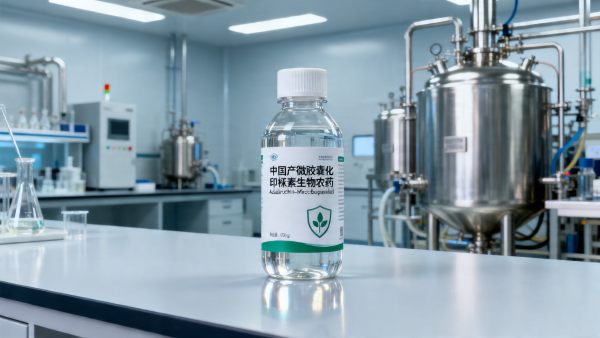
Australia’s Australian Pesticides and Veterinary Medicines Authority (APVMA) granted full registration on 16 April 2026 to a Chinese-developed, plant-derived insecticide — Azadirachtin-Microencapsulated — marking the first time a China-originated bioagrochemical has achieved full APVMA approval. This development signals relevance for exporters of biopesticides, organic input suppliers, regulatory affairs specialists, and agrochemical distributors targeting premium export markets.
Event Overview
On 16 April 2026, the Australian Pesticides and Veterinary Medicines Authority (APVMA) approved the registration of ‘Azadirachtin-Microencapsulated’, a microencapsulated formulation of azadirachtin derived from neem. The product was submitted by a Chinese enterprise and is confirmed as the first China-originated biological agrochemical to receive full APVMA registration. It holds ECOCERT organic certification and is scheduled to enter mainstream Australian agrochemical distribution channels in the second half of 2026.
Industries Affected
Direct Exporters of Agrochemicals: This registration lowers the regulatory entry barrier for Chinese biopesticide exporters seeking access to Australia’s high-compliance, value-sensitive market. Impact includes potential shifts in export portfolio weighting toward registered biological actives and increased scrutiny of dossier quality for future APVMA submissions.
Raw Material Sourcing Enterprises: Suppliers of botanical actives — particularly those involved in neem extract standardization or azadirachtin isolation — may see renewed demand pressure tied to scale-up requirements for APVMA-compliant manufacturing. Impact manifests in tighter traceability expectations and documentation alignment with APVMA’s Good Manufacturing Practice (GMP) references.
Formulation & Manufacturing Firms: Companies engaged in microencapsulation or suspension concentrate (SC) production may face indirect demand signals, as the approved product uses microencapsulated technology to enhance stability and field performance. Impact centers on technical validation needs — especially for residue behavior and release kinetics data required under APVMA guidelines.
Distribution & Channel Partners: Australian importers, distributors, and agronomy service providers handling bioinputs may begin evaluating shelf-ready supply options ahead of the second-half 2026 launch. Impact includes early engagement with compliance documentation (e.g., APVMA Certificate of Registration, label approvals) and alignment with organic retail or integrated pest management (IPM)-focused customer segments.
Regulatory & Compliance Support Providers: Third-party consultancies and testing labs supporting APVMA submissions may observe increased inquiry volume related to botanical actives, particularly around environmental fate studies and toxicological endpoints specific to microencapsulated delivery systems.
Key Considerations for Stakeholders
Monitor official APVMA communications for label conditions and use restrictions
The APVMA registration includes specific label claims, crop group authorizations, and stewardship requirements. Stakeholders should verify these publicly released conditions before commercial planning — as they define permissible use patterns and liability boundaries.
Track implementation timing versus regulatory approval timing
Registration approval (16 April 2026) does not equate to immediate market availability. Distribution readiness, inventory build-up, and retailer onboarding are separate operational phases; current visibility extends only to an anticipated H2 2026 channel entry.
Distinguish between organic certification and regulatory approval
ECOCERT organic status supports market positioning but does not substitute for APVMA registration. Stakeholders must treat each as independent compliance milestones — one governing marketing claims (organic), the other governing legal sale and use (APVMA).
Prepare for upstream documentation requests
Downstream partners — including Australian importers and registrants acting as local sponsors — may request full technical dossiers, GMP evidence, and analytical method validation reports. Early internal alignment on document readiness reduces time-to-market delays.
Editorial Perspective / Industry Observation
This registration is best understood not as a broad opening of the Australian market, but as a precedent-setting milestone for a narrowly defined category: China-originated, non-synthetic, microencapsulated botanical pesticides. From industry perspective, it reflects growing technical capacity in dossier preparation and formulation science among select Chinese agrochemical developers — yet remains an isolated case, not a systemic trend. Observation suggests it functions primarily as a policy signal: APVMA’s willingness to evaluate novel biological actives on scientific merit, provided data packages meet its evidentiary thresholds. However, it does not imply accelerated review timelines or relaxed standards for future submissions.
Current more appropriate interpretation is that this event validates a pathway — not guarantees replication. Continued attention is warranted not for immediate scale-up implications, but for how APVMA applies similar evaluation logic to subsequent botanical or microbial submissions from Asia-based developers.
Conclusion
This APVMA registration represents a targeted, technically grounded advancement for a single product — not a structural shift in Australia’s import policy or a de facto endorsement of broader categories of Chinese agrochemicals. Its primary significance lies in demonstrating that rigorous, chemistry- and biology-aligned regulatory dossiers from non-traditional innovators can succeed under APVMA’s framework. For industry, it is more meaningfully interpreted as a benchmark for regulatory preparedness than as a near-term growth catalyst.
Information Sources
Main source: Official APVMA registration announcement (date: 16 April 2026). No additional background, corporate disclosures, or third-party verification beyond the registration event and associated public statements have been confirmed. Ongoing observation is recommended for APVMA’s published label conditions, distributor announcements, and any follow-up technical summaries issued by the agency.
Related Intelligence
- AgrochemicalsChina-made Azadirachtin Biopesticide Gains APVMA RegistrationChina-made Azadirachtin biopesticide secures APVMA registration — first Chinese-origin biological agrochemical approved in Australia. Discover implications for exporters, formulators & distributors.
- AgrochemicalsEU REACH Adds 12 New SVHCs: Agrochemical Exporters Must Notify by Apr 30, 2026EU REACH adds 12 new SVHCs—including pesticide metabolites & plant growth regulator intermediates. Agrochemical exporters must submit SCIP notifications by Apr 30, 2026. Act now to avoid shipment delays.
- AgrochemicalsEU CBAM Carbon Tariff Fully Enforced from April 1, 2026EU CBAM Carbon Tariff fully enforced from April 1, 2026 — mandatory quarterly carbon reporting for agrochemicals, APIs & chemical exports to the EU. Act now!
The Morning Broadsheet
Daily chemical briefings, market shifts, and peer-reviewed summaries delivered to your terminal.
