
Indonesia Bans Import of Used Grain Silos, Boosting New Equipment Exports
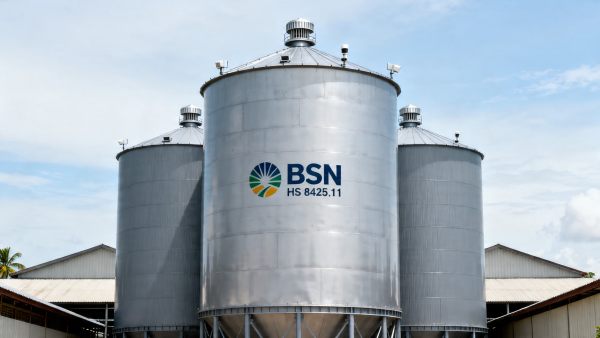
On April 15, 2026, Indonesia’s Ministry of Trade issued Regulation No. 22/2026, prohibiting imports of grain silos and storage equipment (HS code 8425.11) with over five years of service life and mandating BSN certification for new units. This policy directly impacts manufacturers, exporters, and grain-handling enterprises across the global grain storage supply chain — particularly those engaged in trade with Indonesia or supplying to Indonesian agribusiness infrastructure projects.
Event Overview
On April 15, 2026, Indonesia’s Ministry of Trade published Regulation No. 22/2026. The regulation prohibits the import of used grain silos and storage equipment (classified under HS code 8425.11) that have been in service for more than five years. It also requires all newly imported grain silo equipment to comply with Indonesia’s National Standard (BSN) certification. The regulation took effect immediately upon publication. Following its implementation, Chinese manufacturers of grain silos and storage systems reported a 35% year-on-year increase in newly signed export orders during the first half of April 2026, driven primarily by bulk procurement from grain enterprises in Jakarta and Surabaya.
Which Subsectors Are Affected
Direct Exporters & Trading Firms
These entities face immediate shifts in product eligibility and compliance requirements. The ban eliminates an entire category of lower-cost, second-hand equipment previously traded into Indonesia, narrowing the viable product range to only new, BSN-certified units. Impact manifests in revised quotation workflows, extended lead times due to certification steps, and heightened documentation demands for customs clearance.
Manufacturers of Grain Storage Equipment
Producers — especially those exporting from China — are seeing accelerated demand for certified new units. However, this surge is conditional on BSN compliance readiness. Manufacturers without existing BSN certification pathways may experience order delays or lost opportunities, even amid rising demand signals.
Indonesian Grain Handling & Agri-Logistics Operators
Domestic grain enterprises in major logistics hubs (e.g., Jakarta, Surabaya) are now required to source only compliant new equipment. This raises upfront CAPEX and extends procurement cycles, potentially affecting warehouse modernization timelines and regional grain flow capacity planning.
Supply Chain & Certification Service Providers
Firms offering BSN certification support, technical documentation translation, or local regulatory liaison services are likely to see increased engagement from foreign suppliers seeking market access. Demand is concentrated around pre-shipment conformity assessment and post-submission follow-up with BSN.
What Relevant Enterprises or Practitioners Should Focus On
Monitor official BSN implementation guidance
Regulation No. 22/2026 references BSN certification but does not specify procedural details (e.g., test standards, lab accreditation scope, or timeline for application review). Exporters and manufacturers should track updates issued by the National Standardization Agency (BSN) and the Directorate General of Foreign Trade (DGFT), as operational clarity remains pending.
Prioritize verification of HS 8425.11 classification and age documentation
The regulation explicitly targets equipment under HS 8425.11 with >5 years of service life. Companies must ensure precise tariff classification and maintain verifiable records of manufacturing date, commissioning date, or prior usage history — especially for refurbished or re-exported units. Misclassification or incomplete age documentation risks shipment rejection at Indonesian ports.
Distinguish between policy announcement and enforceable execution
While the regulation entered force on April 15, 2026, customs enforcement capacity — including inspection protocols for equipment age verification — may evolve gradually. Early adopters report successful clearances with BSN-certified shipments; however, field-level consistency across Indonesian ports is still being observed. Treat initial orders as operational pilots rather than fully stabilized processes.
Prepare for documentation and lead-time adjustments
BSN certification typically requires technical files, test reports, labeling verification, and local representative appointment. Exporters should allocate additional time (typically 4–8 weeks) for certification processing and update internal sales contracts to reflect revised delivery windows and liability clauses tied to certification status.
Editorial Perspective / Industry Observation
From industry perspective, this regulation is best understood not as an isolated trade barrier, but as an early-stage signal of Indonesia’s broader infrastructure upgrade agenda — one increasingly aligned with domestic quality control and food security objectives. Analysis来看, the 35% order surge reflects pent-up demand meeting tightened eligibility, rather than organic market expansion. Observation来看, the policy’s near-term impact is most visible in procurement behavior among established grain handlers in high-density logistics zones — not yet in wider provincial adoption. Current more relevant interpretation is that it functions as a compliance filter: accelerating market share consolidation among BSN-ready suppliers while raising entry thresholds for smaller or uncertified exporters.
It is neither a broad-based import restriction nor a long-term ban on equipment categories — rather, it is a targeted, standards-based gatekeeping mechanism. Continued attention should focus on whether similar requirements emerge for related categories (e.g., conveyors, dryers, or control systems under adjacent HS codes), and how BSN certification evolves from a one-time approval into an ongoing surveillance framework.
Conclusion
This regulation marks a structural shift in how grain storage infrastructure enters Indonesia — moving from price-driven, used-equipment procurement toward certified, new-unit deployment. For stakeholders, the key implication is not just higher compliance costs, but a recalibration of timing, documentation rigor, and partner selection criteria. It is more accurately interpreted as a medium-term alignment requirement than a short-term disruption — one that rewards preparation over reaction.
Information Sources
Main source: Indonesia Ministry of Trade Regulation No. 22/2026, published April 15, 2026.
Note: BSN certification procedures, enforcement consistency across ports, and potential extension to related equipment categories remain under observation and are not yet confirmed.
Related Intelligence
- Grain Silos & StorageIndonesia Bans Import of Used Grain Silos, Boosting New Equipment ExportsIndonesia bans used grain silos (HS 8425.11) >5 years old—boosting demand for new, BSN-certified equipment exports. Act now to secure compliant orders.
- Grain Silos & StorageVietnam's 5% Broken Rice Export Price Rises $5/Ton Amid Middle East ConflictVietnam's 5% broken rice export price rises $5/ton to $375–380 amid Middle East conflict, impacting global importers. Explore key market shifts and strategic responses for rice trade stability.
- Grain Silos & StorageChina's Spring Planting Progress Stable, Wheat & Rice Price Floors StrengthenedChina's stable spring planting progress and raised wheat & rice price floors signal strengthened grain security. Learn how this impacts global trade, processors, and actionable strategies for industry players.
The Morning Broadsheet
Daily chemical briefings, market shifts, and peer-reviewed summaries delivered to your terminal.
