
SABIC Cuts PP-Homo Price by 12%: Impact on Milling Machinery Export Parts
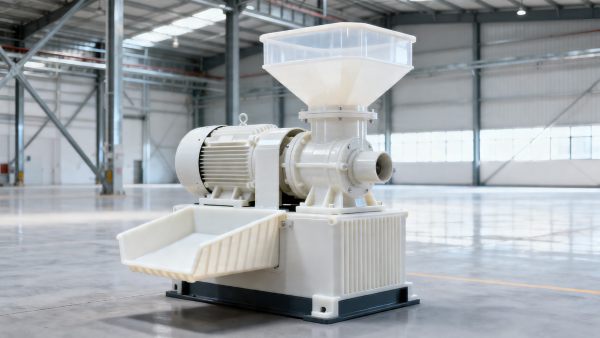
SABIC announced a 12% reduction in the ex-works price of PPH-1010 (PP-Homo) to $1,180/ton on April 17, 2026 — a move directly affecting manufacturers and exporters of commercial feed pellet mills, milling machinery housings, and protective covers. This development is especially relevant for Chinese equipment exporters and their upstream plastic component suppliers, as it signals near-term cost relief and potential delivery acceleration.
Event Overview
On April 17, 2026, Saudi Basic Industries Corporation (SABIC) lowered the official ex-works price of its PP-Homo grade PPH-1010 to $1,180 per metric ton, representing a 12% month-on-month decrease. The company cited two primary factors: increased supply from newly commissioned capacity in the Middle East and soft demand in key Asian markets.
Industries Affected
Feed Pellet & Milling Machinery Exporters: PPH-1010 is widely used in structural components such as machine housings, feed chutes, and safety guards for commercial-scale feed pelletizers and general-purpose milling equipment. Lower resin costs reduce material input expenses for export-oriented OEMs, particularly those supplying to Africa, Southeast Asia, and Latin America.
Plastic Component Manufacturers (OEM Suppliers): Firms producing injection-molded or extruded parts for milling machinery face reduced raw material procurement costs. Since PPH-1010 is a standard-grade homopolymer polypropylene with balanced stiffness and impact resistance, this pricing shift directly affects unit production cost calculations and quotation cycles.
Importers & Distributors of Engineering Plastics: Entities sourcing SABIC resins for resale or toll processing in China may see compressed margins if they hold legacy inventory priced above $1,180/ton — but also gain flexibility to revise downstream pricing or extend lead time buffers.
Logistics & Packaging Service Providers: While indirect, any anticipated Q2 delivery cycle shortening (5–7 days) for finished machinery could affect scheduling of container bookings, customs clearance coordination, and just-in-time packaging logistics — especially for consolidated shipments containing both metal frames and polymer components.
What Enterprises and Practitioners Should Monitor and Do
Track official SABIC regional bulletins for duration and scope of the price adjustment
This is a single-grade, single-region (ex-works Middle East) announcement. Its applicability to CIF China terms, contract renewals, or other SABIC PP grades (e.g., copolymers) remains unconfirmed. Buyers should verify whether the change applies to existing purchase orders or only new contracts effective post-April 17.
Reassess procurement timing for PPH-1010 against current inventory levels and Q2 production plans
Manufacturers holding low stock of PPH-1010 may benefit from delayed purchases to capture lower prices — but must weigh that against potential shipping delays or currency fluctuations. Those with committed Q2 delivery schedules should confirm whether resin price reductions translate into revised component lead times with their plastic part suppliers.
Clarify linkage between resin pricing and final equipment cost structure with supply chain partners
While raw material cost accounts for a portion of total component cost, labor, tooling amortization, and quality certification remain fixed. Exporters should request updated cost breakdowns from plastic part vendors to determine actual margin improvement — rather than assuming full pass-through of the 12% reduction.
Monitor downstream buyer expectations on delivery timelines
The reported 5–7 day reduction in Q2 delivery cycles assumes synchronized responsiveness across procurement, molding, assembly, and export documentation. Companies should align internal planning systems with suppliers’ revised timelines — and avoid overpromising unless confirmed in writing.
Editorial Observation / Industry Insight
This price cut is better understood as a short-term market signal than an established trend. Analysis来看, it reflects localized supply-demand rebalancing rather than a structural shift in global PP fundamentals. From industry perspective, the timing coincides with seasonal lulls in agricultural equipment demand across several emerging markets — suggesting the move is tactical, not strategic. Current more relevant to watch is whether other major PP producers (e.g., LyondellBasell, Borouge, or domestic Chinese producers) follow with similar adjustments in May — which would indicate broader regional pricing pressure.
It is not yet evidence of sustained deflation in engineering plastics; rather, it highlights how regional capacity additions can temporarily decouple pricing from traditional feedstock (naphtha/propane) cost drivers.
Conclusion
This SABIC price revision offers measurable, near-term relief for specific segments of the milling machinery supply chain — particularly exporters relying on standardized PP-Homo components. However, its impact remains narrow in scope (one grade, one region, one timeframe) and contingent on execution across multiple tiers of procurement and manufacturing. It is best interpreted as a tactical cost-optimization opportunity, not a broad-based industry inflection point.
Source Attribution
Main source: Official SABIC price bulletin dated April 17, 2026 (PPH-1010 ex-works Middle East).
Points requiring ongoing observation: Extension of this pricing to other grades or regions; confirmation of actual delivery cycle improvements in Q2; responses from competing PP suppliers.
Related Intelligence
- Milling MachinerySABIC Cuts PP-Homo Price by 12%: Impact on Milling Machinery Export PartsSABIC cuts PP-Homo price by 12% — key impact on milling machinery export parts, feed pellet mill housings & protective covers. Cost relief for Chinese OEMs & suppliers.
- Milling MachineryWhy After Sales Terms Matter in Rice Milling Machines WholesaleRice milling machines wholesale success depends on after-sales terms. Compare support, warranty, and spares for parboiled rice mill plant and commercial flour mill machinery before you buy.
- Milling MachineryRice Milling Machines Wholesale: What Changes at Larger Order VolumesRice milling machines wholesale guide: learn how larger orders affect pricing, QA, lead times, and support across parboiled rice mill plant, commercial flour mill machinery, and more.
The Morning Broadsheet
Daily chemical briefings, market shifts, and peer-reviewed summaries delivered to your terminal.
