
Rice Milling Machines Wholesale: What Changes at Larger Order Volumes
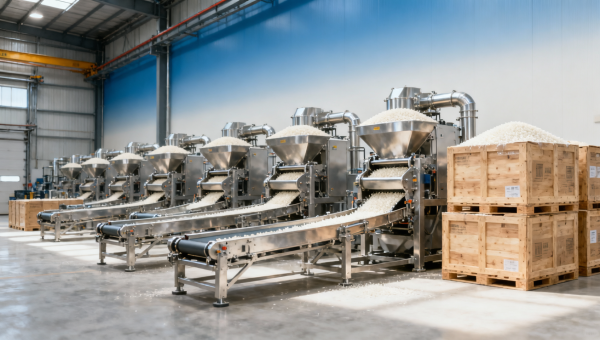
For buyers evaluating rice milling machines wholesale, order volume changes more than price. It can affect equipment configuration, lead times, quality assurance, and after-sales support across related sectors, from parboiled rice mill plant projects to wheat flour milling plant and commercial flour mill machinery procurement. This guide explains what larger orders mean for technical review, budgeting, and supply chain decisions.
In B2B procurement, a 1-line purchase and a 5-line purchase are rarely managed the same way. Once order quantities rise, buyers must review not only unit cost but also power matching, spare-parts policy, inspection methods, container loading plans, operator training, and post-installation service. That is especially true when rice milling machines wholesale orders are tied to multi-site expansion, dealer inventory planning, or integrated grain processing projects.
For technical evaluators, larger orders raise questions about consistency, throughput, and installation sequencing. For finance teams, they change payment structure, inventory exposure, and depreciation planning. For project managers and distributors, they alter delivery risk, commissioning schedules, and local support requirements. Understanding these changes early helps reduce hidden costs and improves procurement outcomes.
How Larger Order Volumes Change the Buying Framework
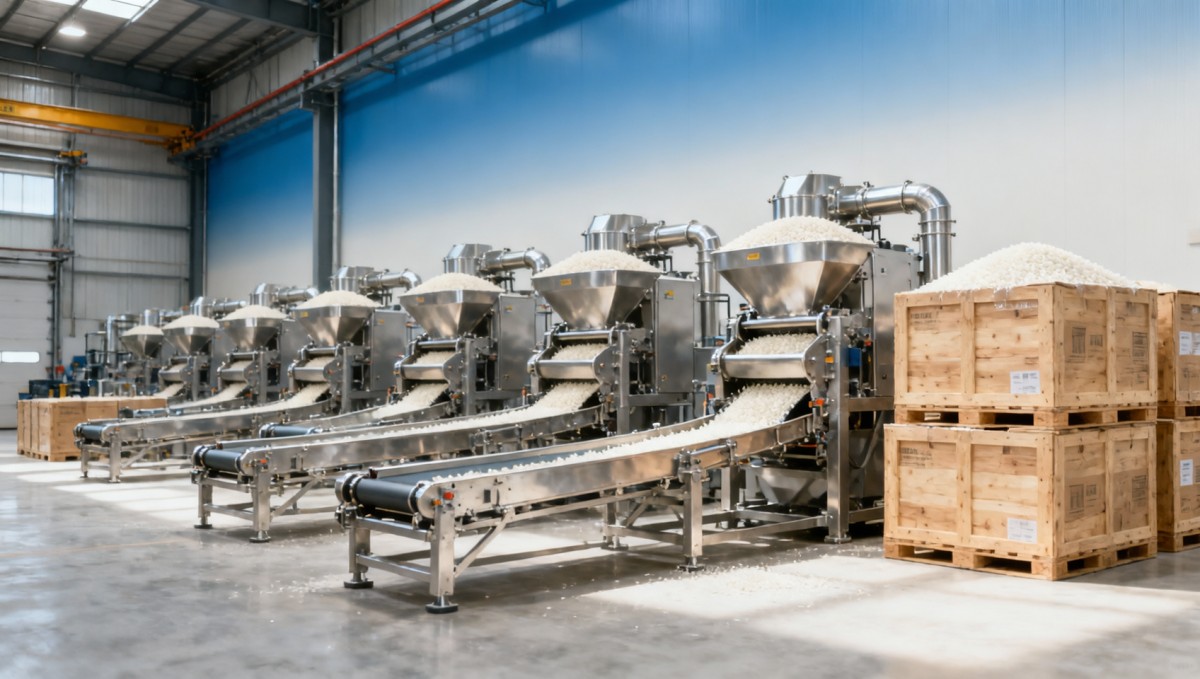
At small volumes, buyers often compare rice milling machines wholesale offers mainly by price per unit, basic capacity, and visible accessories. At larger volumes, that approach becomes incomplete. A procurement package of 10, 20, or 50 machines can involve mixed configurations, staged shipment, dedicated testing, and different warranty terms. The buying framework shifts from product selection to supply-chain planning.
Volume also affects configuration strategy. A buyer ordering 2 units may accept a standard setup such as cleaner, husker, separator, whitener, grader, and basic control panel. A buyer ordering 12 units for regional distribution may need 3 different voltage standards, 2 color sorter options, and spare wear parts for the first 6 to 12 months. This creates a more technical procurement scope and a longer approval path.
Lead time is another major change. A standard machine might ship in 15 to 25 days if it is already in production. A larger order may need 35 to 60 days because manufacturers must allocate fabrication slots, motors, electrical cabinets, and final inspection windows. If the order includes parboiled rice mill plant modules or linked flour milling equipment, lead time can extend further due to layout coordination and utility matching.
What typically changes after quantity thresholds
The exact threshold depends on supplier size, but in many industrial equipment transactions the commercial process changes around 5 units, 10 units, or one full-container equivalent. Above those points, suppliers often move from simple quotation to structured proposal, including technical drawings, inspection plans, and phased delivery schedules.
- At 1 to 4 units: standard quotation, limited customization, shorter review cycle.
- At 5 to 10 units: configuration bundling, more formal documentation, stronger negotiation on spare parts.
- Above 10 units or plant packages: project-style procurement, FAT planning, installation sequencing, and dedicated account management.
The table below shows how evaluation priorities usually change as order volume increases.
The practical conclusion is clear: rice milling machines wholesale procurement becomes less transactional and more operational as quantities rise. Buyers that treat a larger order as a scaled-up small order often overlook integration, installation, and long-term support costs.
Technical Configuration and Performance Consistency at Scale
When a buyer increases order volume, technical consistency matters as much as nominal capacity. Two rice milling machines rated at the same throughput can still differ in motor brand, bearing specification, screen material, control layout, and vibration behavior. In small orders that variation may be manageable. In larger deployments, it can create training problems, uneven product quality, and spare-parts complexity.
For example, a buyer sourcing machines in the 1 to 2 tons/hour range for several regional sites should confirm whether the supplier is standardizing critical assemblies across the batch. If 8 machines use one motor frame and 4 use another, maintenance planning becomes less efficient. The same issue applies to rubber rollers, whitening chambers, graders, and dust collection interfaces.
Performance consistency also affects downstream operations. If one site is feeding a packaging line at 500 to 700 kg/hour and another is supplying bulk storage, the milling tolerance, broken rice rate, and impurity control must be predictable. Buyers should request batch-level technical confirmation rather than relying only on brochure specifications.
Key technical points to verify in larger orders
- Rated input and output capacity under defined paddy moisture conditions, often around 13% to 15%.
- Power supply compatibility such as 380V/50Hz, 400V/50Hz, or 460V/60Hz.
- Material grade for contact parts, sieves, ducts, and polishing chambers.
- Expected broken rice range and impurity removal performance under standard feed quality.
- Wear-part replacement interval, often every 3 to 9 months depending on usage intensity.
Why mixed-use projects need broader review
Many buyers compare rice milling machines wholesale opportunities alongside wheat flour milling plant or commercial flour mill machinery procurement. The cross-sector lesson is the same: as order volume increases, standardization of controls, utilities, and maintenance interfaces becomes more valuable than chasing the lowest single-machine cost. Shared operator training and simpler spare-parts inventory can improve total operating efficiency over 12 to 24 months.
The following table helps technical teams compare the most important configuration variables before approving a larger equipment package.
For quality and safety teams, this is where larger orders either become easier to manage or harder to control. Standardized components, clear tolerances, and repeatable documentation are usually worth more than marginal discounts that create long-term variability.
Commercial Terms, Budget Control, and Delivery Planning
Budget planning for rice milling machines wholesale orders should move beyond simple multiplication of unit price. Larger orders often introduce tooling allocation, export packing upgrades, additional testing, optional installation support, and recommended spare-part kits. A buyer may achieve a 5% to 12% unit discount while still increasing total landed cost if logistics and commissioning are not modeled correctly.
Payment structure also changes. Smaller purchases may follow a straightforward 30/70 pattern. Larger industrial orders more often use staged milestones, such as 30% deposit, 40% after production completion, and 30% after inspection or before shipment. This matters to finance approvers because cash flow exposure grows with every delayed production lot or shipping document issue.
Container utilization is another overlooked factor. One buyer may assume that ordering 8 machines guarantees lower freight cost per unit, but machine footprint, dust collectors, elevators, and steel frames can reduce packing density. In many cases, the real savings appear only when shipment planning is aligned with SKD or modular packing methods and delivery is grouped into 1, 2, or 3 coordinated lots.
Four budget items that expand with volume
- Pre-shipment inspection and documentation costs, especially if third-party verification is requested.
- On-site installation and training support for 3 to 7 days per site.
- Initial spare-part inventory sized for 6 to 12 months of operation.
- Warehousing or phased delivery cost when deployment is staggered by region or project stage.
Buyers should also model schedule risk. A 2-week delay on one machine may be manageable. A 2-week delay across 15 machines can disrupt dealer commitments, site readiness plans, and working capital forecasts. Commercial negotiations should therefore include realistic production windows, document turnaround time, and rules for partial shipment.
Recommended delivery checkpoints
Project teams usually benefit from a 5-step checkpoint structure: specification freeze, manufacturing confirmation, pre-shipment inspection, loading verification, and commissioning readiness review. Each step should have named owners, expected dates, and acceptance documents. This is especially important when rice milling equipment is procured together with auxiliary conveyors, dryers, or polishing lines.
A disciplined commercial process protects both buyer and supplier. It limits rework, reduces disputes over missing accessories, and gives finance teams a clearer view of when capital expenditure converts into operational capacity.
Quality Assurance, Inspection, and Compliance Expectations
Quality assurance becomes more formal as order volumes increase. For a single machine, buyers may rely on factory photos, a basic run test, and packing confirmation. For a multi-unit order, that is usually insufficient. Procurement teams should define what must be checked per unit, per batch, and per shipment. This creates traceability and reduces arguments after goods arrive on site.
In grain processing equipment, QA is not only about whether the machine runs. It also covers dimensional consistency, weld quality, electrical safety labeling, fastener security, surface finishing, and accessory completeness. For example, if 20 dust ducts are missing clamps or if wiring diagrams differ between cabinets, installation delays can quickly erase any wholesale pricing advantage.
Safety and sanitation teams should review contact surfaces, dust control design, guarding, and access points for cleaning. While rice milling machines are not governed by one universal global standard in every market, buyers still need practical conformity to local electrical, mechanical, and workplace safety requirements. For export projects, even differences in cable markings or emergency stop placement can trigger site-level corrections.
Inspection points that matter most in wholesale orders
- Run test duration, commonly 30 to 60 minutes for core assemblies before packing.
- Verification of accessories against packing list, especially belts, rollers, tools, and manuals.
- Electrical cabinet checks for labeling, terminal security, and protection devices.
- Paint, weld, and sheet-metal finish review for corrosion resistance and installation quality.
- Spare-part segregation and marking to prevent mixing across machine sets.
The table below outlines a practical QA structure for buyers managing larger rice milling machines wholesale programs.
A stronger QA plan is not bureaucracy for its own sake. It protects uptime, accelerates installation, and gives distributors and project owners greater confidence when multiple machines must perform consistently across different locations.
After-Sales Support, Spare Parts, and Multi-Site Implementation
After-sales support becomes a strategic factor once buyers move into larger rice milling machines wholesale orders. A single machine can often be serviced reactively. Ten or more machines across several provinces or countries require planned support. Buyers should ask whether the supplier can provide remote troubleshooting within 24 to 48 hours, spare-part dispatch within 3 to 7 days, and operator training packages for each site.
This matters even more for distributors and engineering contractors. If a dealer stocks multiple units for resale, inconsistent after-sales response affects not only machine uptime but also brand reputation and repeat business. The right wholesale supplier should support manuals, exploded part lists, commissioning guidance, and clearly defined warranty boundaries for motors, wear parts, and electrical components.
Larger orders also justify a more deliberate spare-parts strategy. Instead of ordering ad hoc replacements, many buyers prepare a first-year package covering high-wear and high-risk items. Typical examples include belts, rollers, bearings, screens, seals, sensors, and selected electrical protection parts. This approach can reduce downtime during the first 6 to 12 months, especially in regions with slower import clearance.
Practical service model for larger deployments
For a 3-site or 5-site rollout, buyers should align service with implementation phases. One practical model is to separate support into three layers: pre-installation review, startup support, and stabilization support. Each layer should have clear expected response times, documentation, and escalation paths. This is more effective than relying on open-ended promises of “technical assistance.”
Common implementation mistakes
- Ordering multiple machines without matching local power conditions and site elevations.
- Treating spare parts as optional even when machines will run 8 to 16 hours per day.
- Scheduling operator training after startup instead of before first production runs.
- Ignoring common consumables across rice, parboiled rice, and flour processing equipment in mixed plants.
For project managers, the best result usually comes from combining a clear support matrix with realistic operating assumptions. If machines are expected to run two shifts, if dust levels are high, or if ambient temperature routinely exceeds 35°C, maintenance intervals and parts stocking should be adjusted in advance rather than after the first breakdown.
In short, the value of rice milling machines wholesale procurement is realized after delivery, not at quotation stage alone. Service readiness, documentation quality, and spare-part planning are what turn a large purchase into sustainable production capacity.
Frequently Asked Questions for Wholesale Rice Milling Orders
The questions below reflect common concerns from technical evaluators, finance approvers, distributors, and plant operators comparing rice milling machines wholesale offers.
How many units usually justify a project-style procurement process?
In many cases, 5 units is the first point where configuration management and delivery planning become more formal. At 10 units or more, buyers should usually request a detailed specification matrix, inspection plan, and spare-parts proposal. If the purchase is part of a full plant, even 3 units can justify project-level coordination.
What lead time should buyers expect for larger wholesale orders?
For standard machines, a typical range is 15 to 25 days for small orders and 35 to 60 days for larger batches. If the order includes customized voltage, upgraded sorting sections, or integrated line equipment, buyers should allow additional time for engineering review, procurement of components, and final testing.
Which documents are most important before shipment?
At minimum, buyers should confirm the final technical sheet, packing list, run-test or FAT record, spare-parts list, electrical diagram, and operating manual. For multi-site projects, labeling and machine numbering should be consistent so installation teams can identify each set without confusion.
Should distributors buy a standard spare-parts kit with each batch?
Yes, in most cases. A first-year spare-parts kit is usually more efficient than urgent replacement purchasing. The exact quantity depends on daily running hours, local service coverage, and parts lead time, but a 6 to 12 month planning horizon is a practical starting point.
Large rice milling machines wholesale orders create opportunities for better pricing, but the real advantage comes from disciplined technical review, realistic scheduling, and stronger service planning. Buyers that evaluate configuration consistency, QA structure, commercial milestones, and first-year support typically make better long-term decisions than those focused on unit price alone.
Whether you are sourcing for a dealer network, a parboiled rice mill plant, or a broader grain processing expansion, a structured procurement approach reduces risk and improves operating performance. To assess configurations, delivery options, and support requirements in more detail, contact us to discuss your project, request a tailored equipment plan, or learn more about wholesale grain processing solutions.
Related Intelligence
- Milling MachineryWhy After Sales Terms Matter in Rice Milling Machines WholesaleRice milling machines wholesale success depends on after-sales terms. Compare support, warranty, and spares for parboiled rice mill plant and commercial flour mill machinery before you buy.
- Milling MachineryRice Milling Machines Wholesale: What Changes at Larger Order VolumesRice milling machines wholesale guide: learn how larger orders affect pricing, QA, lead times, and support across parboiled rice mill plant, commercial flour mill machinery, and more.
- Milling MachineryHow to Spot Steam and Drying Bottlenecks in a Parboiled Rice Mill PlantParboiled rice mill plant guide: spot steam and drying bottlenecks, improve throughput, and compare rice milling machines wholesale for better quality and lower operating cost.
The Morning Broadsheet
Daily chemical briefings, market shifts, and peer-reviewed summaries delivered to your terminal.
