
How to Spot Steam and Drying Bottlenecks in a Parboiled Rice Mill Plant
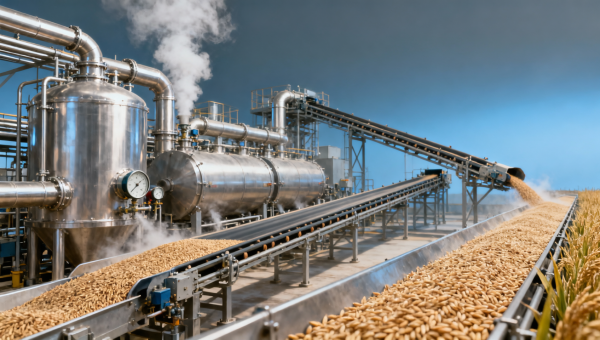
In a parboiled rice mill plant, steam imbalance and poor drying control can quietly reduce throughput, raise energy costs, and damage grain quality. For operators, engineers, and buyers comparing rice milling machines wholesale, this guide explains how to identify hidden bottlenecks, assess system performance, and improve process stability with practical insight relevant to modern feed and grain processing operations.
In commercial parboiling, the bottleneck is rarely a single failed machine. More often, it is a chain of small constraints: unstable steam pressure, poor condensate drainage, overloaded dryers, uneven grain bed depth, delayed moisture feedback, or mismatched capacities between soaking, steaming, drying, and milling sections. When these constraints persist for 2 to 8 weeks, plants often notice slower batch turnover, higher broken rice rates, and inconsistent head rice recovery.
For technical evaluators and project managers, the priority is not only to locate the restriction point, but to quantify its operational and financial effect. For procurement teams and decision-makers, the bigger question is whether the plant needs a process adjustment, a controls upgrade, or a partial equipment retrofit. The answer depends on data discipline, line configuration, and how steam and drying performance interact across the plant.
Where Steam and Drying Bottlenecks Usually Begin
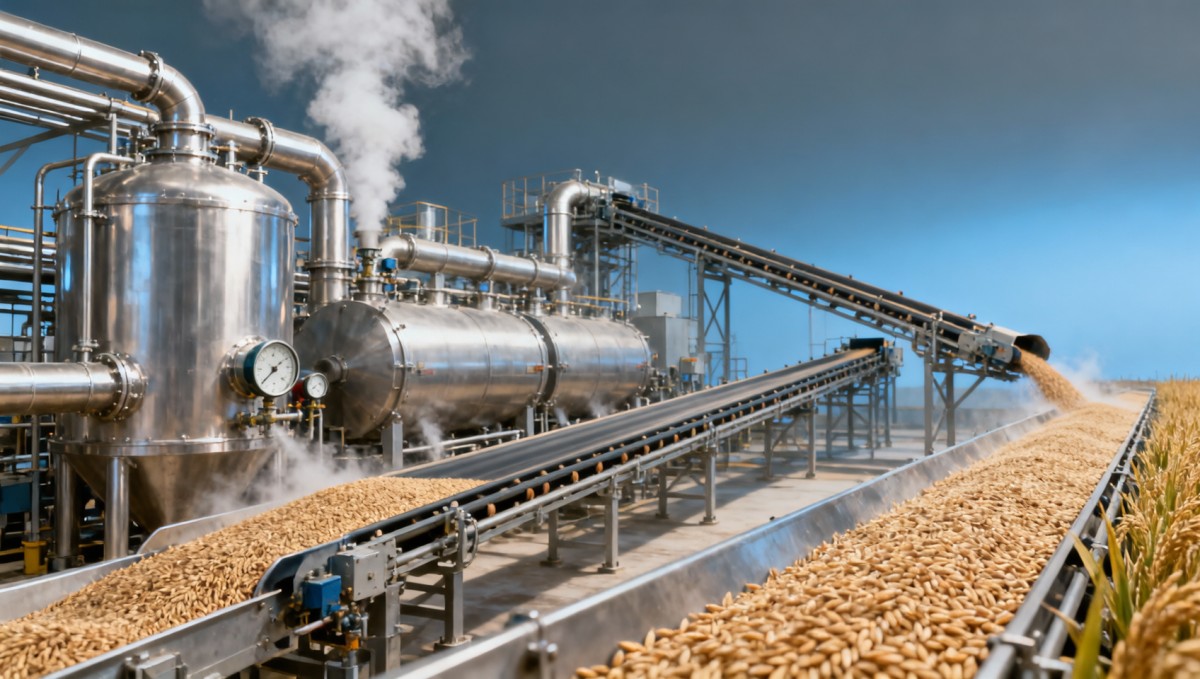
A parboiled rice mill plant normally moves paddy through soaking, steaming, drying, tempering, and final milling. A disruption in one step can reduce the effective capacity of the whole line by 10% to 25%, even when individual machines appear mechanically sound. Steam and drying bottlenecks are especially difficult to spot because they often develop gradually rather than as a sudden shutdown event.
Steam-side issues commonly start with pressure fluctuation, insufficient boiler output during peak demand, long steam pipe runs with heat loss, or poor trap maintenance. In many plants, the steaming vessel receives steam at the required pressure for only part of the batch cycle. If pressure drops from a target band such as 4-6 bar to inconsistent lower levels, the grain may not gelatinize uniformly, which later increases drying instability and breakage during whitening.
Drying bottlenecks often start when the dryer is treated as a standalone machine rather than part of a moisture management system. If incoming paddy enters the dryer at a wider moisture spread, for example 30% to 36% instead of a controlled 2-3 point band, drying becomes uneven. Some kernels are over-dried, some remain too wet, and the following tempering stage cannot fully correct the imbalance.
Another frequent source is capacity mismatch. A plant may have a soaking and steaming section designed for 4 tons per hour, but a dryer effectively stable only at 3.2 tons per hour under high-humidity weather. Operators then compensate by increasing temperature, shortening tempering time, or recirculating product too aggressively. Those workarounds may protect daily output for a short period, but they usually raise fuel use and hurt grain quality.
Typical Root Causes Across the Line
- Boiler oversubscription during simultaneous steaming and auxiliary heating demand.
- Condensate backup that reduces effective heat transfer inside steam chambers.
- Dryer airflow imbalance caused by clogged ducts, fan wear, or poor plenum sealing.
- Irregular feed rates creating variable grain bed thickness above the design range.
- Weak moisture measurement routines, such as checks every 2-3 hours instead of every batch or every pass.
The practical lesson is simple: if throughput, energy cost, and product consistency all worsen together, the plant should investigate steam generation, steam delivery, and dryer loading as one connected system rather than as isolated assets.
How to Diagnose the Constraint Before It Becomes a Quality Loss
The fastest way to diagnose a bottleneck is to compare actual cycle time with designed cycle time at each process step. In many rice milling machines wholesale comparisons, buyers focus on nominal capacity, but line performance depends on real cycle completion under local conditions. If soaking takes 6-8 hours, steaming 20-40 minutes, and drying 3-5 passes, any repeated queue before one stage is a strong indicator of hidden restriction.
Start with four measurements collected over at least 5 to 7 consecutive production days: steam pressure at vessel inlet, condensate removal condition, inlet and outlet grain moisture, and dryer residence time. These values reveal whether the issue is thermal supply, heat transfer, moisture variability, or handling delay. A single reading is not enough. Trends matter more than isolated points.
It is also useful to compare daytime and nighttime performance. Many plants notice that dryer productivity falls by 8% to 15% in periods of high ambient humidity, while steam consumption rises because wetter grain requires longer stabilization. If operators are not logging ambient conditions, they may blame the wrong machine and approve unnecessary replacement.
The table below shows a practical field checklist that operations teams, QC managers, and engineering supervisors can use during a bottleneck assessment.
When these checks are logged together, the cause-and-effect chain becomes easier to see. For example, unstable steam may explain poor gelatinization, which then leads to variable moisture release in the dryer, which finally appears as milling breakage. Without this sequence view, plants often treat the symptom in the milling room rather than the origin in the thermal section.
A 5-Step Diagnostic Routine
- Record actual throughput by hour and by batch for at least 1 week.
- Measure steam pressure and temperature at source and point of use.
- Check dryer inlet moisture, outlet moisture, and moisture spread.
- Inspect airflow distribution, fan load, and air leakage points.
- Match findings against product quality indicators such as head rice yield and broken percentage.
This routine helps technical and commercial stakeholders speak from the same dataset. That is especially important when deciding between process tuning and capital expenditure.
Operational Signals That Your Drying Section Is Limiting the Plant
Drying limitations do not always show up as visible downtime. In many plants, the dryer continues running, but the line loses value through lower consistency. One of the clearest indicators is repeated re-drying. If more than 10% to 15% of material requires additional passes under normal paddy conditions, the dryer or its control logic may be undersized, overloaded, or badly balanced.
Another warning sign is excessive dependence on operator judgment. Experienced operators are valuable, but if dryer settings change every shift without reference to moisture data, the process is vulnerable. A stable parboiled rice mill plant should be able to hold output within a predictable operating window, not rely on constant manual rescue. Variability often rises after maintenance delays, fan blade wear, or sensor drift beyond acceptable tolerance.
Look closely at grain appearance between passes. Surface fissures, color unevenness, and local over-drying are not cosmetic issues. They usually indicate temperature imbalance, hot spots, or residence time mismatch. In practical terms, a moisture removal target of 1.5% to 2.5% per pass is often safer than trying to force a large moisture drop in one step, especially when handling mixed paddy lots.
For plant managers comparing machine upgrades, the dryer should be evaluated not only by rated tons per hour, but also by airflow control, residence time adjustability, sensor placement, and ease of cleaning. These factors affect whether the machine can sustain quality over a 12-hour or 24-hour production schedule.
Common Dryer Performance Symptoms
- Outlet moisture variation remains high even after tempering.
- Fans draw more power while air delivery feels weaker, suggesting blockage or leakage.
- Kernel cracking rises after high-temperature runs meant to recover lost capacity.
- Production planning adds buffer time because dryer completion is unreliable.
What Buyers Should Ask During Technical Evaluation
When evaluating rice milling machines wholesale or assessing a retrofit proposal, ask the supplier for performance data under variable moisture conditions, not just best-case output. A credible offer should explain expected operating range, recommended batch control method, maintenance access points, and how the system behaves in humid weather or with mixed grain quality.
It is also reasonable to ask how long calibration and wear inspections take. If a dryer requires 6 to 8 hours of stoppage for routine checks that should occur every month, operating cost may be higher than the purchase price suggests. Maintenance-friendly design can materially affect total cost of ownership over 3 to 5 years.
Steam System Assessment for Engineers, Procurement Teams, and Investors
In a parboiled rice mill plant, steam quality has a direct influence on starch transformation, drying behavior, and final milling recovery. Yet many investment reviews still treat the boiler as a utility block rather than a production-critical asset. That approach misses the fact that a steam shortfall of even 10% during peak load can disrupt the full process chain.
A sound steam assessment should cover boiler sizing margin, distribution losses, insulation condition, trap maintenance frequency, and condensate return efficiency. If the line has expanded over time, steam headers may no longer reflect the real load profile. A system originally designed for 2.5 tons per hour of paddy may struggle after upgrades push target throughput toward 4 tons per hour without a corresponding utility review.
Commercial teams should also connect steam performance to financial outcomes. Higher fuel use, longer batch cycles, and lower product uniformity increase cost per ton. In many operating models, a small efficiency gain in steam delivery can be more economical than buying a larger dryer first. That is why cross-functional review matters: engineering sees pressure loss, finance sees energy inflation, and QC sees product inconsistency, but all three may stem from the same steam issue.
The following comparison table helps decision-makers prioritize where to investigate first when output losses appear between steaming and drying.
The key conclusion is that not every bottleneck requires immediate capital replacement. In many cases, plants recover measurable output through steam balancing, maintenance discipline, and tighter process controls. However, if demand projections, product mix, or utility load have changed materially, selective retrofit can be the more defensible investment.
Three Questions Before Approving Capex
- Is the bottleneck persistent across seasons, shifts, and paddy grades?
- Can instrumentation and maintenance recover at least 5% to 10% throughput first?
- Will the proposed upgrade improve both quality stability and energy performance?
Implementation Priorities, Common Mistakes, and Practical Next Steps
Once the bottleneck is identified, the most effective improvement plan usually combines process discipline with targeted technical action. Plants that jump straight to replacing equipment may solve only part of the problem. A better sequence is to stabilize measurement, correct obvious utility losses, optimize operating windows, and then evaluate whether new hardware is still necessary.
A common mistake is to chase maximum hourly throughput without protecting moisture uniformity. In parboiled rice processing, forcing the line too hard can create hidden losses later in milling. Saving 20 minutes in drying is not beneficial if the broken rate rises enough to reduce saleable value. The right target is stable throughput with controlled quality, not the highest short-term speed.
Another mistake is separating procurement from operations. Buyers comparing rice milling machines wholesale should collect input from operators, maintenance leads, QC teams, and finance reviewers before final selection. A lower purchase price can become costly if spare access is poor, controls are inflexible, or service support is slow during commissioning. In industrial grain processing, installation readiness and post-startup tuning are often as important as hardware specifications.
For most facilities, a 30-day improvement plan is a practical starting point. Week 1 can focus on baseline data and inspection. Week 2 can address traps, leaks, airflow, and calibration. Week 3 can optimize batch settings and SOPs. Week 4 can compare results against throughput, moisture spread, energy use, and finished rice quality. This staged approach gives both technical and commercial teams a defensible basis for next decisions.
Priority Action List
- Standardize moisture sampling frequency and sample location before changing machine settings.
- Inspect steam traps, insulation, and condensate drainage across the full distribution path.
- Verify dryer feed consistency, airflow balance, and residence time by actual production load.
- Document quality outcomes, especially broken percentage and head rice recovery, after each adjustment.
- Use upgrade proposals only after operational corrections have been measured and recorded.
FAQ: How long does a bottleneck review usually take?
A basic review can often be completed in 5 to 10 production days if the plant already records pressure, moisture, and output data. If instrumentation is weak, allow 2 to 4 weeks to build a reliable baseline and confirm whether the issue is seasonal, operational, or structural.
FAQ: What should a distributor or investor look for first?
Focus on the relationship between nominal capacity and sustained capacity. Also review utility readiness, maintenance burden, process control level, and expected spare support. A line that is rated high on paper but unstable in real production creates more commercial risk than a slightly smaller but well-balanced system.
Spotting steam and drying bottlenecks in a parboiled rice mill plant requires more than checking whether the boiler runs or the dryer turns. The real task is to trace how pressure stability, moisture control, airflow, and cycle time affect throughput, energy use, and grain quality together. For operators, engineers, procurement teams, and investors, that integrated view supports better technical choices and more reliable capital decisions.
If your facility is evaluating process upgrades, comparing rice milling machines wholesale, or preparing a new feed and grain processing investment, a structured bottleneck review can reveal where the highest-value improvements truly sit. Contact us to discuss a tailored assessment, request technical comparison support, or explore practical solutions for more stable parboiling and drying performance.
Related Intelligence
- Milling MachineryWhy After Sales Terms Matter in Rice Milling Machines WholesaleRice milling machines wholesale success depends on after-sales terms. Compare support, warranty, and spares for parboiled rice mill plant and commercial flour mill machinery before you buy.
- Milling MachineryRice Milling Machines Wholesale: What Changes at Larger Order VolumesRice milling machines wholesale guide: learn how larger orders affect pricing, QA, lead times, and support across parboiled rice mill plant, commercial flour mill machinery, and more.
- Milling MachineryHow to Spot Steam and Drying Bottlenecks in a Parboiled Rice Mill PlantParboiled rice mill plant guide: spot steam and drying bottlenecks, improve throughput, and compare rice milling machines wholesale for better quality and lower operating cost.
The Morning Broadsheet
Daily chemical briefings, market shifts, and peer-reviewed summaries delivered to your terminal.
