
CBP Launches Agrochemicals Origin Verification Campaign
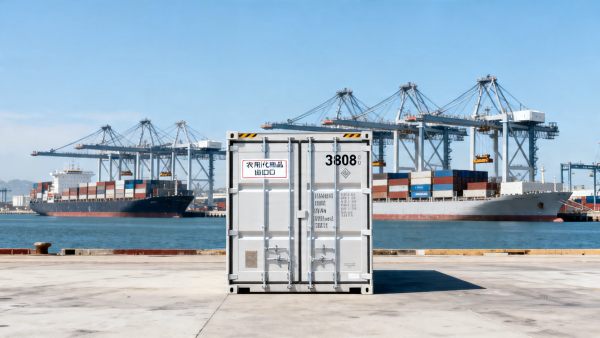
U.S. Customs and Border Protection (CBP) initiated an enhanced origin verification campaign targeting agrochemicals on April 17, 2026 — with heightened scrutiny now applied at the ports of Los Angeles, New York, and Savannah. This action directly affects exporters, importers, and supply chain stakeholders handling products under HS code 3808, particularly those declaring China as country of origin. The campaign signals a material shift in enforcement focus toward traceability, documentation integrity, and synthetic pathway transparency.
Event Overview
Effective April 17, 2026, U.S. Customs and Border Protection (CBP) launched an origin verification initiative for agrochemicals classified under HS code 3808. The campaign is active at three major U.S. entry points: Los Angeles, New York, and Savannah. CBP is conducting intensified examinations — raising the average inspection rate to 35% — to verify whether declared country of origin matches actual manufacturing location, with specific attention to cases where products undergo only minimal repackaging in third countries before being labeled ‘MADE IN CHINA’. Documentation review includes formulation registrations, supplier invoices for key intermediates, and synthetic route schematics.
Industries Affected by Segment
Direct Trading Enterprises
Companies that export agrochemicals under HS 3808 — especially those listing China as origin — face elevated customs clearance risk. Inspection delays, document requests, and potential rejections may increase operational lead times and compliance costs. The 35% examination rate implies significantly higher probability of intervention per shipment compared to baseline CBP practices.
Raw Material Sourcing Firms
Firms procuring intermediates or active ingredients from multiple jurisdictions must ensure invoice trails align precisely with declared origin claims. Discrepancies between supplier country, synthesis location, and final packaging site may trigger CBP inquiries. Invoices lacking clear chain-of-custody language or dated mismatched with production timelines are high-risk.
Contract Manufacturing & Formulation Facilities
Facilities engaged in toll manufacturing, blending, or repackaging — particularly those operating across borders — are now subject to greater evidentiary expectations. CBP’s request for synthetic pathway diagrams means facilities must retain and be prepared to submit technical documentation demonstrating where chemical transformation (not just physical assembly) occurred.
Distribution & Logistics Providers
Third-party logistics providers and customs brokers handling HS 3808 shipments must verify completeness and consistency of origin-related documentation prior to filing. Incomplete or inconsistent data across commercial invoices, packing lists, and certificates of origin may result in hold-ups at port — even if the consignee is not the manufacturer.
What Enterprises Should Monitor and Do Now
Track official CBP guidance and port-specific implementation notes
While the campaign began April 17, 2026, CBP has not yet published formal directives or FAQs. Stakeholders should monitor CBP’s Trade Facilitation and Trade Enforcement (TFTE) portal and port bulletin boards for updates on acceptable evidence formats, response windows for document requests, and any expansion beyond the initial three ports.
Review HS 3808 declarations against full supply chain maps
Enterprises should cross-check every HS 3808 shipment’s declared origin against actual synthesis sites, intermediate sourcing locations, and final packaging addresses. Any instance where final labeling differs from the site of chemical synthesis or formulation warrants immediate documentation alignment — especially if third-country repackaging is involved.
Distinguish between policy signaling and operational enforcement
The 35% inspection rate reflects current field-level practice at selected ports, not a statutory requirement. Analysis来看, this rate may evolve based on early findings — meaning it could rise further or narrow to specific subcategories (e.g., certain pesticide classes or solvent-based formulations). It should not yet be assumed as a permanent baseline.
Prepare origin documentation packages in advance
For all active HS 3808 SKUs, compile standardized dossiers including: (1) signed formulation registration records; (2) itemized purchase invoices for ≥90% of listed intermediates, showing supplier name, address, and date; (3) simplified synthetic flowcharts indicating reaction steps and primary manufacturing site(s). These should be accessible within 48 hours of CBP request.
Editorial Observation / Industry Perspective
From industry angle, this initiative is best understood as a targeted enforcement signal — not a broad regulatory revision. It reflects CBP’s growing capacity to cross-reference trade data with chemical manufacturing intelligence, particularly around origin misrepresentation risks in complex global supply chains. Observation来看, the emphasis on synthetic pathway documentation suggests CBP is moving beyond label checks toward technical due diligence. Current more appropriate interpretation is that this is a pilot-phase escalation — one likely intended to generate deterrence and refine future targeting algorithms, rather than impose immediate systemic change across all agrochemical imports.
Conclusion
This CBP action underscores a tightening of origin accountability specifically for agrochemicals entering the U.S. market. It does not introduce new tariff rules or licensing requirements, but raises the evidentiary bar for origin claims under HS 3808. For stakeholders, the most rational stance is to treat it as a focused, evidence-driven compliance checkpoint — one requiring precise documentation alignment, not wholesale supply chain restructuring — at least until further official guidance or expansion is confirmed.
Source Attribution
Main source: U.S. Customs and Border Protection (CBP) public notice issued April 17, 2026, referencing enhanced examination protocols for HS 3808 agrochemicals at Los Angeles, New York, and Savannah ports.
Points under ongoing observation: Whether the 35% inspection rate will be extended to additional ports or adjusted based on initial outcomes; whether CBP will publish formal evidentiary standards or accept alternative documentation formats.
Related Intelligence
- AgrochemicalsCBP Launches Agrochemicals Origin Verification CampaignCBP's agrochemicals origin verification campaign targets HS 3808 imports—especially 'Made in China' claims. Learn how to avoid delays, document risks, and 35% inspection surges at key U.S. ports.
- AgrochemicalsChina-made Azadirachtin Biopesticide Gains APVMA RegistrationChina-made Azadirachtin biopesticide secures APVMA registration — first Chinese-origin biological agrochemical approved in Australia. Discover implications for exporters, formulators & distributors.
- AgrochemicalsEU REACH Adds 12 New SVHCs: Agrochemical Exporters Must Notify by Apr 30, 2026EU REACH adds 12 new SVHCs—including pesticide metabolites & plant growth regulator intermediates. Agrochemical exporters must submit SCIP notifications by Apr 30, 2026. Act now to avoid shipment delays.
The Morning Broadsheet
Daily chemical briefings, market shifts, and peer-reviewed summaries delivered to your terminal.
