
Vietnam Enforces Local Climate Data Validation for Smart Greenhouses
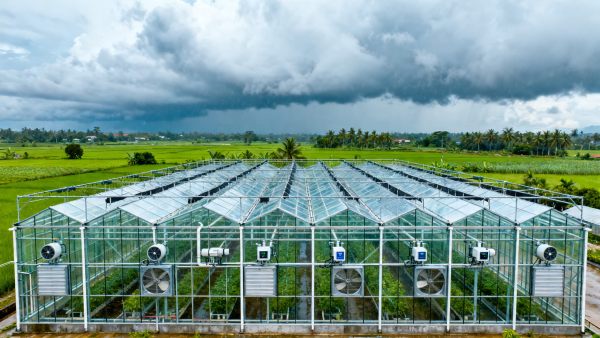
Vietnam’s Vietnam Academy of Science and Technology (VAST) issued Appendix B to the VAST-2026 standard on April 18, 2026, mandating localized climate data integration and closed-loop operational validation for all imported smart greenhouse systems. This regulation directly impacts agricultural technology exporters, IoT hardware integrators, and agri-subsidy-dependent vendors operating in or supplying to Vietnam’s controlled-environment agriculture sector.
Event Overview
On April 18, 2026, the Vietnam Academy of Science and Technology (VAST) published Appendix B to the VAST-2026 standard. It requires all imported smart greenhouse systems to be pre-equipped with real-time interface capabilities for Vietnamese meteorological stations. Furthermore, each system must complete no fewer than 90 days of dual-mode closed-loop operation validation—under both ‘high-temperature/high-humidity’ and ‘monsoon rainfall’ conditions—within six months after delivery. Systems failing this requirement are prohibited from connecting to Vietnam’s National Agricultural IoT Platform and become ineligible for government subsidies and public procurement.
Industries Affected by Segment
Smart greenhouse system exporters (OEM/ODM)
These firms supply fully assembled or modular smart greenhouse control platforms to Vietnamese importers or end-users. They are directly affected because compliance must be embedded at the hardware-software integration stage—not retrofitted post-import. Impact includes mandatory redesign of data ingestion modules, certification timelines extending beyond typical delivery windows, and potential liability for validation failure if local environmental conditions are not accurately simulated during pre-deployment testing.
Agricultural IoT platform providers
Providers offering cloud-based monitoring, analytics, or automation services for greenhouse operations face integration constraints. Appendix B restricts platform interoperability to only those systems that pass the mandated Vietnamese climate-loop validation. Providers lacking native support for VAST-certified meteorological station feeds—or unable to log and report the required dual-mode runtime metrics—risk exclusion from the national platform ecosystem.
Importers and local system integrators
Entities responsible for customs clearance, commissioning, and handover to end-farmers must now manage extended validation cycles. Their role shifts from logistics coordination to active validation oversight: they bear responsibility for initiating, documenting, and certifying the 90-day operational period. Failure to meet deadlines or submit auditable logs results in loss of subsidy eligibility for their clients—and reputational exposure for non-compliant deployments.
Key Considerations and Recommended Actions for Stakeholders
Monitor official VAST technical guidance documents
VAST has not yet published detailed specifications for the required meteorological station interface protocol (e.g., data format, polling frequency, authentication method) or the audit criteria for ‘dual-mode’ validation. Stakeholders should track upcoming VAST circulars or technical bulletins—particularly any clarification on whether third-party validation labs will be authorized.
Review current product architecture for Vietnamese climate adaptability
Manufacturers should assess whether existing firmware supports dynamic adaptation to high-humidity (>85% RH) and monsoon-driven rapid temperature/humidity swings (e.g., >15°C drop within 2 hours). Systems relying solely on generic weather APIs or offline calibration models may require firmware updates or sensor recalibration workflows aligned with Vietnam’s regional microclimate profiles.
Distinguish between regulatory signal and enforceable compliance
Appendix B is part of the VAST-2026 standard, which carries technical normative weight—but its enforcement mechanism (e.g., customs hold points, platform API gatekeeping, subsidy application checkpoints) remains unconfirmed. Companies should treat it as an operational prerequisite starting April 2026, but avoid assuming automatic enforcement without documented verification procedures from VAST or the Ministry of Agriculture and Rural Development.
Prepare documentation and validation coordination protocols
Exporters and integrators should draft standardized validation log templates covering timestamped sensor readings, actuator response latency, environmental deviation thresholds, and manual intervention records. Internal teams should align with Vietnamese partners on responsibilities for time-stamped logging, data retention (minimum 90 days), and submission formats ahead of first shipments.
Editorial Observation / Industry Perspective
This regulation is best understood not as a sudden market barrier, but as a formalized step toward sovereign data governance in Vietnam’s digital agriculture infrastructure. Analysis来看, VAST is prioritizing environmental fidelity over generic IoT compatibility—signaling a shift from device-level certification to context-aware operational assurance. From industry角度看, the 90-day validation window suggests VAST intends to measure resilience under real agronomic stress, not just functional uptime. Current更值得关注的是 how strictly the ‘closed-loop’ requirement will be interpreted: whether it demands autonomous correction (e.g., ventilation triggered solely by local station input) or permits human-in-the-loop adjustments. This distinction will define hardware and software design priorities for the next 12–18 months.
It is neither a finalized market closure nor a symbolic gesture. Rather, it functions as a calibrated policy signal—one that tests vendor commitment to localized adaptation while building institutional capacity for future standards in climate-resilient agri-tech.
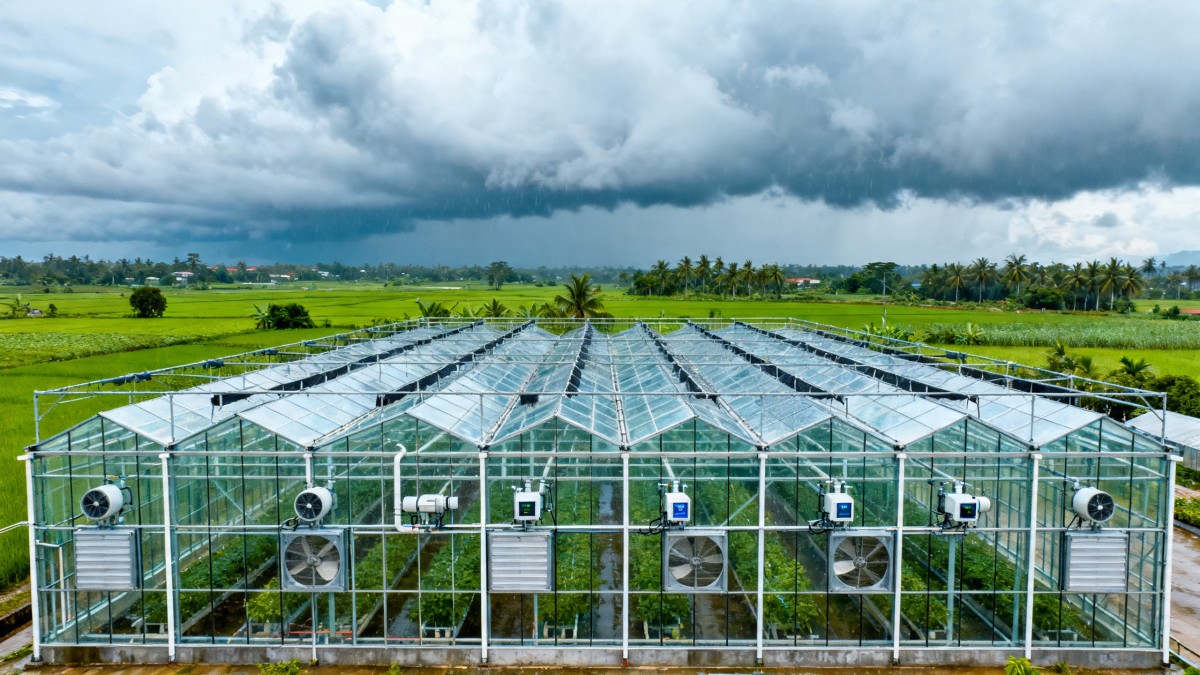
Conclusion
VAST-2026 Appendix B introduces a concrete, time-bound, and environment-specific compliance layer for smart greenhouse deployment in Vietnam. Its significance lies less in immediate enforcement volume and more in establishing a precedent: agricultural IoT devices must demonstrate contextual performance—not just technical conformity—to access national infrastructure and incentives. For stakeholders, the most rational interpretation is operational readiness—not panic. The regulation rewards advance planning, local technical alignment, and transparent validation discipline over reactive compliance.
Information Sources
Main source: Vietnam Academy of Science and Technology (VAST), official publication of VAST-2026 Appendix B, dated April 18, 2026.
Areas requiring ongoing observation: (1) Technical implementation guidelines from VAST; (2) Enforcement protocols by Vietnam Customs and the National Agricultural IoT Platform operator; (3) Clarification on authorized third-party validation entities.
Related Intelligence
- Smart GreenhouseVietnam Enforces Local Climate Data Validation for Smart GreenhousesVietnam enforces local climate data validation for smart greenhouses—mandatory 90-day dual-mode testing, VAST-2026 compliance, and National IoT Platform access. Act now.
- Smart GreenhouseVietnam Enforces VAST-2026 for Smart Greenhouse ImportsVietnam Enforces VAST-2026 for Smart Greenhouse Imports: Key compliance insights, affected subsectors, and actionable strategies for exporters & integrators.
- Smart GreenhousePolysilicon Price Falls Below $550/ton, Smart Greenhouse Export Quotes Drop 8–12%Polysilicon price drops below $550/ton — Smart Greenhouse export quotes fall 8–12%. Discover ripple effects on tenders, margins & supply chains in ME/AU.
The Morning Broadsheet
Daily chemical briefings, market shifts, and peer-reviewed summaries delivered to your terminal.
