
Indonesia BPOM Tightens Natural Ingredients Import Rules
Indonesia’s National Agency of Drug and Food Control (BPOM) announced on April 17, 2026, new import requirements for natural ingredients effective May 1, 2026 — a development with direct implications for exporters of botanical extracts, functional food ingredients, dietary supplement raw materials, and cosmetic actives from China and other ASEAN dialogue partners.
Event Overview
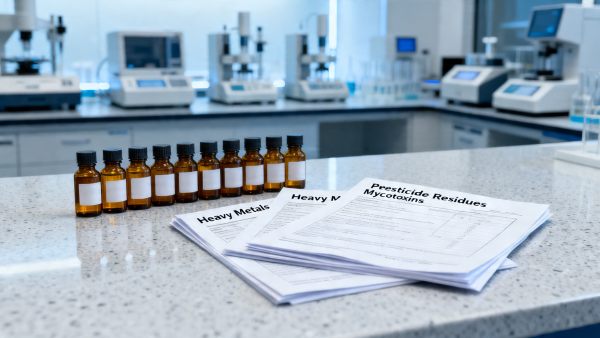
On April 17, 2026, BPOM issued an official notice stating that, starting May 1, 2026, all imported natural ingredients must be accompanied by full analytical reports covering heavy metals, pesticide residues, and mycotoxins. These reports must be issued by laboratories accredited under the ASEAN Mutual Recognition Arrangement (MRA) and listed in BPOM’s latest approved laboratory directory. As of the notice, only 12 CNAS-accredited laboratories in mainland China are included in that list — representing coverage for fewer than 30% of Chinese natural-ingredient exporting enterprises.
Industries Affected by This Change
Direct Exporters (Trading Enterprises)
These entities face immediate operational impact: shipments without MRA-compliant test reports will not clear BPOM registration or customs entry. Since BPOM requires report submission prior to product listing, delays may occur at both pre-market authorization and port release stages.
Raw Material Sourcing Companies
Firms procuring natural ingredients from upstream suppliers (e.g., herb growers, fermentation facilities) must now verify whether their current testing partners appear on BPOM’s updated MRA lab list. Absence of alignment may require retesting — increasing cost and lead time, especially for time-sensitive batches.
Manufacturers of Finished Products (Dietary Supplements, Cosmetics, Functional Foods)
While not directly importing raw materials, such manufacturers relying on imported natural actives must ensure traceability and compliance documentation flows through their supply chain. BPOM’s requirement applies regardless of whether the ingredient enters as bulk material or as part of a finished-good consignment — meaning downstream compliance responsibility remains shared.
Supply Chain & Regulatory Support Providers
Third-party regulatory consultants, logistics coordinators, and testing service aggregators must update client advisories and internal checklists. The narrow pool of eligible labs (12 in China) increases dependency risk — making lab capacity planning and report turnaround time critical new KPIs.
What Enterprises Should Monitor and Do Now
Confirm laboratory eligibility against BPOM’s latest published list
BPOM updates its recognized MRA laboratory directory periodically; companies should cross-check current lab accreditation status — not just CNAS or ISO/IEC 17025 certification — but explicit inclusion in BPOM’s active list. Past eligibility does not guarantee continued status.
Map testing requirements to specific SKUs and destination markets
Not all natural ingredients are subject to identical scrutiny. BPOM’s notice applies specifically to ‘natural ingredients’ as defined under its regulatory scope — which typically includes plant-derived extracts, fermented metabolites, and unmodified bioactive isolates. Companies should review product classifications ahead of May 1 to avoid over- or under-testing.
Assess lead-time implications for sample dispatch and reporting
With only 12 qualified labs serving a large exporter base, average report turnaround may extend beyond standard timelines. Exporters should schedule sampling and submission at least 10–14 days prior to shipment, and retain documented proof of submission dates for BPOM audit readiness.
Prepare contingency plans for lab capacity constraints
Given the limited number of authorized labs, backup arrangements — such as pre-approved alternate labs in Malaysia, Thailand, or Vietnam (if also MRA-listed and BPOM-recognized) — should be validated now. Relying solely on domestic CNAS labs without BPOM listing confirmation carries non-compliance risk.
Editorial Observation / Industry Perspective
This measure is better understood as a procedural tightening rather than a market access restriction — it does not ban imports nor raise tariff barriers, but shifts verification burden upstream to certified third-party labs. Analysis来看, BPOM is aligning domestic safety oversight more closely with ASEAN harmonized standards, signaling long-term intent toward greater reliance on regional lab interoperability. From industry角度看, the bottleneck lies less in technical capability and more in administrative recognition lag: many qualified Chinese labs meet MRA criteria but remain absent from BPOM’s list due to pending validation steps. Current更值得关注的是 how frequently BPOM updates its lab directory — and whether additional Chinese labs will be added before May 1.
It is not yet a de facto barrier, but functions as a compliance gate: passing through depends on documentation validity, not product quality per se. That distinction matters — because remediation (e.g., retesting) is possible post-submission, whereas rejection at registration triggers reapplication cycles.
Conclusion
This BPOM requirement reflects a maturing regulatory environment in Indonesia — one increasingly grounded in verifiable, regionally harmonized data. For affected enterprises, the change is operational rather than strategic: it demands precision in documentation, foresight in lab coordination, and clarity in product classification. It is best interpreted not as a sudden disruption, but as a calibrated step toward standardized, evidence-based market access — where preparedness, not panic, determines continuity.
Information Sources
Main source: Official notice issued by Badan Pengawas Obat dan Makanan (BPOM), Republic of Indonesia, dated April 17, 2026. No further implementation guidance or lab list updates have been publicly released as of April 17, 2026. Ongoing monitoring of BPOM’s official portal and ASEAN MRA secretariat communications is recommended.
Related Intelligence
- Natural IngredientsIndonesia BPOM Tightens Natural Ingredients Import RulesIndonesia BPOM tightens natural ingredients import rules: MRA-accredited lab reports for heavy metals, pesticides & mycotoxins now mandatory from May 1, 2026 — act now to avoid shipment delays.
- Natural IngredientsOrganic Spirulina Powder Bulk: The Moisture Level to WatchOrganic spirulina powder bulk moisture levels can impact stability, yield, and shipment risk. Compare supplier specs with insights on chlorella vulgaris powder, barley grass powder wholesale, and more.
- Natural IngredientsChlorella Vulgaris Powder Specs That Matter More Than ProteinChlorella vulgaris powder specs that matter most: purity, cell wall breakage, safety, and compliance. Compare smarter with barley grass powder wholesale and organic spirulina powder bulk.
The Morning Broadsheet
Daily chemical briefings, market shifts, and peer-reviewed summaries delivered to your terminal.
