
Maersk Launches RAS-Specific Cold Chain Containers on Asia-Europe Routes
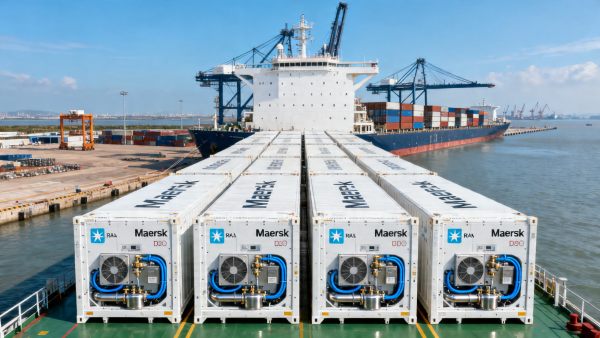
On April 17, 2026, Maersk deployed its first 12 RAS (Recirculating Aquaculture Systems)–dedicated refrigerated containers — equipped with independent temperature control and dissolved oxygen (DO) monitoring — on the Asia–Europe shipping lane. This development directly impacts commercial fishing equipment exporters, RAS system integrators, and cold-chain logistics providers serving emerging aquaculture markets in the Middle East, North Africa, and Southern Europe.
Event Overview
Maersk announced on April 18, 2026, the operational launch of 12 newly commissioned RAS-specific refrigerated containers on its Asia–Europe service. These units feature dedicated environmental control systems for temperature and dissolved oxygen, designed exclusively for transporting RAS equipment and live-system components. The inaugural voyage departed Shanghai Yangshan Port on April 17, 2026. As a result, end-to-end logistics costs for Chinese RAS system exports to the Middle East, North Africa, and Southern Europe decreased by 5.2%, with transit time reduced by 7–10 days.
Industries Affected
Direct Exporters of RAS Systems & Aquaculture Equipment
These companies supply integrated RAS hardware, control modules, and modular farm units primarily from China to growth markets. The new container service lowers landed cost and improves delivery predictability — both critical for project-based sales cycles and financing arrangements tied to delivery milestones.
Suppliers of RAS-Critical Components (e.g., DO Sensors, Biofilters, UV Sterilizers)
Component manufacturers often ship sensitive, calibrated devices requiring stable thermal and gaseous environments. The DO-monitoring capability and independent climate zones reduce risk of sensor drift or biological media degradation during transit — potentially lowering post-arrival commissioning delays and warranty claims.
Cold-Chain Logistics Providers Serving Aquaculture Clients
Third-party logistics firms handling RAS-related freight now face tighter specification requirements. The introduction of purpose-built units implies rising client expectations around environmental data logging, real-time monitoring integration, and compliance documentation — shifting competitive differentiation toward technical transparency rather than just rate competitiveness.
Importers & Project Developers in Target Markets (Middle East, North Africa, Southern Europe)
End users building land-based fish farms rely on precise arrival windows to align civil works, utility hookups, and staffing. A 7–10 day reduction in lead time supports more agile project phasing and reduces working capital tied up in extended inventory buffers or demurrage exposure at congested regional ports.
What Relevant Enterprises or Practitioners Should Monitor and Do Now
Track official service expansion plans beyond the initial 12 units
Maersk’s current deployment is limited and route-specific. Current capacity remains constrained; practitioners should monitor Maersk’s scheduled vessel rotations and any public updates on fleet scaling — especially whether additional RAS-dedicated slots will be added on trans-Mediterranean or Red Sea feeder services.
Verify compatibility of existing RAS shipments with the new container specifications
Not all RAS-related cargo qualifies automatically: only shipments requiring active DO control and narrow temperature bands benefit fully. Companies should review their current packaging, insulation, and pre-cooling protocols against Maersk’s published RAS container technical parameters before booking — avoiding misalignment between declared cargo needs and unit capabilities.
Assess impact on inland handover and last-mile coordination
The 7–10 day transit reduction applies only to ocean leg performance. Delays at destination terminals or inland transport legs may offset gains. Exporters and importers should jointly audit current port clearance timelines, customs classification accuracy for RAS equipment (e.g., HTS codes for aquaculture control systems), and bonded warehouse readiness for temperature-sensitive unloading.
Prepare documentation for DO and temperature data traceability
Regulatory authorities in target markets increasingly require environmental logs for imported aquaculture infrastructure. Shippers should confirm whether Maersk provides certified, tamper-evident digital logs — and if so, how those logs integrate into existing quality management or regulatory submission workflows.
Editorial Perspective / Industry Observation
From an industry perspective, this initiative is better understood as an infrastructure signal — not yet a scalable solution. The 12-unit pilot reflects growing recognition that standard reefer containers cannot meet the physiological precision demands of next-generation aquaculture hardware. However, widespread adoption hinges on three factors: consistent demand volume across lanes, interoperability with non-Maersk port terminals and inland depots, and clarity on long-term pricing parity versus conventional reefers. Observers should treat early cost and time savings as indicative — not guaranteed — for non-pilot routes or non-qualifying cargo types.
Analysis suggests this move also tests market readiness for ‘vertical specialization’ in maritime cold chain: rather than retrofitting general-purpose units, carriers are beginning to invest in narrowly defined, application-specific assets. If validated, it could prompt similar initiatives for pharmaceutical biologics, hydrogen fuel cells, or semiconductor manufacturing tools — but only after RAS volumes demonstrate sustained yield on the capital outlay.
Current more appropriate interpretation is that Maersk is de-risking technical feasibility and regulatory acceptance in a high-value, low-volume niche — using RAS as a proving ground before broader verticalization efforts.
Conclusion: This is not a broad-based freight rate shift, nor a wholesale upgrade to global cold-chain standards. It is a targeted, technically grounded step toward asset specialization in maritime logistics — one that benefits specific actors in the aquaculture value chain today, while signaling longer-term shifts in how carriers align physical infrastructure with industrial end-use requirements.
Information Source: Maersk official announcement, April 18, 2026; confirmed vessel departure data from Shanghai Yangshan Port Authority records (April 17, 2026). Note: Expansion timeline, terminal compatibility, and long-term pricing structure remain subject to ongoing observation.
Related Intelligence
- RAS SystemsMaersk Launches RAS-Specific Cold Chain Containers on Asia-Europe RoutesRAS-specific cold chain containers launched by Maersk on Asia-Europe routes — enabling precise DO & temperature control for aquaculture exporters, integrators, and logistics providers.
- RAS SystemsIndia Removes Import Tariff on RAS Systems for AquacultureIndia removes import tariffs on RAS systems for aquaculture—unlocking $170M+ equipment demand. Key opportunity for exporters, technical documentation & after-sales providers.
- RAS SystemsLFP Battery Recycling Enters Deep Water: RAS & Feed Pellet Firms Tap Regenerated PhosphateLFP Battery Recycling breakthrough: Regenerated phosphate now powers RAS systems & feed pellets—EU/US-compliant, 20% cheaper, live since April 2026.
The Morning Broadsheet
Daily chemical briefings, market shifts, and peer-reviewed summaries delivered to your terminal.
