
APVMA Launches Food Grade Enzymes Fast Track 2.0 for China-Australia Lab Reports
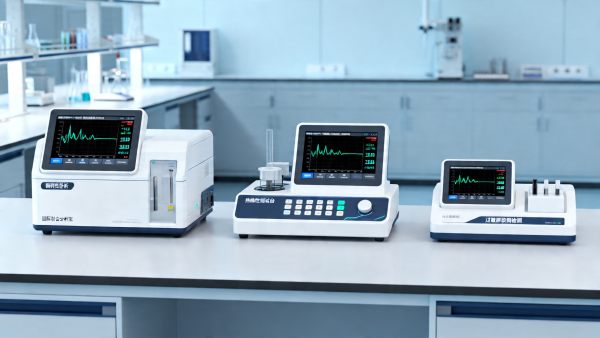
On 20 April 2026, the Australian Pesticides and Veterinary Medicines Authority (APVMA) upgraded its Food Grade Enzymes Fast Track program, enabling direct acceptance of analytical reports from the Guangzhou–Melbourne Joint Laboratory for enzyme activity, thermal stability, and allergen residue testing—without re-sampling. This update affects exporters, manufacturers, and suppliers of food-grade enzymes targeting the Australian market, particularly those working with starchase, protease, phytase, and 9 other enzyme categories.
Event Overview
The APVMA officially launched Version 2.0 of the Food Grade Enzymes Fast Track on 20 April 2026. Under this revision, test reports issued by the China–Australia jointly established Guangzhou/Melbourne Joint Laboratory—covering enzyme activity, thermal stability, and allergen residue—are now accepted directly for registration applications. The fast-track pathway applies to 12 major enzyme types, including amylase, protease, and phytase. Approved applications under this route are processed within 14 working days.
Industries Affected
Direct Exporters to Australia
Exporters submitting food-grade enzymes for APVMA registration will experience reduced administrative burden and shorter time-to-market. Previously required re-testing in Australia is no longer necessary if reports originate from the designated joint laboratory—potentially lowering compliance costs and eliminating delays linked to international sample transit and local lab scheduling.
Enzyme Manufacturing & Formulation Companies
Manufacturers supplying enzymes into the Australian food or feed sectors must align internal quality control protocols with the joint lab’s reporting scope. Since only enzyme activity, thermal stability, and allergen residue data are accepted under this pathway, companies relying on broader safety or functional profiling may still require supplementary submissions outside the fast track.
Supply Chain & Contract Testing Providers
Third-party labs and logistics partners supporting enzyme exports may see shifts in service demand. With testing centralized at the Guangzhou–Melbourne Joint Laboratory for fast-track eligibility, regional labs not affiliated with the joint initiative may face reduced volume for APVMA-bound submissions—unless they support non-fast-track applications requiring additional endpoints.
Key Considerations and Recommended Actions
Monitor official guidance on report validity and scope
Current eligibility is strictly limited to three test parameters (enzyme activity, thermal stability, allergen residue) and only for reports issued by the Guangzhou–Melbourne Joint Laboratory. Companies should verify whether future updates expand accepted parameters or authorize additional laboratories—before committing to new testing strategies.
Prioritise alignment with the 12 covered enzyme categories
The fast track explicitly covers 12 enzyme types—including amylase, protease, and phytase—but does not confirm inclusion of variants (e.g., thermostable subtypes) or novel engineered enzymes. Firms developing next-generation enzymes should confirm category eligibility early, rather than assume coverage based on functional similarity.
Distinguish between policy signal and operational readiness
While the 14-working-day timeline is stated, actual processing speed depends on application completeness and absence of queries. Companies should treat the timeline as a target—not a guaranteed SLA—and prepare documentation rigorously to avoid resubmission delays.
Prepare for coordinated sampling and documentation workflows
Since joint lab reports must be generated prior to submission, exporters need to integrate sample dispatch, testing timelines, and APVMA filing schedules. Aligning internal QA/QC handover points with the lab’s reporting cycle—and maintaining full traceability from batch to report—is now operationally critical.
Editorial Perspective / Industry Observation
From an industry perspective, this upgrade is better understood as a procedural refinement than a regulatory expansion: it streamlines verification for a defined set of products and data points, rather than introducing new approval pathways or relaxing safety standards. Analysis来看, the move signals strengthened technical coordination between Australian regulators and selected Chinese testing infrastructure—but does not imply broad mutual recognition across other agri-input categories. Observation来看, the focus on enzyme-specific parameters (rather than general toxicology or environmental fate) suggests APVMA is prioritising efficiency gains where analytical methods are highly standardised and inter-laboratory comparability is well established. Current more appropriate interpretation is that this is a targeted facilitation measure—not a precedent for wider regulatory harmonisation.
As such, the significance lies less in regulatory novelty and more in operational predictability: for companies already active in these 12 enzyme categories and aligned with the joint lab, the change delivers measurable time and cost savings. For others, it serves as a benchmark for how bilateral technical collaboration can concretely shape regulatory execution—without altering underlying requirements.
Conclusion
This update reflects a maturing phase in Australia–China technical cooperation on food-grade enzyme regulation—not a shift in safety expectations or market access rules. It enables faster, more predictable registration for a defined subset of products, provided reporting follows strict procedural conditions. Companies should assess applicability against their current enzyme portfolio and testing partnerships, rather than interpret the fast track as a general easing of APVMA requirements.
Source Attribution
Main source: Official APVMA announcement dated 20 April 2026. No additional background, historical context, or third-party commentary is included. Ongoing observation is recommended regarding potential expansion of accepted test parameters or additional laboratories under the fast track framework.
Related Intelligence
- Food Grade EnzymesAPVMA Launches Food Grade Enzymes Fast Track 2.0 for China-Australia Lab ReportsAPVMA Launches Food Grade Enzymes Fast Track 2.0—accepts China-Australia lab reports for enzyme activity, thermal stability & allergen residue. Faster 14-day registration for 12 key enzymes.
- Food Grade EnzymesAPVMA Launches Enzyme Fast Track 2.0 for Food-Grade EnzymesAPVMA Enzyme Fast Track 2.0 now accepts GAEL food-grade enzyme test reports—cutting registration to 14 days for papain, bromelain & more.
- Food Grade EnzymesAPVMA Shortens Food Grade Enzymes Registration to 22 DaysAPVMA shortens food grade enzymes registration to just 22 days — a game-changer for exporters, manufacturers & compliance teams navigating China-Australia trade.
The Morning Broadsheet
Daily chemical briefings, market shifts, and peer-reviewed summaries delivered to your terminal.
