
What makes a good shiitake mushroom powder supplier in 2026?
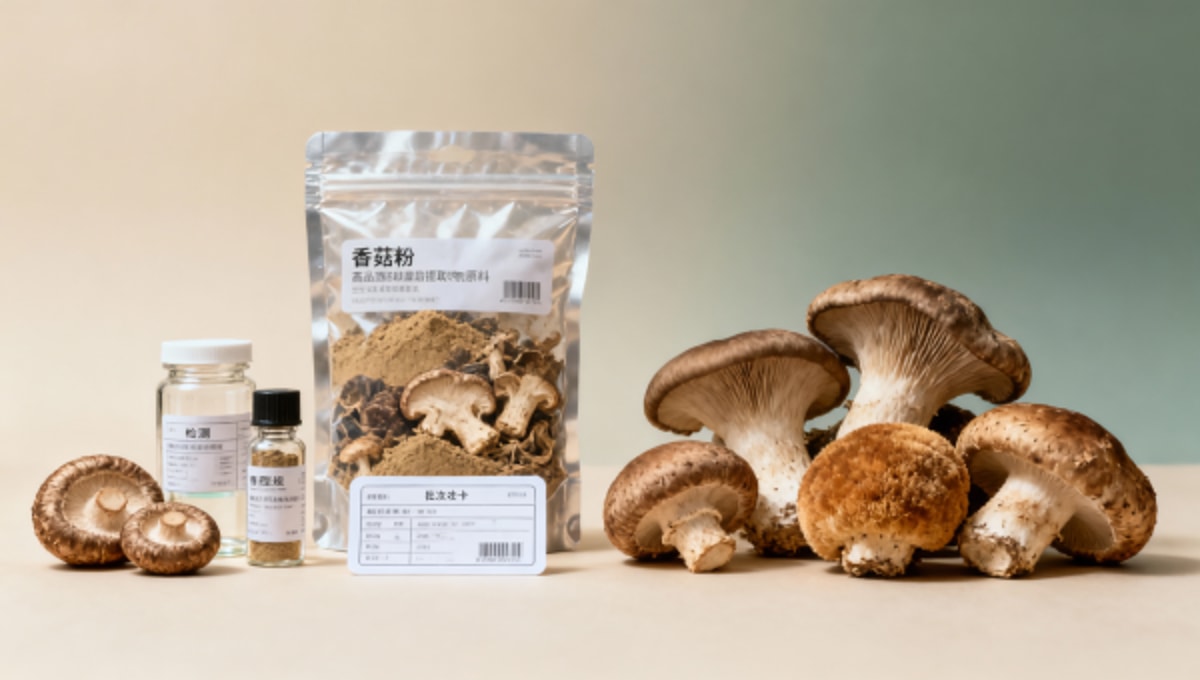
In 2026, choosing a reliable shiitake mushroom powder supplier means looking beyond price to traceability, extraction quality, compliance, and scalable delivery. As demand also grows for maitake mushroom extract, chaga mushroom extract, cordyceps extract wholesale, and lion's mane mushroom powder, buyers need clearer benchmarks to assess risk, consistency, and long-term value across botanical ingredient supply chains.
Why supplier quality matters more in the 2026 mushroom extract market
The shiitake mushroom powder market is no longer a simple bulk ingredient trade. Buyers across food processing, nutraceutical formulation, health product distribution, and industrial ingredient sourcing now face tighter documentation expectations, more volatile raw material availability, and higher scrutiny on contamination control. A good shiitake mushroom powder supplier must therefore prove not only product availability, but also technical discipline across cultivation, drying, milling, testing, and shipping.
For procurement teams, the risk is rarely limited to unit price. A low-cost supplier can create hidden downstream costs through inconsistent mesh size, unstable moisture content, missing batch records, or poor packaging that shortens shelf life. For quality managers and safety officers, one missing COA, one unclear pesticide statement, or one unresolved heavy metal question can delay approvals by 2–4 weeks and disrupt launch timelines.
This is especially important in adjacent categories such as maitake mushroom extract, chaga mushroom extract, cordyceps extract wholesale, and lion's mane mushroom powder. Institutional buyers increasingly prefer suppliers that can support multi-ingredient sourcing under a consistent documentation system. In practice, this means standard test methods, repeatable lead times, and a service team that understands technical questions from R&D, QA, procurement, and finance at the same time.
AgriChem Chronicle tracks this shift closely because botanical ingredient sourcing now overlaps with the same concerns seen in fine chemicals and regulated primary industries: supply chain visibility, process control, and compliance readiness. In 2026, a good supplier is not just a manufacturer or trader. It is an operational partner capable of supporting qualification, scale-up, and long-term risk management.
What has changed for B2B buyers
- Raw material transparency has become a standard request, including origin, cultivation method, and batch-level traceability.
- Specification review now often includes 5–8 key items, such as moisture, particle size, microbial limits, heavy metals, appearance, odor, solubility behavior, and packaging format.
- Cross-functional approval is more common, meaning operators, technical evaluators, sourcing managers, and financial approvers all review the same supplier from different angles.
- Buyers increasingly prefer suppliers that can discuss both conventional mushroom powder and concentrated extracts within one sourcing roadmap.
How to evaluate a shiitake mushroom powder supplier step by step
A practical supplier review starts with defining the intended use. A beverage premix buyer, a capsule packer, and a functional food manufacturer do not evaluate shiitake mushroom powder in exactly the same way. Particle size, bulk density, microbial controls, and flowability may all carry different weight depending on whether the powder will be blended, tableted, encapsulated, or reprocessed.
The second step is matching technical claims with evidence. If a supplier offers hot water extraction, fine milling, sterilization treatment, or custom packaging, ask for process descriptions and batch documents. A good supplier should explain what is standardized, what is adjustable, and what lead time impact to expect. For many buyers, a realistic sample-to-order cycle ranges from 7–15 days for document review and sample dispatch, then another 2–6 weeks for approval and commercial release.
The third step is checking commercial resilience. Buyers often focus on product data sheets but overlook capacity planning. Can the supplier support small pilot orders, mid-volume recurring shipments, and larger annual contracts without changing material characteristics? Supply continuity matters even more when a purchasing program covers multiple SKUs, including lion's mane mushroom powder or cordyceps extract wholesale alongside shiitake mushroom powder.
The fourth step is evaluating communication quality. In higher-value B2B sourcing, delayed answers are a warning sign. If a supplier cannot clarify test methods, packaging materials, storage conditions, or complaint handling within 48–72 hours, the operational burden shifts back to the buyer. For project managers and technical teams, that slows qualification and creates avoidable internal escalations.
Core checks before supplier approval
The table below summarizes the most useful evaluation dimensions for a shiitake mushroom powder supplier. It is designed for procurement personnel, quality teams, and decision-makers who need a practical shortlist rather than a generic vendor presentation.
A supplier that scores well across these four areas is usually easier to qualify and less expensive to manage over a 12-month sourcing horizon. This is a better decision framework than chasing the lowest quotation, especially for projects that involve recurrent shipments, contract manufacturing, or multi-ingredient product lines.
A simple 4-stage review workflow
- Document screening: confirm basic specs, test reports, origin, and packaging details.
- Sample validation: assess color, odor, handling, particle behavior, and lab conformity.
- Commercial review: compare MOQ, lead time, payment terms, and annual supply stability.
- Controlled first order: start with a monitored batch before long-term nomination.
Which technical and compliance signals separate strong suppliers from risky ones?
Not all mushroom ingredient suppliers operate at the same process maturity. Some are strong in cultivation but weak in post-processing control. Others are good at bulk trading but cannot explain extraction ratio logic, sterilization conditions, or shelf-life protection. Buyers should look for suppliers who can connect agricultural origin with industrial documentation. That bridge is what reduces risk in the real world.
For shiitake mushroom powder, technical quality is usually reflected in a few manageable indicators: stable moisture, controlled particle size, acceptable microbial profile, and packaging that protects the powder during 6–24 months of intended storage, depending on format and market requirements. For extracts such as chaga mushroom extract or maitake mushroom extract, buyers should also understand extraction medium, concentration logic, and how active components are represented in the specification.
Compliance is equally important. A good supplier should be familiar with common buyer requests around GMP-aligned manufacturing discipline, food safety management, document retention, and export labeling support. This does not mean every supplier will hold the same certifications, but it does mean they should provide clear, reviewable records and respond consistently when quality teams raise technical questions.
ACC’s editorial coverage of bio-extracts and ingredients repeatedly shows the same pattern: buyers that verify process clarity early avoid expensive surprises later. In regulated or semi-regulated markets, one weak point in contaminant screening or batch traceability can create cascading problems for procurement, finance, and customer-facing sales teams.
Technical comparison points buyers should request
When comparing shiitake mushroom powder suppliers with providers of lion's mane mushroom powder, maitake mushroom extract, or cordyceps extract wholesale, a side-by-side review table helps teams focus on evidence instead of marketing language.
The strongest responses are specific, consistent, and documented. Vague answers such as “premium quality” or “factory standard” should be treated as incomplete. For industrial buyers, technical precision is often the difference between a smooth approval and a stalled project.
Common warning signs
- The supplier cannot explain whether the material is powder, extract, or blended formulation.
- Batch documents vary significantly across orders or appear incomplete.
- Lead time promises are aggressive, such as under 7 days for custom documentation and export dispatch, but without clear inventory support.
- The supplier expands into chaga mushroom extract or cordyceps extract wholesale but offers no unified quality system across categories.
How procurement, QA, and finance can align on selection criteria
One reason supplier qualification drags on is that each department uses a different definition of value. Procurement looks at landed cost and lead time. QA looks at document completeness and batch risk. Finance looks at payment exposure, inventory turnover, and the cost of nonconformance. A good shiitake mushroom powder supplier should make alignment easier by providing information in a structured, auditable format.
For example, a supplier with a slightly higher unit price may still be the better choice if it reduces reinspection, shortens approval by 10–15 business days, and supports consolidated purchasing across lion's mane mushroom powder, maitake mushroom extract, and shiitake mushroom powder. This matters in companies where project managers need predictable timelines and operators need uniform handling behavior on the production floor.
A balanced selection model usually includes 3 categories: technical fit, supply reliability, and commercial viability. Technical fit covers specification consistency, test documents, and handling suitability. Supply reliability covers MOQ, replenishment, packaging integrity, and communication speed. Commercial viability covers payment terms, annual volume flexibility, and the cost impact of deviations or rejected lots.
This is where an industry intelligence platform such as AgriChem Chronicle adds value. ACC helps institutional buyers and industrial decision-makers compare suppliers using sector-aware criteria instead of generic sourcing checklists. In botanical ingredients, that perspective is useful because the line between agricultural product and process-critical industrial input is often underestimated.
A practical scoring model for internal review
- Technical fit, 40%: material identity, test scope, consistency, and suitability for formulation or processing.
- Supply reliability, 35%: lead time stability, MOQ flexibility, packaging performance, and responsiveness within 1–3 business days.
- Commercial viability, 25%: total cost, payment terms, sample support, and deviation handling.
Questions every approval team should ask
Can the supplier support both pilot and scale volumes? Are there clear storage conditions and shelf-life expectations? Can they provide a repeatable batch document package for every shipment? If the answer is inconsistent, the total sourcing cost may rise even when the purchase price looks attractive on paper.
Another useful question is whether the supplier can support portfolio expansion. Buyers that begin with shiitake mushroom powder often later review maitake mushroom extract, chaga mushroom extract, or cordyceps extract wholesale for adjacent products. A supplier with coordinated systems across these ingredients reduces duplicate qualification work and speeds up new product planning.
FAQ: common buying questions about shiitake mushroom powder suppliers
How do I know whether a shiitake mushroom powder supplier is suitable for long-term contracts?
Look beyond a one-time sample result. Review at least 3 areas: batch-to-batch consistency, documented lead time, and issue-response discipline. A supplier that can maintain comparable quality across several lots and communicate deviations quickly is more suitable for annual or semi-annual contracts. For many B2B buyers, a monitored first order followed by 1–2 repeat orders is a practical way to confirm reliability before committing larger volumes.
What is the usual lead time for mushroom powder and extract orders?
Lead time depends on stock status, packaging format, and documentation needs. As a general industry range, samples may be arranged within 7–15 days, while commercial orders often move in 2–5 weeks. Custom packaging, additional testing, or export paperwork can extend the cycle. Buyers should request both standard lead time and peak-season lead time, especially if they also plan to source lion's mane mushroom powder or cordyceps extract wholesale from the same supplier.
Is a lower price a reliable sign of better purchasing value?
Not by itself. Lower price can reflect simpler processing, weaker documentation, reduced testing scope, or less protective packaging. The real comparison should include incoming inspection burden, approval speed, rejection risk, and inventory impact. A slightly higher-priced shiitake mushroom powder supplier can create better overall value if they reduce delays, quality disputes, and resourcing work for internal teams.
Should buyers source multiple mushroom ingredients from one supplier?
It depends on the supplier’s system maturity. If the supplier can provide consistent specs, lot traceability, and category-specific technical support across shiitake mushroom powder, maitake mushroom extract, chaga mushroom extract, and lion's mane mushroom powder, consolidation can save time and simplify vendor management. If not, category-specific sourcing may still be safer. The decision should be based on documentation quality, not product range alone.
Why informed buyers work with AgriChem Chronicle for supplier evaluation and market clarity
In complex ingredient markets, decision quality depends on the quality of the questions being asked. AgriChem Chronicle supports that process by translating technical manufacturing signals, compliance expectations, and trade realities into decision-useful market intelligence. For teams evaluating a shiitake mushroom powder supplier in 2026, that means clearer sourcing benchmarks, sharper risk screening, and stronger internal justification for procurement recommendations.
ACC’s advantage lies in its cross-sector lens. Botanical ingredients do not operate in isolation; they share many operational challenges with fine chemicals, agricultural inputs, and regulated processing industries. That broader view helps procurement professionals, quality leaders, and commercial evaluators judge suppliers on process credibility, not just brochure language. It also helps enterprise decision-makers understand when a supplier is ready for scale and when it is not.
If your team is comparing shiitake mushroom powder, maitake mushroom extract, chaga mushroom extract, cordyceps extract wholesale, or lion's mane mushroom powder suppliers, ACC can help frame the review around practical decision points. These include parameter confirmation, documentation completeness, indicative lead times, packaging and storage suitability, sample strategy, and supplier communication quality.
Contact us if you need support with supplier shortlisting, specification comparison, sample review criteria, compliance document planning, or quotation evaluation. We can help you structure a clearer discussion around product selection, delivery cycle expectations, custom sourcing scenarios, certification-related questions, and the technical checks that matter before you commit budget or approve a purchasing program.
Related Intelligence
- Natural IngredientsIndonesia BPOM Updates Label Rules for Natural Ingredients ImportsIndonesia BPOM updates natural ingredients label rules: heat-tolerance declarations required from Aug 2026. Stay compliant & avoid shipment delays.
- Natural IngredientsIndonesia BPOM Updates Natural Ingredients Labeling RulesIndonesia BPOM Updates Natural Ingredients Labeling Rules: New 'Microbial Tolerance Statement' required for natural pigments, plant powders & fermented extracts by Aug 1, 2026.
- Natural IngredientsIndonesia BPOM Updates Natural Ingredients Labeling RulesIndonesia BPOM updates natural ingredients labeling rules: New 'Microbial Tolerance Statement' required for plant powders, fermented extracts & peptides—act now to avoid customs delays.
The Morning Broadsheet
Daily chemical briefings, market shifts, and peer-reviewed summaries delivered to your terminal.
