
Indonesia BPOM Updates Label Rules for Natural Ingredients Imports
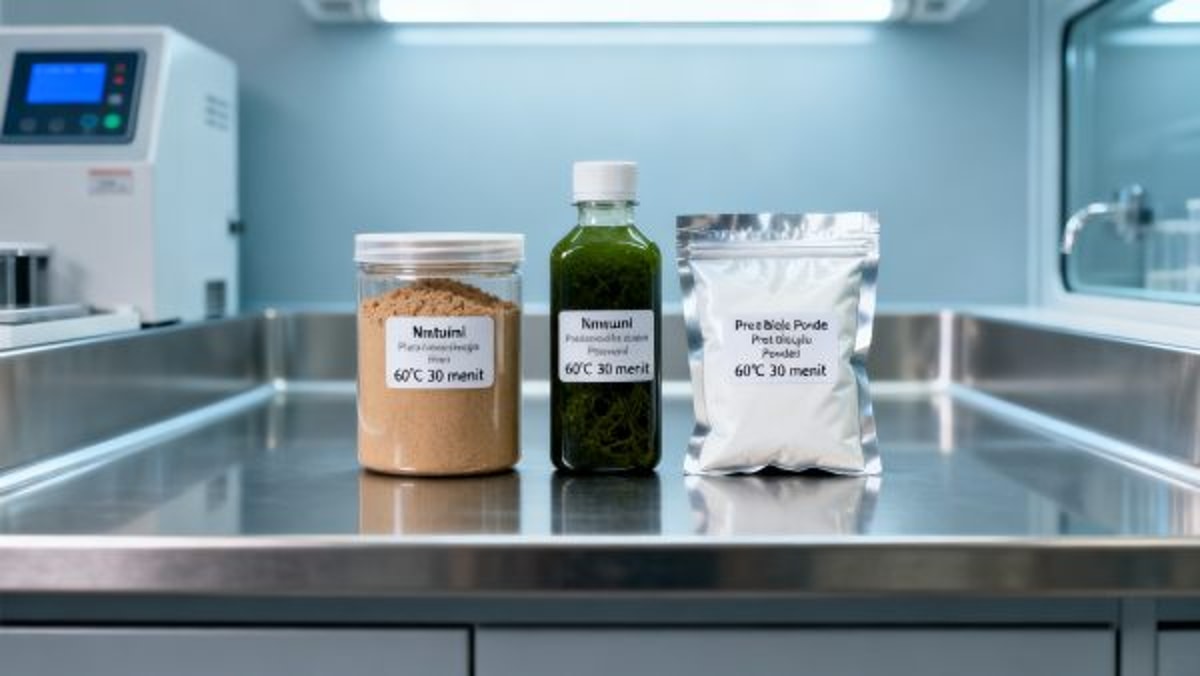
Indonesia’s National Agency of Drug and Food Control (BPOM) has revised labeling requirements for imported natural ingredients, mandating microbiological heat-tolerance declarations effective 1 August 2026. This update directly affects exporters of plant powders, algal extracts, prebiotics, and other natural ingredient categories from China and other countries — particularly those engaged in B2B supply to Indonesian manufacturers or distributors.
Event Overview
On 29 April 2026, BPOM issued Regulation No. 22/2026 (Perka BPOM No. 22/2026), stipulating that, from 1 August 2026 onward, all imported natural ingredients must carry Indonesian-language labels specifying ‘temperature tolerance ranges and corresponding microbial inhibition effects’ — for example: ‘Salmonella inactivation achieved by holding at 60°C for 30 minutes’. Exporters must submit third-party laboratory verification reports confirming such thermal resistance claims; absence of such documentation renders the label non-compliant.
Which Subsectors Are Affected
Direct Exporters (e.g., Chinese Ingredient Suppliers)
These companies face immediate compliance obligations. Since BPOM requires Indonesian-language labeling and certified thermal validation, exporters must coordinate with labs capable of generating BPOM-recognized test reports — including strain-specific challenge testing under defined time–temperature conditions. Label redesign, translation verification, and documentation alignment add lead time and cost before shipment.
Raw Material Procurement Firms (e.g., Indonesian Formulators Sourcing Abroad)
Importers in Indonesia now bear responsibility for verifying label conformity prior to customs clearance. Non-compliant shipments risk rejection or mandatory relabeling — which is not permitted post-import under current BPOM enforcement practice. Procurement teams must now require validated thermal data and bilingual label drafts during supplier onboarding and order placement.
Contract Manufacturers & Blenders (e.g., Indonesian Nutraceutical Producers)
These entities rely on imported natural ingredients as inputs for finished products (e.g., dietary supplements, functional foods). Under the new rule, they must ensure incoming raw materials meet BPOM’s labeling standard — otherwise, their own downstream product registrations may be challenged during audit or renewal, as BPOM cross-checks input compliance in facility inspections.
Logistics & Regulatory Support Providers
Freight forwarders and regulatory consultants handling BPOM submissions must now verify inclusion of thermal validation reports in dossier packages. Absence of this document triggers automatic deficiency notices in BPOM’s online registration system (SIPN), delaying import permit issuance. Service providers need updated checklists and staff training on interpreting lab report scope (e.g., whether test parameters match declared label statements).
What Relevant Companies or Practitioners Should Focus On Now
Monitor official BPOM guidance on acceptable lab accreditation criteria
Perka BPOM No. 22/2026 references third-party verification but does not yet list approved laboratories or specify required ISO/IEC 17025 scopes. Analysis shows BPOM may issue a follow-up circular clarifying recognized accreditation bodies (e.g., KAN in Indonesia or ILAC-MRA signatories) — exporters should track BPOM’s official portal and consult local representatives for updates before finalizing lab partnerships.
Validate label claims against actual production-relevant thermal profiles
Observably, BPOM’s requirement targets real-world processing conditions — not theoretical sterilization. Exporters should align thermal validation tests with typical downstream use cases (e.g., beverage pasteurization, dry-mix heating steps). A claim like ‘60°C for 30 min’ only holds if the lab test replicates that exact condition using relevant challenge organisms (e.g., Salmonella, E. coli, Bacillus cereus) — generic ‘microbial reduction’ statements are insufficient.
Prepare bilingual label drafts and internal SOPs ahead of deadline
Current more actionable than waiting for BPOM’s template: exporters should develop Indonesian-language label templates with dedicated fields for thermal statements, assign internal reviewers fluent in technical Indonesian, and integrate label approval into existing quality control workflows. Delaying this until July 2026 risks bottlenecks as labs and translators face concurrent demand.
Distinguish between regulatory signal and enforceable obligation
The regulation takes effect 1 August 2026 — there is no grace period stated. From industry perspective, this is an enforceable requirement, not a consultation draft. Customs authorities have begun flagging non-compliant entries in pilot audits since May 2026; early non-compliance may trigger escalated scrutiny, not just rejection.
Editorial View / Industry Observation
This update is better understood as a procedural tightening within BPOM’s broader effort to strengthen traceability and functional claim accountability for natural ingredients — not merely a labeling formality. Analysis shows it reflects increasing convergence with ASEAN Common Technical Dossier (CTD) expectations around process-related safety evidence. Observably, BPOM is shifting from ‘what is in the product’ to ‘how the product behaves under intended use conditions’. It signals growing emphasis on microbiological risk management across the entire supply chain — especially where natural matrices (e.g., plant powders) may harbor heat-resistant spores or biofilms not eliminated by standard drying.
It is not yet a market access barrier — but functions as a de facto gatekeeping mechanism. The requirement’s operational weight lies less in scientific novelty and more in documentation rigor and cross-border coordination. Continued attention is warranted because BPOM has historically followed such labeling updates with parallel revisions to Good Manufacturing Practice (GMP) inspection checklists — suggesting future audits may include on-site verification of thermal validation records.
Conclusion: This regulation marks a formalization of microbiological process transparency for natural ingredient imports into Indonesia. It does not ban any category nor introduce novel safety thresholds — rather, it institutionalizes evidence-based labeling as a prerequisite for market entry. For affected stakeholders, the priority is not re-evaluating product safety, but ensuring that safety evidence is documented, testable, and communicated in accordance with BPOM’s specific linguistic and procedural framework.
Information Source: BPOM Regulation No. 22/2026 (Perka BPOM No. 22/2026), published 29 April 2026; official BPOM announcement archive (https://www.pom.go.id). Note: Lab accreditation criteria and enforcement protocols remain subject to further clarification — ongoing monitoring recommended.
Related Intelligence
- Natural IngredientsIndonesia BPOM Updates Label Rules for Natural Ingredients ImportsIndonesia BPOM updates natural ingredients label rules: heat-tolerance declarations required from Aug 2026. Stay compliant & avoid shipment delays.
- Natural IngredientsIndonesia BPOM Updates Natural Ingredients Labeling RulesIndonesia BPOM Updates Natural Ingredients Labeling Rules: New 'Microbial Tolerance Statement' required for natural pigments, plant powders & fermented extracts by Aug 1, 2026.
- Natural IngredientsIndonesia BPOM Updates Natural Ingredients Labeling RulesIndonesia BPOM updates natural ingredients labeling rules: New 'Microbial Tolerance Statement' required for plant powders, fermented extracts & peptides—act now to avoid customs delays.
The Morning Broadsheet
Daily chemical briefings, market shifts, and peer-reviewed summaries delivered to your terminal.
