
Shiitake mushroom powder: common sourcing mistakes to avoid
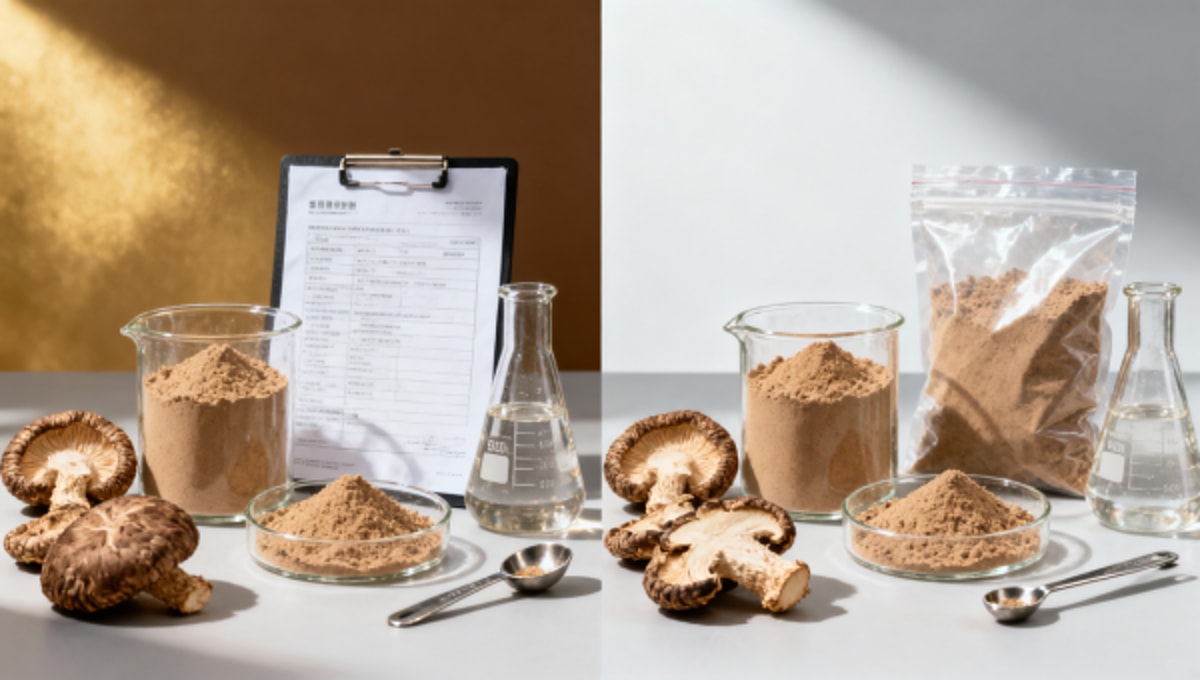
Sourcing shiitake mushroom powder can look straightforward, yet common errors in origin verification, active-compound testing, and supplier qualification often undermine quality, compliance, and margin. For buyers comparing maitake mushroom extract, chaga mushroom extract, lion's mane mushroom powder, and reishi mushroom extract bulk, understanding these pitfalls is essential to making safer, more cost-effective procurement decisions.
For most buyers, the core question is not whether shiitake mushroom powder is available, but whether a quoted material is authentic, specification-consistent, compliant, and commercially reliable at scale. In practice, the biggest sourcing mistakes happen when procurement teams treat mushroom powders as simple commodity ingredients rather than variable bio-based materials. The result can be weak potency, unstable batches, labeling disputes, failed audits, or margin loss caused by paying extract-level prices for low-value powder blends.
If your role involves technical assessment, supplier onboarding, quality control, or commercial approval, the safest approach is to evaluate shiitake mushroom powder through three lenses at the same time: raw material authenticity, fit-for-purpose specification, and supplier process transparency. Those three factors do far more to protect cost and product performance than headline price alone.
What are the most common sourcing mistakes in shiitake mushroom powder procurement?
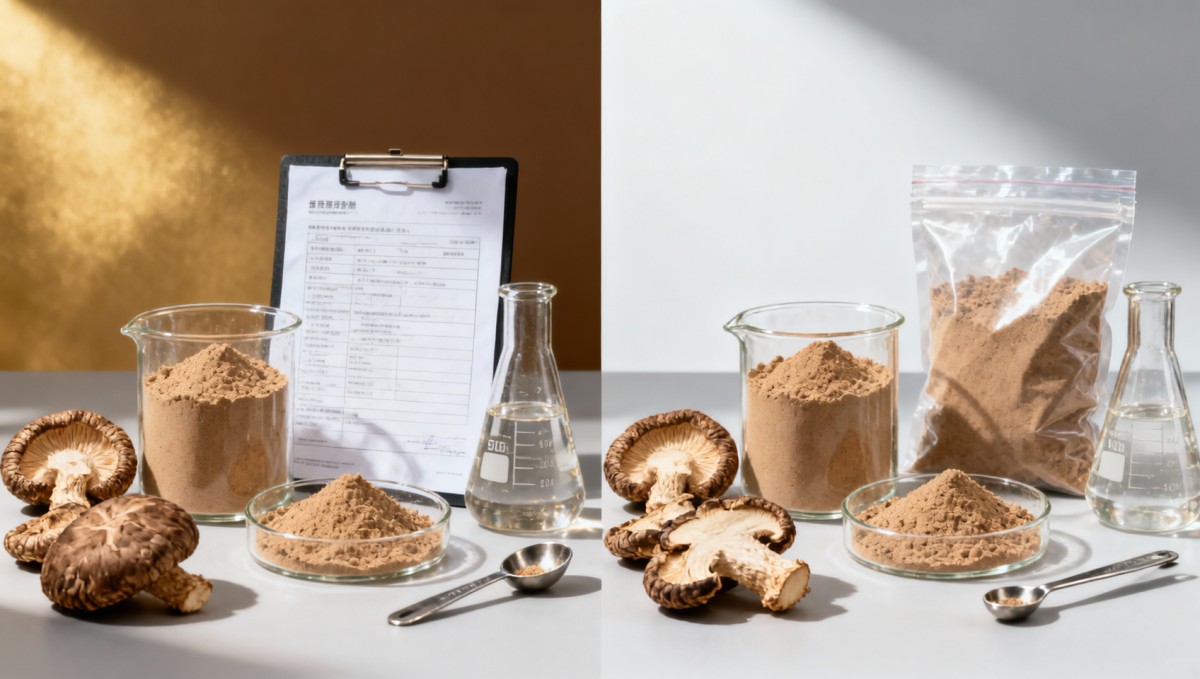
The most frequent mistakes are surprisingly consistent across food ingredients, nutraceuticals, and industrial botanical sourcing projects.
- Confusing mushroom powder with mushroom extract and buying on the wrong specification basis.
- Failing to verify the botanical and geographic origin beyond a basic COA.
- Ignoring fruiting body vs. mycelium composition, especially when performance claims matter.
- Relying on generic polysaccharide claims without appropriate test methodology.
- Overlooking carrier agents, fillers, or undeclared blending.
- Approving suppliers before reviewing contamination risk controls for heavy metals, pesticides, and microbes.
- Choosing solely on unit price rather than cost-in-use, yield, and batch consistency.
- Skipping documentation checks for allergen statements, traceability, irradiation status, and regulatory fit for the target market.
These mistakes become even more costly when teams are sourcing multiple functional mushroom ingredients together, such as maitake mushroom extract, chaga mushroom extract, lion's mane mushroom powder, and reishi mushroom extract bulk, because each category may require different analytical and sourcing criteria.
Why do buyers often misunderstand shiitake mushroom powder specifications?
One of the biggest commercial errors is assuming that all mushroom-derived powders represent similar value. They do not.
Shiitake mushroom powder usually refers to a milled powder made from dried mushroom material. Depending on the supplier, that may mean whole fruiting body powder, sliced dried mushroom powder, cap-only material, stem-heavy material, or blends. By contrast, shiitake mushroom extract typically involves water or dual extraction, concentration, and standardization. These products have different concentration ratios, applications, and price structures.
Problems arise when a buyer compares two offers without aligning the specification basis. For example:
- One supplier quotes a low price for plain mushroom powder.
- Another quotes a higher price for concentrated extract powder.
- A third offers “10:1” material without clearly defining extraction process, input-output ratio, or assay basis.
Without clarification, a procurement team may approve a lower-cost material that fails in formulation, sensory profile, dosage efficiency, or marketing substantiation. This is especially relevant for companies developing products across the medicinal mushroom category, where lion's mane mushroom powder or reishi mushroom extract bulk may be benchmarked differently than shiitake ingredients.
The practical takeaway is simple: always define whether you need raw powder, extract powder, or standardized extract, and require the supplier to document exactly what that term means in manufacturing terms.
How should buyers verify origin, authenticity, and material composition?
Origin verification matters because cultivation practices, substrate inputs, drying methods, and post-harvest handling directly affect contamination risk, organoleptic quality, and batch consistency.
At minimum, buyers should verify:
- Botanical identity: confirm the material is genuinely derived from Lentinula edodes.
- Part used: fruiting body, mycelium, or mixed source.
- Cultivation method: log-grown, substrate-grown, indoor, outdoor, conventional, or organic.
- Country of origin: not just trading country, but actual cultivation and primary processing location.
- Processing method: drying temperature, milling controls, extraction method if applicable, and sieving standard.
A common sourcing mistake is accepting broad phrases such as “natural mushroom powder” or “premium shiitake extract” without asking for production detail. For technical and quality teams, this creates a blind spot. For commercial teams, it creates valuation risk because a premium-sounding description may hide a lower-value source material.
Where strategic volume or regulated applications are involved, supplier qualification should include traceability documentation, batch coding logic, and, where appropriate, a review of upstream farm or processor controls. If the supplier cannot clearly explain source material flow, that is an immediate warning sign.
What testing gaps create the highest risk in shiitake mushroom powder sourcing?
Testing is where many sourcing decisions appear rigorous on paper but fail in reality. A certificate of analysis is useful, but only if the right tests are requested and the methods are appropriate.
The highest-risk testing gaps include the following:
- Polysaccharide claims without method transparency: total polysaccharide values can be inflated or commercially misleading if the method does not distinguish relevant fractions.
- No beta-glucan testing when functional composition matters.
- Insufficient heavy metal screening, especially arsenic, cadmium, lead, and mercury.
- Weak pesticide residue review for market-specific compliance requirements.
- Incomplete microbiological panel, particularly for yeast, mold, salmonella, and coliform risk.
- No screening for adulteration or carrier addition in powders sold as pure mushroom ingredients.
Buyers should also separate quality testing from marketing testing. A supplier may showcase one attractive assay number, but that does not guarantee the material meets your actual application needs. For example, a food manufacturer may care most about microbial safety and sensory consistency, while a nutraceutical brand may place greater emphasis on beta-glucan profile, extract standardization, and claim support.
If you are comparing shiitake mushroom powder with adjacent ingredients such as chaga mushroom extract or maitake mushroom extract, avoid using a single generic test template across all mushroom materials. Different products justify different analytical priorities.
How do supplier qualification mistakes affect cost, compliance, and supply continuity?
Many procurement failures begin before the first order is placed. A supplier may look acceptable based on sample quality or initial responsiveness, yet still be a poor long-term sourcing partner.
Common qualification mistakes include:
- Approving suppliers without auditing manufacturing capability.
- Not confirming whether the supplier is a manufacturer, processor, trader, or broker.
- Failing to review change-control procedures for raw material source, process parameters, or specification updates.
- Ignoring documentation turnaround performance for COAs, specifications, declarations, and corrective actions.
- Overlooking capacity realism during scale-up from sample to commercial volume.
For procurement managers and business evaluators, the key issue is not only whether the supplier can provide shiitake mushroom powder today, but whether they can maintain the same quality profile three, six, or twelve months from now without introducing hidden substitution risk.
For finance approvers and enterprise decision-makers, poor qualification often leads to indirect costs that exceed the apparent savings from a low-price offer. These can include production delays, customer complaints, reformulation work, rejected shipments, excess safety stock, or reputational risk in export markets.
What does a practical sourcing checklist look like for technical and procurement teams?
The most useful approach is a cross-functional checklist that aligns sourcing, quality, regulatory, and commercial priorities.
Before shortlisting a supplier, confirm:
- Is the required material plain powder, extract powder, or standardized extract?
- What part of the mushroom is used?
- What application is the powder intended for: food, supplement, industrial ingredient, or blended formulation?
- Which compliance markets are relevant?
Before approving samples, request:
- Full specification sheet
- Recent COA with methods listed
- Country of cultivation and processing
- Manufacturing flow description
- Allergen, GMO, irradiation, and solvent declarations where relevant
- Microbial, heavy metal, and pesticide data
Before signing a commercial contract, verify:
- MOQ, lead time, and annual capacity
- Packaging format and shelf-life stability basis
- Batch-to-batch variance expectations
- Deviation handling and complaint response process
- Document support for customs, audit, and customer review
This process is especially valuable when building a wider medicinal mushroom sourcing portfolio. Teams buying reishi mushroom extract bulk, lion's mane mushroom powder, or maitake mushroom extract alongside shiitake can standardize their supplier-review framework while still keeping product-specific technical criteria.
How can buyers distinguish a commercially strong offer from a risky low-price quote?
The best offer is rarely the cheapest per kilogram. It is the one that delivers the most reliable specification, lowest compliance friction, and best operational fit.
A commercially strong offer usually includes:
- Clear raw material definition
- Transparent origin disclosure
- Relevant analytical support
- Stable documentation quality
- Consistent packaging and lead-time performance
- Credible answers to technical questions
A risky quote often shows the opposite pattern:
- Vague language around powder vs. extract
- Unusually high assay claims without method detail
- Limited traceability
- Slow or inconsistent document response
- Large price gaps with no process explanation
For business decision-makers, this distinction matters because ingredient sourcing quality directly affects downstream profitability. Saving on input cost means little if the material causes instability in manufacturing, claim limitations in the market, or higher rejection rates during incoming QC.
Conclusion: what should buyers do differently when sourcing shiitake mushroom powder?
The most important change is to stop evaluating shiitake mushroom powder as a simple bulk commodity. Buyers who avoid the biggest sourcing mistakes usually do three things well: they define the right specification early, they verify authenticity and testing depth, and they qualify suppliers for long-term reliability rather than short-term price advantage.
For teams comparing shiitake mushroom powder with other functional ingredients such as chaga mushroom extract, maitake mushroom extract, lion's mane mushroom powder, and reishi mushroom extract bulk, the procurement lesson is the same: value comes from fit-for-purpose quality and supply transparency, not from attractive labels or the lowest quote on a spreadsheet.
In practical terms, if a supplier cannot clearly explain origin, composition, processing, and testing methodology, the sourcing risk is already too high. Better buying decisions come from disciplined verification, cross-functional review, and a focus on total commercial outcome rather than nominal price alone.
Related Intelligence
- Natural IngredientsIndonesia BPOM Updates Label Rules for Natural Ingredients ImportsIndonesia BPOM updates natural ingredients label rules: heat-tolerance declarations required from Aug 2026. Stay compliant & avoid shipment delays.
- Natural IngredientsIndonesia BPOM Updates Natural Ingredients Labeling RulesIndonesia BPOM Updates Natural Ingredients Labeling Rules: New 'Microbial Tolerance Statement' required for natural pigments, plant powders & fermented extracts by Aug 1, 2026.
- Natural IngredientsIndonesia BPOM Updates Natural Ingredients Labeling RulesIndonesia BPOM updates natural ingredients labeling rules: New 'Microbial Tolerance Statement' required for plant powders, fermented extracts & peptides—act now to avoid customs delays.
The Morning Broadsheet
Daily chemical briefings, market shifts, and peer-reviewed summaries delivered to your terminal.
