
Maitake mushroom extract vs powder: which one fits your process?
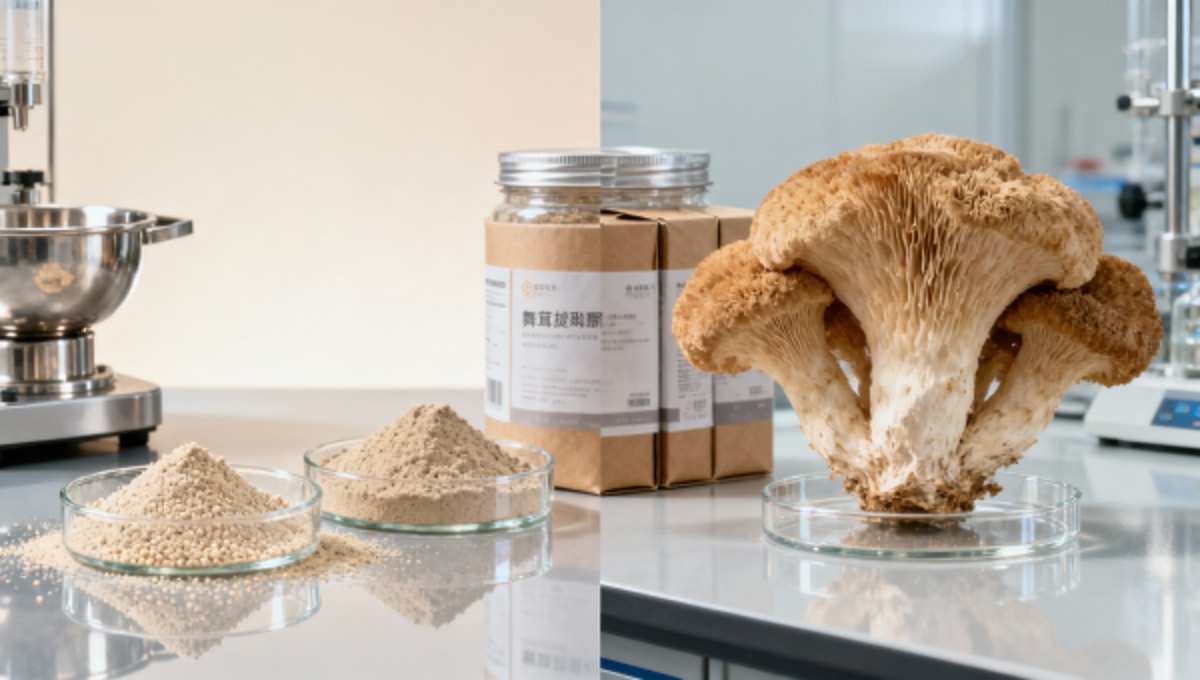
When comparing maitake mushroom extract with powder, the right choice depends on your formulation goals, processing conditions, compliance needs, and cost targets. For teams already evaluating shiitake mushroom powder, chaga mushroom extract, cordyceps extract wholesale, lion's mane mushroom powder, reishi mushroom extract bulk, astragalus root extract, echinacea purpurea extract, elderberry extract wholesale, or pomegranate seed extract, understanding extract-versus-powder performance is essential for smarter sourcing and technical decision-making.
How should buyers define maitake mushroom extract versus powder in real processing terms?
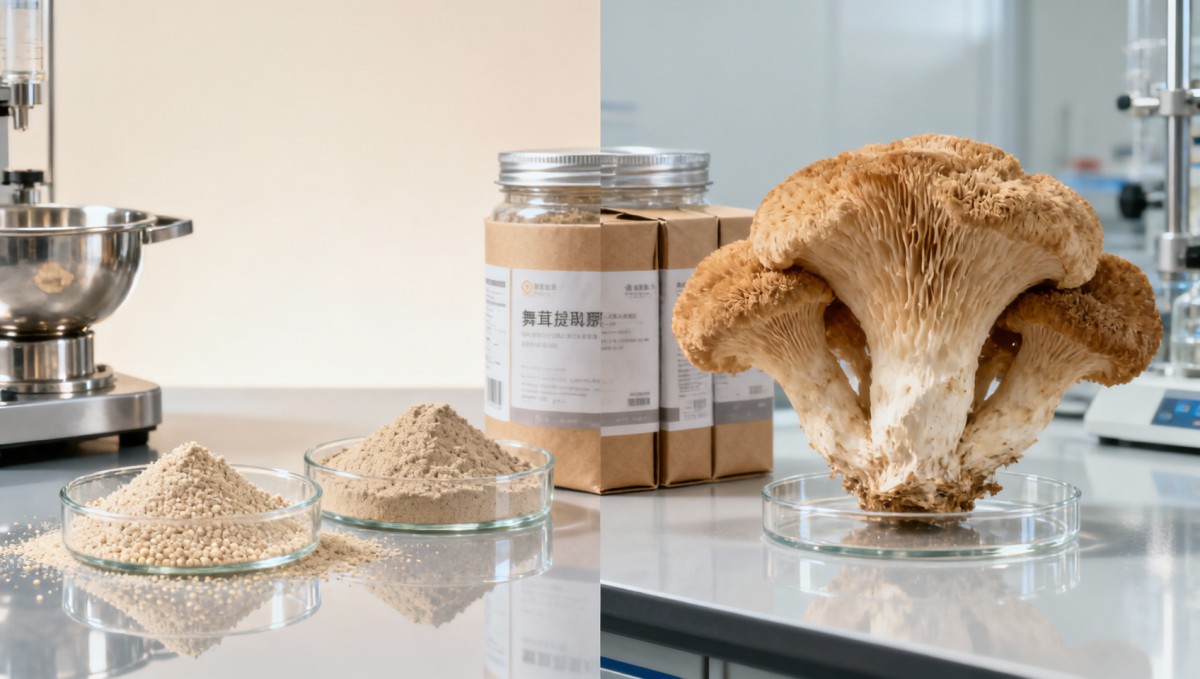
For industrial buyers, the extract-versus-powder decision is not a branding question. It is a process-fit question. Maitake mushroom powder generally refers to dried fruiting body or mycelium material that has been milled into a controlled particle size, while maitake mushroom extract usually refers to a concentrated material obtained through water extraction, dual extraction, or similar steps, then dried into a powder for easier blending and dosing.
That distinction matters because concentration, solubility, sensory profile, and batch standardization can differ substantially. In a typical procurement review, teams compare at least 4 dimensions: active compound target, manufacturing compatibility, regulatory documentation, and total landed cost. A powder may fit a simple dry mix operation, while an extract may better support lower inclusion rates or a cleaner technical specification for downstream formulators.
For operators and technical evaluators, the first practical question is how the ingredient behaves across 3 process stages: storage, dispensing, and final incorporation. Powder often offers a familiar whole-material profile, but may introduce more variability in bulk density or insoluble solids. Extract may simplify dosing at low percentages, yet it can require closer review of carrier content, extract ratio, and moisture limits.
Within ACC’s coverage of bio-extracts and ingredients, this is exactly where procurement complexity becomes operational risk. A specification sheet that looks acceptable at purchasing stage can still fail in production if mesh size, water activity, extraction solvent history, or microbiological controls are not aligned with the intended use. That is why buyers increasingly move from generic ingredient selection to process-oriented qualification.
A quick operational distinction
The table below summarizes how maitake mushroom extract and maitake mushroom powder are usually assessed in B2B formulation and sourcing workflows. It is intended for research teams, purchasing managers, and quality personnel who need a practical rather than purely botanical comparison.
The key takeaway is simple: neither format is inherently better. The better option depends on the production environment, dosage design, customer claim strategy, and supply documentation requirements. A team evaluating reishi mushroom extract bulk or lion’s mane mushroom powder will often reach the same conclusion: format selection should start with process demands, not unit price alone.
Which format fits different application scenarios and production scales?
Application context changes the answer quickly. In low-shear dry blending, sachet filling, tablets, or functional food premixes, maitake mushroom powder can be attractive when the goal is broad whole-mushroom inclusion and a familiar ingredient narrative. In contrast, when formulators need higher active density, reduced dosage volume, or easier standardization across 12-month procurement cycles, maitake mushroom extract often becomes more workable.
For liquid systems, instant beverages, concentrated nutrition formats, or multi-ingredient botanical blends, extract usually has an advantage if dispersibility and dosage control matter more than whole-material identity. However, technical teams should still verify whether the extract contains maltodextrin or another carrier, because this can affect label space, hygroscopicity, and solids calculation in final formulations.
Production scale also matters. At pilot scale, a powder may seem easier because it avoids the complexity of marker-based standardization. But once a plant moves from sample batches to repeated monthly production, even small changes in flowability or fill weight can create rejects, line stoppage, or cleaning burdens. At that stage, a more standardized extract can reduce variability across 2–4 production quarters.
This issue extends beyond maitake. Buyers comparing cordyceps extract wholesale, shiitake mushroom powder, or elderberry extract wholesale often face the same operational choice: do they prioritize natural whole-material positioning, or do they prioritize concentration, repeatability, and leaner dosage design?
Scenario mapping for technical and commercial teams
The next table helps cross-check application scenario, process expectation, and preferred format. It can shorten internal discussions between R&D, procurement, quality, and finance teams by clarifying which trade-offs are actually relevant.
A mixed strategy is common in commercial practice. Some manufacturers use a base powder for positioning and volume, then add a standardized extract for technical strength. This layered approach can also work with adjacent botanicals such as astragalus root extract, echinacea purpurea extract, or pomegranate seed extract when a formulation needs both story value and measurable specification control.
Three checkpoints before locking the format
- Review inclusion rate targets across small batch, validation batch, and commercial batch stages. A format that works at 5 kg may behave differently at 500 kg.
- Check whether the process involves heat, high shear, or long hold times of 30–90 minutes, since this can affect dispersibility and sensory outcomes.
- Confirm whether product claims rely on whole mushroom identity or on a standardized extract profile, because this affects labeling and procurement specifications.
These checkpoints reduce late-stage reformulation risk. They also help financial approvers understand why a higher per-kilogram price may still result in better total process economics.
What technical performance and quality indicators should teams compare?
Technical comparison should begin with specification clarity, not marketing descriptors. For maitake mushroom extract, buyers normally ask about extract ratio, assay method, solvent system, carrier use, loss on drying, microbiological limits, and heavy metal controls. For maitake mushroom powder, the focus often shifts toward mesh size, moisture, ash, identity testing, and consistency of raw material origin. These are not interchangeable documents.
Quality managers should pay attention to 5 practical indicators. First, batch-to-batch consistency. Second, microbial profile under intended storage conditions. Third, flowability in automated feeding systems. Fourth, dispersibility or sedimentation behavior in the final matrix. Fifth, compatibility with other actives, especially when combining multiple mushroom ingredients such as chaga mushroom extract and lion’s mane mushroom powder in one formula.
In many facilities, storage conditions for botanical ingredients stay within typical warehouse ranges such as cool, dry handling and tightly sealed packaging, but the actual risk comes from exposure time after opening. Once a drum or bag is opened for repeated use over 7–30 days, moisture pickup and handling variation can change performance. This is particularly relevant for hygroscopic extracts or very fine powders with dusting tendencies.
Technical evaluation should also include process simulation. A specification may appear acceptable on paper, yet fail under real dosing conditions if the material bridges in hoppers, forms floating clumps in liquids, or leaves unacceptable sediment. A short bench test using 3–5 candidate lots is often more informative than a single attractive certificate.
A practical quality review checklist
- Identity and traceability: verify botanical identity, part used, country or region of origin, and lot traceability chain.
- Physical handling: confirm particle size range, bulk density behavior, tendency to cake, and packaging format such as liner bag inside fiber drum.
- Chemical control: review moisture, ash if relevant, marker compounds if standardized, and any declared carrier percentage.
- Safety profile: check microbiological limits, heavy metals, residual solvent relevance, allergen statement, and adulteration risk management.
- Process suitability: run dispersion, blending, and dosage tests using the actual production sequence rather than lab-only assumptions.
For technical assessment personnel, this checklist often prevents a common mistake: selecting the most concentrated material without checking whether it behaves well in the actual production environment. Concentration improves some metrics, but not every metric that matters on a working line.
How do procurement, cost control, and compliance change the final decision?
Procurement teams rarely buy on ingredient price alone. They buy on total acquisition logic. That includes quoted price, effective dosage cost, freight efficiency, quality testing burden, supplier responsiveness, and documentation completeness. A lower-priced maitake mushroom powder may become more expensive if it requires higher use levels, more frequent incoming inspections, or extra filtration and cleaning time in production.
Commercial evaluators should map cost in 3 layers: per-kilogram price, cost-in-use, and failure cost. Cost-in-use reflects how much material is needed to achieve the formulation target. Failure cost covers line inefficiency, rejected batches, customer complaints, or relabeling risk. This framework is equally useful when sourcing reishi mushroom extract bulk, cordyceps extract wholesale, or a mixed botanical portfolio with multiple active ingredients.
Compliance is another decisive factor. Depending on the market and end use, buyers may need documentation aligned with food, supplement, cosmetic, feed, or industrial ingredient expectations. Common review items include specification sheet, certificate of analysis, allergen statement, heavy metal statement, microbiological controls, packaging declaration, and traceability records. In more regulated environments, internal supplier qualification can take 2–6 weeks even before first order release.
ACC’s editorial strength is especially relevant here because cross-border ingredient buying now involves scientific review and trade compliance review at the same time. Procurement leaders, quality heads, and project managers need a framework that connects extraction method, supply transparency, and application fit instead of treating them as separate decisions.
Selection criteria for purchasing and approval teams
The following matrix is useful when internal stakeholders disagree. It gives finance, procurement, quality, and operations a shared basis for comparing a maitake mushroom extract offer against a maitake mushroom powder offer.
When buyers use this matrix, the discussion becomes more disciplined. A premium extract may justify itself through lower inclusion and cleaner release documentation, while a powder may still be the right commercial answer for broad-use, value-sensitive formulas. The point is to compare offers on equivalent business terms.
Common procurement mistakes to avoid
- Approving a sample lot without locking the commercial specification, which creates inconsistency between development and production supply.
- Comparing extract and powder only by quoted kilogram price instead of normalized use level.
- Ignoring carrier content or extraction details that can affect label declarations and formula balance.
- Overlooking lead time risk; standard replenishment may be manageable, but urgent replacement can disrupt projects planned on 30-day cycles.
These mistakes are avoidable if evaluation starts early and includes operations, quality, and finance instead of leaving the decision to a single function.
FAQ: what do teams most often ask before choosing maitake mushroom extract or powder?
Search intent around maitake mushroom extract vs powder usually centers on dosage, technical fit, and sourcing risk. The questions below reflect the issues most often raised by buyers, formulators, and project teams reviewing mushroom ingredients alongside other botanical extracts.
Is maitake mushroom extract always stronger than powder?
Not in every practical sense. Extract is often more concentrated in selected soluble fractions, which can support lower use levels. But “stronger” does not automatically mean better for every application. If your product concept depends on whole-mushroom identity, texture contribution, or broad composition rather than concentration, powder may still be the better fit. The right comparison is concentration plus usability, not concentration alone.
Which option is usually easier for large-scale production?
For large-scale production, the answer depends on the line type. In automated encapsulation or standardized beverage blending, extract often gives better dosing control. In bulk dry mixes or simpler food applications, powder may be easier and more economical. Most manufacturers should validate performance at 3 scales: bench trial, pilot run, and first commercial batch. That sequence reduces scale-up surprises.
What should quality teams request from suppliers before approval?
At minimum, request specification sheet, recent COA, microbiological limits, heavy metal statement, ingredient composition details, packaging description, and traceability information. If the material is an extract, also confirm extract ratio, assay basis if applicable, and whether any carrier is present. For cross-border trade or regulated applications, internal qualification may also require supplier questionnaires and consistency review over more than 1 lot.
Can buyers combine maitake powder and extract in the same formula?
Yes, and many commercial teams do. A combination approach can balance cost, labeling goals, and technical function. For example, powder may support broader ingredient positioning, while extract supports potency or lower fill weight. This approach is also common in multi-mushroom systems that include shiitake mushroom powder, chaga mushroom extract, and reishi mushroom extract bulk. The key is to verify compatibility, sensory impact, and declared composition before scaling up.
Why work with ACC when evaluating mushroom ingredients and botanical sourcing options?
For ingredient buyers and industrial decision-makers, the challenge is rarely a lack of product listings. The challenge is sorting technical relevance from generic claims. ACC supports that decision process by connecting market intelligence, processing logic, compliance context, and supplier-facing evaluation criteria across bio-extracts, fine chemicals, and primary industries.
If your team is comparing maitake mushroom extract with powder, or benchmarking adjacent materials such as cordyceps extract wholesale, elderberry extract wholesale, astragalus root extract, or pomegranate seed extract, ACC can help structure the review around actual procurement and implementation needs. That includes parameter confirmation, application fit, documentation expectations, supply chain transparency, and risk screening for commercial scale-up.
You can use ACC as a decision-support partner when you need to clarify 5 key issues: which format matches your process, what specification points need negotiation, how long qualification may take, what sample testing should include, and how to compare quotations on a true cost-in-use basis. This is especially valuable when project timelines are tight and internal teams need a shared technical-commercial framework.
Contact ACC to discuss sample support planning, product selection logic, target specification review, likely delivery windows, documentation checkpoints, and custom sourcing strategy for mushroom ingredients and botanical extracts. A focused inquiry at the start of the process can prevent weeks of rework later in development, qualification, and purchasing.
- Fine Chemicals
- Bio-Extracts
- pomegranate seed extract
- elderberry extract wholesale
- echinacea purpurea extract
- astragalus root extract
- reishi mushroom extract bulk
- lion's mane mushroom powder
- cordyceps extract wholesale
- chaga mushroom extract
- shiitake mushroom powder
- maitake mushroom extract
- Trade Compliance
- Supply Chain Transparency
- Industrial Buyers
Related Intelligence
- Botanical ExtractsANVISA New Rule: Botanical Extracts Import to Brazil Requires Two-Tier TraceabilityANVISA new rule mandates two-tier traceability for botanical extracts imported to Brazil — learn how it impacts Chinese exporters, compliance deadlines & AgroTrace integration.
- Botanical ExtractsANVISA New Rule: Botanical Extracts to Brazil Require Traceability to Tier-2 SuppliersANVISA new rule requires traceability for botanical extracts to Brazil — now covering tier-2 suppliers. Learn compliance steps, affected sectors & how to prepare before July 2026.
- Botanical ExtractsANVISA’s New Traceability Rule for Botanical Extracts Enters Force in BrazilANVISA’s new traceability rule for botanical extracts takes effect April 27, 2026—learn how it impacts exporters, importers & suppliers in Brazil.
The Morning Broadsheet
Daily chemical briefings, market shifts, and peer-reviewed summaries delivered to your terminal.
