
Lion's mane mushroom powder: how to prevent clumping in storage
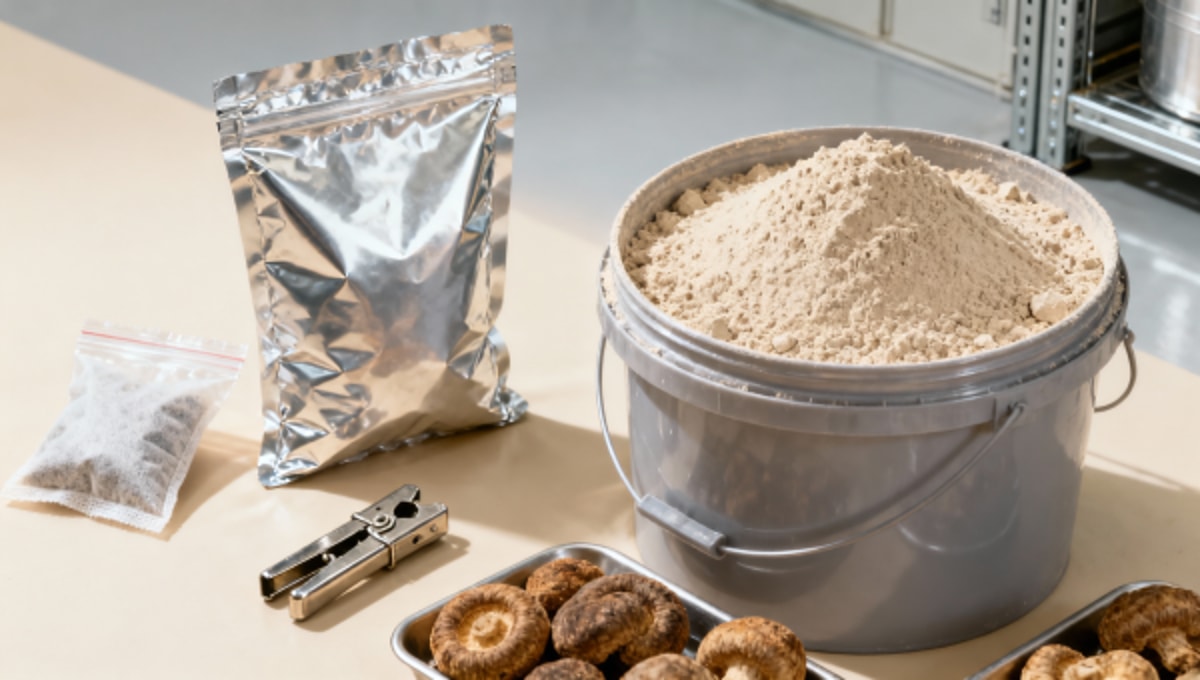
Lion's mane mushroom powder clumps primarily because it absorbs ambient moisture quickly, then undergoes localized caking as fine particles compress during storage and transport. In practical terms, preventing clumping is less about a single fix and more about controlling three variables together: low water activity, oxygen- and moisture-resistant packaging, and stable storage conditions across warehousing and distribution. For processors, buyers, and quality teams evaluating functional ingredients alongside maitake mushroom extract, shiitake mushroom powder, chaga mushroom extract, and reishi mushroom extract bulk, the key objective is to preserve flowability, label integrity, and usable shelf life without creating avoidable handling losses or compliance risk.
What actually prevents lion's mane mushroom powder from clumping during storage?
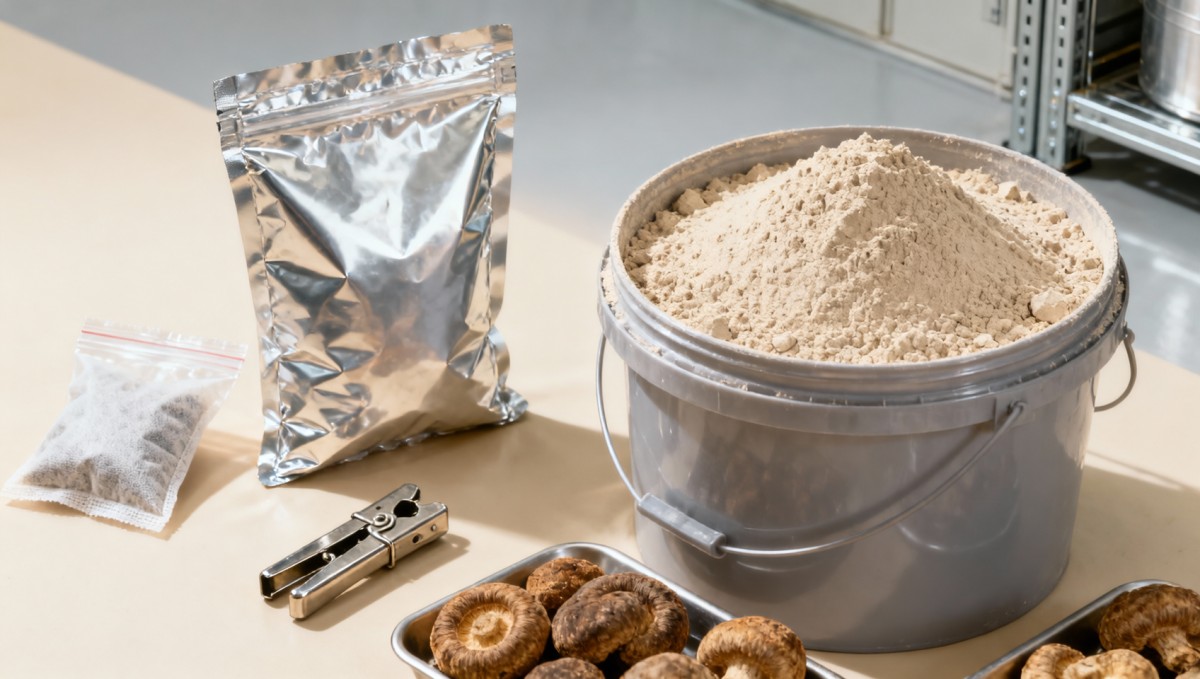
The most effective prevention strategy combines proper post-drying moisture control, barrier packaging, and disciplined warehouse management. If a powder leaves production with marginal moisture content, even high-quality packaging may not fully prevent caking later. Likewise, a well-dried powder can still clump if it is packed in containers with poor moisture barriers or stored in warm, humid conditions.
For most commercial operators, the best results come from treating lion's mane mushroom powder as a hygroscopic botanical ingredient. That means focusing on:
- Low and consistent residual moisture after drying
- Low water activity, not just acceptable moisture percentage
- Fast transfer from processing to sealed packaging
- Moisture-barrier packaging with reliable seals
- Temperature-stable, low-humidity storage areas
- Clear lot monitoring during warehousing and transport
If these controls are in place, clumping can be reduced substantially without compromising product usability. If they are not, clumping often appears early, especially after repeated temperature swings, partial container opening, or long-distance shipment.
Why lion's mane mushroom powder clumps faster than many buyers expect
Lion's mane mushroom powder is usually milled into a fine particle size to improve dispersion, blending, and extract handling. That fine structure increases surface area, which also increases exposure to moisture in the surrounding air. Once moisture is absorbed, particles begin sticking to one another. Pressure during stacking or transport can then turn soft agglomeration into hard caking.
Several additional factors can accelerate this process:
- High polysaccharide content: natural mushroom constituents can attract and retain moisture.
- Very fine grind: smaller particles tend to bridge and compact more easily.
- Inadequate cooling before packing: warm product entering a sealed pack can create internal condensation.
- Poor sealing practices: minor seal defects allow gradual moisture ingress over time.
- Repeated opening in production or lab settings: each opening exposes the powder to humid air.
This is why two visually similar lots may perform very differently in storage. One may remain free-flowing for months, while another begins forming lumps within weeks. For procurement and technical teams, supplier storage discipline matters almost as much as ingredient specification.
Which storage conditions matter most for preserving flowability?
If the goal is to keep lion's mane mushroom powder free-flowing and easy to dose, three storage conditions matter most: humidity, temperature stability, and packaging integrity.
Relative humidity control is usually the first priority. Even a short period in a humid environment can initiate clumping, particularly after the package has been opened. Dry rooms or controlled storage zones are strongly preferable for bulk botanical powders.
Temperature stability is the second priority. Large day-night swings or warm-to-cool transitions can promote condensation, especially inside partially filled containers. A consistently cool environment is usually better than intermittent refrigeration if refrigeration creates repeated exposure to condensation during removal and return.
Packaging integrity is the third priority. Once a moisture-sensitive powder is packed, the container becomes part of the preservation system. The best warehouse conditions cannot compensate for weak liners, poor resealing, or punctured sacks.
For commercial storage programs, practical controls often include:
- Keeping stock away from dock doors, steam lines, washdown zones, and exterior walls
- Using pallets and avoiding direct floor contact
- Maintaining first-in, first-out inventory rotation
- Limiting partial-open storage duration
- Resealing opened units immediately with minimal headspace exposure
How should lion's mane mushroom powder be packaged for bulk and industrial use?
For industrial and B2B use, packaging should be selected based on moisture sensitivity, shipment length, handling frequency, and pack size. In most cases, multi-layer moisture-barrier bags with sealed inner liners outperform standard paper-based formats for long-distance or multi-stage distribution.
Common packaging options include:
- Foil-laminated pouches or liners: strong moisture and oxygen barrier performance for premium extracts and sensitive powders
- HDPE or food-grade rigid containers: useful for repeated access if closure systems are robust
- Fiber drums with sealed inner liners: common in bulk trade when lined correctly and stored well
- Vacuum or nitrogen-assisted packing: can reduce oxidation and moisture-related deterioration risk in some formats
Desiccants may be appropriate in certain packs, but they should not be treated as a substitute for correct drying and barrier packaging. A desiccant can support stability; it cannot rescue a powder packed too wet or exposed too often after opening.
For buyers comparing lion's mane with reishi mushroom extract bulk or chaga mushroom extract, packaging specification should be reviewed as part of supplier qualification, not as an afterthought. The right packaging can reduce waste, preserve appearance, and improve downstream batching efficiency.
What should buyers and quality teams check before approving a supplier?
When clumping affects production, the root issue is often traced back to incomplete supplier controls rather than unavoidable mushroom behavior. Buyers, QA teams, and technical evaluators should therefore assess both product data and packaging discipline.
Useful qualification checks include:
- Moisture content and, ideally, water activity data for each lot
- Defined drying and cooling procedures before milling and packing
- Particle size distribution consistency
- Packaging material specification and seal validation
- Recommended storage conditions and open-pack handling instructions
- Shelf-life support data under actual distribution conditions
- Evidence of GMP-aligned handling and contamination control
It is also worth asking whether the powder includes an approved anticaking approach or whether the product is intentionally additive-free. Some users prefer clean-label formats with no flow aids, but that choice may require tighter storage discipline. The right decision depends on application, regulatory expectations, and commercial tolerance for minor agglomeration.
How to handle opened containers without causing rapid caking
Many storage failures occur after the original seal is broken. Even a well-packed lion's mane mushroom powder can clump if opened repeatedly in uncontrolled room conditions. For operators and production staff, open-pack handling is often the most important day-to-day control point.
Best practices include:
- Open only the quantity needed for immediate use
- Allow cold-stored material to equilibrate before opening to avoid condensation
- Use clean, dry tools only
- Remove air where possible and reseal promptly
- Transfer partially used material into smaller airtight containers if repeated access is expected
- Label the date of opening and define a shorter in-use period
If slight soft clumping occurs but there is no sign of spoilage, off-odor, discoloration, or moisture damage, some lots may still be usable after controlled sieving, depending on internal quality standards and intended application. However, hard caking should be investigated as a storage control failure, especially for regulated or specification-sensitive end uses.
Does clumping always mean the powder has lost quality or potency?
Not always. Clumping is first a physical warning sign, not automatically proof of chemical degradation. A powder may show minor lumping yet still remain within specification for identity or key actives. However, clumping can indicate increased moisture exposure, and that raises broader concerns about microbial stability, oxidation, handling performance, dosing consistency, and customer acceptance.
For this reason, clumping should be interpreted in context:
- Light, friable agglomeration may reflect limited moisture pickup and manageable handling impact.
- Dense or hardened caking more strongly suggests storage failure or prolonged moisture ingress.
- Clumping with odor, color, or flow changes warrants formal quality review and likely rejection for sensitive applications.
In commercial settings, the issue is not only whether the powder is still analytically acceptable, but whether it can still be processed efficiently and presented as a stable, professionally handled ingredient.
What is the most practical storage policy for commercial operators?
A workable policy for lion's mane mushroom powder should be simple enough to enforce and strict enough to reduce avoidable waste. For most processors, distributors, and end users, that means specifying dry, cool, sealed storage; minimizing time in open-air conditions; and documenting lot-level handling from receipt through use.
A strong commercial policy typically includes:
- Incoming inspection for packaging damage and visible caking
- Storage in a clean, dry, temperature-stable area
- Moisture-sensitive inventory segregation from wet-process zones
- Controlled procedures for opening, sampling, and resealing
- Clear disposition rules for clumped or compromised stock
- Supplier review if repeated clumping occurs across lots
For organizations sourcing multiple functional mushroom ingredients such as maitake mushroom extract, shiitake mushroom powder, chaga mushroom extract, and lion's mane formats, a unified powder-handling SOP can reduce training complexity and quality variation across SKUs.
In summary, the best way to prevent lion's mane mushroom powder from clumping in storage is to control moisture before packing, use high-barrier packaging, and maintain stable low-humidity conditions throughout warehousing and use. For technical teams and buyers, clumping should be treated as a preventable storage and packaging issue rather than an unavoidable inconvenience. The suppliers that deliver the most reliable commercial value are usually those that can demonstrate disciplined drying, pack integrity, and realistic storage guidance from production line to final application.
Related Intelligence
- Natural IngredientsIndonesia BPOM Updates Label Rules for Natural Ingredients ImportsIndonesia BPOM updates natural ingredients label rules: heat-tolerance declarations required from Aug 2026. Stay compliant & avoid shipment delays.
- Natural IngredientsIndonesia BPOM Updates Natural Ingredients Labeling RulesIndonesia BPOM Updates Natural Ingredients Labeling Rules: New 'Microbial Tolerance Statement' required for natural pigments, plant powders & fermented extracts by Aug 1, 2026.
- Natural IngredientsIndonesia BPOM Updates Natural Ingredients Labeling RulesIndonesia BPOM updates natural ingredients labeling rules: New 'Microbial Tolerance Statement' required for plant powders, fermented extracts & peptides—act now to avoid customs delays.
The Morning Broadsheet
Daily chemical briefings, market shifts, and peer-reviewed summaries delivered to your terminal.
