
Cordyceps extract wholesale: is private label worth considering?
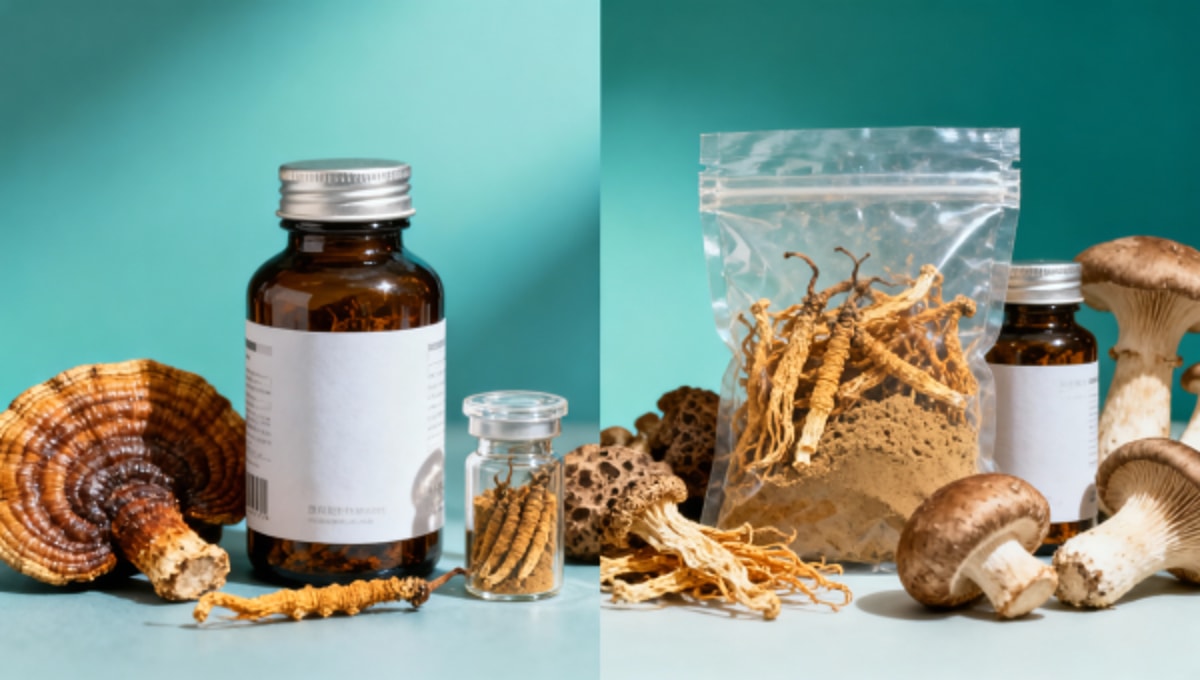
For buyers evaluating cordyceps extract wholesale, private label can offer stronger margin control, faster market entry, and clearer brand positioning—but only when quality systems and supplier transparency are proven. As demand also expands for maitake mushroom extract, shiitake mushroom powder, chaga mushroom extract, and reishi mushroom extract bulk, this article examines whether private labeling is a strategic advantage or an avoidable risk.
Why are more buyers considering private label for cordyceps extract wholesale?
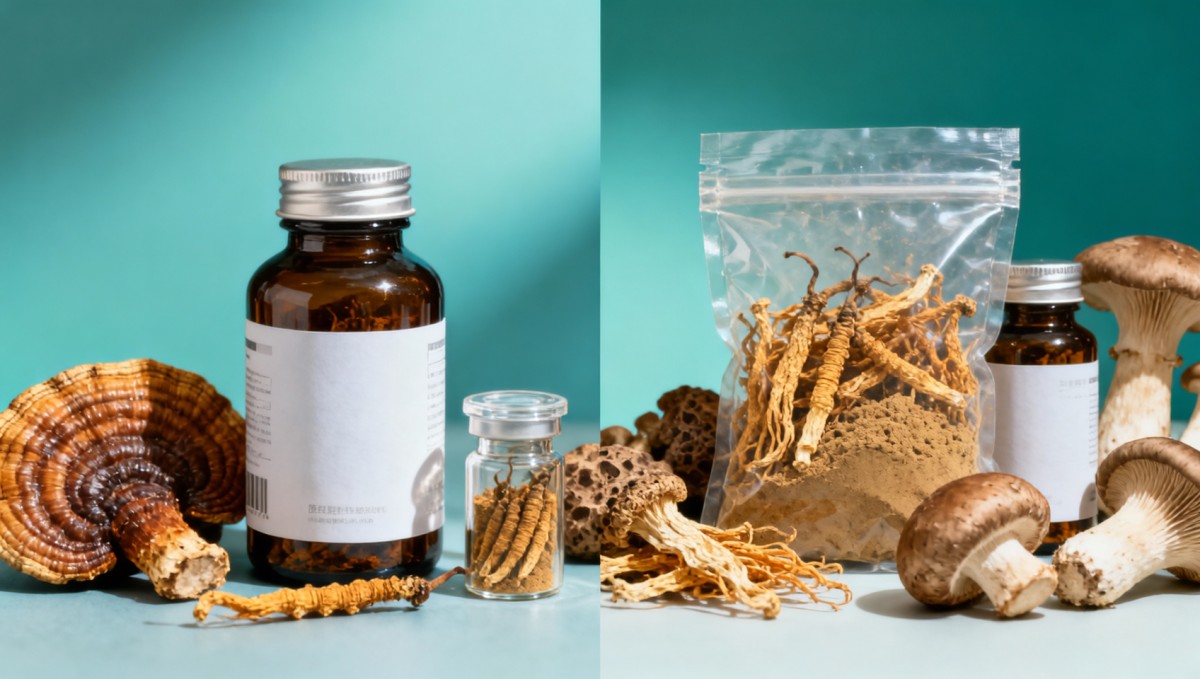
In the bio-extracts and ingredients segment, private label has moved from a simple packaging option to a strategic sourcing model. For procurement teams, it can shorten the route from bulk ingredient to shelf-ready product. For business evaluators, it creates room to differentiate by dosage format, labeling language, target market, and price architecture. In cordyceps extract wholesale, this matters because the same raw material may serve nutraceutical, wellness, food supplement, and specialist ingredient channels across 3–5 regional markets.
The attraction is clear. Instead of investing 6–12 months in building a fully owned manufacturing setup, a buyer can often launch through an experienced contract or private label supplier within a typical development cycle of 4–10 weeks, depending on formula complexity, packaging readiness, and label review. This is especially relevant when operators face tight launch windows, seasonal demand shifts, or internal pressure to validate market demand before approving larger capital commitments.
However, private label is not automatically the better choice. In a category such as cordyceps extract, quality variability can arise from species selection, extraction ratio, carrier use, moisture control, heavy metal management, and batch documentation. A low-cost quotation may appear attractive to finance approvers, but if the supplier cannot support COA consistency, traceability, and regulatory file readiness, the downstream cost of rework, rejected goods, or delayed customs review can outweigh the initial savings.
This is where ACC’s editorial focus becomes practical for industrial buyers. In complex supply chains shaped by GMP, FDA-facing expectations, import rules, and buyer audits, decision-makers need more than product claims. They need supplier transparency, process logic, and risk screening criteria. For information researchers and technical assessors, the question is not only whether private label is worth considering, but under which conditions it becomes commercially sound.
What does private label usually include in this category?
In practice, private label for cordyceps extract wholesale can cover several service depths. Some suppliers provide only bulk extract plus neutral packaging support. Others offer a broader package that includes blending, encapsulation, powder filling, finished-label application, export documentation, and standard QC release. Buyers should define this scope early, ideally across 4 core layers: raw material, processing, packaging, and compliance support.
- Bulk-only model: suited to brands with in-house packing capability and stronger internal QA review.
- Semi-finished model: useful when buyers want pre-blended or pre-standardized extract but retain label control.
- Full private label model: typically includes packaging, artwork implementation, and shipment preparation.
- Regulatory support model: may include basic document packs, specification sheets, and test summaries for import review.
The wider the service scope, the greater the need for documented controls. A buyer managing 2–3 SKU launches may accept a lighter model. A regional distributor planning 10 or more SKUs across mushroom extracts usually needs a stronger private label framework with batch coding logic, specification harmonization, and packaging validation built in.
Private label vs bulk buying only: which model makes more commercial sense?
The best sourcing model depends on your internal capabilities, margin target, and speed requirement. A buyer with strong technical operations may prefer bulk cordyceps extract and manage blending or packaging internally. A buyer entering a new region with limited infrastructure may benefit more from private label. The decision often turns on 5 variables: MOQ, lead time, quality control depth, working capital, and compliance readiness.
The table below compares common decision factors in cordyceps extract wholesale and adjacent mushroom ingredient categories such as maitake mushroom extract, shiitake mushroom powder, chaga mushroom extract, and reishi mushroom extract bulk. It is designed for procurement teams, technical reviewers, and commercial managers who need a practical framework rather than a generic preference.
The comparison shows why private label is often attractive for first-stage commercialization. It reduces operational fragmentation. Yet bulk-only sourcing can become more cost-efficient at larger recurring volumes, especially when a buyer already runs validated packaging lines or regional warehousing. The tipping point is usually not price alone. It is whether your organization can control the added interfaces without creating delay or compliance risk.
When is private label a stronger fit?
Private label is usually worth considering in at least 4 scenarios. First, when time to market is critical and the business wants to test demand within one quarter. Second, when internal production capacity is limited or better reserved for higher-volume core products. Third, when a buyer wants to build a branded portfolio that includes multiple mushroom actives under a consistent label system. Fourth, when procurement teams need clearer landed-cost forecasting through a more integrated supply arrangement.
When is it less suitable?
It may be less suitable when the buyer needs highly customized formulations with strict process confidentiality, when batch volumes exceed the supplier’s packaging efficiency window, or when a regulated end-use requires deeper manufacturing oversight than the private label partner can document. If your internal QA program already audits every conversion step and your own site has spare line time, bulk buying may remain the stronger model.
What should technical and quality teams verify before approving a supplier?
In cordyceps extract wholesale, quality assessment should begin before any commercial negotiation is finalized. Technical evaluators and quality managers should request a document pack early, then verify whether the supplier can maintain repeatability across 3 consecutive batches or at least explain the control logic for natural raw material variability. This is particularly important for mushroom-derived ingredients, where extraction processes, standardization claims, and excipient use can affect both performance and label accuracy.
The first review layer is specification discipline. Does the supplier define extract ratio, marker compounds if relevant, microbial limits, moisture range, and storage recommendation? The second layer is traceability. Can the supplier connect raw material intake, production batch, test release, packaging lot, and export documents? The third layer is practical compliance. Can they support documentation suitable for buyer audits, import review, or customer due diligence within a normal response window of 2–5 working days?
The following table summarizes a practical review matrix for procurement, QA, and project teams. It is useful not only for cordyceps extract private label projects, but also for buyers comparing maitake mushroom extract, shiitake mushroom powder, chaga mushroom extract, and reishi mushroom extract bulk under a unified sourcing program.
This matrix highlights a common oversight: some buyers review the extract but not the finished-goods conversion process. In private label, packaging and coding are not secondary tasks. They are part of the quality system. A correct extract in an incorrectly coded or poorly sealed pack can still become a rejected shipment.
Which standards and documents are commonly requested?
Requirements vary by destination market and product positioning, but buyers commonly ask for specification sheets, COA templates, allergen statements where relevant, origin information, storage recommendations, and manufacturing or quality-system declarations appropriate to the product class. In more regulated channels, procurement may also request evidence aligned with GMP-oriented practices, sanitation controls, and packaging material suitability.
A practical 6-point pre-approval checklist
- Confirm whether the specification is fixed or subject to seasonal adjustment.
- Ask how many production steps are performed in-house versus outsourced.
- Review the standard lead time for samples, first order, and repeat order separately.
- Check if label content review is purely administrative or technically screened.
- Verify retained sample duration and complaint investigation workflow.
- Clarify storage conditions, especially if transit may exceed 3–6 weeks.
These steps are practical because they connect technical review to procurement reality. A quality file that looks complete on paper still needs to support shipment release, customs communication, customer audits, and potential claim handling after delivery.
How should procurement teams assess cost, MOQ, and launch risk?
Cost comparison in private label should never stop at unit price. Buyers should calculate at least 4 cost layers: ingredient cost, conversion cost, packaging cost, and risk cost. Risk cost includes delayed launch, document gaps, repacking, and nonconforming inventory. A lower offer on cordyceps extract wholesale can become more expensive if the MOQ is too high, if packaging materials are not stable, or if the supplier’s revision control is weak.
MOQ structure deserves close scrutiny. Some suppliers quote an attractive bulk rate but require separate minimums for extract, bottle, label, and carton. Others offer a more integrated MOQ that better fits pilot launch programs. For a buyer testing 2–4 formulations, the commercial fit may depend less on lowest raw material cost and more on whether the supplier supports a manageable first production run without forcing excess packaging inventory.
Procurement managers should also segment suppliers by response reliability. If document turnaround consistently takes more than 5 working days, or if specification revisions are not version-controlled, the real project cost rises. This matters for project managers coordinating artwork approval, shipment booking, and market launch deadlines. A slow but cheap supplier can create hidden cost in labor hours, internal follow-up, and delayed revenue recognition.
A simple sourcing workflow that reduces avoidable risk
- Screen 3 supplier types: bulk specialist, integrated private label supplier, and hybrid partner with both options.
- Request sample, specification, COA format, and estimated lead time in the same inquiry round.
- Run a joint review with procurement, QA, and commercial teams before discussing price finalization.
- Pilot with 1–2 SKUs first, then expand to broader mushroom extract lines after delivery performance is verified.
This 4-step workflow helps align financial approval with technical evidence. It is especially useful when one supplier can support multiple products such as cordyceps extract, reishi mushroom extract bulk, and shiitake mushroom powder, because cross-category sourcing can improve negotiation leverage but also amplify the impact of one weak quality system.
Common mistakes, buyer questions, and when private label is not worth it
Many sourcing problems in cordyceps extract wholesale begin with one of 3 assumptions: that all extracts with similar names are commercially equivalent, that private label automatically reduces workload, or that a compliant-looking document pack guarantees operational consistency. None of these assumptions is reliable without deeper review. Natural extract categories require closer control over variation, process clarity, and release discipline.
A second mistake is treating adjacent mushroom products as interchangeable in project planning. Maitake mushroom extract, chaga mushroom extract, shiitake mushroom powder, and reishi mushroom extract bulk may share a sourcing channel, but they do not always share the same processing characteristics, dosage logic, or packaging behavior. Grouping them under one buying program makes sense only if specifications and commercial assumptions are kept separate.
A third mistake is approving a supplier without confirming what happens after shipment. Who handles complaint review? Who stores retained samples? What is the expected response time if one batch shows visual deviation or if customs asks for clarification? These operational questions often matter more than the opening quotation.
How do buyers know if a private label project is ready to proceed?
A project is usually ready when 5 elements are aligned: specification approval, packaging confirmation, document set review, lead time acceptance, and commercial sign-off. If even one of these remains open, the probability of launch friction rises. For first orders, teams should also build in a buffer of 1–2 weeks for artwork revision, sample confirmation, or shipping adjustments.
What lead time is realistic for private label mushroom extracts?
For standard SKUs with available packaging materials, many projects can move in roughly 4–8 weeks. If custom packaging, new label review, or multiple extract combinations are involved, 8–12 weeks may be more realistic. Repeat orders are often faster, but only if the specification, artwork, and packaging components remain unchanged.
Is the lowest MOQ always the best option?
Not necessarily. A very low MOQ can carry higher per-unit conversion costs, less favorable packaging options, or unstable scheduling priority. Buyers should compare MOQ together with batch efficiency, packaging consistency, and reorder flexibility. In many cases, the best commercial outcome comes from a moderate first run with a clear repeat-order path rather than the smallest possible batch.
When should a buyer avoid private label entirely?
Avoid it when the supplier cannot provide transparent batch logic, when your target market needs a documentation depth they cannot support, or when your internal brand strategy depends on formulation control that a third party cannot guarantee. In those cases, bulk ingredient purchasing with in-house processing or a more specialized contract manufacturing model may be safer.
Why work with a specialist publishing and intelligence partner when evaluating suppliers?
In regulated and technically sensitive categories, good decisions depend on better information structure. ACC serves professionals across fine chemicals, bio-extracts, agricultural systems, and primary processing industries by translating supplier claims into decision-ready frameworks. That matters when procurement leaders, QA managers, financial approvers, and project owners must evaluate the same private label proposal from different risk perspectives.
Our value is not limited to surface-level product commentary. We focus on the commercial and technical intersections that influence actual buying outcomes: documentation depth, supply chain visibility, quality-system logic, lead-time realism, and market-entry practicality. For buyers assessing cordyceps extract wholesale, we help clarify where private label supports margin and speed, and where it may introduce hidden operational exposure.
If you are reviewing cordyceps extract, maitake mushroom extract, shiitake mushroom powder, chaga mushroom extract, or reishi mushroom extract bulk, you can contact us for structured support around supplier comparison, specification review priorities, common compliance checkpoints, expected lead-time ranges, sample evaluation logic, and market-facing positioning considerations. This is especially useful for teams managing multi-SKU launches or cross-border sourcing under tight approval timelines.
Use ACC when you need practical clarity before the purchase order stage. We can help you frame the right questions on parameters, private label suitability, MOQ strategy, delivery windows, documentation expectations, and quotation comparison points so your next discussion with a supplier is faster, more technical, and easier to approve internally.
Related Intelligence
- Custom SynthesisANVISA Extends Custom Synthesis Oversight to Tier-3 SuppliersANVISA extends custom synthesis oversight to tier-3 suppliers—key for API exporters, CDMOs & pharma procurement teams entering Brazil. Learn implications before July 1, 2026.
- Custom SynthesisANVISA Extends Custom Synthesis Traceability to 3rd-Tier SuppliersANVISA Extends Custom Synthesis Traceability to 3rd-Tier Suppliers—key update for API importers, CDMOs & global suppliers entering Brazil. Act now.
- Custom SynthesisCordyceps extract wholesale: is private label worth considering?Cordyceps extract wholesale: is private label worth it? Compare maitake mushroom extract, shiitake mushroom powder, chaga mushroom extract, and reishi mushroom extract bulk for smarter sourcing.
The Morning Broadsheet
Daily chemical briefings, market shifts, and peer-reviewed summaries delivered to your terminal.
