
ANVISA Extends Custom Synthesis Oversight to Tier-3 Suppliers
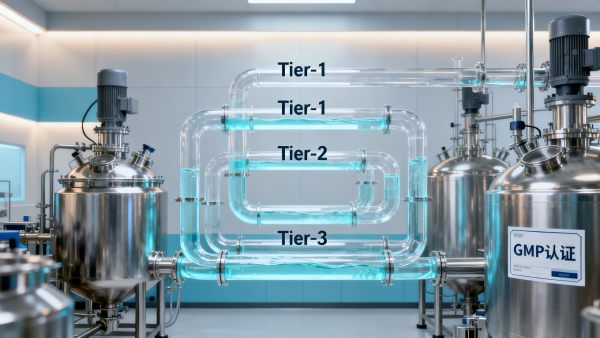
On April 24, 2026, Brazil’s National Health Surveillance Agency (ANVISA) updated its Guidelines for Import Compliance of Active Pharmaceutical Ingredients, mandating that exporters of custom-synthesized APIs provide full qualification documents and GMP compliance statements for starting materials’ suppliers up to the third tier upstream. The requirement takes effect on July 1, 2026. This development is particularly relevant for API exporters, CDMO service providers, pharmaceutical procurement teams, and supply chain auditors operating in or serving the South American market.
Event Overview
On April 24, 2026, ANVISA published an update to its Guidelines for Import Compliance of Active Pharmaceutical Ingredients. The revision introduces a new requirement for manufacturers engaged in custom synthesis of APIs: they must submit complete regulatory documentation—including supplier qualification files and formal GMP compliance declarations—for all upstream suppliers of starting materials, extending traceability to the third tier. The rule becomes mandatory for all API imports into Brazil effective July 1, 2026. No further implementation details, transitional provisions, or enforcement protocols have been publicly released as of the update date.
Industries Affected
API Exporters & Custom Synthesis Providers
These entities are directly subject to the new documentation obligation. Their ability to demonstrate end-to-end traceability—especially for non-commercial or proprietary starting materials—will now determine import eligibility in Brazil. Impact includes increased internal documentation burden, potential delays in customs clearance, and heightened scrutiny during ANVISA’s pre-market evaluation of imported APIs.
South American Pharmaceutical Procurement Teams
Procurement functions at Brazilian and regional pharma companies will need to re-evaluate vendor due diligence protocols. The update raises the bar for supplier qualification, shifting emphasis from second-tier (immediate supplier) verification to full third-tier mapping. This may extend sourcing timelines and increase reliance on audit-ready partners with documented upstream governance.
CDMOs Serving Global Clients with Brazilian Distribution
Contract development and manufacturing organizations—particularly those based in China or other API-exporting countries—face intensified client-facing audits. Buyers are expected to request verified tier-3 supplier dossiers as part of quality agreements. CDMOs without integrated upstream quality oversight may encounter reduced competitiveness in tenders targeting the Brazilian market.
Supply Chain Verification & Audit Service Providers
Firms offering GMP-aligned supply chain auditing, supplier qualification support, or regulatory dossier preparation will likely see increased demand for tiered supplier mapping services—especially for starting material origins outside regulated jurisdictions. However, scope expansion depends on whether ANVISA issues further guidance on acceptable evidence formats or audit equivalency.
What Relevant Enterprises or Practitioners Should Focus On
Monitor official ANVISA communications for interpretation notes
As of April 24, 2026, the updated Guidelines do not define ‘tier-3’ with reference to chemical synthesis pathways (e.g., number of synthetic steps vs. contractual layers). Stakeholders should track any subsequent FAQs, technical notices, or webinars issued by ANVISA to clarify operational expectations before July 1, 2026.
Map current API supply chains against the tier-3 requirement
Exporters and procurement teams should conduct internal gap assessments—noting which starting materials originate from non-GMP or unqualified suppliers beyond the second tier. Prioritize APIs destined for Brazilian registration or commercialization, as these will face immediate review under the new rule.
Distinguish between policy signal and enforceable procedure
The update reflects ANVISA’s growing emphasis on supply chain transparency, but enforcement mechanisms—including penalties for incomplete submissions or reliance on third-party attestations—remain unspecified. Until such details emerge, stakeholders should treat the requirement as a procedural readiness benchmark rather than an immediately adjudicated standard.
Align internal documentation systems with tiered supplier data collection
Companies should begin updating quality management systems to capture, verify, and retain tier-3 supplier information—including site names, addresses, regulatory status, and signed GMP declarations. Preparing standardized templates for supplier engagement now can reduce last-minute friction ahead of the July 2026 deadline.
Editorial Observation / Industry Perspective
From an industry perspective, this update is best understood as a regulatory signal—not yet a fully operationalized compliance regime. It signals ANVISA’s intent to align with global trends in supply chain resilience and active substance provenance, particularly in response to increasing complexity in custom synthesis workflows. Analysis来看, the move does not introduce novel scientific standards but significantly raises the evidentiary threshold for documentation integrity. Observation来看, it reflects a broader shift among emerging-market regulators toward upstream accountability, though actual impact will depend heavily on how rigorously ANVISA implements verification—and whether it accepts equivalent assurance from recognized authorities (e.g., EU EMA, US FDA). Current more appropriate interpretation is that this is a preparatory milestone, not a finalized audit criterion.
This update underscores how regulatory evolution in key growth markets like Brazil increasingly tests the depth—not just breadth—of pharmaceutical supply chain governance. Its significance lies less in immediate enforcement and more in its role as a forward-looking benchmark for quality system maturity. For now, it is more accurately interpreted as a calibration point for long-term supplier strategy than a short-term compliance trigger.
Information Source: Official ANVISA update dated April 24, 2026, titled Guidelines for Import Compliance of Active Pharmaceutical Ingredients. No supplementary guidance or implementation manual has been published as of the update date; ongoing monitoring is recommended.
Related Intelligence
- Custom SynthesisANVISA Extends Custom Synthesis Oversight to Tier-3 SuppliersANVISA extends custom synthesis oversight to tier-3 suppliers—key for API exporters, CDMOs & pharma procurement teams entering Brazil. Learn implications before July 1, 2026.
- Custom SynthesisANVISA Extends Custom Synthesis Traceability to 3rd-Tier SuppliersANVISA Extends Custom Synthesis Traceability to 3rd-Tier Suppliers—key update for API importers, CDMOs & global suppliers entering Brazil. Act now.
- Custom SynthesisANVISA Extends Custom Synthesis API Traceability to 3-Tier Upstream SuppliersANVISA extends Custom Synthesis API traceability to 3-tier upstream suppliers—key for pharma importers, CMOs & supply chain teams. Act now to avoid suspensions.
The Morning Broadsheet
Daily chemical briefings, market shifts, and peer-reviewed summaries delivered to your terminal.
