
What certifications matter for reishi mushroom extract bulk orders?
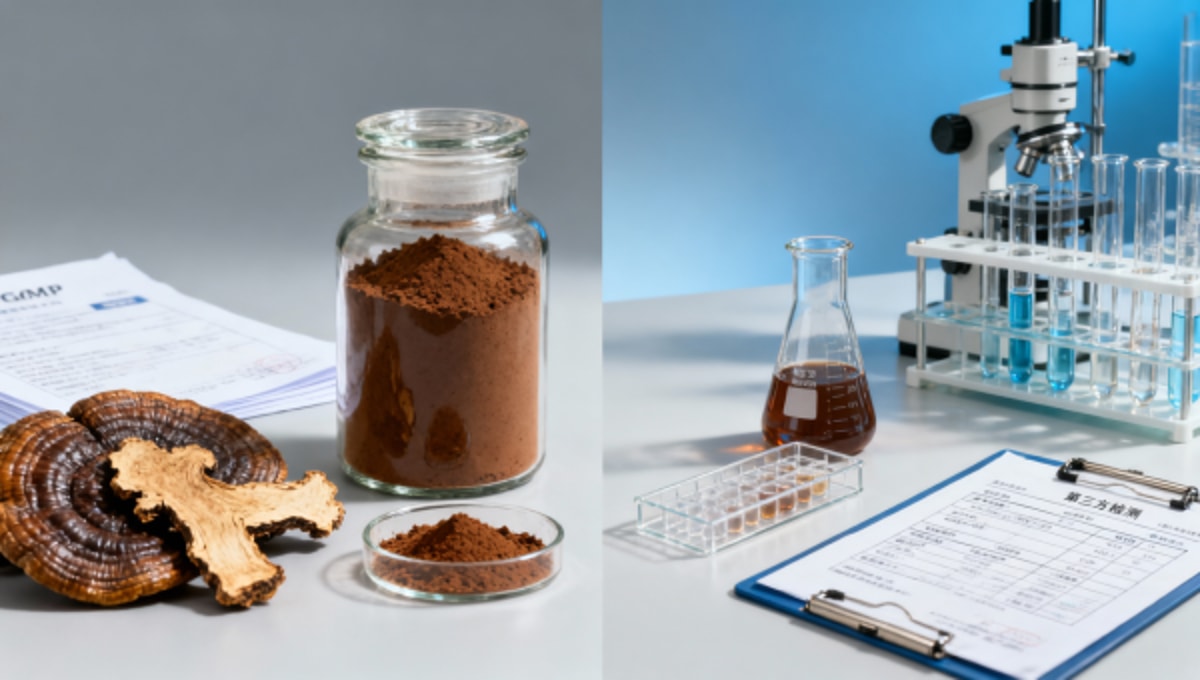
For buyers evaluating reishi mushroom extract bulk, the short answer is this: the most important certifications are the ones that verify manufacturing control, food or supplement safety, contaminant testing, and traceability for your target market. In practice, that usually means GMP, ISO 22000 or HACCP-based food safety systems, and complete third-party lab documentation for heavy metals, microbiology, pesticides, and active compounds. Organic, Kosher, Halal, and region-specific registrations may also matter depending on your downstream application and export destination. The real procurement task is not collecting the most certificates, but identifying which ones reduce supply risk, support compliance, and match your product positioning.
For technical teams, QA managers, and procurement leaders, certifications are useful only when they help answer practical questions: Can this supplier consistently produce safe material? Are the active markers verified batch to batch? Will this documentation hold up in an audit, customer review, or customs clearance? Those same questions also apply when comparing adjacent functional ingredients such as maitake mushroom extract, chaga mushroom extract, and lion's mane mushroom powder.
Which certifications actually matter for reishi mushroom extract bulk orders?
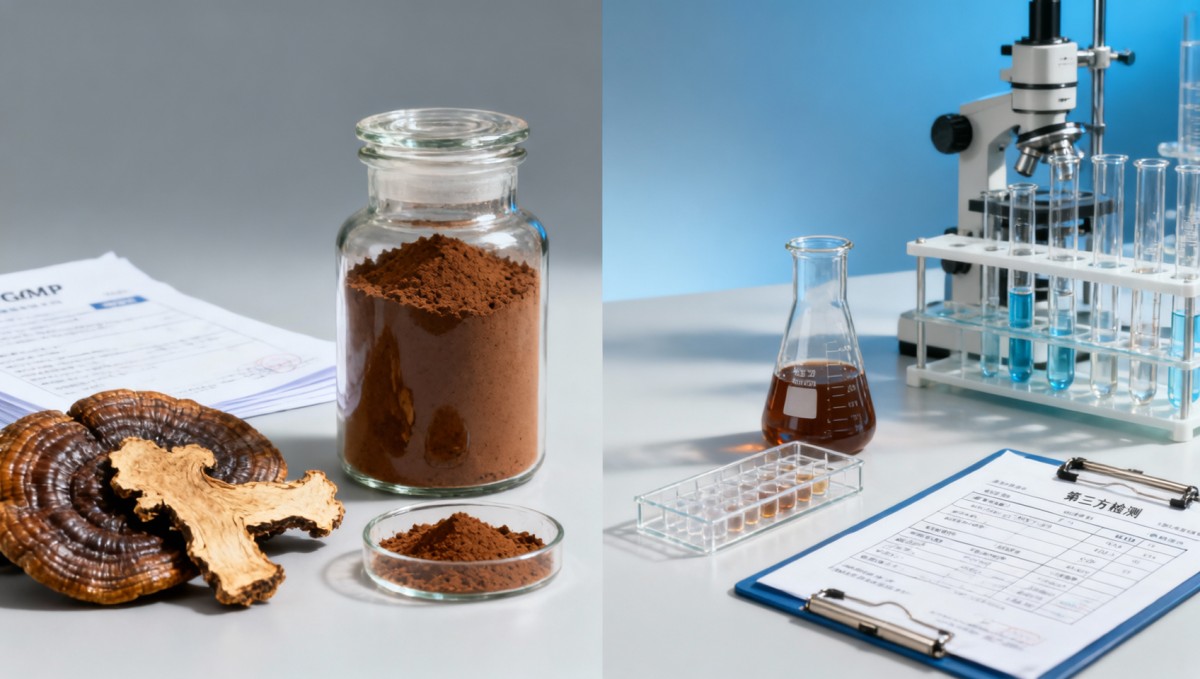
Not every certificate has equal value. For bulk reishi mushroom extract, buyers should separate core certifications from market-access or positioning certifications.
Core certifications and documents usually include:
- GMP — confirms the manufacturer follows controlled production procedures, documentation practices, hygiene requirements, and quality systems.
- ISO 22000, HACCP, or equivalent food safety management certification — especially relevant if the extract is sold into food, beverage, or nutraceutical channels.
- Third-party Certificate of Analysis (COA) — should verify identity, active compounds, microbial limits, heavy metals, and where relevant, solvent residues and pesticide residues.
- Traceability records — raw material origin, lot tracking, processing records, and chain-of-custody details.
- Allergen, adulteration, and contamination control documentation — increasingly important in multi-ingredient manufacturing environments.
Secondary but commercially important certifications may include:
- USDA Organic / EU Organic / other local organic certification
- Kosher
- Halal
- Non-GMO statements
- FDA facility registration for suppliers serving the U.S. market, where applicable
- Country-specific compliance files needed for importers, contract manufacturers, or brand owners
If a supplier promotes many logos but cannot provide recent batch-level lab data, the certifications have limited procurement value. In bulk purchasing, current analytical evidence matters more than marketing badges.
Why GMP is often the first filter for procurement and QA teams
For most professional buyers, GMP is a baseline requirement because it speaks directly to operational discipline. Reishi mushroom extract bulk is not judged only by label claims; it is judged by whether the producer can control raw material selection, extraction parameters, sanitation, documentation, deviation handling, and release procedures.
A credible GMP system helps buyers assess whether the supplier can:
- Maintain batch consistency across repeated large-volume orders
- Document critical processing steps such as extraction ratio, concentration, drying, and packaging
- Investigate out-of-specification results properly
- Reduce contamination and mix-up risk
- Support customer audits and regulatory reviews
This is especially important with mushroom-derived ingredients because quality can vary significantly depending on whether the extract is made from fruiting body, mycelium, or mixed substrate material. A GMP-certified manufacturer should be able to state clearly what the raw material is, how it is processed, and what the specification actually represents.
What should the COA and third-party testing cover?
When buyers ask what certifications matter, they often also mean: What test results must be on file before we approve a supplier? In many cases, the COA package is more decision-critical than the certificate itself.
For reishi mushroom extract bulk, a useful analytical package should include the following:
- Identity testing — confirms the ingredient is actually Ganoderma lucidum or the specified reishi species/material.
- Active or characteristic compounds — typically polysaccharides, beta-glucans, triterpenes, or other declared markers depending on product type and claim framework.
- Heavy metals — commonly lead, cadmium, arsenic, and mercury.
- Microbiological testing — total plate count, yeast and mold, coliforms, E. coli, Salmonella, and other market-relevant indicators.
- Pesticide residue testing — particularly important where agricultural inputs and export requirements are strict.
- Residual solvents — required if solvents are used in extraction or concentration.
- Moisture, ash, bulk density, mesh size, and appearance — important for manufacturing usability and stability.
For technical evaluation teams, one key question is whether the supplier tests only against internal standards or against recognized pharmacopeial, food safety, or customer-defined methods. The method and lab credibility matter almost as much as the result itself.
How do certifications affect market access, claims, and commercial risk?
Certifications are not only quality tools; they are also commercial filters. A reishi mushroom extract supplier may be technically acceptable but commercially unsuitable if its documentation does not match the buyer’s end market.
Examples:
- If the material is going into premium wellness products, organic certification may support brand positioning and retailer acceptance.
- If it is sold into religiously sensitive markets, Kosher or Halal status may be necessary.
- If the buyer supplies large contract manufacturers, formal food safety certification and strong audit documentation may be mandatory.
- If the product is destined for high-compliance export markets, complete traceability and contaminant screening may be non-negotiable.
From a business perspective, the right certifications reduce:
- Import clearance delays
- Customer qualification failure
- Batch rejection risk
- Reputational exposure from contamination incidents
- Hidden costs caused by incomplete paperwork or repeat testing
This is why procurement teams should evaluate certificates against the intended use case, not in isolation.
What red flags should buyers watch for when reviewing supplier certificates?
Experienced buyers know that a certificate alone does not prove a supplier is reliable. Several warning signs should trigger deeper review:
- Certificates are expired, low-resolution, incomplete, or difficult to verify
- The certificate holder name does not clearly match the manufacturer
- The scope of certification does not include the actual processing activity
- COAs appear overly generic and identical across batches
- Active compound data is missing or inconsistent
- The supplier cannot explain whether the product comes from fruiting body or mycelium
- There is no clear contaminant control plan for heavy metals or microbes
- Third-party lab reports are old or only available on request after commercial commitment
For reishi mushroom extract bulk, documentation quality often reflects overall operational maturity. Suppliers with robust systems usually respond quickly with audit-ready files, specification sheets, allergen statements, TDS documents, and lot-specific analytical records.
How should buyers compare reishi with maitake, chaga, and lion’s mane ingredients?
The same certification logic generally applies across medicinal and functional mushroom ingredients, including maitake mushroom extract, chaga mushroom extract, and lion's mane mushroom powder. However, the technical emphasis may differ by ingredient format and commercial use.
- Reishi mushroom extract bulk — often evaluated for polysaccharides, beta-glucans, and triterpene-related specifications, alongside contaminant control.
- Maitake mushroom extract — buyers may focus on extract ratio, beta-glucan content, and microbiological quality.
- Chaga mushroom extract — traceability and contaminant testing can be especially important because sourcing environments and mineral uptake profiles may vary.
- Lion's mane mushroom powder — if sold as powder rather than extract, particle size, organoleptic properties, microbial load, and raw material authenticity may receive more attention.
For multi-ingredient procurement programs, standardizing supplier qualification criteria across mushroom products can improve efficiency. Many buyers create a common approval checklist covering GMP status, food safety certification, COA requirements, traceability, and market-specific declarations.
A practical supplier checklist for reishi mushroom extract bulk qualification
To make evaluation faster and more consistent, procurement and QA teams can use a simple decision framework. Before approving a supplier, confirm the following:
- Manufacturing system: Is there valid GMP certification or equivalent evidence of controlled production?
- Food safety system: Does the facility hold ISO 22000, HACCP, or another recognized food safety certification where relevant?
- Batch analytics: Can the supplier provide recent lot-specific COAs with identity, active markers, heavy metals, microbiology, and residue data?
- Raw material transparency: Is the source material clearly defined as fruiting body, mycelium, or other format?
- Traceability: Are origin records, lot tracking, and production records available?
- Market fit: Are organic, Kosher, Halal, or other target-market documents available if needed?
- Audit readiness: Can the supplier support questionnaires, technical reviews, and customer audits without delay?
- Specification consistency: Do multiple batches show stable values, not just one attractive sample?
This checklist helps stakeholders across procurement, quality, technical review, finance, and management align around the same approval logic.
Conclusion: the most important certifications are the ones that reduce risk and support the intended market
For reishi mushroom extract bulk orders, the most meaningful certifications are those tied to manufacturing control, safety, and compliance: GMP, recognized food safety systems, and strong third-party analytical documentation. Organic, Kosher, Halal, and other certificates matter when they directly support customer requirements or market access, but they should not substitute for batch-level evidence.
The best buying decision comes from combining certificates with specifications, test data, traceability, and a clear understanding of the ingredient itself. That approach helps teams evaluate reishi more confidently and also creates a consistent framework for sourcing related ingredients such as maitake mushroom extract, chaga mushroom extract, and lion's mane mushroom powder. In bulk procurement, the question is not simply whether a supplier has certificates, but whether those documents genuinely lower risk, support quality, and fit the commercial objective.
Related Intelligence
- Botanical ExtractsANVISA New Rule: Botanical Extracts to Brazil Require Traceability to Tier-2 SuppliersANVISA new rule requires traceability for botanical extracts to Brazil — now covering tier-2 suppliers. Learn compliance steps, affected sectors & how to prepare before July 2026.
- Botanical ExtractsANVISA’s New Traceability Rule for Botanical Extracts Enters Force in BrazilANVISA’s new traceability rule for botanical extracts takes effect April 27, 2026—learn how it impacts exporters, importers & suppliers in Brazil.
- Botanical ExtractsANVISA Extends Traceability for Botanical Extract Imports to Tier-2 SuppliersANVISA extends botanical extract traceability to tier-2 suppliers—key for Chinese exporters of herbal ingredients, supplements & cosmetics. Act now for July 2026 compliance.
The Morning Broadsheet
Daily chemical briefings, market shifts, and peer-reviewed summaries delivered to your terminal.
