
Pomegranate seed extract: what makes one batch better than another?

In the global market for pomegranate seed extract, batch quality is shaped by far more than origin alone. From polyphenol retention and extraction methods to contamination control and traceable sourcing, small differences can determine commercial value and compliance readiness. For buyers comparing pomegranate seed extract alongside astragalus root extract, chaga mushroom extract, or reishi mushroom extract bulk, understanding what separates one batch from another is essential for safer procurement and stronger product performance.
Why do pomegranate seed extract batches vary so much in commercial quality?
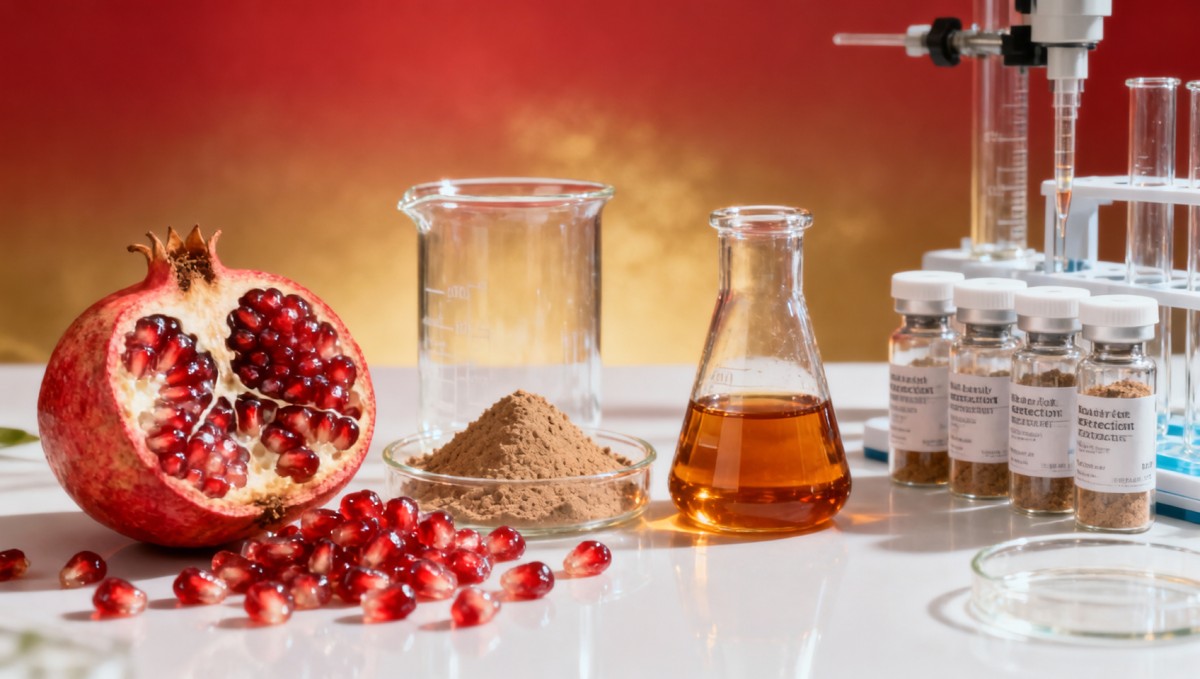
Pomegranate seed extract is often discussed as if it were a uniform ingredient, yet procurement teams know that one lot can perform very differently from the next. In practice, batch variation usually begins with three upstream factors: raw material maturity, post-harvest handling within 24–72 hours, and the extraction route used to preserve or degrade target compounds. For users in nutraceuticals, cosmetics, and functional ingredients, these differences directly affect assay consistency, sensory profile, and downstream formulation stability.
For technical evaluators, the first mistake is to judge quality by color, origin, or a single headline specification. A darker powder or a fruit source from a recognized growing region may look promising, but that does not confirm marker retention, oxidation status, or contaminant control. In the fine chemicals and bio-extracts space, a batch only becomes commercially reliable when specification sheets, analytical methods, and traceability records align with each other across at least 3 core dimensions: identity, purity, and consistency.
This matters even more when procurement cycles are tight. A buyer who approves based on a brochure may later face a 2–4 week delay caused by failed incoming QC, retesting, or document mismatch. For project managers and finance approvers, that delay is not only a laboratory issue. It affects production planning, customer commitments, and total landed cost. In regulated or export-oriented supply chains, one inconsistent pomegranate seed extract batch can create disproportionate administrative and operational friction.
AgriChem Chronicle focuses on this exact decision gap. Across agricultural, biochemical, and primary processing sectors, the question is rarely whether an extract exists in the market. The real question is which batch is suitable for a specific compliance profile, use case, and purchasing model. That is why batch-level analysis matters more than generic product descriptions.
The 5 batch variables most buyers should check first
When pomegranate seed extract is evaluated for industrial purchase, the highest-risk gaps usually appear in five areas. These are not abstract quality concerns; they are practical checkpoints that influence approval speed, formulation performance, and contract confidence.
- Raw material condition: seed maturity, moisture, storage temperature, and whether damaged fruit entered the processing stream.
- Extraction method: solvent type, temperature range, concentration step, and whether the process limits oxidation of sensitive compounds.
- Specification design: assay basis, marker definition, residue limits, and whether methods are internally repeatable across batches.
- Contaminant control: heavy metals, microbiology, residual solvents, pesticides, and foreign matter risk.
- Documentation and traceability: lot coding, COA structure, origin records, and retention sample availability for 12–24 months where relevant.
For purchasers comparing pomegranate seed extract with astragalus root extract or mushroom extracts, these checkpoints remain broadly applicable. The specific markers differ, but the discipline of batch evaluation does not. Reliable sourcing depends on process transparency, not on category popularity.
Which technical indicators actually separate a stronger batch from a weaker one?
A stronger pomegranate seed extract batch is not merely one with a higher advertised assay. It is one in which technical indicators are coherent. That means the assay matches the extraction method, the physical form matches the intended application, and the impurity profile stays within acceptable commercial limits. Buyers should review at least 4 technical layers together: active markers, physical properties, contaminant profile, and analytical reproducibility.
For example, an extract standardized for polyphenol content may suit beverage premixes, capsules, or functional blends only if moisture, bulk density, and dispersibility also fit the process. A batch with acceptable active content but poor flowability can still raise handling costs on production lines. Operators and formulation teams often discover this only after receipt, when blending times extend by 15–30 minutes or sieving losses increase.
The extraction route also changes commercial value. Lower-temperature processing may better preserve sensitive constituents, while aggressive concentration can increase apparent assay yet worsen oxidation risk or sensory harshness. A serious supplier should be able to explain the relationship between the process route and the final certificate data. If that link is vague, technical review should slow down rather than speed up.
The table below summarizes practical indicators that quality teams and procurement managers can use when comparing pomegranate seed extract lots from different suppliers or different production windows.
The most useful takeaway is that technical performance should be read as a pattern rather than as a single number. A batch with moderate assay but clean impurity control and stable handling may deliver better commercial value than a high-assay batch that fails process compatibility. This is especially true in B2B purchasing, where total cost includes testing, delays, and reformulation effort.
How QC and safety teams should interpret batch documents
Quality control teams should not treat the certificate of analysis as a final answer. It is a starting point. The stronger review process usually includes 4 document checks: specification version control, method reference clarity, lot identification consistency, and shelf-life dating logic. If any one of these areas is ambiguous, the batch may still pass on paper while remaining risky in practice.
A frequent issue in botanical ingredients is mismatch between commercial language and analytical language. A supplier may market a “high-potency” pomegranate seed extract, but the COA may not define the marker basis clearly enough for a technical comparison. That makes cross-supplier benchmarking difficult and can confuse finance teams trying to compare prices across offers.
For safety managers, contaminant statements should also be current and lot-linked where possible. Generic declarations without batch relevance are weaker than lot-specific testing, especially when materials are intended for regulated manufacturing environments or sensitive export destinations.
A practical 4-point QC review
- Confirm whether the assay method is appropriate for the declared marker and consistently used across recent lots.
- Check whether residual solvent and microbiological limits align with your market and product category.
- Review packaging integrity, storage conditions, and transit exposure risk for shipments lasting 7–21 days.
- Retain a reference sample and compare appearance, odor, and handling profile against at least 1 prior approved lot.
This discipline reduces avoidable disputes and gives project owners a clear escalation path when specification drift appears.
How should procurement teams compare suppliers and batches before placing an order?
Procurement should compare pomegranate seed extract offers through a structured sourcing lens, not by unit price alone. In most industrial buying environments, the lowest quote can become the highest total cost if the batch fails identity testing, arrives with incomplete documents, or requires urgent replacement. A disciplined pre-purchase review typically covers 5 dimensions: technical fit, compliance readiness, supply continuity, commercial terms, and response speed.
This is where cross-functional alignment matters. Technical evaluators want method clarity. Procurement wants reliable delivery. Finance wants predictable total cost. Business decision-makers want supply continuity over 2–3 purchasing cycles, not one successful shipment. If those priorities are not unified before approval, teams often select a batch that looks economical but creates downstream friction.
The comparison table below is designed for real sourcing discussions. It helps buyers rank pomegranate seed extract batches beyond brochure claims and identify where follow-up questions are needed before sample approval or quotation finalization.
A useful procurement rule is simple: if a supplier cannot answer batch-specific questions before payment terms are negotiated, risk is already elevated. In sectors linked to food ingredients, fine chemicals, or regulated intermediates, commercial confidence should be built on document quality and process transparency as much as on pricing.
A 6-step buying workflow for pomegranate seed extract
A structured workflow reduces rushed approvals and helps teams compare pomegranate seed extract on equal terms, whether they are sourcing for formulation, private label manufacturing, or industrial ingredient blending.
- Define the use case: capsule, beverage, cosmetic base, compound blend, or export-oriented ingredient system.
- Confirm 3 must-have specifications: marker level, contaminant limits, and physical handling properties.
- Request batch-linked documents before sample dispatch, not after internal approval.
- Run sample review under actual process conditions over 1–3 production simulations where feasible.
- Compare lead time, packaging format, and replenishment reliability for the next 2 purchase cycles.
- Approve only when technical, commercial, and compliance teams agree on the same lot criteria.
This approach is also useful when comparing pomegranate seed extract with adjacent botanical ingredients such as chaga mushroom extract or reishi mushroom extract bulk, where supplier claims can vary widely and documentation quality is uneven.
What compliance, risk, and market factors should decision-makers keep in view?
Not every pomegranate seed extract purchase is regulated in the same way, but compliance expectations still shape risk exposure. Depending on market destination and product type, buyers may need to consider GMP-aligned manufacturing controls, food or supplement documentation frameworks, contaminant monitoring, and import documentation discipline. Even when a batch is technically acceptable, weak paperwork can delay customs clearance or internal release by several business days.
Risk also rises when companies treat botanical extracts as simple commodities. In reality, pomegranate seed extract sits in a category where agricultural variability, biochemical processing, and trade compliance intersect. That makes it a strategic purchase rather than a routine one. For enterprise decision-makers, the key question is whether the supplier relationship can support repeatability over 6–12 months, not just one low-cost transaction.
Market pressure adds another layer. Seasonal raw material availability, freight fluctuations, and changing customer expectations around clean-label or traceable sourcing can all shift purchasing priorities. A batch that is acceptable for one market may be too weakly documented for another. This is why many industrial buyers now place traceability and contaminant transparency alongside cost in their approval matrix.
The following checklist helps teams translate broad compliance concerns into practical review actions before final sign-off.
5 risk points often overlooked in botanical extract sourcing
- Assuming origin alone predicts quality, without checking lot-specific analytical evidence.
- Accepting a sample result without confirming production-scale consistency and reserve capacity.
- Overlooking storage and transport conditions for shipments that may remain in transit 10–30 days.
- Failing to align specification language between procurement contracts and QC release documents.
- Ignoring substitute pressure, where a cheaper extract format changes handling behavior or label implications.
These are manageable risks, but only when they are surfaced early. In ACC’s coverage areas, the strongest purchasing outcomes usually come from shared visibility between technical reviewers, trade compliance staff, and commercial teams rather than isolated decisions made under time pressure.
FAQ for buyers, formulators, and project teams
How should we judge pomegranate seed extract if different suppliers use different marker claims?
Start by asking for method clarity, not marketing language. Different marker systems can still be compared if the test basis, extraction type, and acceptance ranges are transparent. Without that, price comparison is unreliable because you may be comparing different material definitions rather than equivalent batches.
Is a higher assay always better for procurement?
No. A higher assay may help in some formulations, but only if impurity control, handling characteristics, and sensory impact remain suitable. In many B2B settings, a balanced batch with predictable performance is commercially stronger than a high-assay lot that causes blending, stability, or documentation problems.
What lead time should buyers expect?
Lead times vary by region, packaging form, and stock position, but a typical commercial planning range is 2–6 weeks for repeat orders and longer for customized specification review or fresh production scheduling. Buyers with narrow launch windows should confirm reserve stock, batch release timing, and shipping method before approving artwork or promotional timelines.
When is re-testing incoming pomegranate seed extract necessary?
Re-testing is especially important when the extract is sourced from a new supplier, when shipping exposure was uncertain, when specification language changed, or when the material will be used in a higher-risk application. Many buyers prioritize identity, moisture, and key contaminant checks on first lots, then adjust frequency after 3 compliant shipments.
Why work with AgriChem Chronicle when evaluating extract quality and sourcing decisions?
For companies operating across bio-extracts, fine chemicals, and primary processing, the hardest part is often not finding a supplier. It is separating persuasive sales language from procurement-grade information. AgriChem Chronicle supports that need with industry-specific analysis shaped for technical evaluators, buyers, operators, and executive reviewers who need more than generic market summaries.
Our editorial framework is built around supply chain complexity, regulatory awareness, and manufacturing transparency. That means readers can use ACC content to compare pomegranate seed extract not only as a botanical ingredient, but as a commercial decision involving assay interpretation, document readiness, production fit, and procurement risk. This perspective is particularly useful when teams are also benchmarking astragalus root extract, chaga mushroom extract, or reishi mushroom extract bulk within broader ingredient portfolios.
If your team is reviewing pomegranate seed extract for sourcing, reformulation, or vendor qualification, ACC can help frame the right technical and commercial questions. You can consult on parameter confirmation, supplier comparison logic, expected delivery windows, sample review priorities, documentation gaps, and market-facing compliance considerations. For project owners and finance approvers, that shortens the path from inquiry to defensible decision.
Contact AgriChem Chronicle to discuss batch evaluation criteria, procurement screening points, specification matching, sample support priorities, or quotation-stage information needs. When batch quality affects product performance and compliance readiness, better questions at the start usually save weeks of correction later.
Related Intelligence
- Botanical ExtractsANVISA New Rule: Botanical Extracts Import to Brazil Requires Two-Tier TraceabilityANVISA new rule mandates two-tier traceability for botanical extracts imported to Brazil — learn how it impacts Chinese exporters, compliance deadlines & AgroTrace integration.
- Botanical ExtractsANVISA New Rule: Botanical Extracts to Brazil Require Traceability to Tier-2 SuppliersANVISA new rule requires traceability for botanical extracts to Brazil — now covering tier-2 suppliers. Learn compliance steps, affected sectors & how to prepare before July 2026.
- Botanical ExtractsANVISA’s New Traceability Rule for Botanical Extracts Enters Force in BrazilANVISA’s new traceability rule for botanical extracts takes effect April 27, 2026—learn how it impacts exporters, importers & suppliers in Brazil.
The Morning Broadsheet
Daily chemical briefings, market shifts, and peer-reviewed summaries delivered to your terminal.
