
The Authority in Global Agricultural Chemistry & Bio-Resources
What documentation matters most in elderberry extract wholesale?
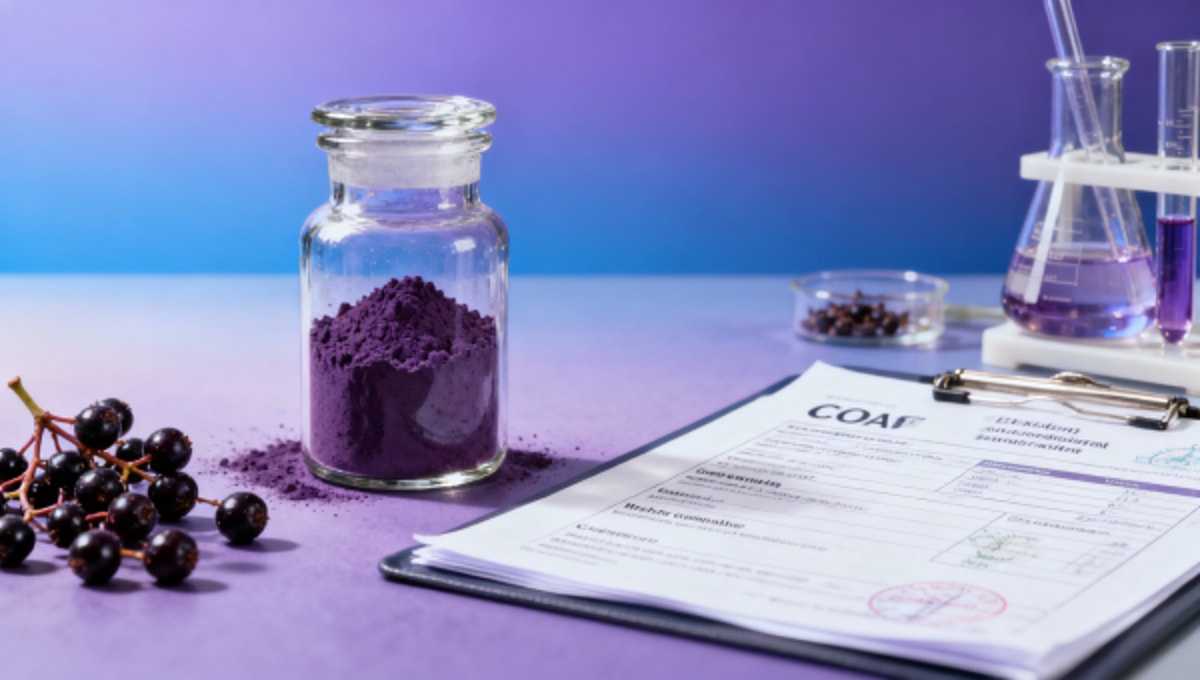
In elderberry extract wholesale, the most critical documentation goes far beyond a basic COA. Buyers, technical reviewers, and quality teams should verify identity testing, anthocyanin assay data, heavy metal and microbial limits, origin traceability, allergen status, and compliance records. For companies also sourcing astragalus root extract, echinacea purpurea extract, or pomegranate seed extract, robust documentation is essential to reduce regulatory risk, protect product consistency, and support confident procurement decisions.
Why documentation determines risk in elderberry extract wholesale
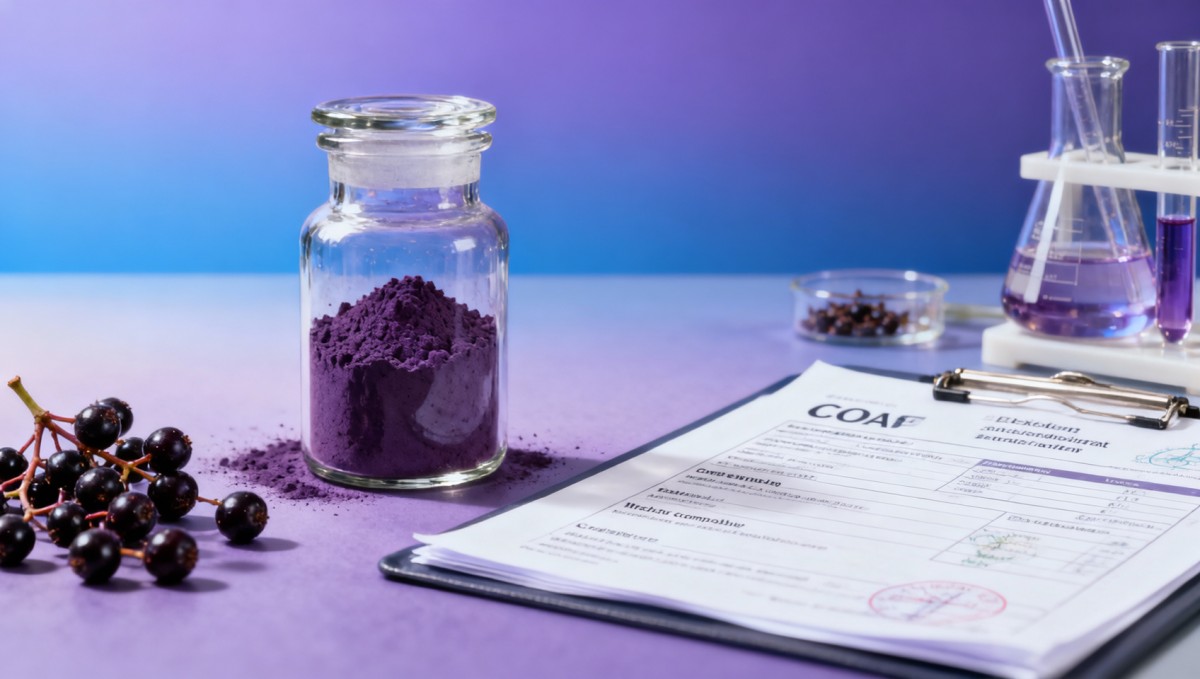
In B2B ingredient sourcing, documentation is not a paperwork formality. It is the primary control layer between a compliant bulk ingredient and a costly downstream problem. In elderberry extract wholesale, one incomplete file can delay qualification by 7–15 business days, trigger repeat testing, or block release for production. That matters to procurement teams, quality managers, operators, and budget approvers who need reliable material flow without avoidable compliance friction.
Elderberry extract is often evaluated for anthocyanin content, botanical identity, contamination risk, and origin consistency. However, many buyers still over-rely on a single certificate of analysis. A COA is necessary, but it only summarizes selected results from one lot. It does not replace a broader documentation package that shows method suitability, traceability, handling conditions, regulatory positioning, and supplier control over raw material variability across seasons and harvest regions.
This is especially relevant in multi-ingredient portfolios. Companies that buy elderberry extract together with astragalus root extract, echinacea purpurea extract, or pomegranate seed extract often need harmonized documentation standards across 3–5 botanical SKUs. If one ingredient arrives with weaker records, the entire vendor review may slow down. For project managers and technical assessors, the goal is not just buying material; it is maintaining an auditable, repeatable approval path.
AgriChem Chronicle focuses on supply chains where technical specifications, regulatory interpretation, and procurement execution intersect. In bio-extracts and ingredients, the practical question is simple: which documents actually reduce risk, speed internal review, and support confident purchasing decisions? The answer starts with identifying the documents that prove what the extract is, what it contains, how it was produced, and whether its compliance position fits the intended market.
- For information researchers, documentation helps compare suppliers on evidence rather than marketing language.
- For technical reviewers and QC teams, it supports identity confirmation, specification review, and contamination control.
- For procurement and finance teams, it reduces the risk of rework, shipment rejection, and hidden qualification costs.
Which documents matter most before approving a bulk elderberry extract supplier?
A useful documentation package should answer 4 core questions: Is the material authentic? Does it meet the declared assay? Is it safe within agreed limits? Can the supplier trace and defend each lot? The strongest elderberry extract wholesale files usually combine analytical, safety, traceability, and commercial documents rather than relying on a single testing summary. This helps align the needs of purchasing, regulatory review, and operational release.
Before the table below, it is worth stressing that not all documents carry equal decision weight. Some are mandatory for initial screening, while others become critical during final approval, customer audit, or market expansion into stricter regions. For example, a specification sheet may support early comparison, but method-backed identity data and traceability records become decisive when batches differ or complaints arise.
The table shows why documentation should be reviewed as a package. A supplier may present an acceptable COA but still fail on traceability depth, incomplete identity methods, or weak compliance statements. In practical procurement, the strongest vendors are not those with the shortest document list, but those whose records remain consistent across multiple lots, revisions, and customer audits over 12 months or longer.
The 5 document groups that usually carry the most weight
First, identity documentation matters because botanical ingredients are vulnerable to substitution. A supplier should be able to explain how identity is confirmed, whether by chromatography, microscopy, marker-based methods, or an internally validated combination. Technical teams should not accept generic statements such as “passes test” without a named method or method summary.
Second, assay records matter because anthocyanin content often drives commercial value. Buyers should check whether the reported assay is tied to a defined method and whether the range is commercially meaningful. A narrow and realistic range is often more useful than an ambitious headline number with weak lot-to-lot support.
Third, safety records matter because heavy metals, microbiological counts, and residual solvents can directly affect market suitability. Reviewers should verify whether testing is lot-specific, periodic, or based on risk ranking. In many supplier audits, this is where documentation gaps become visible within the first 30–45 minutes.
Fourth and fifth, traceability and compliance statements matter because they support investigations, customer requests, and market access. A supplier that can map batch origin, process controls, and status declarations quickly usually reduces internal workload for procurement, QA, and regulatory functions.
A practical pre-approval checklist
- Request at least 1 current COA and 2 historical COAs from separate lots when possible to review consistency.
- Confirm whether anthocyanin assay, identity testing, and contamination testing are tied to documented methods.
- Check whether origin, manufacturing site, and repacking location are clearly separated in the file set.
- Verify whether allergen, GMO, and solvent statements match your internal customer or export requirements.
How should procurement and quality teams compare supplier documentation?
When several offers appear similar on price, documentation quality often becomes the best predictor of downstream stability. This is where procurement teams, technical evaluators, and financial approvers should move from document collection to document scoring. A clear comparison model helps prevent subjective decisions, especially when 2–4 suppliers offer similar assay levels but differ in transparency, revision control, and responsiveness.
For elderberry extract wholesale, the most useful comparison dimensions are not only cost and assay. Teams should also compare test method clarity, lot history, traceability depth, specification precision, and response speed for document updates. A supplier that needs 10 business days to clarify a missing item may be riskier than one with a slightly higher price but a complete file set delivered within 24–72 hours.
The matrix below gives a practical framework that quality, sourcing, and project teams can use during vendor shortlisting. It also works well for companies evaluating adjacent botanical extracts such as echinacea purpurea extract or pomegranate seed extract, where quality files can differ substantially between vendors even when headline specifications look similar.
A comparison matrix like this helps internal stakeholders speak the same language. Procurement can evaluate response efficiency, QA can rate technical sufficiency, and business reviewers can assess commercial risk. Instead of debating broad impressions, teams can review 5 specific dimensions and identify where a lower-cost option may actually create a higher total qualification burden.
Where cheaper offers often become more expensive
The lowest quote in elderberry extract wholesale can become costly when missing documents trigger retesting, hold inventory, or customer-side questions. Even one additional round of sample review or external lab confirmation can extend project timing by 1–3 weeks. If a contract manufacturer or downstream customer is waiting, that delay may outweigh a modest unit-price saving.
Operators and production planners also feel the impact. If release documentation is incomplete at goods-in, material may be physically present but operationally unusable. For plants running scheduled campaigns, this can disrupt blending, packaging, or dispatch windows. That is why experienced sourcing teams often evaluate documentation readiness as part of total landed risk, not just supplier paperwork quality.
A practical rule is to distinguish three sourcing models: price-led, balance-led, and risk-led. Price-led buying may work for low-criticality use, but balance-led or risk-led models are more suitable when the extract supports regulated finished products, branded claims, or export documentation. The stricter the downstream expectation, the more valuable a complete documentation package becomes.
What compliance and technical details are most often overlooked?
In documentation review, the most common mistake is checking whether a document exists without checking whether it is decision-ready. A specification sheet may list appearance, assay, and moisture, yet omit extraction solvent context, carrier information, or storage conditions. For quality and safety managers, those omissions matter because they affect handling, formulation compatibility, and shelf-life interpretation over 12–24 months.
Another overlooked point is whether the declared anthocyanin data are analytically meaningful for the intended application. Procurement staff sometimes compare only the percentage claim, but technical reviewers should also ask how the result is measured and whether the method can be compared between suppliers. If one vendor reports a headline assay without method context, direct price-per-active comparisons may be misleading.
Traceability depth is also frequently underestimated. A document that says “origin: Europe” or “origin: multiple” may be too broad for higher-control environments. Project leaders and commercial evaluators should ask whether the supplier can identify the raw material source, extraction location, repacking point, and lot linkage. That level of detail can be decisive during complaint handling, customer due diligence, or market entry review.
Finally, compliance statements should be read as scope documents, not marketing claims. Allergen, GMO, irradiation, pesticide, residual solvent, and contaminant declarations must be reviewed against your target market and end use. What is sufficient for one regional food supplement channel may not be enough for another buyer category, especially when private-label clients request a broader documentation bundle within 48 hours.
Four common misconceptions in botanical extract procurement
- A current COA proves full supplier control. It does not. It only reflects selected tests for a specific lot.
- A high assay always means better buying value. Not if the method is unclear or lot consistency is weak.
- A declaration sheet is equal to analytical evidence. It is useful, but it should not replace test-backed records where risk is higher.
- Traceability is only needed for audits. In reality, it also supports faster complaint resolution and safer supplier transitions.
A 3-stage review path for cross-functional teams
Stage 1 is screening. In this step, sourcing teams collect the specification sheet, COA, and basic declarations to remove clearly unsuitable offers. Stage 2 is qualification. QA and technical teams review identity data, assay method logic, safety records, and traceability. Stage 3 is commercial approval. Procurement, business evaluators, and finance align documentation strength with pricing, MOQ, and delivery risk.
This 3-stage structure is useful because it prevents overloading commercial review with technical uncertainty. It also helps companies managing 5–10 ingredient lines create a repeatable process rather than restarting each review from zero. In regulated and semi-regulated sectors, repeatability often matters as much as the documents themselves.
For organizations with mixed stakeholders, AgriChem Chronicle’s value lies in turning complex documentation issues into decision-ready frameworks. That matters when biochemical engineers, sourcing leads, and executive reviewers need a shared basis for comparing suppliers, identifying weak files, and planning remediation requests before contract finalization.
FAQ for buyers evaluating elderberry extract wholesale documentation
Is a COA enough to approve elderberry extract wholesale?
No. A COA is a core document, but it should sit inside a broader package that includes a specification sheet, identity support, safety records, and traceability data. For many B2B buyers, at least 4–6 documents are needed before a supplier can move from inquiry to meaningful qualification. The exact depth depends on end use, customer expectations, and market destination.
What should quality teams check first?
Start with botanical identity, anthocyanin assay logic, and contamination controls. Then check whether the file is lot-specific, current, and internally consistent. If the specification says one thing while the COA uses different limits or naming, the supplier should clarify before approval. Small inconsistencies often signal larger control gaps.
How many lots should buyers review before deciding?
Where possible, review at least 2–3 lots across a reasonable time window instead of a single recent batch. This helps buyers see whether anthocyanin values, appearance, and safety results are stable. The approach is particularly useful when contracting recurring supply over a quarter or a full annual cycle.
Does the same documentation logic apply to other botanical extracts?
Yes, although the marker compounds and test priorities may differ. Astragalus root extract, echinacea purpurea extract, and pomegranate seed extract each require their own identity and assay context, but the core review principles remain similar: authenticity, active content, contamination control, traceability, and compliance fit for the target market.
Why work with AgriChem Chronicle when assessing supplier documentation?
In global ingredient procurement, good decisions depend on more than collecting files. Teams need context: which documents truly matter, which gaps are tolerable, which gaps create regulatory or commercial exposure, and how those judgments change across product categories. AgriChem Chronicle supports that decision environment through analysis built for buyers, technical reviewers, compliance teams, and industrial decision-makers operating in heavily regulated supply chains.
Our editorial strength sits at the intersection of bio-extracts, fine chemicals, and global trade compliance. That means we can help readers interpret documentation not as isolated paperwork, but as part of supplier capability, market access readiness, and procurement risk control. For enterprises reviewing elderberry extract wholesale suppliers, that perspective can shorten research time and improve internal alignment across commercial and technical departments.
If your team is comparing suppliers, preparing RFQs, or building a qualification workflow for elderberry extract, astragalus root extract, echinacea purpurea extract, or pomegranate seed extract, contact AgriChem Chronicle for focused support. We can help you evaluate parameter definitions, documentation completeness, supplier comparison logic, typical delivery considerations over 1–4 week windows, and the compliance questions most likely to affect approval.
You can also reach out for practical guidance on sample documentation review, product selection criteria, specification alignment, audit-preparation questions, quote comparison, and documentation requests to send upstream vendors. For teams under time pressure, that kind of structured support can turn a confusing file review into a clear purchasing decision with fewer surprises later in the process.
Related Intelligence
- Botanical ExtractsFDA Updates Import Alert for Botanical Extracts from ChinaFDA updates Import Alert 54-12: Botanical extracts from China now face DWPE over heavy metals & pesticide residues—act now to ensure GAP compliance and 12-analyte testing.
- Botanical ExtractsANVISA New Rule: Botanical Extracts Importers Must Trace to Tier-2 SuppliersANVISA new rule requires botanical extracts importers to trace supply chains to tier-2 suppliers—act now to ensure compliance, avoid delays & secure market access in Brazil.
- Botanical ExtractsZhiAnHua GNA Launches LingMou Global Compliance Monitoring System for Botanical ExtractsLingMou Global Compliance Monitoring System by ZhiAnHua GNA tracks real-time regulatory & AI-platform terminology risk for botanical extracts—empowering smarter, proactive compliance.
The Morning Broadsheet
Daily chemical briefings, market shifts, and peer-reviewed summaries delivered to your terminal.
