
How fine should lion's mane mushroom powder be for blending?
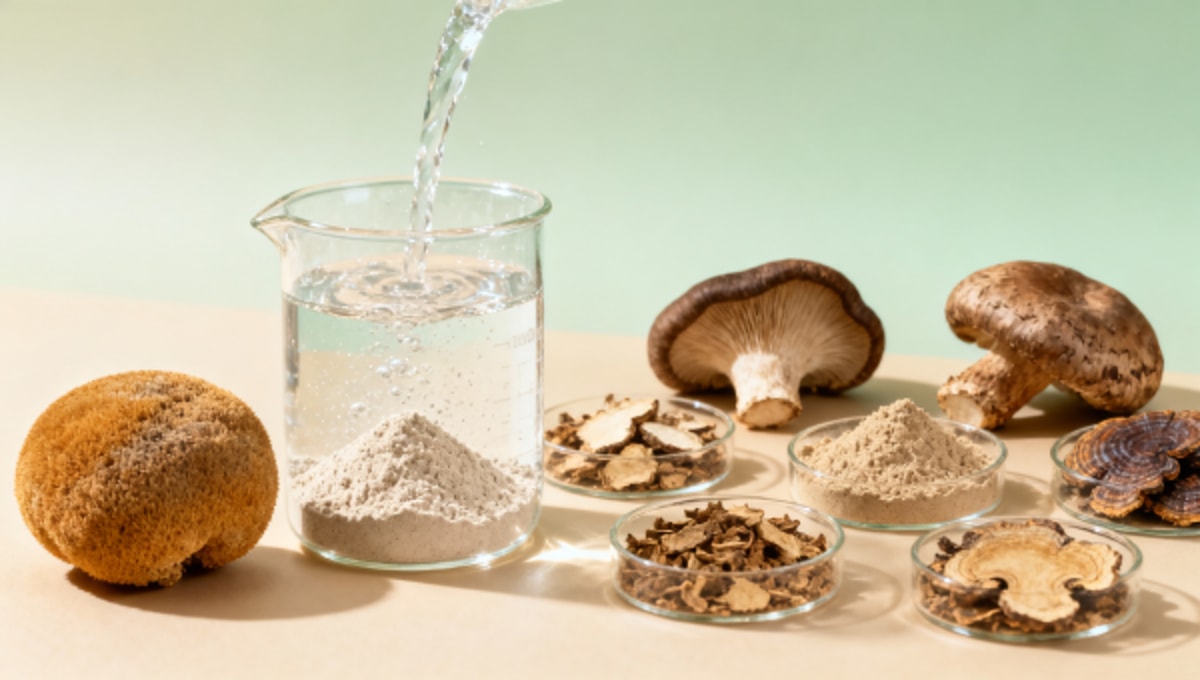
For smooth blending, lion's mane mushroom powder should be fine enough to disperse quickly without grittiness, yet stable enough to preserve functional compounds. Buyers comparing maitake mushroom extract, shiitake mushroom powder, chaga mushroom extract, and reishi mushroom extract bulk should also assess particle size, solubility, processing method, and quality compliance before selecting powders for food, beverage, or nutraceutical applications.
What particle size is suitable for lion's mane mushroom powder in blending applications?
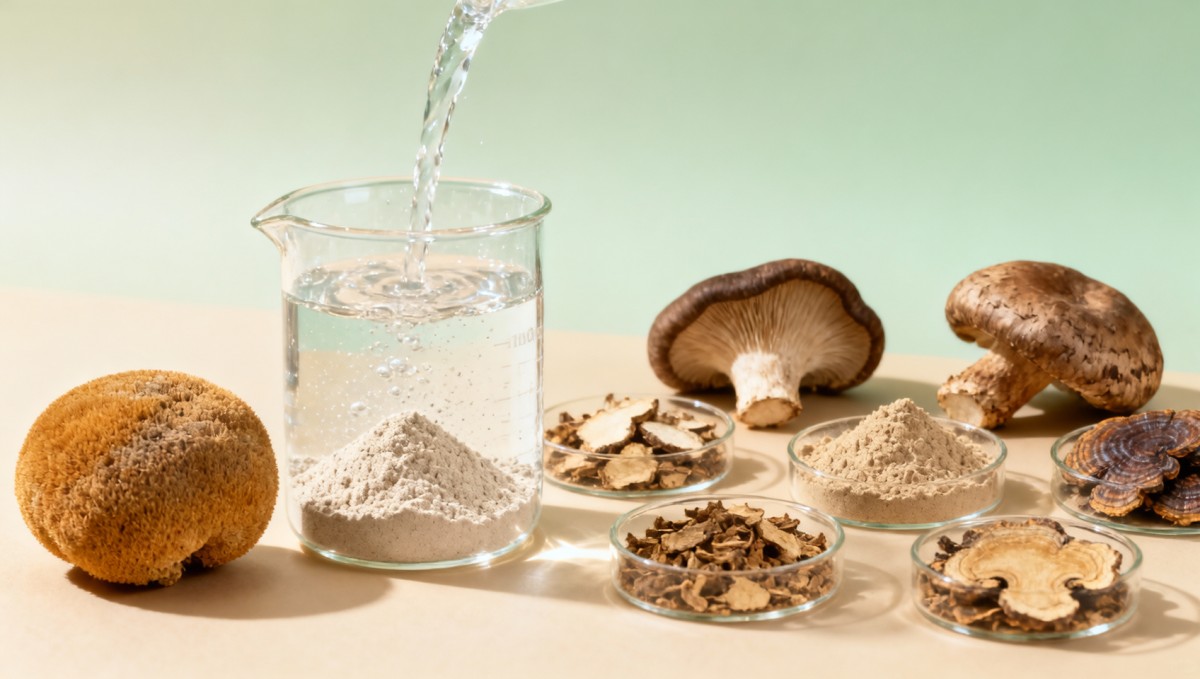
In practical purchasing and formulation work, the best fineness for lion's mane mushroom powder depends on the final product format. For instant beverages, stick packs, powdered drink mixes, and sachet-based nutraceuticals, buyers usually prefer a fine powder that disperses within 10–30 seconds under normal stirring. If the powder is too coarse, sediment forms quickly and the drinking experience becomes gritty. If it is excessively micronized, flowability may decline and dusting can increase during handling.
A useful commercial reference is to ask suppliers for mesh range or particle size distribution rather than relying on broad descriptions such as “ultra-fine” or “standard powder.” In many botanical ingredient transactions, ranges such as 80–120 mesh are commonly discussed for general blending, while finer specifications may be considered for instant applications. The right target is not only about mouthfeel. It also affects blend uniformity, packaging efficiency, bulk density, and cleaning frequency on the production line.
Technical evaluators and quality teams should also distinguish between fruiting body powder, mycelium powder, and concentrated extracts. A lion's mane mushroom powder made from whole fruiting body may behave differently in suspension compared with a spray-dried extract, even if the mesh specification appears similar. This is why ACC often advises institutional buyers to request both particle size data and process disclosure before shortlisting suppliers.
For operators, the practical question is simple: does the powder blend smoothly in the intended matrix within 1–2 minutes, with acceptable sedimentation over the next 5–10 minutes? That functional test often reveals more than a headline specification. Procurement teams that combine lab checks with pilot blending usually avoid expensive reformulation later in the project cycle.
Typical fineness ranges by use case
Different blending systems call for different fineness targets. A powder that performs well in a smoothie plant may not behave the same way in tablet premix production or dry beverage filling. The table below summarizes common commercial considerations for lion's mane mushroom powder and related mushroom ingredients.
This comparison shows why there is no single “best” fineness for every lion's mane mushroom powder purchase. The specification should be linked to blending speed, target mouthfeel, and downstream processing. In B2B procurement, a narrower and more consistent distribution is often more valuable than an aggressively fine powder with unstable handling properties.
Why fineness alone is not enough: solubility, processing method, and functional retention
Many buyers focus first on particle size because it is easy to compare across quotations. However, a finer lion's mane mushroom powder does not automatically mean better blending performance. The production method matters. Air milling, mechanical grinding, extraction, spray drying, and freeze drying can all produce powders that look similar on paper but perform differently in liquid systems, dry blends, and encapsulation lines.
For beverage and nutraceutical manufacturers, 3 factors usually deserve equal review: particle size, dispersibility, and compositional integrity. Excess heat during milling or drying may influence aroma, color, and the stability of desired mushroom constituents. Over-processing may also alter moisture behavior, leading to caking during storage, especially in humid environments or in warehouses with inconsistent temperature control.
This issue becomes more important when buyers are also comparing maitake mushroom extract, shiitake mushroom powder, chaga mushroom extract, and reishi mushroom extract bulk. These ingredients vary widely in fiber content, extract concentration, and natural solubility. A coarse shiitake mushroom powder may still work in savory formulations, while a fine chaga mushroom extract intended for instant drinks may require much tighter dissolution performance and lower residue.
ACC’s editorial approach is especially relevant here because supply chains for bio-extracts and ingredients often present incomplete technical disclosure. Procurement teams benefit from supplier review that combines laboratory information, processing descriptions, and commercial feasibility. This is particularly valuable when approval workflows involve operators, QA managers, finance reviewers, and executive decision makers over a 2–6 week qualification cycle.
Three technical questions to ask before approving a sample
- What is the actual particle size distribution or mesh specification, and how much lot-to-lot variation is allowed?
- Is the material a whole mushroom powder, a standardized extract, or a blended botanical ingredient with carriers?
- How does the powder behave in the intended medium over 30 seconds, 2 minutes, and 10 minutes after mixing?
Operational impact for production teams
Production users often notice the consequences before procurement does. A powder that appears acceptable in a bench-top sample may create dust loss during bag dumping, bridging in hoppers, or slower clean-down between batches. These issues increase labor time and can disrupt scheduled output windows, particularly in facilities running multiple SKUs per day.
For that reason, technical assessment should include at least 4 checks: dispersibility, sedimentation, bulk density consistency, and storage stability. Even a 7–14 day internal pilot can reveal whether the lion's mane mushroom powder is suitable for scale-up. This approach is often more cost-effective than selecting purely on price per kilogram and then correcting process problems later.
How should buyers compare lion's mane, maitake, shiitake, chaga, and reishi ingredients?
Cross-comparison is a common request in the bio-extracts and ingredients market. Yet these mushroom products should not be treated as interchangeable simply because they appear in similar categories. Lion's mane mushroom powder is often evaluated for blending smoothness and formulation versatility, while chaga mushroom extract may be prioritized for extract concentration, and reishi mushroom extract bulk may be assessed more carefully for bitterness management and dosage planning.
Shiitake mushroom powder frequently enters food applications where flavor integration matters alongside fineness. Maitake mushroom extract may be reviewed more closely for extract ratio and standardization. For purchasing teams, that means specification sheets should align with end use rather than ingredient label alone. A finance approver comparing prices without application context may unintentionally approve a lower-cost option that increases process cost or customer complaints later.
The table below helps procurement, QA, and project teams compare mushroom ingredients using a more practical framework. It is designed for sourcing conversations where formulation performance, compliance risk, and commercial feasibility all matter within the same decision window.
A side-by-side review like this helps separate ingredient identity from purchase logic. In many tenders, the real decision is not just which mushroom to buy, but which format fits the application, processing line, and compliance expectations. That distinction supports better technical approval and more defensible commercial negotiation.
A practical 5-point comparison checklist
- Match ingredient type to product format: powder, extract, or standardized blend.
- Confirm particle size or dissolution behavior under real mixing conditions.
- Review moisture, storage sensitivity, and expected shelf handling requirements.
- Check documentation needed for food, nutraceutical, or regulated market use.
- Compare total formulation cost, not only raw material price per unit.
What should procurement and QA teams verify before ordering?
A strong purchase decision for lion's mane mushroom powder usually requires coordination across at least 3 functions: procurement, technical review, and quality assurance. In larger organizations, finance and project management also need visibility, especially when volumes shift from small sampling to medium or large commercial lots. The challenge is that each function looks at a different risk. Procurement sees price and lead time, QA sees compliance and consistency, while operators focus on blend behavior and cleaning burden.
To reduce approval friction, buyers should define specifications early. This includes target mesh or particle behavior, moisture expectation, packaging format, document requirements, and intended application. A 5-item pre-qualification brief can shorten the supplier screening cycle from several rounds of clarification to a more manageable 7–15 day review period, depending on sample availability and internal sign-off steps.
For regulated or export-oriented businesses, document readiness matters as much as product performance. Depending on market and use case, teams may ask for specifications, certificate of analysis, allergen or contaminant statements, microbial limits, and manufacturing disclosures consistent with food or nutraceutical practices. When claims involve APIs, highly regulated formulations, or environmental controls, stricter review may be needed under applicable GMP, FDA, or EPA-related expectations.
ACC is positioned to support this stage because its coverage spans bio-extracts, fine chemicals, and supply chain transparency. That editorial combination is valuable when project leaders need not only ingredient information but also context about processing standards, sourcing risk, and documentation expectations across global procurement channels.
Pre-order verification points
- Confirm whether the lion's mane mushroom powder is whole powder, extract powder, or a carrier-containing finished ingredient.
- Request mesh range, particle distribution method, and expected lot consistency over at least 2–3 batches.
- Review moisture handling, storage conditions, and packaging format such as bags, drums, or lined cartons.
- Check lead time for samples and standard orders, which commonly varies from 1–2 weeks for samples to several weeks for larger production lots.
- Align QA requirements with the final sales market before approving commercial release.
Common purchasing mistakes
One frequent mistake is treating all fine powders as instant-soluble. Fine particle size can improve dispersion, but true dissolution depends on composition and process. Another mistake is approving a mushroom ingredient based on one successful bench trial without checking warehouse stability, transport conditions, and line performance over repeated batches.
A third mistake is comparing lion's mane mushroom powder with reishi mushroom extract bulk only on landed cost. If dosage, flavor masking, sediment control, or product positioning differ, the less expensive option may produce a higher cost per finished unit. This is where cross-functional review protects both quality and budget discipline.
FAQ: sourcing, blending, and decision risks
The questions below reflect common search intent from information researchers, technical evaluators, operators, and commercial decision makers. They also help clarify where lion's mane mushroom powder fits within broader mushroom ingredient procurement.
How fine should lion's mane mushroom powder be for smoothies and drink mixes?
For smoothies and drink mixes, a fine and uniform powder is usually preferred, often discussed in commercial terms around 80–120 mesh for general blending reference. However, the better question is how the powder behaves during actual mixing. It should disperse quickly, create minimal grittiness, and maintain acceptable suspension for at least several minutes. A pilot test using your actual liquid base is more reliable than a mesh number alone.
Is finer always better for nutraceutical formulations?
No. Finer can improve blending smoothness, but it may also increase dusting, static behavior, and handling complexity. In capsule and tablet systems, consistency and flow may matter as much as fineness. Technical teams should balance at least 4 variables: particle size, flowability, moisture behavior, and formulation compatibility. Overly fine powder can create operational issues even if bench-top mixing looks good.
What should buyers ask when comparing maitake mushroom extract and shiitake mushroom powder?
Buyers should first define the intended use. If the target is an extract-driven nutraceutical formula, maitake mushroom extract may require questions on extract ratio, standardization, and dissolution behavior. If the target is food blending, shiitake mushroom powder may need closer review of texture, flavor, and visible particle effect. Asking the wrong questions can delay selection by 1–3 review cycles and generate misleading price comparisons.
How long does qualification usually take for a new mushroom ingredient supplier?
For many B2B buyers, initial qualification takes 2–6 weeks depending on document readiness, sample transit time, lab checks, and internal approval routing. If multiple departments are involved, the process often includes 4 stages: document review, sample evaluation, pilot blending, and commercial approval. Projects move faster when the buyer defines application, required fineness, and compliance documents from the start.
Why work with AgriChem Chronicle when evaluating mushroom powders and botanical ingredients?
For institutional buyers and technical teams, the challenge is rarely a lack of suppliers. The challenge is filtering claims, comparing process quality, and understanding how ingredient specifications affect real production and commercial outcomes. AgriChem Chronicle addresses that gap through a specialist editorial lens across bio-extracts, fine chemicals, primary processing, and regulated supply chains.
That matters when evaluating lion's mane mushroom powder alongside maitake mushroom extract, shiitake mushroom powder, chaga mushroom extract, or reishi mushroom extract bulk. The relevant decision is not only “Which product is available?” but “Which ingredient fits the application, quality threshold, procurement timeline, and compliance environment?” This is where technical intelligence and market context become directly useful to procurement, QA, project, and finance stakeholders.
If your team is comparing suppliers, refining a specification, or preparing a new ingredient qualification package, ACC can support more informed evaluation through structured industry analysis and commercially relevant technical framing. This is especially useful for businesses that need to align 3–5 internal stakeholders before moving from sampling to contract discussion.
Contact us if you need support with particle size interpretation, mushroom ingredient selection, expected lead-time planning, documentation review, sample comparison, or a clearer sourcing framework for food, beverage, nutraceutical, and industrial bio-extract applications. A focused discussion can help your team narrow options faster, reduce approval risk, and move toward supplier engagement with better technical and commercial confidence.
Related Intelligence
- Natural IngredientsIndonesia BPOM Updates Label Rules for Natural Ingredients ImportsIndonesia BPOM updates natural ingredients label rules: heat-tolerance declarations required from Aug 2026. Stay compliant & avoid shipment delays.
- Natural IngredientsIndonesia BPOM Updates Natural Ingredients Labeling RulesIndonesia BPOM Updates Natural Ingredients Labeling Rules: New 'Microbial Tolerance Statement' required for natural pigments, plant powders & fermented extracts by Aug 1, 2026.
- Natural IngredientsIndonesia BPOM Updates Natural Ingredients Labeling RulesIndonesia BPOM updates natural ingredients labeling rules: New 'Microbial Tolerance Statement' required for plant powders, fermented extracts & peptides—act now to avoid customs delays.
The Morning Broadsheet
Daily chemical briefings, market shifts, and peer-reviewed summaries delivered to your terminal.
