
Reishi mushroom extract bulk buying: how to avoid low-grade lots
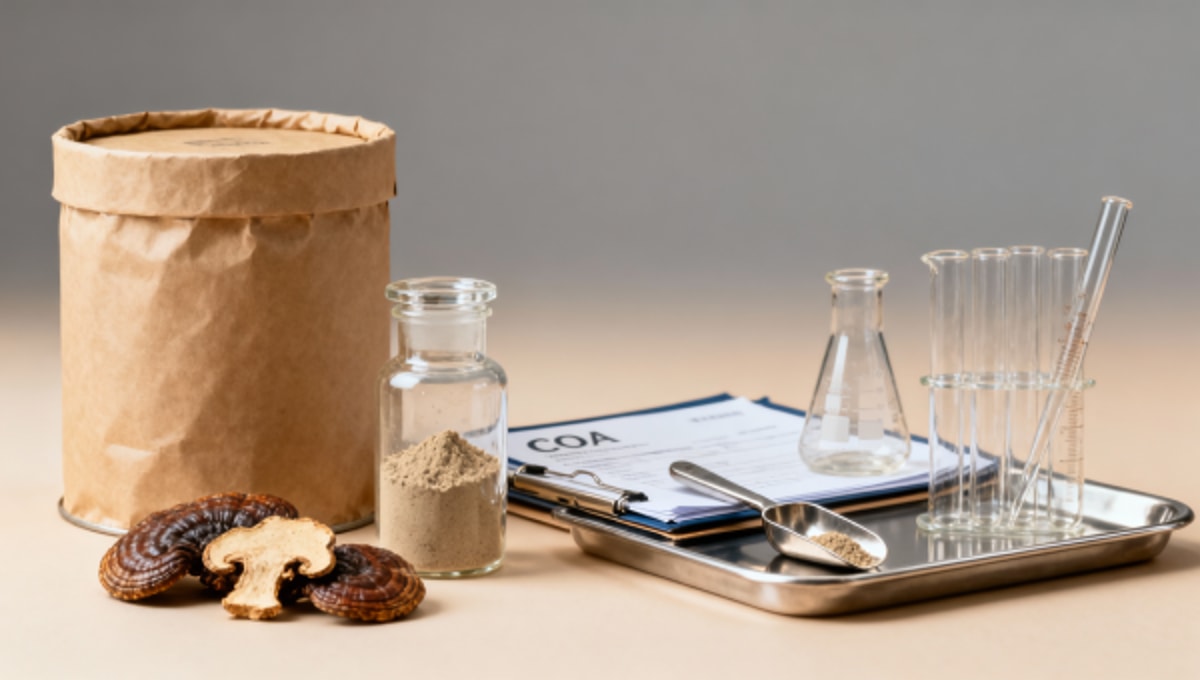
When sourcing reishi mushroom extract bulk, one low-grade lot can undermine formulation consistency, compliance, and margins. For buyers comparing maitake mushroom extract, chaga mushroom extract, cordyceps extract wholesale, lion's mane mushroom powder, and shiitake mushroom powder, due diligence is essential. This guide explains how to identify reliable specifications, verify testing standards, and avoid quality risks before committing to commercial-volume purchases.
In industrial procurement, the risk is rarely limited to appearance or price. A weak lot of reishi mushroom extract can trigger assay failures, label claim disputes, out-of-spec finished goods, or delayed production windows. For procurement managers, quality teams, formulation specialists, and commercial decision-makers, bulk buying must therefore be driven by technical evidence rather than brochure language.
This matters even more in cross-category sourcing. Buyers often evaluate reishi against adjacent functional mushroom ingredients such as lion's mane mushroom powder or cordyceps extract wholesale, yet the quality markers, extraction logic, and contamination risks are not identical. The safest purchasing process combines specification review, supplier qualification, testing verification, and lot-by-lot release control.
Why low-grade reishi lots enter the market
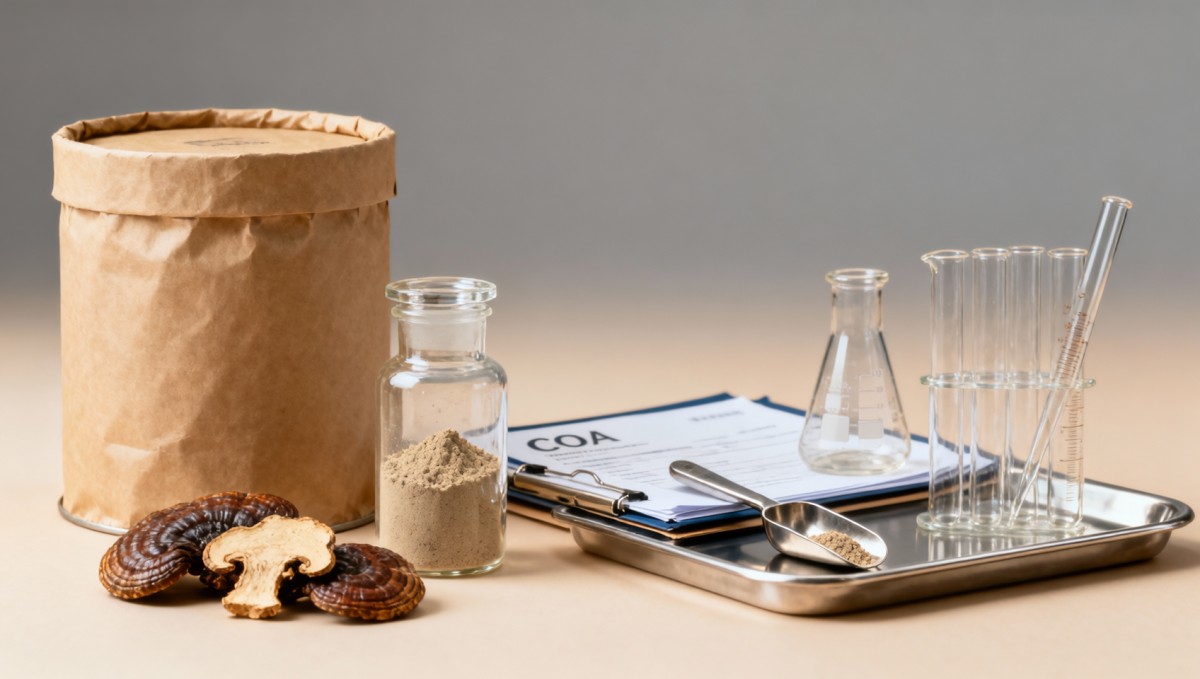
The reishi market includes materials ranging from raw mushroom powder to concentrated extract, cracked-spore products, and blends. Low-grade lots usually appear when buyers rely on one-dimensional claims such as “30% polysaccharides” without confirming extraction method, active fraction profile, or identity testing. In commercial channels, this can lead to a 2- to 4-fold difference in practical performance between two samples that look similar on paper.
A common issue is raw material substitution. Some suppliers may use more mycelium-heavy material, excessive carrier, or low-potency biomass to hit a target price. Others may present mushroom powder as extract, even though the concentration ratio and solubility behavior are different. For manufacturers supplying capsules, beverages, gummies, or tablets, this changes processing stability and final dosage economics.
Another source of inconsistency is poor process control. Reishi extraction typically involves hot water, dual extraction, or other tailored approaches depending on the desired fraction. If temperature, time, or concentration steps drift outside validated ranges, one lot may carry acceptable beta-glucan levels while the next shows weaker marker retention, darker color, higher moisture, or poor dispersibility.
In global trade, pressure on lead times also creates shortcuts. A supplier facing a 3- to 6-week shipping commitment may blend multiple runs, ship before final third-party confirmation, or release product with incomplete heavy metal and microbiology data. That may reduce short-term delay, but it transfers compliance risk directly to the buyer.
Four recurring quality downgrade patterns
- Marker inflation through unsuitable test methods, especially when total polysaccharides are presented without distinguishing beta-glucans.
- Use of excessive excipients or carriers, sometimes above 10% to 20%, without transparent declaration in the specification sheet.
- Identity confusion between fruiting body, mycelium, and fermentation-derived material, which affects buyer expectations and pricing.
- Incomplete contaminant control, including pesticide residue, heavy metals, yeast, mold, and aerobic plate count.
Why this affects more than technical teams
For finance approvers, a cheaper lot may appear attractive until rework, claims adjustment, or customer rejection increases total cost. For project managers, an off-spec shipment can interrupt a launch window by 2 to 8 weeks. For safety and quality personnel, incomplete traceability creates audit exposure that is difficult to correct after import or batch release.
Specifications that actually protect buyers
A useful specification for reishi mushroom extract bulk should do more than list color and odor. It needs to define the source material, extraction ratio or concentration basis, marker assays, physical limits, microbiological limits, contaminant thresholds, and storage conditions. If a supplier cannot provide these basics in a coherent document, commercial-scale buying should pause.
Buyers should distinguish between broad and decision-grade specifications. “Polysaccharides ≥ 30%” is broad. “Beta-glucans by validated method, total polysaccharides by stated method, loss on drying ≤ 5%, ash ≤ 8%, TAMC within stated limit, and heavy metals within agreed thresholds” is decision-grade. The second format creates measurable acceptance criteria at incoming inspection.
It is also important to ask whether the material is standardized for food, nutraceutical, or pharmaceutical-adjacent applications. The expected documentation depth changes accordingly. A cosmetic ingredient may tolerate one profile, while a dietary supplement manufacturer selling in multiple jurisdictions may require broader contaminant coverage and tighter lot documentation.
Key specification items to review before placing a PO
The table below summarizes the specification fields that most often separate reliable reishi mushroom extract bulk from low-grade lots. These same review habits are also useful when assessing maitake mushroom extract or chaga mushroom extract for multi-SKU procurement programs.
The most important takeaway is comparability. If one supplier quotes a 10:1 extract and another quotes a 30% polysaccharide powder, those offers may not be functionally equivalent. Procurement teams should normalize quotes using at least 4 dimensions: source type, marker basis, carrier content, and required testing package.
A practical pre-approval checklist
- Request specification, certificate of analysis template, allergen statement, and flow chart before sampling.
- Verify whether assay methods are in-house, compendial, or third-party aligned.
- Confirm standard pack size, MOQ, and normal lead time, often 25 kg per drum and 2 to 5 weeks depending on stock model.
- Review storage and shelf-life conditions, commonly 24 months in sealed packaging under cool and dry conditions.
How to verify testing standards and certificates
A certificate of analysis is only useful if the buyer understands what stands behind it. Many low-grade suppliers can provide a neat document, but fewer can explain the method logic, sampling plan, laboratory controls, and retest criteria. For bulk procurement, testing review should cover both document quality and laboratory credibility.
First, examine whether the certificate is lot-specific. A valid COA should include batch or lot number, manufacturing or retest date, specification reference, and actual results. Generic certificates without traceable lot linkage are weak evidence. In higher-risk categories, buyers should also ask for a recent third-party report within the last 6 to 12 months, especially for heavy metals and microbiology.
Second, confirm that the assay method fits the claim. In mushroom ingredients, “total polysaccharides” alone can be misleading because the value may include non-functional carbohydrates. For reishi mushroom extract bulk intended for efficacy-positioned products, beta-glucan relevance is often greater than a broad polysaccharide claim. The same principle applies when comparing lion's mane mushroom powder or shiitake mushroom powder for functional formulations.
Third, review contaminant limits in context of your destination market and product form. A tablet, beverage premix, and sachet powder may face different internal risk tolerances. If your finished dosage is high, even moderate contamination in raw extract can become unacceptable after label calculations. That is why incoming raw material limits should be set with use level in mind, not copied blindly from a supplier template.
Testing areas buyers should cross-check
The following table provides a practical verification matrix for quality, procurement, and technical review teams. It is especially helpful when evaluating multiple mushroom ingredients across one sourcing round.
As a control measure, many buyers use a 3-lot qualification approach. They test the first three commercial lots more heavily, compare assay variance, and only then reduce routine verification frequency. This approach adds some upfront cost, but it usually protects much larger production and recall exposure later.
Red flags on certificates
- Same test values repeated across multiple lots down to decimal places.
- No test method references for key markers.
- Mismatch between specification limits and actual report format.
- Certificate issue date significantly later than shipment dispatch without explanation.
Supplier qualification beyond the sample stage
Passing a laboratory sample does not guarantee commercial consistency. One of the most expensive procurement mistakes is approving a supplier on the basis of a 200 g sample while failing to evaluate process stability at 100 kg, 500 kg, or 1,000 kg scale. Bulk buying decisions should therefore include manufacturing capability, documentation discipline, and supply resilience, not just one acceptable sample.
Start with traceability. Ask where the raw material is cultivated or sourced, how batches are segregated, and whether extraction is done in-house or outsourced. A supplier that controls only the trading step may still be useful, but the buyer should then require deeper visibility into the processing chain and a clearer release protocol.
Next, review operational readiness. Commercial buyers should know standard MOQ, annual capacity range, lead time by season, and backup planning in case of crop variability or logistics delay. For many buyers, the acceptable lead time window is 2 to 6 weeks for stocked materials and 4 to 8 weeks for made-to-order extracts. If a supplier cannot explain these ranges, planning risk remains high.
It is equally important to understand how change control is handled. A modification in carrier level, mesh size, extraction parameter, or drying process can affect finished product performance even if the headline assay remains unchanged. Buyers should require advance notice for material changes and define whether requalification is needed when a process change occurs.
Commercial and technical questions to ask suppliers
- Can you provide 3 recent lot COAs for the same reishi mushroom extract bulk specification?
- What is the normal assay variation range between lots, and what triggers investigation?
- What pack formats are available, such as 5 kg, 20 kg, or 25 kg fiber drums with inner liners?
- How are deviations handled if moisture, microbiology, or marker content falls close to the limit?
- Do you maintain reserve samples and how long are they retained, for example 12 to 24 months?
Cross-category buying requires separate qualification logic
Procurement teams often bundle reishi with maitake mushroom extract, chaga mushroom extract, cordyceps extract wholesale, and lion's mane mushroom powder to leverage freight or simplify vendor management. That can improve efficiency, but only if each ingredient still receives category-specific technical review. A strong supplier in one mushroom format is not automatically strong across all five.
For example, lion's mane mushroom powder may be selected for lower processing intensity, while reishi extract is often purchased for higher concentration and standardization. The sourcing questions overlap, but assay logic, flavor impact, and application constraints differ. Treating them as interchangeable commodity powders is a frequent buyer mistake.
A buying framework to reduce quality and margin risk
The safest approach to reishi mushroom extract bulk buying is to use a staged approval framework. This gives procurement, quality, operations, and finance a shared basis for decision-making. Instead of focusing only on lowest landed price, the framework evaluates total acquisition risk over the first 3 to 12 months of supply.
Stage 1 is document screening. Eliminate suppliers with incomplete specifications, inconsistent COAs, unclear source identity, or weak contaminant coverage. Stage 2 is sample and data review, including internal fit-for-use testing for solubility, flavor, color, and process behavior. Stage 3 is trial order validation, where the first commercial lot is checked against agreed acceptance criteria before long-term scheduling.
This process is especially valuable when comparing multiple formats such as reishi mushroom extract bulk against shiitake mushroom powder or cordyceps extract wholesale for product line expansion. A cheap input is not economical if it requires higher dosage, creates more process loss, or raises complaint rates. Procurement should therefore convert technical variation into commercial impact.
In many cases, buyers benefit from a weighted scorecard with 5 to 7 dimensions. Typical weighting might assign 25% to quality documentation, 20% to assay consistency, 15% to contaminant control, 15% to supply reliability, 15% to total landed cost, and 10% to service responsiveness. The exact model can change, but a defined structure makes approvals more defensible.
Example of a supplier comparison scorecard
The table below shows how teams can turn technical findings into a practical sourcing decision. It works for first-time qualification, annual supplier review, or re-bidding exercises.
Using a scorecard helps teams avoid a familiar trap: approving the lowest quote without quantifying technical risk. It also creates a useful record for enterprise decision-makers and financial approvers who need evidence behind vendor selection.
FAQ for first-time and repeat buyers
How many lots should be reviewed before approving a supplier?
A practical minimum is 2 to 3 lots of documentation review, with tighter incoming testing on the first 3 commercial shipments. If the ingredient is critical to efficacy claims or sold into multiple markets, buyers may extend enhanced monitoring to 6 lots.
Is the cheapest reishi mushroom extract bulk ever the right choice?
Sometimes, but only after adjusting for marker basis, source material, carrier level, and testing package. A lot priced 15% lower can become more expensive if it requires a 20% higher use level or causes one failed production run.
Should buyers source several mushroom extracts from one supplier?
That can reduce logistics complexity, but qualification should remain ingredient-specific. Reishi, maitake mushroom extract, chaga mushroom extract, cordyceps extract wholesale, and shiitake mushroom powder each present different assay and application considerations.
For industrial buyers, avoiding low-grade lots is less about one perfect certificate and more about building a disciplined purchasing system. Clear specifications, method-aware testing review, supplier qualification, and staged approval can materially reduce quality failures, shipment disputes, and hidden cost leakage in reishi mushroom extract bulk procurement.
If your team is reviewing suppliers across functional mushroom ingredients or needs a more defensible vendor evaluation framework, now is the right time to tighten the sourcing process. Contact us to discuss your procurement criteria, request a tailored comparison checklist, or explore broader ingredient sourcing intelligence for commercial-volume purchasing.
Related Intelligence
- Botanical ExtractsANVISA New Rule: Botanical Extracts Import to Brazil Requires Two-Tier TraceabilityANVISA new rule mandates two-tier traceability for botanical extracts imported to Brazil — learn how it impacts Chinese exporters, compliance deadlines & AgroTrace integration.
- Botanical ExtractsANVISA New Rule: Botanical Extracts to Brazil Require Traceability to Tier-2 SuppliersANVISA new rule requires traceability for botanical extracts to Brazil — now covering tier-2 suppliers. Learn compliance steps, affected sectors & how to prepare before July 2026.
- Botanical ExtractsANVISA’s New Traceability Rule for Botanical Extracts Enters Force in BrazilANVISA’s new traceability rule for botanical extracts takes effect April 27, 2026—learn how it impacts exporters, importers & suppliers in Brazil.
The Morning Broadsheet
Daily chemical briefings, market shifts, and peer-reviewed summaries delivered to your terminal.
