
Why Maitake Mushroom Extract Potency Varies So Much
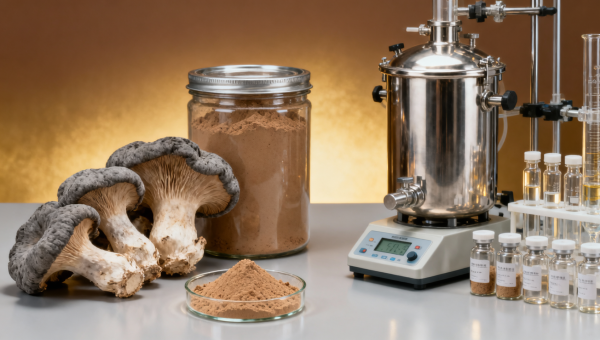
Why does maitake mushroom extract show such wide potency swings from one batch to another? For buyers comparing shiitake mushroom powder, chaga mushroom extract, lion's mane mushroom powder, or reishi mushroom extract bulk, the answer lies in raw material quality, extraction methods, standardization targets, and supply chain controls. This article explains the key variables that influence consistency, efficacy, compliance, and procurement risk.
In B2B ingredient sourcing, potency is not a marketing detail; it directly affects formulation accuracy, label claims, batch release timelines, and cost per active unit. For technical evaluators, procurement teams, QA managers, and project owners, maitake mushroom extract is a category where a nominally similar product can differ substantially in beta-glucan content, extract ratio, solubility, moisture, and contaminant risk.
That variability becomes even more important when mushroom ingredients move into capsules, tablets, beverage blends, pet nutrition, wellness powders, or functional food systems. A 10:1 extract from one supplier may not behave like a 10:1 extract from another, and a batch standardized to 20% polysaccharides may still differ from one standardized to beta-glucans by validated assay.
For organizations operating under GMP-oriented documentation, supplier qualification, and import compliance review, understanding why potency varies is the first step toward reducing procurement risk. The sections below break down the most important technical and commercial drivers behind maitake mushroom extract consistency.
Raw Material Quality Is the First Source of Potency Variation
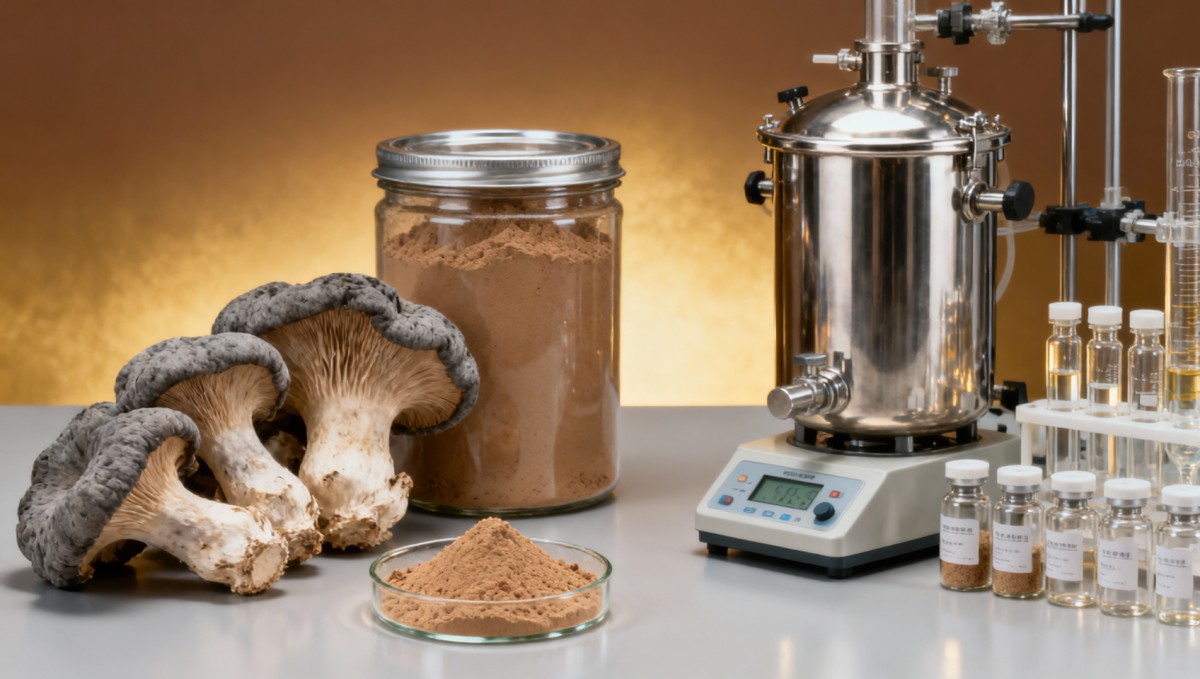
The potency of maitake mushroom extract begins long before extraction. It starts with the fungal strain, substrate, cultivation environment, harvest timing, and the plant part used. Whole fruiting body, mycelium biomass, and mixed material can all produce different chemical profiles, even when the final product is sold under the same generic name.
In practical sourcing terms, two batches may both be labeled maitake extract, yet one may be derived from mature fruiting bodies harvested at a defined moisture level of 8%–12%, while another may include a higher proportion of myceliated grain. That difference can materially change beta-glucan concentration, starch carryover, ash content, and downstream extraction efficiency.
Seasonality and agricultural controls also matter. Even in indoor cultivation systems, temperature swings of 3–5°C, differences in humidity control, and substrate composition can shift the biomass profile. For large-volume buyers, this is why agricultural traceability and lot-level raw material records should be part of supplier qualification rather than an optional document request.
Another overlooked variable is post-harvest handling. If fresh maitake is not dried promptly, enzymatic degradation and microbial load can increase within 24–48 hours. Drying temperatures that are too high may reduce some thermolabile compounds, while drying that is too slow can raise total plate count and compromise extract stability. Potency variation is often rooted in these early-stage controls.
Key raw material checkpoints for buyers
- Confirm whether the source is fruiting body, mycelium, or a blend, and request the declared ratio.
- Ask for cultivation substrate disclosure, especially where grain-grown biomass may inflate carbohydrate readings.
- Review moisture, ash, bulk density, and microbiological specifications for at least 3 recent lots.
- Request harvest and drying process controls, including target drying range and storage conditions below 25°C.
The table below shows how upstream raw material choices can influence the final potency profile and procurement suitability.
The core takeaway is straightforward: potency control starts with agricultural and post-harvest discipline. If the raw mushroom input is inconsistent, even a well-run extraction process will struggle to deliver repeatable commercial specifications.
Extraction Method Changes What “Potency” Actually Means
Maitake mushroom extract potency varies because extraction is not a single standardized industrial process. Suppliers may use hot water extraction, dual extraction, concentration under reduced pressure, spray drying, vacuum drying, or combinations of these. Each process selects for different fractions and affects solubility, color, density, and active-marker results.
For maitake, hot water extraction is commonly used to target polysaccharides and beta-glucans. Yet even within that approach, process temperature may range from 80°C to 100°C, extraction time may range from 2 to 6 hours, and the solid-to-liquid ratio may vary significantly. Small shifts in these parameters can alter extraction yield and the balance between desired actives and unwanted solids.
Extract ratio claims such as 4:1, 8:1, or 10:1 are often misunderstood in procurement discussions. A higher ratio does not automatically guarantee higher potency in the finished powder, because the ratio reflects concentration from starting biomass, not necessarily the validated level of the target compounds. Without assay data, ratio claims are incomplete.
Drying and carrier addition create another layer of variability. Some commercial extracts contain maltodextrin or other carriers to improve powder flow and drying stability. A product with 10%–20% carrier can have very different active concentration per kilogram compared with a carrier-free extract, even if the commercial description sounds similar.
How processing choices affect specification outcomes
Technical teams should review not only the assay certificate, but also how the extract was made. Process transparency helps explain why one supplier offers a darker, more hygroscopic powder with higher water solubility, while another offers a lighter powder with lower dispersibility but higher concentration of target fractions.
Common process variables to examine
- Extraction solvent system: water only versus multi-step systems.
- Extraction temperature and hold time: for example, 90°C for 3 hours versus 100°C for 5 hours.
- Concentration and filtration stage: coarse filtration can leave more insoluble residue.
- Drying method: spray drying is efficient, but inlet and outlet conditions can affect powder quality.
- Carrier use and percentage: always verify whether assay values are reported on as-is or dry basis.
The comparison below helps buyers understand why extracts with similar commercial labels may perform differently in formulation and QC testing.
In short, potency is process-dependent. A buyer comparing maitake mushroom extract with chaga mushroom extract or reishi mushroom extract bulk should not rely on extract ratio language alone. Analytical standardization and process disclosure matter more than broad marketing descriptors.
Standardization and Testing Determine Whether Potency Is Comparable
One of the main reasons potency appears to vary so much is that different suppliers measure different targets. Some standardize to total polysaccharides, others to beta-glucans, and some provide only extract ratio plus organoleptic data. These are not interchangeable metrics. Two lots can both state 30% polysaccharides and still have materially different functional composition.
For technical assessment, beta-glucan data are usually more informative than broad polysaccharide data when the application is built around mushroom actives. This is because total polysaccharide testing may capture non-target carbohydrates. Where mycelium on grain is involved, non-fungal starch contribution can complicate interpretation unless the assay method is clearly defined.
Another issue is basis of reporting. Moisture-adjusted dry basis results can differ from as-is results by several percentage points. If one certificate of analysis reports 25% beta-glucans on a dry basis and another reports 20% as-is with 6% moisture, the apparent gap may be smaller than it first appears. Procurement comparison requires aligned reporting conditions.
Method validation is equally important. A credible supplier should be able to explain whether testing is performed in-house, by a third-party lab, or under a hybrid release model. Repeatability, retention samples, and lot trending over at least 6 months improve confidence for regulated and export-oriented buyers.
Specifications that should be reviewed together
- Active marker: beta-glucans, polysaccharides, or both.
- Assay basis: as-is versus dry basis.
- Moisture limit: commonly not more than 5%–8% for stable powder handling.
- Microbiology: total plate count, yeast and mold, coliforms, and pathogen absence where required.
- Heavy metals and residues: aligned with target market requirements and internal QA thresholds.
The following table outlines why potency comparison often fails when standardization targets are not aligned.
When comparing shiitake mushroom powder, lion's mane mushroom powder, or maitake mushroom extract across multiple quotations, a harmonized specification sheet is essential. Without it, cost comparisons can be misleading because price per kilogram is not the same as price per functional active unit.
Supply Chain Controls, Compliance, and Storage Conditions Also Matter
Even when the raw material and extraction process are sound, potency can drift due to poor supply chain management. Exposure to humidity, oxygen, heat, or prolonged warehouse dwell time can change powder flow, moisture uptake, microbial status, and occasionally analytical results. For bulk ingredients, packaging integrity is not a secondary issue.
A typical commercial maitake mushroom extract may be packed in 20 kg or 25 kg fiber drums with inner food-grade bags. If the inner liner seal is weak, or if container transport exposes the product to high humidity for 3–5 weeks, caking and moisture gain can occur. That creates problems for receiving inspection and later blending performance.
Documentation controls are equally critical. Serious buyers should expect lot number traceability, COA matching, manufacturing date, retest or shelf-life information, and contaminant declarations. Depending on market destination, compliance review may also include allergen statements, residual solvent declarations, pesticide screens, and heavy metal limits aligned to internal or destination-country standards.
Lead time variability can also affect potency risk. An ingredient held too long at an intermediary warehouse before release may show more variation than one shipped under a tighter first-in-first-out schedule. For many buyers, target shelf life at receipt should still leave at least 70%–80% of the declared shelf-life period available for production planning.
Operational risk points in the supply chain
- Supplier qualification review before first order, including document and sample verification.
- Pre-shipment COA and packaging confirmation for each production lot.
- Transit condition control, especially for sea freight cycles of 20–45 days.
- Receiving inspection for identity, moisture, microbiology, and packaging condition.
- Controlled storage after receipt, ideally in a cool, dry warehouse below 25°C.
The table below summarizes common supply chain issues that can create potency and compliance risk in mushroom ingredient procurement.
For procurement and finance approvers, these controls translate directly into total cost management. The cheaper quotation may become more expensive if it causes testing delays, higher rejection rates, or reformulation costs after arrival.
How Buyers Can Reduce Potency Risk When Sourcing Maitake Mushroom Extract
The most effective way to manage potency variation is to move from generic buying to specification-driven sourcing. Instead of asking only for maitake extract price, buyers should issue a technical brief covering active marker target, source material type, assay basis, microbial limits, packaging format, and application use. This shortens comparison cycles and filters out non-equivalent offers early.
For many commercial teams, a 3-stage qualification approach works well. Stage 1 is document review, including specification sheet, COA examples, contaminant controls, and process summary. Stage 2 is sample evaluation, ideally across 2 or 3 lots rather than a single golden sample. Stage 3 is pilot or first commercial order review, including receiving performance and formulation behavior.
It is also useful to calculate cost per active unit. For example, if one supplier offers a lower price per kilogram but only 15% beta-glucans, while another offers 25%, the higher-priced material may still be more efficient in the finished formulation. This is especially relevant when comparing maitake with reishi mushroom extract bulk or lion's mane mushroom powder for multi-ingredient blends.
Finally, build written tolerances into purchasing documents. Acceptable ranges for moisture, assay variance, microbial counts, and packaging condition reduce dispute risk. They also help project managers and QA teams make faster release decisions under real production timelines.
Recommended B2B sourcing checklist
- Define the active target clearly, such as beta-glucans at a specified minimum percentage.
- State whether fruiting body only is required.
- Request 2–3 recent commercial COAs, not a single template document.
- Verify carrier use, mesh size, solubility, and application fit.
- Set minimum remaining shelf life, such as at least 18 months on a 24-month product.
- Ask for packaged sample retention and deviation response time expectations.
FAQ for technical and procurement teams
How should maitake mushroom extract be compared with shiitake mushroom powder or chaga mushroom extract?
Compare them by application target, not by name alone. Check active markers, extract format, solubility, and whether the ingredient is a powder, an extract, or a blended intermediate. A mushroom powder may have a lower concentration than a standardized extract but could still fit a whole-food positioning better.
What is a reasonable sample review process before bulk purchase?
A practical process includes 1 document review, 2 laboratory checks, and 1 pilot application run. Where volume justifies it, test at least 2 lots and confirm assay, moisture, microbiology, and organoleptic consistency before signing annual supply terms.
Why do two suppliers with the same 10:1 claim quote very different prices?
Because extract ratio is not a complete indicator of value. Price may reflect fruiting body purity, carrier percentage, filtration quality, standardized beta-glucans, contaminant control, and documentation level. A lower quote can represent a different technical product, not simply a better deal.
What should QA teams prioritize at goods receipt?
Prioritize packaging integrity, lot traceability, COA match, moisture, microbiological indicators, and any market-specific contaminant tests. If the material is hygroscopic or caked on arrival, investigate transit and storage conditions before release.
Wide potency variation in maitake mushroom extract is usually not random. It is the predictable result of differences in raw material sourcing, extraction design, standardization logic, analytical reporting, and supply chain discipline. Buyers that align specifications, test methods, and document controls can reduce variation significantly and make more accurate cost, quality, and compliance decisions.
For organizations evaluating mushroom ingredients across nutraceutical, food, feed-adjacent, or bio-extract procurement workflows, a structured sourcing framework creates better outcomes than price-first comparison. If you need deeper guidance on supplier screening, technical content positioning, or market-facing ingredient communications, contact us to discuss a tailored solution, request a customized sourcing framework, or learn more about industry-specific procurement intelligence.
Related Intelligence
- Botanical ExtractsANVISA’s New Traceability Rule for Botanical Extracts Enters Force in BrazilANVISA’s new traceability rule for botanical extracts takes effect April 27, 2026—learn how it impacts exporters, importers & suppliers in Brazil.
- Botanical ExtractsANVISA Extends Traceability for Botanical Extract Imports to Tier-2 SuppliersANVISA extends botanical extract traceability to tier-2 suppliers—key for Chinese exporters of herbal ingredients, supplements & cosmetics. Act now for July 2026 compliance.
- Botanical ExtractsANVISA Extends Traceability for Botanical Extracts to Tier-2 SuppliersANVISA extends botanical extract traceability to tier-2 suppliers—solvents, filter aids, adsorption media—effective Sept 1, 2026. Essential for exporters & supplement brands.
The Morning Broadsheet
Daily chemical briefings, market shifts, and peer-reviewed summaries delivered to your terminal.
