
How Moisture Control Shapes Pellet Quality in Feed Plants
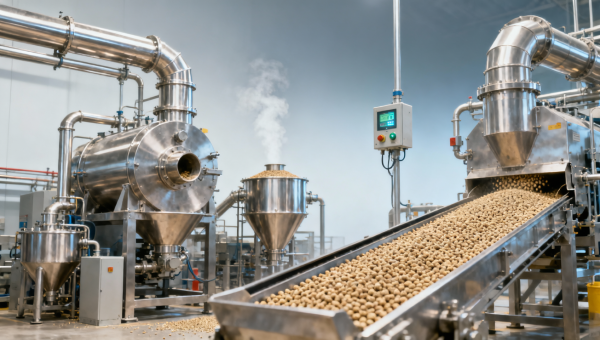
In modern feed plants, moisture control is a decisive factor behind pellet durability, throughput, and storage stability, whether the line uses a vertical feed mixer machine, horizontal ribbon blender feed system, or a poultry feed pellet machine. For teams evaluating a floating fish feed plant or cattle feed processing plant, understanding this variable helps reduce waste, improve consistency, and support smarter animal feed mixers wholesale procurement decisions.
For operators, quality managers, procurement teams, and project decision-makers, moisture is not a minor processing variable. It directly affects conditioning efficiency, pellet mill load, fines generation, cooling performance, packaging behavior, and downstream shelf stability. A feed line that misses moisture targets by even 1% to 2% can experience visible changes in pellet hardness, output rate, and customer complaints.
This article examines how moisture control shapes pellet quality across feed and grain processing systems, what parameters matter most, where losses usually occur, and how technical evaluators and buyers can compare equipment, sensors, and process layouts with more confidence.
Why Moisture Is a Core Process Variable in Pellet Manufacturing
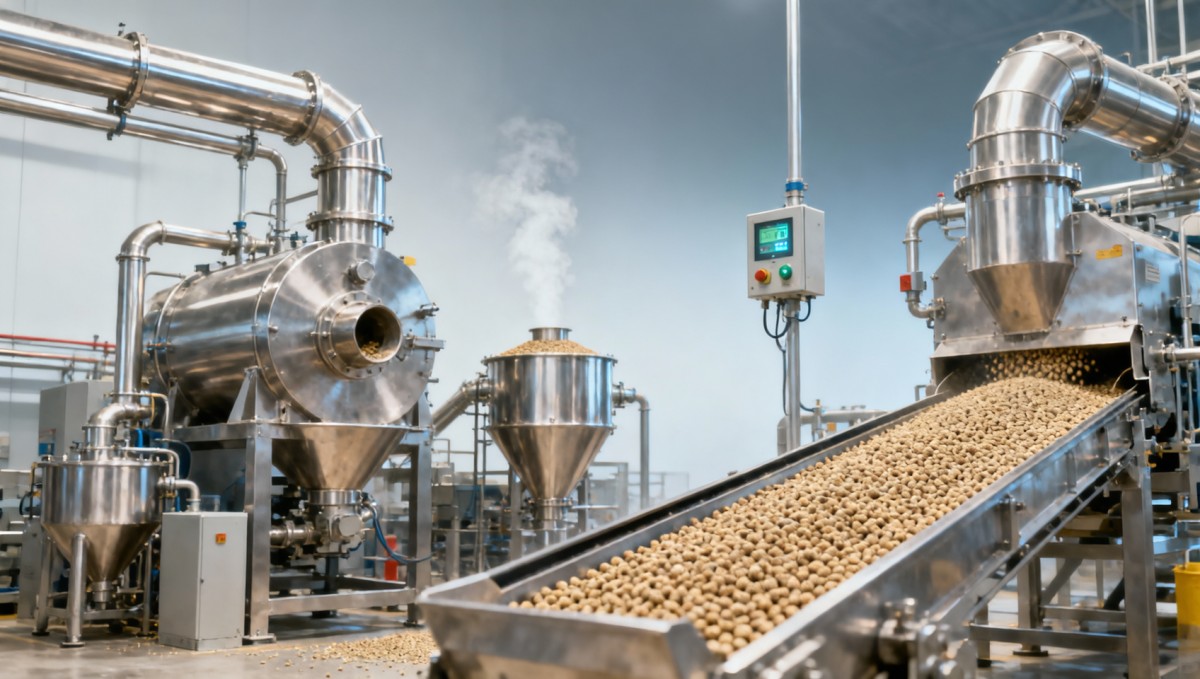
Pellet production is a moisture-driven thermal and mechanical process. In a typical feed plant, mash enters the conditioning stage at one moisture level, receives added steam or liquids, then passes through compression in the die before cooling. At each stage, moisture influences starch gelatinization, protein behavior, friction inside the die, and final pellet density.
In practical terms, low moisture often leads to higher die friction, increased energy demand, more broken pellets, and reduced throughput. Excessive moisture creates a different problem: soft pellets, poor cooling, mold risk, and unstable storage. Many feed plants work within a narrow conditioning moisture window, often around 15% to 17% for standard livestock feed, although exact targets vary by formulation, particle size, fat level, and species.
For floating fish feed plant operators, moisture control can be even more sensitive because expansion, buoyancy, and water stability depend on tightly managed thermal input and moisture distribution. For cattle feed processing plants, the challenge is often balancing fiber-rich formulations with acceptable pellet durability and line speed. In both cases, moisture control is tied to profitability, not just quality.
A well-managed line does not only measure moisture at intake. It checks at 4 key points: raw material receiving, post-mixing, post-conditioning, and post-cooling. This staged approach helps teams identify whether the main issue comes from ingredient variation, mixer performance, steam quality, or cooling imbalance.
How moisture affects major pellet quality indicators
Feed plants usually evaluate pellet quality through several linked indicators. These include pellet durability index, fines percentage, bulk density, output per hour, die temperature behavior, and storage stability over 7 to 30 days. Moisture does not act alone, but it is one of the most controllable variables among them.
- Pellet durability: conditioning moisture that is too low may reduce inter-particle bonding and increase breakage during conveying.
- Throughput: moisture in the right range can reduce die resistance and improve tonnage per hour.
- Cooling and storage: pellets exiting too wet may trap heat and create condensation inside bags or silos.
- Appearance: uneven moisture distribution often produces cracked, dull, or deformed pellets.
The table below summarizes typical relationships between moisture conditions and pellet outcomes in commercial feed lines.
The main takeaway is that moisture should be treated as a controlled process sequence rather than a single number. Plants that link incoming ingredient data with mixer, conditioner, pellet mill, and cooler settings are usually better positioned to reduce variability across shifts and batches.
Where Moisture Variability Starts: Ingredients, Mixing, and Conditioning
Moisture problems rarely begin at the pellet mill. In many cases, they start upstream with inconsistent raw materials, poor liquid addition control, or uneven mixing. Corn, soybean meal, wheat bran, fish meal, and mineral premixes can all arrive with different water levels depending on season, storage time, and transport conditions. A 2% swing in incoming moisture can shift the entire line if compensation is not built into the process.
This is why mixer selection matters. A vertical feed mixer machine may suit smaller operations or simpler formulations, but larger plants often prefer a horizontal ribbon blender feed system when uniform liquid addition and short mixing cycles are required. For many commercial lines, effective dry mixing takes 45 to 120 seconds, while liquid addition and post-spray homogenization may require another 30 to 90 seconds depending on batch size and viscosity.
Conditioning is the next critical stage. Steam quality, residence time, and paddle or shaft design influence how well moisture penetrates the mash. A conditioner running with insufficient retention time, such as less than 20 seconds for a demanding formulation, may not allow enough moisture distribution before pelleting. On the other hand, over-wetting without proper heat transfer can create sticky mash and unstable die behavior.
For technical assessment teams, the focus should not only be on rated machine capacity. It should also include nozzle design, liquid dosing accuracy, mixer coefficient of variation, steam pressure stability, and whether the line supports recipe-based control. These details often determine whether a plant can maintain the same pellet quality from one batch to the next.
Common upstream causes of moisture inconsistency
- Raw material moisture is tested too infrequently, such as once per shift instead of per delivery lot.
- Liquid dosing systems drift outside calibration, causing addition errors of 0.5% to 1.0%.
- Mixer discharge occurs before uniform distribution is achieved.
- Steam lines contain excess condensate, reducing conditioning quality.
- Formula changes are made without adjusting water or steam setpoints.
Operational checks that reduce early-stage variation
Plants that perform 5 routine checks tend to identify moisture drift sooner: incoming ingredient sampling, mixer uniformity verification, liquid nozzle inspection, steam trap review, and post-conditioner moisture testing. Even in medium-capacity systems processing 3 to 10 tons per hour, these checks can prevent recurring pellet quality complaints and unplanned downtime.
When procurement teams compare new or retrofit systems, they should ask whether the supplier supports inline sensors, automatic recipe correction, and maintenance access around dosing and steam components. These features may appear secondary during bidding, but they strongly influence long-term control costs.
Moisture Targets by Application and How They Influence Equipment Choice
Different feed applications demand different moisture strategies. Poultry feed pellet machine lines often prioritize pellet hardness, low fines during transport, and stable bagging performance. Floating aquafeed systems usually require tighter control of expansion and density. Ruminant pellets may need greater tolerance for fiber and variable ingredient structure. As a result, the right moisture control approach is closely linked to species, formula complexity, and line design.
There is no single ideal number for every plant. However, many operators work with broad target zones. Mash before conditioning may sit around 11% to 13%, conditioned mash may move to 15% to 17%, and finished cooled pellets are often brought down near 11% to 13% depending on climate, packaging, and storage duration. High-fat formulas or specialty aqua feeds may require tighter tolerances than standard compound feed.
These targets influence equipment selection. A plant with frequent formula changes may benefit from faster mixer cleanout and automated liquid dosing. A fish feed line may need more advanced conditioning and drying coordination. A cattle feed processing plant may prioritize robust mechanical handling and greater tolerance for bulkier mash. In all cases, matching equipment capability to moisture control demand reduces the risk of underperforming assets.
The comparison below helps buyers connect application type with likely moisture priorities and equipment features.
For procurement and financial approval teams, the lesson is clear: equipment should not be selected on output rating alone. A machine advertised at 5 tons per hour may not deliver stable quality if moisture control components are undersized, manually adjusted, or difficult to calibrate. Total value comes from process stability, not just nominal capacity.
Questions buyers should ask suppliers
- What is the expected moisture control accuracy at mixer and conditioner stages?
- Can the line support multiple recipes with separate water and steam setpoints?
- How long is the normal commissioning and calibration period, 3 days or 2 weeks?
- What maintenance intervals apply to dosing pumps, valves, sensors, and steam traps?
- Is post-installation training included for operators, QC staff, and maintenance technicians?
Control Methods, Measurement Points, and Risk Management in Daily Operation
A moisture control program is most effective when it combines measurement, adjustment, and verification. Plants that rely on a single manual sample at the end of the line often react too late. By the time finished pellets test out of range, waste has already occurred through broken product, slowed throughput, or rejected lots. Daily control should be structured around defined checkpoints and response limits.
Most commercial operations benefit from setting action bands. For example, if post-conditioning moisture deviates by more than 0.5% from target, operators review steam pressure, condensate removal, and liquid addition settings immediately. If cooled pellets exceed storage limits, they inspect cooler residence time, ambient air conditions, and bed depth before packaging resumes. A disciplined response within 15 to 30 minutes is more effective than waiting until the end of the shift.
Quality and safety teams should also consider storage risk. Pellets packed while still warm or too wet may appear acceptable at dispatch but deteriorate during transport, especially in humid climates. In export or long-distance distribution channels, even a small moisture imbalance can increase caking, mold pressure, or odor issues over 2 to 6 weeks of storage.
The table below outlines a practical monitoring framework for feed plants seeking tighter pellet quality control.
This framework supports communication across departments. Operators can react faster, QC can document trends, project managers can justify retrofit priorities, and procurement teams can compare automation packages based on measurable control needs rather than generic vendor claims.
Frequent mistakes that weaken moisture control
Mistake 1: treating steam addition as a fixed setting
Steam demand changes with ingredient seasonality, formula composition, and ambient conditions. Fixed settings may work for 1 formula but not for 10. Recipe-based adjustment is usually more reliable.
Mistake 2: ignoring post-cooler moisture drift
Some plants focus heavily on conditioning but neglect the cooler. If pellet temperature and residual moisture are not balanced, quality gains made upstream can be lost before storage.
Mistake 3: evaluating equipment without serviceability
A sophisticated dosing system offers little value if sensors are difficult to clean, calibrate, or replace. Maintenance access and spare part response times should be reviewed during equipment selection.
Procurement, Retrofit Planning, and ROI Considerations for Feed Plants
Moisture control investments can range from small upgrades to full line redesign. Some plants begin with handheld testing and improved SOPs. Others add automated liquid dosing, inline moisture sensors, conditioner upgrades, or improved coolers. The right level depends on line size, recipe variation, quality claims, and the financial cost of waste, downtime, and complaints.
For buyers and business evaluators, a practical approach is to compare projects through 4 dimensions: quality improvement, throughput gain, waste reduction, and compliance support. If a plant reduces fines by 1% to 3%, improves throughput by even 5%, and lowers rework frequency across 6 to 12 months, the economic case may be stronger than a simple equipment price comparison suggests.
Retrofit planning should also include implementation timing. Minor dosing or sensor upgrades may be completed during a short shutdown of 2 to 5 days, while conditioning and cooling modifications may require 1 to 3 weeks depending on civil work, piping, control integration, and commissioning. Project managers should align this schedule with seasonal production peaks and raw material availability.
For distributors, agents, and OEM partners, moisture control is also a sales positioning opportunity. Buyers increasingly want solutions that connect machinery, testing, training, and process documentation. A supplier who can explain how moisture affects pellet quality in commercial terms often builds more trust than one who only lists motor power and mechanical dimensions.
A practical evaluation checklist before approval
- Define current loss points: fines rate, throughput fluctuation, rejected lots, or storage complaints.
- Map moisture readings at no fewer than 4 process points.
- Compare supplier solutions by control accuracy, not only installed power.
- Confirm spare parts lead time, training scope, and calibration support.
- Estimate payback using 6- to 12-month production and waste data.
FAQ: What do buyers ask most often?
How much moisture variation is acceptable in normal production?
Many plants try to keep critical process points within about ±0.5% of target, especially after conditioning and cooling. Wider variation may still be manageable for some formulas, but consistency usually declines as the gap increases.
Do smaller plants need automated control?
Not always. Smaller batch plants can improve significantly with better testing discipline, calibrated dosing, and mixer verification. However, when product mix expands or quality claims tighten, automation becomes more valuable.
Which upgrade usually delivers the fastest benefit?
In many cases, improved liquid addition accuracy, steam system maintenance, and post-cooler verification deliver quick gains before larger capex projects are approved.
Moisture control shapes pellet quality at every stage of feed manufacturing, from raw material intake to cooled product storage. It affects durability, throughput, fines, cooling efficiency, and the commercial reliability of poultry, aqua, and cattle feed operations. For technical teams, the priority is process stability. For procurement and management, the priority is choosing equipment and control methods that turn stability into measurable operating value.
If your team is assessing a new feed line, retrofitting a mixer or conditioner, or comparing animal feed mixers wholesale options, a structured review of moisture control points can clarify where quality is won or lost. To explore tailored equipment configurations, implementation guidance, or process evaluation support, contact us to discuss your application and get a customized solution.
Related Intelligence
- Commercial Feed PelletIndia Launches Anti-Dumping Review on Chinese Commercial Feed PelletsIndia's anti-dumping review on Chinese commercial feed pellets could extend the 18.3% duty—key for importers, feed mills & agri-supply chains. Act now.
- Commercial Feed PelletIndia Launches Mid-Term AD Review on Chinese Commercial Feed PelletsIndia's mid-term AD review on Chinese Commercial Feed Pellets impacts exporters, feed mills & importers—get actionable insights, HS code guidance, and duty-scenario planning now.
- Commercial Feed PelletIndia Launches Mid-Term AD Review on Chinese Commercial Feed PelletsIndia's mid-term AD review on Chinese commercial feed pellets could raise duties to 28.5% — critical for exporters, feed mills & agri-input suppliers. Act now.
The Morning Broadsheet
Daily chemical briefings, market shifts, and peer-reviewed summaries delivered to your terminal.
