
Pomegranate Seed Extract Quality Clues Before You Order
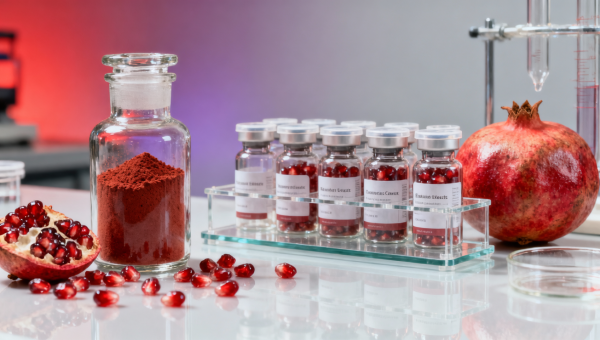
Before you place a purchase order for pomegranate seed extract, the fastest way to reduce sourcing risk is to look past attractive specification sheets and focus on the quality clues that actually predict performance: marker profile, extraction method, solvent control, traceability, batch consistency, and the supplier’s ability to support technical review. For procurement, QA, R&D, and management teams, the key question is not simply whether an extract is “standardized,” but whether its composition, documentation, and manufacturing controls are reliable enough for your intended application. That matters even more for teams simultaneously evaluating other botanical ingredients such as maitake mushroom extract, shiitake mushroom powder, chaga mushroom extract, or cordyceps extract wholesale, where label claims can look similar while underlying quality varies significantly.
What should buyers check first when assessing pomegranate seed extract quality?
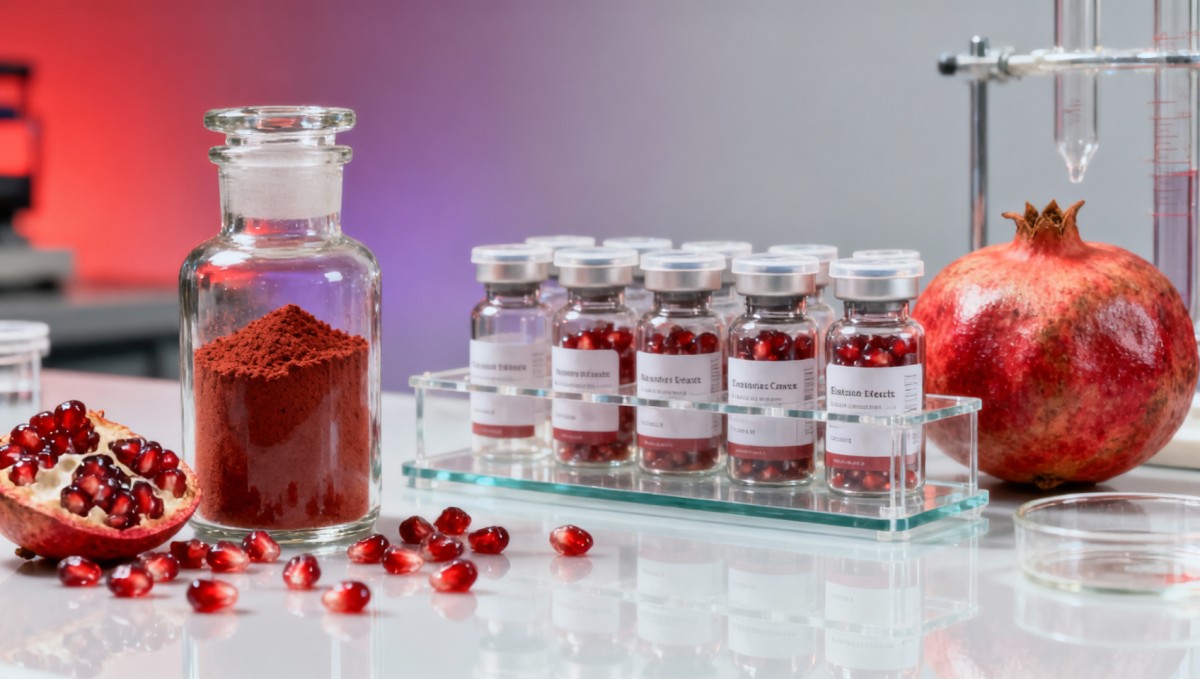
The first screening step is to identify whether the supplier can clearly explain what part of the pomegranate is used, which compounds are standardized, and how the extract is produced. This matters because “pomegranate extract” is often used loosely in the market. Some materials come from peel, some from seed, some from juice concentrate, and some are blended to hit a target assay. If a supplier cannot define the raw material origin precisely, the product may be difficult to benchmark or qualify.
For purchasing and technical teams, these are the earliest quality clues worth checking:
- Botanical identity: Confirm Punica granatum L. and the exact plant part used.
- Marker compounds: Ask whether the specification focuses on punicalagins, ellagic acid, polyphenols, or a broader fingerprint.
- Extraction solvent system: Water, ethanol, or hydroalcoholic systems are generally easier to justify than poorly disclosed processes.
- Standardization approach: Determine whether marker levels are naturally achieved or adjusted through blending.
- Certificate support: Review COA, TDS, SDS, allergen statement, residual solvent data, heavy metals, and microbiological limits.
- Batch traceability: Check whether lot numbers can be linked back to raw material procurement and production records.
If a vendor struggles on these basics, that is often a stronger warning sign than a slightly higher price from a better-documented source.
Which active profile actually matters: punicalagin, ellagic acid, or total polyphenols?
One of the most common buying mistakes is assuming that a single assay number proves quality. In reality, pomegranate seed extract quality assessment should be tied to use case.
Punicalagins are often treated as key markers because they are strongly associated with pomegranate’s antioxidant profile. Ellagic acid is also widely used in specifications, but it can be misleading if viewed in isolation. A product with a high ellagic acid number is not automatically the better extract if the overall polyphenol pattern is weak, degraded, or inconsistent across lots.
For technical evaluation, buyers should ask:
- Is the specification built around punicalagins, ellagic acid, total polyphenols, or a combination?
- What analytical method is used—typically HPLC, UV, or another validated procedure?
- Are chromatograms available to show fingerprint consistency across batches?
- Do the marker levels reflect the natural extract, or are they achieved through concentration or formulation adjustments?
For many professional buyers, the strongest sign of quality is not the highest claimed assay but a coherent and repeatable marker profile supported by method transparency. This is especially important if the extract will be used in capsules, tablets, premixes, functional foods, or formulations where stability and label accuracy matter.
How do extraction method and solvent controls affect quality and compliance?
Extraction method is a practical quality clue because it directly affects composition, purity, regulatory acceptability, and downstream processing behavior. Two extracts with similar assay values may perform differently because the solvent system, temperature profile, concentration steps, or drying process were different.
From a procurement and QA perspective, pay close attention to:
- Declared extraction solvent: Suppliers should clearly state the solvent and residual solvent limits.
- Residual solvent testing: Particularly important for regulated markets and sensitive applications.
- Carrier use: Maltodextrin or other carriers may affect assay interpretation, flowability, and formulation compatibility.
- Drying technology: Spray-dried versus other formats can influence moisture, particle size, and stability.
- Heat exposure: Excessive processing may damage sensitive polyphenol fractions.
If documentation only says “natural extraction” or “advanced process” without specifics, buyers should push for more detail. Ambiguous process language usually adds risk for technical approval, customer audits, and import compliance.
What documentation separates a credible supplier from a risky one?
Good pomegranate seed extract sourcing decisions are usually made through documents before they are confirmed through samples. A supplier that is genuinely prepared for industrial or institutional buyers should be able to provide a complete technical package without delay.
Key documents typically include:
- Certificate of Analysis for the current lot
- Product specification sheet with physical, chemical, and microbiological parameters
- Analytical method references
- Residual solvent data
- Heavy metals and pesticide screening, where relevant
- Microbiological compliance data
- GMP, ISO, HACCP, or other facility certifications as applicable
- Country of origin and manufacturing site information
- Non-GMO, allergen, BSE/TSE, and irradiation statements if needed for your market
For enterprise buyers and finance approvers, documentation quality also has a cost implication. Incomplete files often slow onboarding, create repeated back-and-forth with regulatory or QA teams, delay product launch timelines, and increase the hidden cost of procurement.
How can buyers verify batch consistency before committing to larger volumes?
Batch consistency is one of the clearest indicators of whether a supplier can support long-term procurement, not just sample-stage approval. It is relatively easy to produce one attractive sample. It is much harder to maintain marker levels, color, solubility, odor profile, contamination control, and moisture range across commercial lots.
To evaluate consistency, buyers should request:
- COAs from multiple production lots, not just one
- Typical range data for key markers such as punicalagins and ellagic acid
- Retention sample policy information
- Shelf-life and stability data under expected storage conditions
- Information on seasonal raw material variation and how the supplier manages it
A reliable supplier should be able to explain normal variation and define realistic control ranges. This is often more useful than a marketing claim of “premium quality.” For project managers and operations teams, stable incoming quality means fewer formulation adjustments, fewer rejected lots, and better production planning.
What practical red flags should procurement and QA teams watch for?
Several warning signs tend to appear before serious quality or supply issues emerge. These clues are especially useful when comparing multiple botanical ingredient vendors.
- Unclear plant-part description: The supplier cannot distinguish seed extract from peel or fruit extract.
- Overly broad marketing claims: Strong health claims but weak technical files.
- Assay without method transparency: High numbers with no HPLC or validated method support.
- Missing contaminant data: No recent heavy metals, microbial, or solvent testing.
- Inconsistent appearance between lots: Major changes in color, odor, or powder behavior.
- Price that is unusually low for the claimed standardization: May indicate dilution, blending, or unstable sourcing.
- Slow or evasive responses during technical review: Often a sign that documentation and internal controls are weak.
These same red flags often apply when sourcing adjacent natural ingredients such as maitake mushroom extract, shiitake mushroom powder, chaga mushroom extract, or cordyceps extract wholesale. The broader lesson is that extract quality should be judged by compositional integrity and manufacturing discipline, not by brochure language alone.
How should different stakeholders evaluate value, not just price?
Different stakeholders read quality clues differently, but the most successful buying decisions align them early:
- R&D and technical evaluators focus on marker profile, formulation fit, and analytical credibility.
- QA and safety teams focus on contamination control, traceability, and manufacturing standards.
- Procurement teams focus on supply reliability, lead times, MOQ, and total acquisition cost.
- Business decision-makers focus on risk reduction, launch reliability, and supplier scalability.
- Finance approvers focus on whether a higher unit price avoids larger downstream costs such as delays, waste, or rejected inventory.
In practice, the best-value pomegranate seed extract is rarely the cheapest option on the quotation sheet. It is the material that clears qualification faster, performs consistently, supports claims responsibly, and reduces the probability of compliance or production problems later.
Conclusion: what are the most reliable quality clues before you order?
Before ordering pomegranate seed extract, buyers should prioritize a few decisive signals: clear raw material identity, a meaningful punicalagin and ellagic acid profile, transparent extraction and solvent control, complete documentation, and proven batch consistency. These clues do more to predict real purchasing success than a single high assay claim or a low headline price.
For teams responsible for technical approval, sourcing, quality control, or commercial sign-off, the smartest approach is to treat pomegranate seed extract as a specification-driven ingredient rather than a generic botanical commodity. When suppliers can support that level of scrutiny with traceability, data, and process transparency, buyers can move faster and with far less risk.
Related Intelligence
- Botanical ExtractsANVISA’s New Traceability Rule for Botanical Extracts Enters Force in BrazilANVISA’s new traceability rule for botanical extracts takes effect April 27, 2026—learn how it impacts exporters, importers & suppliers in Brazil.
- Botanical ExtractsANVISA Extends Traceability for Botanical Extract Imports to Tier-2 SuppliersANVISA extends botanical extract traceability to tier-2 suppliers—key for Chinese exporters of herbal ingredients, supplements & cosmetics. Act now for July 2026 compliance.
- Botanical ExtractsANVISA Extends Traceability for Botanical Extracts to Tier-2 SuppliersANVISA extends botanical extract traceability to tier-2 suppliers—solvents, filter aids, adsorption media—effective Sept 1, 2026. Essential for exporters & supplement brands.
The Morning Broadsheet
Daily chemical briefings, market shifts, and peer-reviewed summaries delivered to your terminal.
