
Milk thistle extract silymarin: what specs matter?
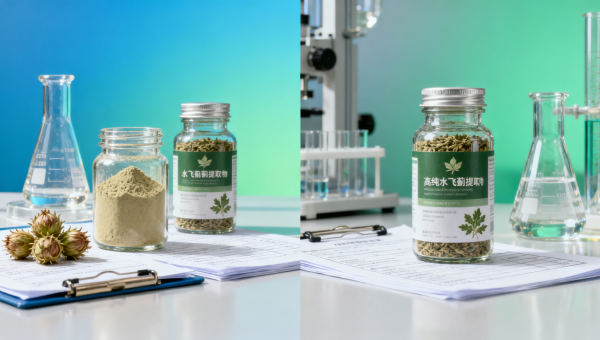
When evaluating milk thistle extract silymarin for pharmaceutical, nutraceutical, or industrial sourcing, the real question is not just purity, but which specifications determine efficacy, compliance, and procurement value. For buyers also comparing pine bark extract bulk, grape seed extract opc, and green tea extract egcg, understanding assay standards, solvent residues, and traceability is essential before any technical or commercial decision.
What should buyers check first in milk thistle extract silymarin specifications?
For most procurement teams, the first screening step is not price but specification clarity. Milk thistle extract silymarin is sold under several assay expressions, including total silymarin, silybin content, extract ratio, and marker-based standardization. If a supplier cannot explain whether the assay is measured by UV, HPLC, or another validated method, comparison across quotations becomes unreliable within the first 1–2 review rounds.
Information researchers usually want a fast way to separate commodity-grade material from application-fit material. Operators focus on flowability, color, odor, and dispersion behavior. Quality and safety managers look for residual solvent limits, heavy metals, pesticide controls, and microbial status. Finance approvers want to know why one 80% grade costs more than another 80% grade. These concerns all trace back to specification depth, not label simplicity.
In practical sourcing, 3 core indicators usually decide the short list: assay definition, contaminant control, and document traceability. A technically weak COA may still show a high percentage, but without batch-level identity testing, extraction solvent disclosure, and storage recommendations, downstream risk rises quickly. This matters even more when milk thistle extract silymarin is intended for capsules, tablets, premixes, or regulated export channels.
The 5 specification points that influence procurement value
- Assay basis: confirm whether “80% silymarin” means total flavonolignans, a UV equivalent value, or quantified components by HPLC.
- Active component profile: ask whether silybin A+B, isosilybin, silychristin, and silydianin are characterized or only total content is declared.
- Extraction process: ethanol, acetone, or other solvents affect residual solvent review, odor, and regulatory acceptability in different markets.
- Contaminant limits: heavy metals, microbial counts, aflatoxins where relevant, and pesticide residue control should match intended market requirements.
- Traceability package: batch code, origin, production date, retest period, allergen statement, and transport conditions should be auditable within 24–72 hours.
For ACC readers across fine chemicals and bio-extract procurement, the key is to translate a botanical specification into operational certainty. A purchase order should not proceed until the supplier has aligned assay language, testing method, and documentation set. That is often the difference between smooth approval in 7–15 days and a stalled technical review lasting 3–4 weeks.
Which technical parameters matter most for quality control and application fit?
Quality control teams rarely evaluate milk thistle extract silymarin as a single number. They assess a specification matrix. Typical items include appearance, assay, loss on drying, ash, bulk density, particle size, solvent residues, and microbiological limits. For a powder used in solid dosage or nutraceutical blending, particle size and moisture can affect mixing uniformity just as much as active content.
Operators also need practical handling data. A hygroscopic powder may bridge in hoppers after 48–72 hours in humid storage. A very fine mesh may improve dispersibility but create dust-control issues during weighing. If a plant runs semi-automatic filling, the acceptable bulk density range can influence line stability and packaging consistency over a full production shift.
The table below summarizes the specification areas that usually deserve priority during supplier qualification. It is especially useful when a team is comparing milk thistle extract silymarin with other botanical actives such as pine bark extract bulk, grape seed extract opc, or green tea extract egcg, where assay style and impurity control also vary by manufacturer and market.
A frequent mistake is treating all botanical extracts as interchangeable once assay percentage appears similar. In reality, two suppliers can both offer milk thistle extract silymarin at “80%,” yet one may fit pharmaceutical intermediate review while the other suits only general nutraceutical blending. The difference usually appears in method disclosure, impurity management, and lot-to-lot reproducibility over 6–12 months.
What QC teams should request before approval
Minimum document pack
- Current COA with test methods and batch number.
- Product specification sheet with storage, shelf life, and packaging format.
- Residual solvent and contaminant statement, ideally linked to routine testing frequency.
- Origin and traceability declaration for raw botanical material and processing site.
For project managers coordinating launch schedules, this document set should be reviewed before sample dispatch or no later than the first 3 business days after sample confirmation. Early document review cuts repeated technical queries, reduces idle approval time, and helps finance and operations move from evaluation to commercial negotiation with fewer surprises.
How does milk thistle extract silymarin compare with other botanical actives?
Buyers often compare milk thistle extract silymarin with pine bark extract bulk, grape seed extract opc, and green tea extract egcg because all four are widely sourced botanical ingredients with active-marker claims. Yet their procurement logic differs. Silymarin is heavily tied to flavonolignan profiling and solvent history. OPC products often emphasize oligomeric content and color control. EGCG products raise stronger sensitivity around catechin profile and oxidation stability.
This comparison matters when procurement teams are standardizing supplier scorecards across a botanical portfolio. A uniform vendor form may miss extract-specific risk. For example, one product may be more vulnerable to residual solvent scrutiny, while another is more sensitive to moisture pickup or catechin degradation. Cross-category comparison is useful only when adjusted to the chemistry of each active.
The following table helps technical and commercial teams compare extract families through the lens of sourcing, handling, and approval. It is not a substitute for application testing, but it helps narrow which questions should be asked in the first 2–3 supplier discussions.
For finance approvers, comparison tables like this are useful because they explain why a lower quote is not always a lower landed risk. If milk thistle extract silymarin requires tighter solvent review or broader documentation, the administrative cost of approval can offset a nominal saving. In many regulated or export-facing projects, total procurement efficiency is measured across specification review, release speed, and batch acceptance rate.
When lower price becomes higher cost
- A low-cost batch may trigger repeat testing, adding 3–7 days and extra laboratory expense.
- Incomplete solvent or traceability data may delay customer release or import documentation.
- Unstable physical properties can increase production deviation rates during blending or encapsulation.
ACC’s editorial perspective is particularly valuable here because cross-sector buyers need a framework that connects chemistry, compliance, and commercial execution. A bio-extract should be evaluated as a supply-chain input with operational consequences, not just as a line item on a quotation sheet.
What compliance and traceability signals reduce sourcing risk?
For regulated or semi-regulated markets, milk thistle extract silymarin sourcing depends on more than a specification sheet. Teams should ask which quality system governs production, how batch records are retained, whether raw botanical identity is verified, and how change control is managed. In many projects, the strongest risk reduction comes from consistent documentation over time rather than a single impressive sample result.
Common review checkpoints include GMP relevance where applicable, food-grade or supplement-grade documentation where relevant, residual solvent alignment, contaminant declarations, and packaging integrity. Storage advice also matters. A standard recommendation may involve cool, dry conditions, protected from light, with unopened shelf-life review points at 24 or 36 months depending on the product dossier and stability approach.
Project owners should treat traceability as a workflow, not a document. If a supplier can provide origin, processing date, batch number, COA, and shipment linkage within 24 hours, issue resolution becomes much faster. If every request requires 5–7 emails across sales and factory teams, the sourcing model may not support urgent production schedules or audit expectations.
A practical 4-step approval path
- Define end use and target market: pharmaceutical intermediate review, nutraceutical use, or broader industrial ingredient sourcing.
- Match specification to application: assay method, solvent system, contaminant limits, and physical properties.
- Verify documentation: COA, specification sheet, traceability statement, packaging details, and transport conditions.
- Run sample and batch review: compare lab findings, handling performance, and approval lead time before commercial scale-up.
This sequence helps different stakeholders work in parallel. Researchers can screen the dossier, quality managers can review risk items, operators can assess usability, and finance teams can estimate total procurement cost. In most organizations, aligning these 4 steps early can shorten final supplier selection from a fragmented 4–6 week process to a more controlled technical-commercial cycle.
FAQ: what do procurement teams most often ask about milk thistle extract silymarin?
Because milk thistle extract silymarin sits between natural ingredient sourcing and compliance-driven procurement, the same questions appear repeatedly across technical, operational, and financial review. The answers below focus on practical selection, not generic extract theory.
How should we compare two suppliers both offering 80% milk thistle extract silymarin?
Start by checking whether both use the same assay method and the same definition of silymarin. Then compare residual solvent declaration, contaminant limits, batch traceability, and physical characteristics such as moisture and mesh. If these factors differ, the two offers are not directly equivalent even if the headline percentage matches.
What is the most overlooked risk in milk thistle extract silymarin procurement?
The most overlooked issue is ambiguous assay language. Buyers often accept a percentage claim without clarifying the analytical method. That creates problems during incoming inspection, customer dossier review, or inter-batch comparison. The second common risk is insufficient solvent transparency, especially for projects with export or higher compliance expectations.
How long does qualification usually take?
A straightforward review with complete documents and an acceptable sample can move in 7–15 business days. If the material needs repeated testing, market-specific documentation, or clarification on origin and processing, the process can extend to 3–4 weeks or longer. Early document exchange is the easiest way to compress the timeline.
Is milk thistle extract silymarin suitable for every botanical portfolio strategy?
Not automatically. It fits well where liver-health positioning, flavonolignan standardization, or defined phytochemical sourcing is relevant. But supplier selection criteria should not simply be copied from grape seed extract opc or green tea extract egcg. Each extract family requires its own active-marker logic, impurity review, and storage handling checks.
Why consult ACC before final supplier selection?
AgriChem Chronicle serves technical buyers, industrial operators, and compliance-led decision makers who need more than promotional claims. Our editorial framework is designed for sectors where botanical extracts, fine chemicals, and regulated procurement intersect. That means specification interpretation, supplier comparison, and market-facing risk analysis are treated as connected decisions rather than separate tasks.
If your team is evaluating milk thistle extract silymarin, pine bark extract bulk, grape seed extract opc, or green tea extract egcg, ACC can help structure the review around real procurement variables: assay confirmation, solvent disclosure, traceability readiness, batch consistency, documentation gaps, and expected approval time. This is especially useful when internal teams span R&D, QA, purchasing, and budget control.
You can reach out for support on 6 practical topics: parameter confirmation, product selection, sample review, delivery lead-time planning, compliance documentation expectations, and quotation comparison logic. For projects under schedule pressure, it is often helpful to clarify these points before issuing final RFQs, not after sample acceptance.
What to prepare before contacting us
- Target specification range, including assay basis and any required contaminant limits.
- Application scenario, such as capsule filling, premix blending, or ingredient trading.
- Expected order scale, sample need, and preferred delivery window, whether 2 weeks or a longer procurement cycle.
- Destination market or customer documentation requirements, especially if approval standards differ by region.
With these inputs, the discussion becomes faster and more precise. Instead of exchanging generic brochures, your team can move directly to comparing milk thistle extract silymarin specifications, identifying approval risks, and determining whether a quoted material truly matches your technical and commercial objectives.
Related Intelligence
- Botanical ExtractsANVISA’s New Traceability Rule for Botanical Extracts Enters Force in BrazilANVISA’s new traceability rule for botanical extracts takes effect April 27, 2026—learn how it impacts exporters, importers & suppliers in Brazil.
- Botanical ExtractsANVISA Extends Traceability for Botanical Extract Imports to Tier-2 SuppliersANVISA extends botanical extract traceability to tier-2 suppliers—key for Chinese exporters of herbal ingredients, supplements & cosmetics. Act now for July 2026 compliance.
- Botanical ExtractsANVISA Extends Traceability for Botanical Extracts to Tier-2 SuppliersANVISA extends botanical extract traceability to tier-2 suppliers—solvents, filter aids, adsorption media—effective Sept 1, 2026. Essential for exporters & supplement brands.
The Morning Broadsheet
Daily chemical briefings, market shifts, and peer-reviewed summaries delivered to your terminal.
