
Maitake mushroom extract: what specs actually matter before buying?
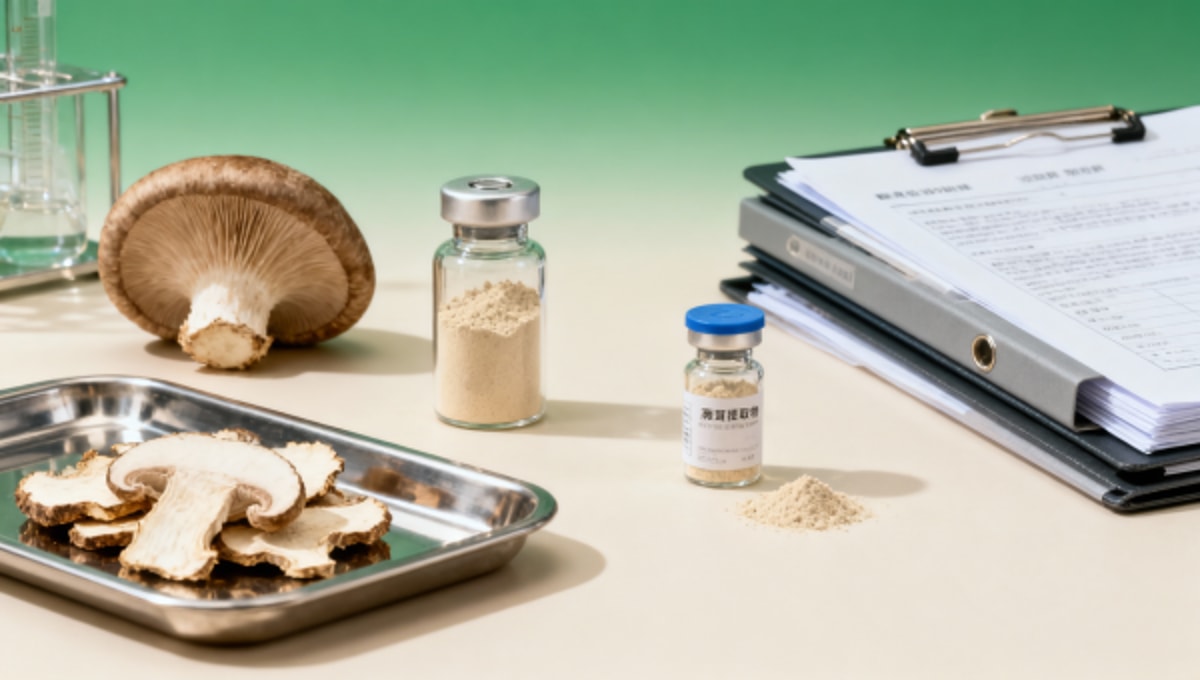
Before sourcing maitake mushroom extract, buyers need to look beyond label claims and focus on the specifications that affect efficacy, compliance, and commercial value. In a market also shaped by shiitake mushroom powder, chaga mushroom extract, cordyceps extract wholesale, lion's mane mushroom powder, and reishi mushroom extract bulk, understanding assay standards, beta-glucan content, purity, traceability, and testing protocols is essential for informed technical and procurement decisions.
Which maitake mushroom extract specifications matter most in real procurement?
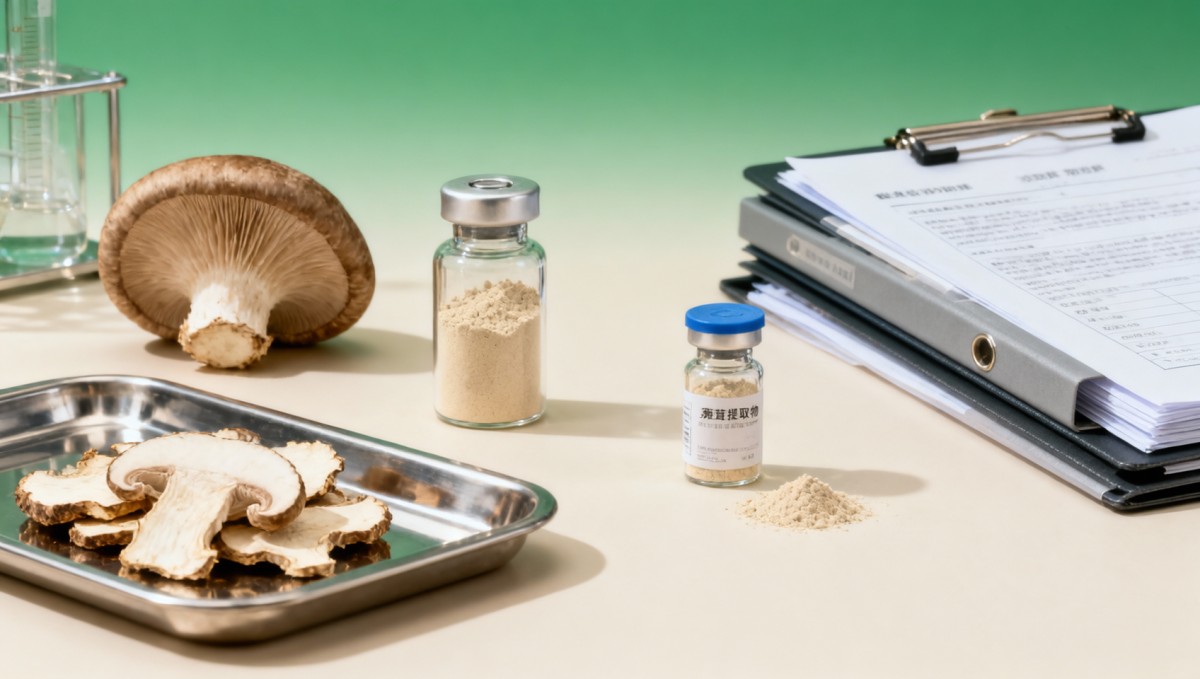
In industrial and commercial purchasing, maitake mushroom extract is rarely evaluated on a single claim. Technical teams, procurement managers, and quality personnel typically review at least 5 core dimensions before approving a supplier: identity, active content, purity, processing method, and documentation. A product that looks competitive on price can still fail downstream if its assay basis is unclear or if batch records do not match the specification sheet.
For buyers serving nutraceutical, food ingredient, or botanical formulation channels, the key question is not simply whether the material is “high potency.” The better question is whether the extract specification aligns with the target application. A 10:1 extract, a polysaccharide-standardized extract, and a beta-glucan-standardized extract may all be sold as maitake mushroom extract, but they represent different quality signals and different commercial risks.
This is especially relevant in a broader bio-extracts market where shiitake mushroom powder, chaga mushroom extract, cordyceps extract wholesale offers, lion's mane mushroom powder, and reishi mushroom extract bulk are often compared side by side. Cross-category comparison can mislead non-technical buyers because mushrooms differ in marker compounds, extraction objectives, and common specification language. That is why technical review should happen before commercial negotiation, not after.
From an ACC-style intelligence perspective, procurement decisions improve when teams separate marketing descriptors from measurable indicators. In practice, the first screening step should be completed within 3 layers: document review, laboratory conformity review, and supply-chain verification. If a supplier cannot support all 3, the risk profile rises even when quoted lead times are only 2–4 weeks.
The 5 specification areas that should be checked first
- Identity and raw material basis: confirm whether the material comes from fruiting body, mycelium, or biomass-fermented substrate, because functionality claims and buyer expectations differ materially across these sources.
- Active content definition: ask whether polysaccharides are total polysaccharides or beta-glucans specifically, since these values are not interchangeable and should not be compared as if they were identical.
- Solvent and extraction method: hot-water extraction is common, while hydroalcoholic processing may be used in some formulations; the method influences solubility, residue expectations, and label compatibility.
- Purity and contaminants: review limits for heavy metals, microbial load, residual solvents where relevant, and pesticide screening if the material is positioned for regulated channels.
- Traceability package: require COA, specification sheet, batch number linkage, origin statement, and storage guidance for each lot rather than a generic product brochure.
Many sourcing problems begin when buyers approve a mushroom extract using only one line on a quotation sheet, such as “polysaccharides 30%.” That statement is incomplete unless the test method, dry basis condition, and botanical identity are disclosed. For financial approvers and business evaluators, this is not a minor technical detail. It directly affects claim consistency, complaint risk, and whether the material can be defended during an audit or customer review.
How should technical teams read assay values, beta-glucans, and extract ratios?
One of the most common mistakes in buying maitake mushroom extract is comparing extract ratio and active assay as though they describe the same thing. They do not. A ratio such as 10:1 or 20:1 suggests concentration relative to starting raw material, but it does not confirm the final level of beta-glucans or other target fractions. A standardized assay, by contrast, is tied to a measurable component and is usually more useful for formulation and quality control planning.
Technical evaluators should also distinguish between total polysaccharides and beta-glucans. Total polysaccharides may include starches or other carbohydrate fractions depending on method and raw material quality. Beta-glucans are generally treated as a more decision-relevant metric in many mushroom ingredient programs, but only when the method is suitable and disclosed. If the assay method is hidden, the number itself has limited value.
For operators and project managers, these distinctions affect process performance. Solubility, color, odor, and blend stability can vary noticeably across extracts standardized in different ways. A material with a higher ratio is not always easier to use in beverage, capsule, tablet, or premix applications. In some production environments, a moderate standardized extract with consistent lot-to-lot behavior performs better over 6–12 monthly procurement cycles than a stronger-looking but less stable alternative.
The table below summarizes the most decision-relevant specification items for maitake mushroom extract and shows why document clarity is as important as the headline number on the offer sheet.
A practical reading method is to rank specification confidence in 3 tiers. Tier 1 includes identity, assay, and contaminant limits. Tier 2 includes extraction method, excipients, and physical characteristics. Tier 3 includes packaging format, storage, and shipping profile. If Tier 1 is weak, there is little value in arguing over freight terms or payment discounts because the technical foundation is still unresolved.
What to ask when assay claims look similar
Questions that reduce comparison errors
- Is the assay reported on an as-is basis or dry basis, and what is the moisture limit?
- Which method was used for beta-glucan or polysaccharide testing, and is it consistent across lots?
- Does the material contain carrier agents, maltodextrin, or other flow aids that affect net active content?
- Can the supplier provide recent lot data over at least 3 consecutive batches instead of a single idealized COA?
These questions matter just as much when reviewing shiitake mushroom powder or reishi mushroom extract bulk. Across mushroom ingredients, the most reliable procurement outcomes come from comparable assay language, matched test methods, and transparent batch history rather than from isolated potency claims.
What purity, safety, and compliance checks should be non-negotiable?
Quality control teams and safety managers usually treat purity and compliance as the gatekeeping stage. For maitake mushroom extract intended for B2B distribution, common checks include microbial limits, heavy metals, moisture, ash where relevant, and residual solvent review if non-water extraction was used. The exact acceptable ranges depend on destination market and product category, but the existence of a documented control plan should not be optional.
Procurement professionals should also pay close attention to traceability depth. A compliant supplier should be able to link finished extract batches back to raw material lots, processing dates, and release documentation. In regulated or semi-regulated supply chains, a missing link in records can delay approval by 7–15 days, especially if the customer asks for additional declarations on allergens, irradiation status, GMO status, or applicable contaminant screening.
For international trade, the most practical approach is to review compliance in 4 layers: product specification, manufacturing controls, market-entry documents, and shipment-level consistency. This is where ACC’s cross-disciplinary perspective matters. In fine chemicals, bio-extracts, and primary processing, a technically acceptable product can still become a commercial problem if paperwork standards do not match the buyer’s audit environment.
The next table can be used by technical, procurement, and financial stakeholders as a joint screening tool. It helps convert abstract quality discussions into approval checkpoints that can be reviewed in one meeting instead of being scattered across emails over 2–3 weeks.
The key interpretation is simple: a technically promising maitake mushroom extract should be purchased only if its compliance file is proportionate to its intended use. This discipline becomes even more important when buyers compare it with cordyceps extract wholesale listings or chaga mushroom extract offers from multiple regions, because documentation quality can vary more than headline potency.
A practical 6-point release checklist
- Match the product name on the quotation, COA, and label draft to avoid customs and warehouse confusion.
- Confirm lot number traceability from incoming sample through commercial shipment.
- Verify whether the assay and contaminant tests are lot-specific rather than template-based.
- Review storage condition, packaging barrier, and expected shelf-life under standard warehouse conditions.
- Check whether any carrier or excipient changes effective loading in the final formula.
- Confirm whether re-test interval, retention sample policy, and complaint handling process are defined.
For project leaders, a release checklist like this reduces internal friction. It keeps technical evaluation, purchasing, and finance aligned around measurable approval points instead of subjective impressions about supplier credibility.
How do maitake extract options compare with other mushroom ingredients and buying models?
Many buyers do not review maitake mushroom extract in isolation. They compare it against shiitake mushroom powder, lion's mane mushroom powder, reishi mushroom extract bulk formats, or chaga mushroom extract depending on formulation goals and budget constraints. The challenge is that these materials often differ in processing intensity, marker expectations, organoleptic impact, and cost structure. A fair comparison should therefore start with use case, not with price per kilogram alone.
There are also at least 3 common buying models in the market: spot purchase for immediate use, quarterly contracted supply for stable production, and specification-led sourcing for private label or customer-defined formulas. Each model changes the importance of lead time, safety stock, and documentation depth. For example, a spot purchase may tolerate tighter lead times, while a quarterly program demands stronger batch consistency and forecast communication.
In cost discussions, finance teams should ask whether the lower-priced option requires higher use rates, more blending correction, or extra incoming inspection. Apparent savings can disappear over a 90-day planning window if rejects, reformulation, or delayed release consume labor and inventory capacity. That is why commercial value should be measured as total usable cost rather than invoice price alone.
The comparison table below is intended to support cross-functional selection. It does not rank one mushroom ingredient above another. Instead, it highlights how decision criteria shift depending on whether the buyer prioritizes standardized actives, simpler powders, or broad portfolio sourcing.
A smart comparison framework uses 4 decision filters: functional fit, specification clarity, release risk, and total delivered cost. When those filters are applied consistently, buyers can compare maitake mushroom extract with adjacent ingredients without collapsing technical and commercial criteria into a single price argument.
When is a standardized extract the better buy?
Typical scenarios
A standardized extract tends to be the better option when customer-facing specifications must be stable over multiple lots, when formulation loading is tightly controlled, or when procurement supports regulated distribution channels. In these cases, a 2% difference in actual active level can matter more than a 10% difference in quotation price.
By contrast, simpler powder formats may be commercially sensible where the application is less sensitive to active standardization and where physical characteristics are easier to manage. The point is not that one format is universally better. The point is that selection should follow the application brief, customer commitments, and approval burden.
What buying process reduces risk from sample stage to commercial shipment?
A disciplined buying process for maitake mushroom extract usually follows 4 stages: requirement definition, sample and document review, pilot or first-order verification, and contracted supply management. This process is useful not only for large purchasing teams but also for smaller importers and formulators who need to control risk without creating excessive administrative delay.
At stage one, define the application, target assay, source preference, and unacceptable deviations. At stage two, review sample, COA, and specification together rather than in isolation. At stage three, compare sample performance with commercial lot documentation over at least 1 initial shipment. At stage four, set reorder triggers, document refresh intervals, and communication rules for any process change. Even a basic version of this sequence can reduce avoidable purchasing errors over a 1–2 quarter horizon.
For mixed stakeholder groups, the best practice is to assign ownership by function. Technical staff approve specification fitness. Quality staff approve documentation and release criteria. Procurement negotiates price, terms, and supply flexibility. Finance reviews exposure tied to MOQ, payment schedule, and safety stock. When these decisions are forced into one role, hidden risk tends to surface later as delays or write-offs.
ACC supports this decision logic by translating complex technical and regulatory signals into usable procurement intelligence. In sectors where raw materials, fine chemicals, and bio-extracts move through increasingly regulated global channels, decision-makers need more than promotional literature. They need specification interpretation, compliance context, and supplier-side transparency checkpoints that can withstand internal and external review.
FAQ for technical buyers and procurement teams
How should I compare two maitake mushroom extract offers with different assay language?
First, normalize the basis of comparison. Check dry basis versus as-is, confirm whether the source is fruiting body or mycelium, and ask for the exact test method. Then compare contaminant limits, carrier content, and recent batch history. Without those 4 checks, a cheaper offer may not be truly equivalent.
What is a reasonable lead time to expect?
Lead times vary by stock status, processing schedule, and export documentation needs. For standard commercial material, buyers often plan around 2–4 weeks for available inventory and longer for customized specifications or documentation-heavy markets. It is safer to confirm both production lead time and release-document lead time separately.
Is beta-glucan always the most important number?
Not always. Beta-glucan is often a key metric, but the most important value depends on the application, customer requirements, and test method reliability. For some programs, source declaration, microbiology, and lot consistency are equally important because they affect approval and repeatability more directly than a single marker percentage.
What documents should I request before first commercial order?
At minimum, request a specification sheet, lot-specific COA sample, manufacturing or process summary, packaging details, storage guidance, and key declarations relevant to your market. If your customer asks for additional statements, request them before price approval rather than after PO issuance.
Why work with a specialized industry intelligence partner before committing to supply?
For buyers navigating maitake mushroom extract, shiitake mushroom powder, chaga mushroom extract, lion's mane mushroom powder, or reishi mushroom extract bulk, the hardest part is often not locating suppliers. It is separating commercially usable specifications from incomplete or non-comparable offers. That is where a specialized publication and industry analysis platform adds measurable value.
AgriChem Chronicle serves procurement, technical review, and executive decision teams that need clarity across bio-extracts, fine chemicals, and primary industries. Our editorial framework is designed for specification interpretation, market screening, and compliance-aware buying decisions. Rather than amplifying marketing claims, we focus on the details that determine whether a material can be approved, shipped, released, and used without avoidable friction.
If you are evaluating maitake mushroom extract for a new program or requalifying an existing supplier base, you can contact us for support on 6 practical topics: parameter confirmation, assay comparison, source-material review, documentation gaps, expected delivery window, and commercial shortlist refinement. This is especially useful when your team must align technical, purchasing, QC, and finance decisions within a single approval cycle.
Reach out when you need help reviewing specification sheets, comparing sample versus commercial lot expectations, identifying realistic certification questions, assessing contract supply readiness, or structuring quotation discussions around total procurement risk rather than price alone. In complex supply chains, better buying starts with better interpretation.
Related Intelligence
- Botanical ExtractsANVISA New Rule: Botanical Extracts Import to Brazil Requires Two-Tier TraceabilityANVISA new rule mandates two-tier traceability for botanical extracts imported to Brazil — learn how it impacts Chinese exporters, compliance deadlines & AgroTrace integration.
- Botanical ExtractsANVISA New Rule: Botanical Extracts to Brazil Require Traceability to Tier-2 SuppliersANVISA new rule requires traceability for botanical extracts to Brazil — now covering tier-2 suppliers. Learn compliance steps, affected sectors & how to prepare before July 2026.
- Botanical ExtractsANVISA’s New Traceability Rule for Botanical Extracts Enters Force in BrazilANVISA’s new traceability rule for botanical extracts takes effect April 27, 2026—learn how it impacts exporters, importers & suppliers in Brazil.
The Morning Broadsheet
Daily chemical briefings, market shifts, and peer-reviewed summaries delivered to your terminal.
