
The Authority in Global Agricultural Chemistry & Bio-Resources
2026 bulk extract buying guide: what has changed in supplier screening?
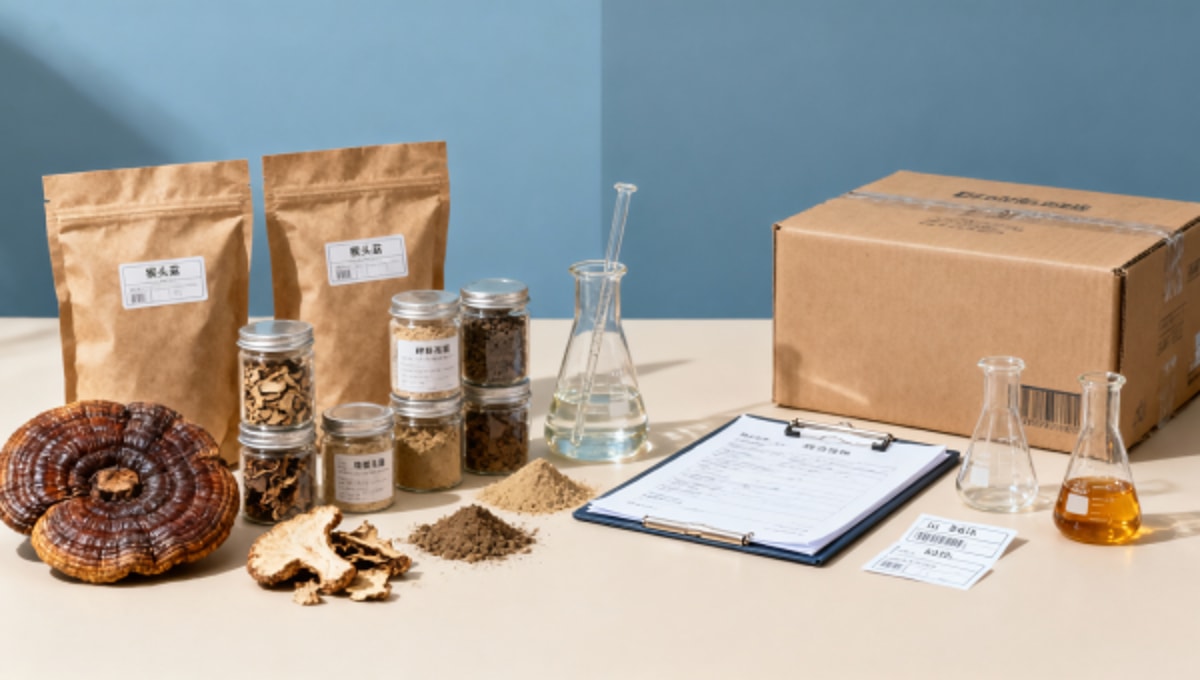
In 2026, bulk extract sourcing is no longer just about price lists and COAs. Buyers comparing maitake mushroom extract, chaga mushroom extract, cordyceps extract wholesale, lion's mane mushroom powder, and reishi mushroom extract bulk now face tighter compliance, deeper traceability checks, and higher documentation standards. This guide explains how supplier screening has changed for botanical ingredients such as shiitake mushroom powder, astragalus root extract, echinacea purpurea extract, elderberry extract wholesale, and pomegranate seed extract.
Why supplier screening for bulk extracts looks different in 2026
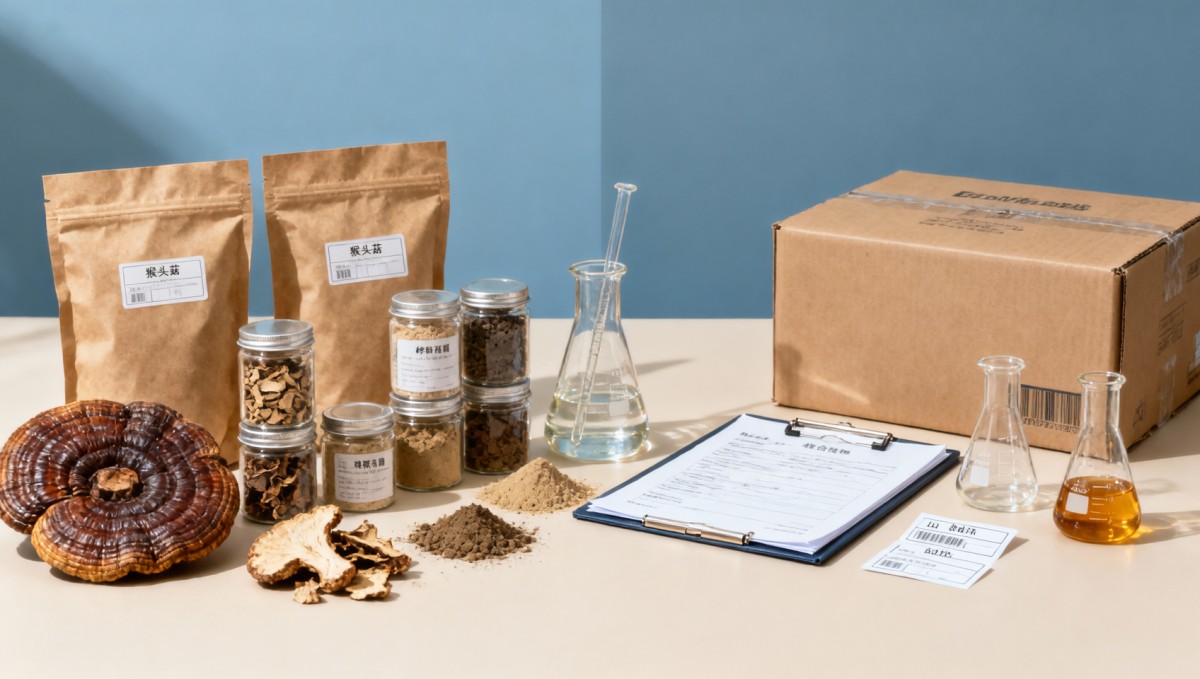
Bulk extract procurement now sits at the intersection of quality, regulatory exposure, ingredient performance, and supply continuity. For procurement teams buying maitake mushroom extract or reishi mushroom extract bulk, the core question is no longer “Who can quote fastest?” It is “Who can prove origin, process control, specification consistency, and export readiness across 3–5 shipment cycles?” That shift is especially visible in botanical ingredients used in nutraceutical, food, feed, and fine chemical applications.
Across global supply chains, buyers are seeing tighter file requirements before supplier approval. A basic COA and specification sheet may still start the conversation, but technical evaluators and quality managers increasingly request batch records, contaminant panels, residual solvent statements, allergen declarations, and stability-related handling guidance. For products such as chaga mushroom extract, lion's mane mushroom powder, and elderberry extract wholesale, supplier screening now extends well beyond simple potency claims.
Another major change is cross-functional review. In many organizations, supplier onboarding involves at least 4 decision groups: procurement, QA/QC, regulatory or compliance, and finance or commercial approval. Project managers may also join if launch timing is tight. This means a supplier must satisfy not one buyer profile, but several. A low price that fails microbial expectations or shipping documentation review can delay a project by 2–6 weeks.
For ACC readers in primary industries and fine chemicals, this matters because extract sourcing now resembles risk-managed procurement rather than commodity buying. Whether the ingredient is astragalus root extract, echinacea purpurea extract, or pomegranate seed extract, supplier screening in 2026 is increasingly defined by verification depth, not brochure quality.
What has changed most for B2B buyers
The practical changes can be grouped into 5 areas: origin traceability, manufacturing discipline, test method transparency, logistics resilience, and document responsiveness. Buyers that previously approved a vendor after 1 sample and 1 quotation round now often require 2–3 rounds of technical clarification, especially for mushroom extracts where extraction ratio, carrier use, and polysaccharide test methodology can vary widely.
- Traceability checks now extend upstream to farm, wild-harvest area, or primary collector, particularly for ingredients with regional identity or seasonal variation.
- Manufacturing review increasingly includes extraction solvent system, concentration method, drying process, and cross-contact control inside the plant.
- Testing review focuses on whether assay methods are declared clearly and whether identity, heavy metals, microbial limits, and pesticide screening match the intended market.
- Commercial review now weighs lead time stability, MOQ flexibility, and deviation handling rather than comparing unit price alone.
This more disciplined screening model reduces downstream surprises. It helps buyers avoid common 2026 risks such as spec mismatch, unapproved excipients, incomplete customs files, and inconsistent appearance between pilot and commercial lots.
Which screening criteria matter most for maitake, chaga, cordyceps, lion's mane, and reishi?
Not all bulk extracts should be screened with the same template. Mushroom-derived ingredients, berry extracts, and root extracts differ in raw material variability, assay logic, contamination risk, and storage sensitivity. A useful 2026 screening model separates universal checks from category-specific checks. This allows purchasing teams to compare suppliers more fairly and avoid rejecting a technically suitable source for the wrong reason.
For maitake mushroom extract, chaga mushroom extract, cordyceps extract wholesale, lion's mane mushroom powder, and reishi mushroom extract bulk, buyers usually focus on identity, active marker approach, processing consistency, and contaminant controls. Some projects require fruiting body documentation, while others accept mycelium-based material if the specification and intended use are aligned. The key is that the supplier must state this clearly before commercial negotiation moves forward.
Below is a practical comparison framework that technical and sourcing teams can use during first-pass qualification. It is especially useful when reviewing 3–6 quotations in parallel and trying to narrow the list to 2 approved suppliers for audit or sample confirmation.
The table shows why 2026 screening has become more technical. Two suppliers may both offer reishi mushroom extract bulk, yet one can fit a beverage or capsule application while the other creates labeling or flowability issues. Likewise, lion's mane mushroom powder may appear similar on paper, but particle size distribution and moisture control can determine whether it runs smoothly in blending and filling operations.
How to evaluate non-mushroom botanicals in the same sourcing cycle
For shiitake mushroom powder, astragalus root extract, echinacea purpurea extract, elderberry extract wholesale, and pomegranate seed extract, the same discipline applies, but the technical triggers differ. Root extracts often need tighter review of botanical identity and solvent declarations. Berry extracts require stronger attention to anthocyanin or polyphenol logic, color stability, and sugar or carrier content. Seed extracts may require oxidation management and more detailed storage instructions.
A practical rule is to set 3 screening layers. Layer 1 checks document completeness in 48–72 hours. Layer 2 reviews specification, test methods, and contaminant controls within 5–7 business days. Layer 3 covers commercial fit, sample confirmation, and shipment readiness over the next 1–3 weeks. This structure helps procurement avoid stalled approvals and keeps project ownership clear.
How should procurement, QA, and finance build a 2026 approval workflow?
One reason supplier screening fails is that companies collect too much data without deciding what each department actually needs. In 2026, the most effective approval workflows are phased. Early-stage research teams want clarity on extract type, source, and specification fit. QA/QC needs evidence of process control and contamination management. Finance and business reviewers need pricing logic, payment terms, MOQ, and lead time reliability. A single checklist should not weigh all factors equally.
For example, a buyer comparing cordyceps extract wholesale and pomegranate seed extract for two different product lines should not use the same criticality scoring. One may carry higher identity verification complexity; the other may carry more oxidative stability and packaging concerns. Supplier screening works better when teams define 4 approval gates: dossier review, sample assessment, commercial negotiation, and shipment release.
The table below outlines a practical cross-functional workflow. It is designed for B2B organizations managing new supplier qualification in 2–4 weeks for standard projects, or 4–8 weeks where additional documentation, customer-specific questionnaires, or regional import reviews are required.
This approach reduces internal friction. It also gives business decision-makers a clearer basis for approval. A slightly higher-priced supplier may still be the better option if it shortens qualification time, answers documentation requests within 24–48 hours, and maintains consistent commercial lots after a pilot order.
A practical 6-point screening checklist
- Confirm the exact botanical identity, part used, and whether the material is extract, powder, concentrate, or standardized ingredient.
- Request the full specification set, not only a marketing spec. This should include physical, chemical, and microbiological items.
- Check whether assay methods are declared and appropriate for the claim. This is essential for mushroom extracts and polyphenol-rich botanicals.
- Review contaminant and compliance files against the destination market and application category.
- Assess supply continuity, including normal lead time, safety stock logic, and response plan for crop or harvest variation.
- Evaluate packaging, shelf-life support, and shipping conditions to avoid damage during 7–30 day international transit windows.
For teams handling several ingredients at once, this checklist creates a repeatable decision path. It also helps quality managers explain rejection decisions in objective terms rather than relying on general impressions.
What documentation and compliance signals separate serious suppliers from risky ones?
Documentation quality has become one of the clearest indicators of supplier maturity. In 2026, serious bulk extract suppliers are expected to provide consistent document sets and answer technical questions precisely. That does not mean every project needs the same paperwork. A food ingredient project and a pharmaceutical-adjacent procurement review may demand very different levels of detail. But the supplier should understand the difference and respond accordingly.
For buyers sourcing maitake mushroom extract, shiitake mushroom powder, or astragalus root extract, the most useful compliance signals are not flashy certificates in isolation. Instead, look for coherence between specification, COA, manufacturing description, traceability statement, and contaminant control. When those files disagree, the risk of customs delay, quality rejection, or customer complaint rises sharply.
ACC’s editorial perspective across fine chemicals, APIs, bio-extracts, and regulated primary industries is that documentation should support decision-making at three levels: technical suitability, regulatory fit, and supply-chain defensibility. This matters for industrial procurement teams that must justify vendor approval to internal auditors, customers, or downstream brand owners.
Documents commonly requested in 2026 bulk extract screening
- Current product specification with test parameters, acceptance limits, and declared test methods where relevant.
- Representative COA from a recent batch, ideally not older than 6–12 months for active sourcing discussions.
- Origin or traceability statement covering cultivation, harvest, or primary collection route.
- Residual solvent, allergen, GMO, irradiation, and contaminants statements when applicable to the target market.
- Packaging specification, storage recommendation, shelf-life statement, and transport condition guidance.
Where products move into more tightly regulated channels, buyers may also ask for facility-level quality documentation, audit questionnaires, or market-specific declarations. The exact package varies, but supplier responsiveness within 2–5 business days is often a strong operational signal.
Common red flags during file review
Watch for claims that are broader than the documentation supports. A supplier may market chaga mushroom extract as highly standardized, yet provide no clear assay basis. Another may quote elderberry extract wholesale with attractive pricing, but omit carrier content or fail to distinguish concentrate from true standardized extract. These gaps can distort cost comparison and downstream formulation decisions.
Another red flag is overuse of generic files. If the same COA template appears across unrelated products, or if the specification for echinacea purpurea extract looks identical to astragalus root extract except for the product name, buyers should slow down and request clarification. Reliable sourcing depends on document specificity.
Where do buyers still make mistakes when screening bulk extract suppliers?
Despite more sophisticated procurement systems, several mistakes remain common. The first is comparing extract prices without normalizing the basis of comparison. A lower quote for reishi mushroom extract bulk may reflect lower active concentration, higher carrier content, different mesh size, or looser microbiological limits. Without adjusting for these factors, teams may approve a supplier that later fails operational or commercial expectations.
The second mistake is using sample performance as the only quality proof. Samples are useful, but they do not replace verification of batch consistency over time. For projects with annual demand or repeat imports, buyers should test how a supplier manages 2nd and 3rd orders, not only first-contact responsiveness. This is particularly important for seasonal botanicals and wild-harvest materials.
A third mistake is allowing procurement and quality teams to work in sequence rather than in parallel. If price negotiation starts before technical fit is established, commercial momentum can pressure teams into approving a weak supplier. In 2026, better organizations run parallel review within the first 5 business days and close obvious gaps early.
FAQ: practical questions from sourcing and technical teams
How many suppliers should we screen for a new bulk extract project?
A practical range is 3–6 suppliers at the quotation stage, then narrow to 2 qualified options for deeper review. Fewer than 3 may limit price and document comparison. More than 6 often increases review workload without improving decision quality unless the category is highly fragmented or the spec is unusually difficult.
What is a normal lead time for documentation and samples?
Basic documents are often available in 2–5 business days. Samples may take 7–15 days depending on export arrangements and destination. If a supplier takes too long to deliver routine files during qualification, that delay may later reappear in deviation handling or shipment support.
Should we prioritize extract ratio claims when buying mushroom ingredients?
Not by themselves. Extract ratio can describe concentration history, but it does not automatically confirm active content, usability, or batch consistency. For maitake mushroom extract, chaga mushroom extract, or cordyceps extract wholesale, buyers should review the ratio together with assay method, carrier content, moisture, appearance, and intended application.
What if one supplier is cheaper but another has better files?
The answer depends on project risk. For low-complexity trials, the lower-cost option may still be acceptable if technical minimums are met. For commercial launches, export-sensitive programs, or customer-audited supply chains, the better-documented supplier often lowers total risk. A 3%–8% higher unit cost can be justified if it reduces rework, customs delays, and internal review time.
Why work with ACC when evaluating bulk extract suppliers in 2026?
AgriChem Chronicle serves decision-makers who need more than generic market commentary. Our strength lies in translating technical, regulatory, and supply-chain complexity into usable procurement intelligence for bio-extracts, fine chemicals, APIs, feed inputs, and primary industry buyers. That perspective is highly relevant when supplier screening involves mushroom extracts, botanical concentrates, and documentation-heavy cross-border trade.
For information researchers, ACC helps frame the market and identify the right screening questions. For technical evaluators and quality managers, we highlight the checks that separate a plausible supplier from a defensible one. For procurement, finance, and project leaders, we connect supplier documentation quality with lead-time risk, approval efficiency, and commercial readiness.
If your team is comparing maitake mushroom extract, chaga mushroom extract, cordyceps extract wholesale, lion's mane mushroom powder, reishi mushroom extract bulk, or adjacent botanicals such as shiitake mushroom powder, astragalus root extract, echinacea purpurea extract, elderberry extract wholesale, and pomegranate seed extract, ACC can support a more structured evaluation path.
What you can contact us about
- Specification comparison and supplier shortlisting for multiple bulk extract quotations.
- Document review priorities for QA, procurement, and regulatory teams handling new approvals.
- Lead-time, MOQ, and supply continuity questions for commercial-scale sourcing plans.
- Category-specific guidance on mushroom extracts, berry extracts, root extracts, and other botanical ingredients.
- Editorial collaboration opportunities for manufacturers seeking to present validated capabilities, technical whitepapers, and compliance-oriented market positioning to institutional buyers.
Contact ACC to discuss parameter confirmation, supplier screening logic, sample support questions, documentation expectations, delivery planning, and quotation alignment. When projects involve multiple stakeholders and tight timelines, clear procurement intelligence can save weeks of rework and help teams make decisions with more confidence.
- Fine Chemicals
- Bio-Extracts
- pomegranate seed extract
- elderberry extract wholesale
- echinacea purpurea extract
- astragalus root extract
- reishi mushroom extract bulk
- lion's mane mushroom powder
- cordyceps extract wholesale
- chaga mushroom extract
- shiitake mushroom powder
- maitake mushroom extract
- APIs
- Technical Whitepapers
Related Intelligence
- Botanical ExtractsFDA Updates Import Alert for Botanical Extracts (May 2026)FDA's May 2026 botanical extracts import alert mandates traceability—ICP-MS, GPS farm data & harvest weather. Act now to avoid detention.
- Botanical Extracts38th Firefly Comic Con Features Agri-Tech IP Zone & Botanical Extracts Cross-Border MarketingAgri-Tech IP Zone & botanical extracts take center stage at 38th Firefly Comic Con—discover cross-border DTC strategies, AR science storytelling, and ASEAN market readiness for functional ingredients.
- Botanical ExtractsWhat Sets a Reliable Ginseng Extract Manufacturer Apart?Ginseng extract manufacturer selection starts with traceability, GMP controls, and consistent ginsenosides. Learn how to compare suppliers, reduce risk, and secure long-term value.
The Morning Broadsheet
Daily chemical briefings, market shifts, and peer-reviewed summaries delivered to your terminal.
