
The Authority in Global Agricultural Chemistry & Bio-Resources
Which botanical extract specs matter most for quality control?
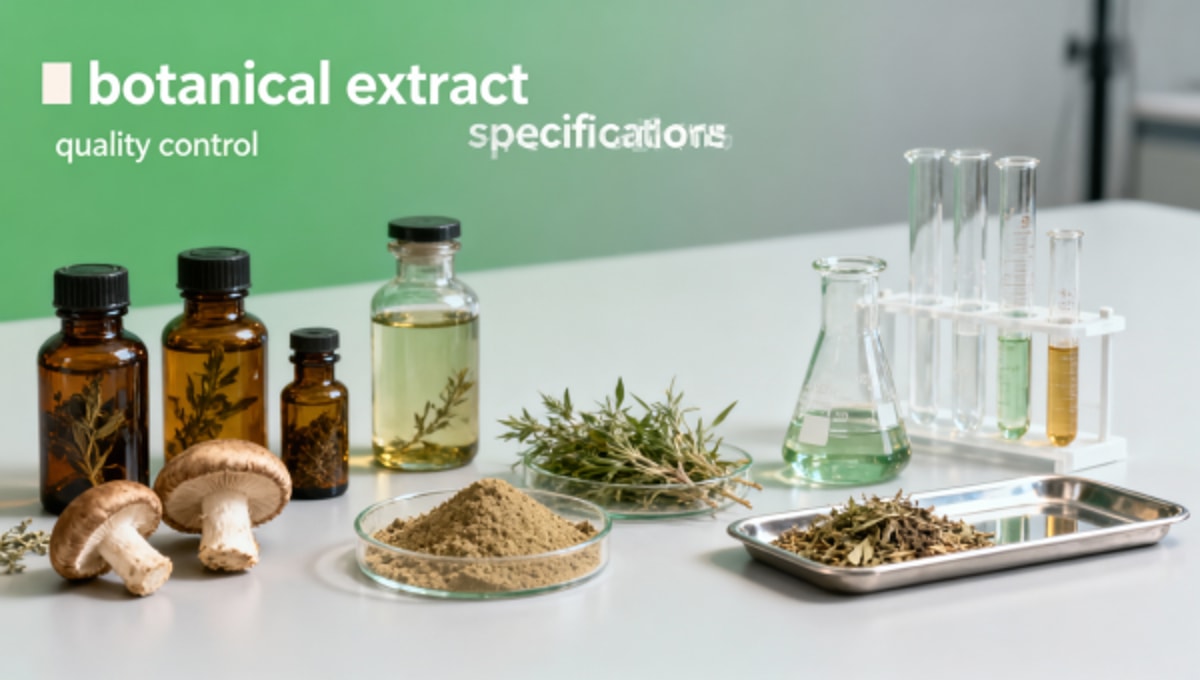
For buyers, QA teams, and technical evaluators, quality control in bio-extracts starts with the right specifications. Whether comparing maitake mushroom extract, shiitake mushroom powder, chaga mushroom extract, cordyceps extract wholesale, lion's mane mushroom powder, reishi mushroom extract bulk, astragalus root extract, echinacea purpurea extract, elderberry extract wholesale, or pomegranate seed extract, the most critical specs determine consistency, compliance, and commercial value.
The short answer is this: the most important botanical extract specifications for quality control are not just the headline assay number. In real procurement and technical review, the specs that matter most are identity, active marker content, contaminant limits, microbiological compliance, solvent residue, stability, and batch-to-batch consistency. For many buyers, the biggest mistake is choosing an extract based only on price or a single “standardized to X%” claim, while overlooking whether the material is actually authentic, safe, reproducible, and fit for the intended formulation or regulatory market.
If you are evaluating botanical ingredients for supplements, food, pharma-adjacent applications, or industrial ingredient programs, the practical question is not “What looks good on the spec sheet?” but “Which specifications reduce technical risk, regulatory risk, and commercial risk?” That is where sound quality control begins.
Which botanical extract specifications should buyers and QA teams check first?
For most commercial decisions, the highest-priority specifications fall into eight categories. These are the specs that most directly affect product performance, compliance status, customer claims, and supply reliability.
1. Botanical identity and raw material authentication
This is the first gate. If identity is wrong, every downstream result becomes meaningless. A robust specification should confirm:
- Correct Latin binomial name
- Plant part used, such as root, fruit, seed, or fruiting body
- Extraction ratio where applicable
- Analytical identification method, such as HPTLC, TLC, microscopy, or chromatographic fingerprinting
- Whether the material is pure extract, powder, concentrate, or blended carrier-based material
This is especially important in categories with high substitution risk. For example, shiitake mushroom powder and lion's mane mushroom powder may be sold as whole mushroom powders, mycelium-based powders, or extracts with very different technical and commercial value. Similarly, astragalus root extract and echinacea purpurea extract need clear species and plant-part confirmation because adulteration and substitution are common market issues.
2. Active marker content or standardized assay
Most buyers immediately look at assay, and for good reason. Standardized marker levels influence label claims, functionality, and product positioning. But assay should be interpreted carefully. The right question is not only “What percentage?” but also:
- Which marker is being measured?
- Is that marker scientifically relevant to the intended use?
- Which method was used for the assay?
- Is the claimed level realistic for the botanical and extraction type?
Examples vary by ingredient:
- Reishi mushroom extract bulk may be specified by polysaccharides, beta-glucans, or triterpenes
- Maitake mushroom extract and chaga mushroom extract are often compared based on beta-glucan content, but method differences can create misleading comparisons
- Elderberry extract wholesale may be standardized to anthocyanins
- Pomegranate seed extract may focus on punicic acid or polyphenol-related markers depending on product form
Buyers should be cautious when a supplier offers an unusually high active content at an unusually low price. That often signals method inconsistency, blending, spiking, or poor comparability between products.
3. Contaminant limits
For QA and safety management teams, contaminant specifications are often more decisive than the assay. The key contaminant areas typically include:
- Heavy metals: lead, arsenic, cadmium, mercury
- Pesticide residues
- Residual solvents
- Mycotoxins where risk is relevant
- PAHs or other environmental contaminants where applicable
These limits should align with the target market and intended use. A material acceptable for one market or application may fail another. Cordyceps extract wholesale, mushroom-derived ingredients, and root extracts may require particularly close scrutiny depending on cultivation conditions, drying methods, and origin.
4. Microbiological specifications
Microbiological quality is essential for extracts used in capsules, tablets, sachets, beverages, and functional food systems. Typical specifications include:
- Total plate count
- Yeast and mold
- E. coli
- Salmonella
- Staphylococcus aureus, coliforms, or other target organisms if required
For ingredients like shiitake mushroom powder, lion's mane mushroom powder, or elderberry extract wholesale, microbial burden can vary substantially depending on raw material handling and drying controls. Low moisture alone does not guarantee low microbial risk.
5. Solubility, particle size, moisture, and physical handling properties
These “practical” specifications are often underestimated by procurement teams until production problems begin. They strongly affect manufacturability and finished-product performance. Relevant specs may include:
- Moisture content
- Bulk density
- Particle size or mesh size
- Appearance and color range
- Odor and taste profile
- Water solubility or dispersibility
If a botanical ingredient is intended for beverage systems, sachets, or direct compression, these parameters may matter as much as the assay. A technically strong reishi mushroom extract bulk product with poor flowability or poor dispersibility can still create processing losses and customer complaints.
Why the assay alone is not enough for botanical extract quality control
A common sourcing error is reducing quality to one number. In botanical extracts, a single assay result rarely captures the real quality profile. Two batches can both meet a 30% polysaccharide claim, for example, but differ significantly in:
- Authenticity of raw material
- Presence of non-active carbohydrates
- Contamination risk
- Sensory profile
- Process suitability
- Long-term stability
This is particularly relevant in mushroom categories. A maitake mushroom extract, chaga mushroom extract, or cordyceps extract wholesale product may show attractive polysaccharide numbers, but unless the method distinguishes beta-glucans from total polysaccharides, the specification may not support meaningful technical comparison. Likewise, a lion's mane mushroom powder may be suitable as a whole-food ingredient but not equivalent to a concentrated extract for formulation requiring standardized activity.
For business evaluators and decision-makers, this matters because assay-only buying often creates hidden costs:
- Batch rejection at incoming QC
- Reformulation work
- Label claim risk
- Customer complaints
- Regulatory exposure
- Supply disruption from inconsistent quality
How to compare specifications across different botanical extracts without making false equivalencies
Different ingredients need different quality lenses. A useful QC framework starts with a small set of universal checks, then adds ingredient-specific criteria.
Universal specifications to compare across all botanicals
- Identity confirmation
- Standardized marker or active range
- Microbiology
- Heavy metals
- Pesticide and solvent compliance
- Moisture and physical characteristics
- Shelf life and storage conditions
- Certificate of analysis consistency across recent lots
Ingredient-specific examples
Maitake mushroom extract: Focus on species authenticity, fruiting body versus mycelium declaration, beta-glucan method, and microbial quality.
Shiitake mushroom powder: Clarify whether it is powder or extract, check mesh size, moisture, microbial levels, and origin-related quality variation.
Chaga mushroom extract: Review fingerprinting and marker approach carefully because composition can vary widely depending on source material and extraction system.
Cordyceps extract wholesale: Confirm species, substrate or cultivation background where relevant, active-marker approach, and contaminant profile.
Lion's mane mushroom powder: Distinguish between culinary powder, fruiting body powder, and extracted ingredient; match the spec to the intended claim and dosage format.
Reishi mushroom extract bulk: Evaluate triterpenes and/or beta-glucans, extraction ratio, taste profile, and reproducibility across lots.
Astragalus root extract: Check astragaloside-related standardization if claimed, species confirmation, solvent residues, and heavy metals.
Echinacea purpurea extract: Ensure species and plant part are clearly stated, because root and aerial-part extracts may not be interchangeable.
Elderberry extract wholesale: Anthocyanin stability, color consistency, and microbial quality are especially important.
Pomegranate seed extract: Marker selection should fit the product type; oxidation stability may be critical depending on format.
The commercial takeaway is simple: do not compare unlike materials as if they are the same SKU class. Powder, extract, standardized extract, and carrier-based finished ingredient are not interchangeable from a QC or cost perspective.
What documents and test methods provide the strongest quality assurance signal?
For technical assessors and procurement teams, the strongest suppliers are not those with the prettiest specification sheets, but those with defensible documentation and method transparency. Key documents include:
- Current certificate of analysis for the batch offered
- Product specification sheet with test methods and acceptance criteria
- Method references for marker assays
- Heavy metal, pesticide, solvent, and microbiological reports
- Allergen, GMO, BSE/TSE, and irradiation statements if relevant
- Stability or shelf-life support data
- Manufacturing certifications such as GMP-related documentation where applicable
- Traceability information for raw material origin and processing site
When reviewing a supplier, look for consistency between documents. If the specification says one thing, the certificate of analysis says another, and the marketing claim says something else, that is a warning sign. This is especially common in fast-moving categories such as elderberry extract wholesale and reishi mushroom extract bulk, where marketing language can outrun technical accuracy.
How should buyers balance quality specifications against price and commercial viability?
From a commercial standpoint, the best specification is not always the highest possible number. It is the specification profile that fits the application, target market, and risk tolerance at the lowest total cost of ownership.
For example:
- A premium, highly standardized extract may be justified for low-dose capsule products with strong label claims
- A lower-concentration but well-controlled powder may be more economical for functional food blends
- A supplier with slightly higher unit pricing may still offer lower total cost if batch consistency reduces QC failures and production downtime
For financial approvers and business decision-makers, the most useful evaluation model includes:
- Unit price per effective active content
- Expected yield loss or handling loss
- Incoming QC pass rate risk
- Regulatory and recall exposure
- Supply continuity and lead-time reliability
- Documentation quality and audit readiness
In other words, a low-cost botanical ingredient with weak contaminant controls or poor assay reproducibility is rarely a true bargain.
What are the most common red flags on a botanical extract spec sheet?
Experienced QA and sourcing teams often reject a supplier not because one number is out of range, but because the overall specification profile lacks credibility. Common red flags include:
- No clear Latin name or plant part declaration
- Assay claims without test method disclosure
- Unusually high active content at a commodity-level price
- Missing contaminant limits
- Very broad appearance ranges that suggest inconsistency
- No differentiation between extract and powder
- No lot-specific certificate of analysis
- Conflicting information across sales sheet, COA, and website
- Undefined excipients, carriers, or processing aids
If you are sourcing ingredients such as echinacea purpurea extract, astragalus root extract, or mushroom-based materials, these red flags should trigger deeper technical review before any commercial commitment.
Practical checklist: the specs that usually matter most in final supplier selection
If you need a practical answer for day-to-day evaluation, prioritize this shortlist:
- Confirmed botanical identity with species and plant part clearly defined
- Relevant standardized marker supported by a credible method
- Heavy metal, pesticide, solvent, and microbial compliance aligned to your market
- Batch-to-batch consistency demonstrated across multiple recent lots
- Physical specifications that fit manufacturing needs
- Shelf-life and storage stability appropriate for your supply chain
- Traceable documentation that supports audits and customer review
For most organizations, this framework is more valuable than chasing the highest advertised active percentage. It leads to better supplier qualification, fewer quality incidents, and stronger long-term cost control.
In summary, the botanical extract specs that matter most for quality control are the ones that prove identity, verify meaningful active content, control contaminants, support manufacturing performance, and demonstrate consistency over time. Whether you are reviewing maitake mushroom extract, shiitake mushroom powder, chaga mushroom extract, cordyceps extract wholesale, lion's mane mushroom powder, reishi mushroom extract bulk, astragalus root extract, echinacea purpurea extract, elderberry extract wholesale, or pomegranate seed extract, the best purchasing decision comes from reading the full specification profile, not just the headline claim. For buyers, QA leaders, and technical evaluators, that is the most reliable path to lower risk and better commercial outcomes.
Related Intelligence
- Botanical Extracts38th Firefly Comic Con Features Agri-Tech IP Zone & Botanical Extracts Cross-Border MarketingAgri-Tech IP Zone & botanical extracts take center stage at 38th Firefly Comic Con—discover cross-border DTC strategies, AR science storytelling, and ASEAN market readiness for functional ingredients.
- Botanical ExtractsWhat Sets a Reliable Ginseng Extract Manufacturer Apart?Ginseng extract manufacturer selection starts with traceability, GMP controls, and consistent ginsenosides. Learn how to compare suppliers, reduce risk, and secure long-term value.
- Botanical ExtractsHemp Extract Bulk: Full Spectrum or Isolate for New Products?Hemp extract bulk: compare full spectrum vs isolate for new products. Learn how each option affects compliance, formulation, sourcing, and market fit before bulk buying.
The Morning Broadsheet
Daily chemical briefings, market shifts, and peer-reviewed summaries delivered to your terminal.
