

The Authority in Global Agricultural Chemistry & Bio-Resources
When paddle wheel aerator wholesale pricing becomes misleading
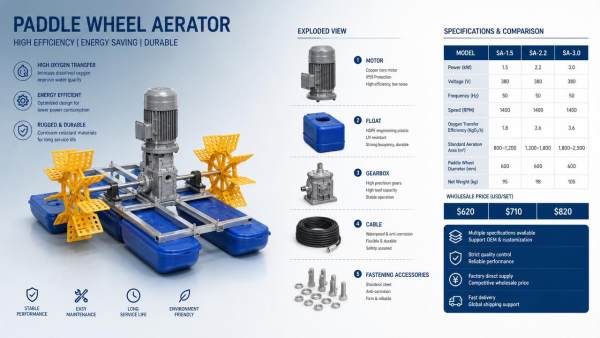
When paddle wheel aerator wholesale pricing looks unusually competitive, business evaluators should pause before treating it as a clear cost advantage. In industrial aquaculture procurement, quoted prices often conceal differences in motor grade, corrosion resistance, energy efficiency, compliance documentation, and after-sales support. This matters well beyond aquaculture alone: in a broader industrial sourcing environment, hidden cost structures can distort lifecycle calculations, weaken operational reliability, and create avoidable compliance risk. Understanding when paddle wheel aerator wholesale offers are genuinely efficient—and when they are simply incomplete—is essential for any value-based equipment assessment.
What paddle wheel aerator wholesale pricing really includes
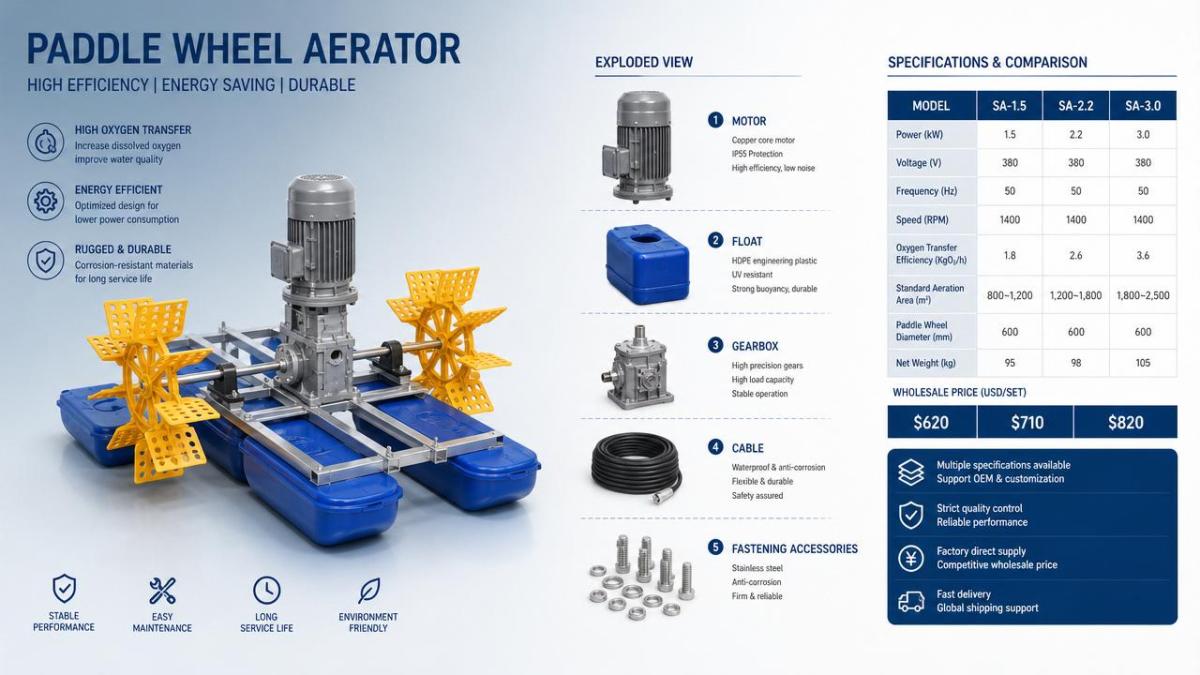
At surface level, paddle wheel aerator wholesale pricing appears straightforward: unit cost, power rating, quantity, and delivery. In practice, the number shown on a quotation may reflect only a partial equipment package. A low offer can exclude core accessories such as gear reducers, power cables, float assemblies, anchors, splash guards, spare impellers, or installation hardware. Some listings also present a base model with a lighter motor housing or lower-grade shaft material while using the same performance description as a more durable version.
A reliable interpretation of paddle wheel aerator wholesale terms therefore requires separating three layers of value: initial acquisition cost, operating cost, and continuity cost. Acquisition cost covers the visible invoice. Operating cost reflects electricity use, oxygen transfer efficiency, and maintenance intervals. Continuity cost includes downtime exposure, replacement lead time, warranty responsiveness, and local technical support. If these layers are not compared together, a cheaper quote may be more expensive over one production cycle.
This is especially relevant in regulated or quality-sensitive supply environments discussed across AgriChem Chronicle’s coverage areas. Equipment claims should be tied to documented specifications, not broad marketing language. For paddle wheel systems, that means reviewing motor insulation class, sealing protection, material resistance to saline or chemically treated water, gearbox reliability, and test data under realistic pond conditions.
Why misleading wholesale quotes appear in the market
Misleading paddle wheel aerator wholesale pricing usually emerges from structural differences in how suppliers package and present their products. In some cases, the issue is not fraud but selective quotation design. One supplier may include export crating, test records, stainless fasteners, and installation guidance, while another lists only the machine body. On paper, the second option looks cheaper. In reality, the comparison is incomplete.
Another source of confusion is performance labeling. Horsepower or kilowatt ratings do not automatically indicate effective oxygen transfer. Two units with similar motor power can produce very different field results because of blade geometry, rotational stability, gearbox loss, or float balance. Wholesale buyers who focus only on price per unit or price per kilowatt may miss the more important metric: useful aeration delivered per unit of energy over time.
Market pressure also encourages aggressive quoting. During periods of raw material volatility, some vendors preserve headline competitiveness by changing internal components, lowering coating thickness, shortening copper windings, or reducing bearing quality. These changes may not appear clearly in a brief paddle wheel aerator wholesale sheet unless a technical schedule is requested and verified line by line.
Common signals behind unusually low pricing
Key evaluation criteria beyond the headline price
A stronger approach to paddle wheel aerator wholesale comparison is to score offers against technical and commercial criteria that affect the full operating horizon. The objective is not to reject low pricing automatically, but to confirm whether the low price results from manufacturing efficiency or from omitted value.
- Motor quality: review winding material, thermal protection, ingress protection rating, insulation class, and service factor.
- Structural durability: check shaft metallurgy, coating process, fastener grade, float UV resistance, and gearbox sealing.
- Energy performance: compare expected oxygen transfer efficiency, not only nominal power consumption.
- Documentation depth: request factory test records, parts list, exploded diagrams, maintenance guides, and conformity files.
- Support infrastructure: confirm spare parts availability, warranty process, and troubleshooting response times.
- Landed cost clarity: align Incoterms, packaging, customs documentation, and installation scope.
For a meaningful paddle wheel aerator wholesale benchmark, request normalized comparison sheets. Every supplier should quote against the same power class, rotor count, material standard, cable length, accessories, packaging format, and warranty term. Without this normalization, the market appears cheaper or more expensive simply because the products are not equivalent.
Commercial value in broader industrial decision-making
The broader business value of scrutinizing paddle wheel aerator wholesale pricing lies in risk control. Aeration systems influence biomass health, feed conversion performance, water quality stability, and emergency resilience. A weak unit can create ripple effects: higher electricity draw, lower dissolved oxygen consistency, more maintenance stoppages, and increased biological stress. These indirect costs rarely appear in a low quotation, yet they often exceed the original price gap.
This logic aligns with cross-sector sourcing principles in chemicals, machinery, and primary processing. In each case, the best commercial decision is usually the one with the most transparent technical basis. A quotation supported by clear documentation, field references, and verifiable performance data may deliver stronger institutional value than a cheaper proposal with uncertain specifications. In SEO terms and in real procurement practice, paddle wheel aerator wholesale should be interpreted as a total value question, not merely a discount opportunity.
Typical comparison categories
Common application scenarios and specification differences
Not every paddle wheel aerator wholesale requirement is identical. A system intended for intensive shrimp ponds, freshwater fish culture, hatchery support, or mixed-water environments will face different operating stresses. As a result, the “best price” depends on matching specification depth to actual use conditions.
- High-salinity or coastal use: corrosion resistance, sealed bearings, and higher-grade fasteners become critical.
- Continuous-duty installations: motor temperature management and gearbox endurance matter more than entry price.
- Remote sites: spare parts interchangeability and simple service procedures reduce continuity risk.
- Energy-sensitive operations: oxygen transfer per kilowatt can reshape the total economics of the paddle wheel aerator wholesale decision.
This scenario-based view prevents overbuying and underbuying at the same time. It helps distinguish between a legitimately efficient supply offer and a quote that is low only because it is underspecified for the intended operating environment.
Practical review steps before accepting a wholesale offer
A disciplined review process improves clarity quickly. Before accepting any paddle wheel aerator wholesale proposal, prepare a short verification checklist and require each supplier to respond against the same structure.
- Request a complete bill of included components and accessories.
- Ask for declared material grades and motor protection specifications.
- Compare tested or documented performance, not just rated power.
- Calculate landed cost, expected maintenance cost, and likely power consumption.
- Review warranty exclusions, spare parts lead times, and service response details.
- Validate whether compliance or environmental documentation is available where required.
If a supplier resists detail, that reluctance is itself a useful indicator. Transparent paddle wheel aerator wholesale sourcing should make technical comparison easier, not harder. The most credible offers are typically those that remain competitive even after all hidden variables have been surfaced and documented.
In the next step, convert every quotation into a lifecycle comparison sheet that includes equipment scope, energy use, maintenance exposure, documentation level, and support terms. That single exercise often reveals whether an attractive paddle wheel aerator wholesale price is a true efficiency gain or simply a misleading headline. In complex industrial sourcing, the most resilient decision is usually the one built on specification transparency, not on the lowest visible number.
Related Intelligence
- Aeration & Water TechGlobal Shipping Alliance Launches Green Corridor Asia-Europe Cold Chain RouteGreen Corridor Asia-Europe cold chain route launched: 22% lower surcharges, –25°C to +15°C control for agri-tech exports. Book now!
- Aeration & Water TechCommercial protein skimmers: what foam quality tells youCommercial protein skimmers reveal more than waste removal—foam quality helps operators spot loading shifts, imbalance, and maintenance needs early for steadier performance.
- Aeration & Water TechDissolved oxygen controller alarms that point to sensor driftDissolved oxygen controller alarms may signal sensor drift, not process upset. Learn key alarm patterns, faster field checks, and service tips to reduce downtime and protect compliance.
The Morning Broadsheet
Daily chemical briefings, market shifts, and peer-reviewed summaries delivered to your terminal.
