

The Authority in Global Agricultural Chemistry & Bio-Resources
Roots blower for aquaculture or ring blower for dense ponds
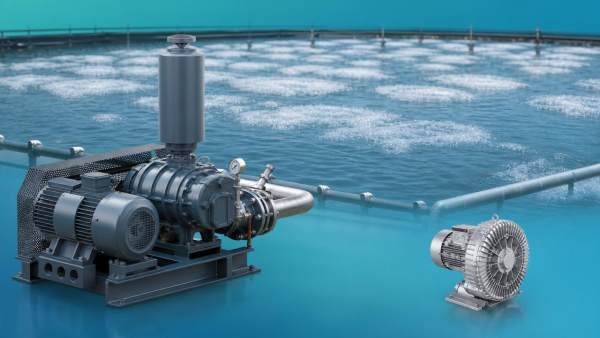
For technical evaluators comparing a roots blower for aquaculture with a ring blower in dense pond applications, aeration efficiency, pressure stability, energy use, and lifecycle reliability are decisive factors. This analysis examines how each blower type performs under intensive stocking conditions, helping engineering and operations teams identify the most suitable solution for oxygen transfer, airflow control, and long-term compliance in modern pond systems.
What is the practical difference between a roots blower for aquaculture and a ring blower?
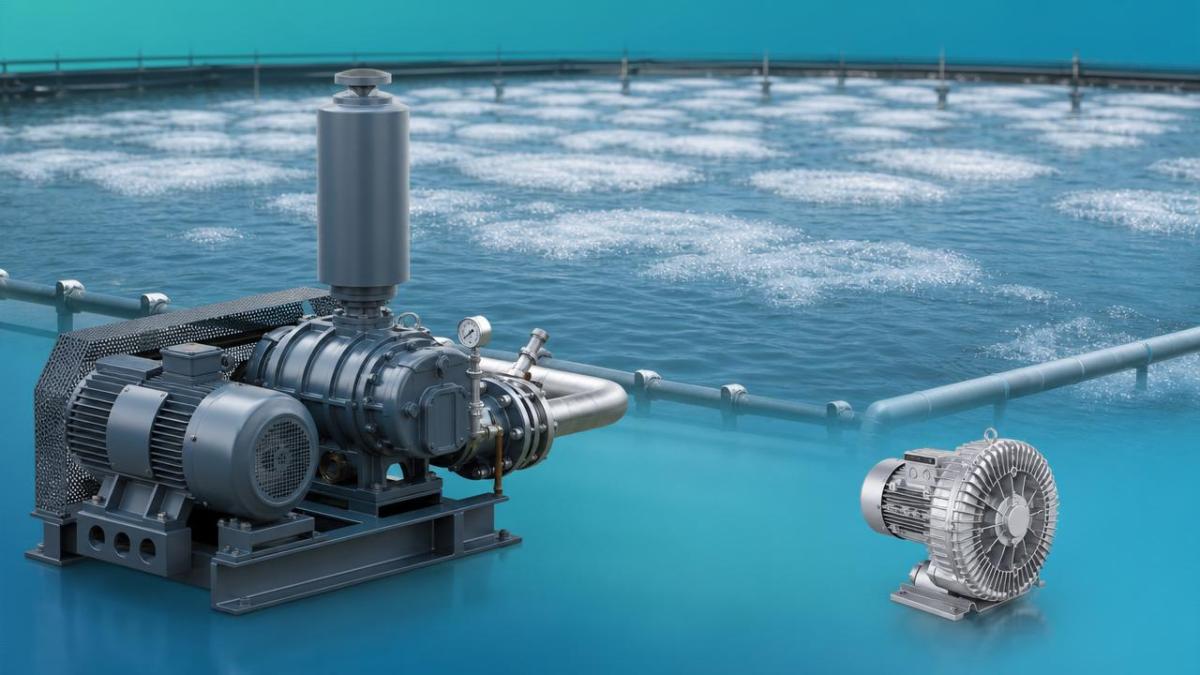
A roots blower for aquaculture is a positive displacement machine. It moves a fixed volume of air per revolution, which means airflow remains comparatively stable even when system backpressure changes. In dense ponds, where diffuser depth, pipe length, biofouling, and manifold balancing can all increase resistance, this characteristic is highly valuable. It supports predictable aeration across multiple lines and helps sustain dissolved oxygen levels during feeding peaks or warm-weather stress.
A ring blower, often called a side channel blower, works differently. It relies on high-speed impeller action to create pressure and airflow. Ring blowers are compact, clean, and simple to install, but their airflow drops more noticeably as pressure rises. In shallow systems or light-duty aeration loops, that may be acceptable. In dense pond operations, however, pressure instability can reduce oxygen transfer exactly when biomass demand is highest.
The core distinction is therefore not just machine design, but how each blower reacts under load. A ring blower may look efficient on paper at low pressure, while a roots blower for aquaculture often proves more dependable in real pond conditions where resistance changes over time.
Which blower performs better in dense ponds with high stocking density?
Dense ponds place unusual demands on aeration. Stocking intensity raises oxygen consumption, feed conversion pressure, sludge accumulation, and carbon dioxide release. As a result, the blower must maintain usable airflow over long operating hours, often in humid and corrosive environments. In this setting, a roots blower for aquaculture generally outperforms a ring blower for three reasons: pressure retention, multi-point distribution, and continuous-duty robustness.
First, pressure retention matters because fine bubble diffusers, deeper pond zones, and long manifold runs increase resistance. A roots unit keeps delivering near-rated volume across this resistance band, whereas a ring blower can experience a sharper falloff. Second, dense ponds often rely on branched air networks. Uneven pressure in these networks creates dead zones and dissolved oxygen variation. A roots blower for aquaculture tends to stabilize the network and reduce those imbalances.
Third, intensive aquaculture frequently operates aeration around the clock. Equipment must tolerate long duty cycles, heat buildup, and maintenance intervals without dramatic efficiency loss. While ring blowers are useful for compact installations and lighter tasks, heavy-duty pond systems usually favor roots technology once biomass and pressure complexity increase.
- High biomass ponds usually benefit from stable positive displacement airflow.
- Deep diffuser grids increase the advantage of a roots blower for aquaculture.
- Ring blowers fit better in smaller, shallower, or lower-resistance applications.
How do energy use and oxygen transfer compare over the full operating cycle?
Energy comparison is often misunderstood because nameplate power alone does not reveal true operating cost. The relevant question is how much oxygen transfer is achieved per unit of energy at the actual working pressure. In dense ponds, where pressure can drift upward due to fouled diffusers or changing water depth, a ring blower may consume energy while delivering less useful airflow than expected. That weakens oxygen transfer efficiency and can force longer run times.
A roots blower for aquaculture, especially when paired with a properly sized motor and variable frequency drive, can match airflow more accurately to day and night demand. This is important because oxygen demand changes with temperature, feeding schedule, plankton activity, and pond age. Stable air delivery means less guesswork and fewer emergency corrections. Over a season, that can offset a higher initial equipment cost.
Ring blowers can still be energy-efficient in the right envelope. If the pond is relatively shallow, pipework is short, and pressure demand remains low and consistent, their compact design may offer a reasonable balance of cost and performance. But once the system moves into higher pressure ranges, the roots blower for aquaculture typically becomes the more energy-rational choice because it maintains productive airflow rather than simply motor load.
A practical comparison table
What sizing and system design mistakes cause poor blower selection?
The most common mistake is selecting by blower capacity alone instead of by the combined air system curve. Dense ponds are rarely static environments. Pipe friction, header length, valve balancing, diffuser membrane condition, and pond depth all contribute to total pressure. If those factors are underestimated, a ring blower may appear adequate during installation but underperform once the system ages. This is one reason many facilities later retrofit a roots blower for aquaculture after recurring low oxygen events.
Another frequent error is ignoring turndown and control strategy. When ponds need different aeration levels during feeding, harvest preparation, or seasonal temperature swings, fixed-speed operation can waste energy or produce unstable dissolved oxygen control. A roots blower for aquaculture paired with staged operation or VFD control can adapt more smoothly across these conditions.
Noise, heat, and moisture management also deserve attention. Blowers installed in closed utility rooms need proper ventilation, intake filtration, and corrosion-aware material choices. Aeration reliability is not just about blower type; it is about the entire installed system.
- Calculate actual operating pressure, not ideal pressure.
- Allow for diffuser fouling and future biomass growth.
- Check whether one blower serves many ponds or one isolated loop.
- Assess control needs before choosing fixed-speed equipment.
How do maintenance, reliability, and lifecycle cost differ?
Lifecycle cost is where the debate becomes more strategic. A ring blower may have a lower barrier to entry in some installations, but that does not automatically mean lower total cost. In dense ponds, unplanned oxygen deficiency can create losses far greater than the purchase price difference between technologies. When downtime risk, emergency aeration, replacement frequency, and process instability are considered, a roots blower for aquaculture often delivers better value over time.
Maintenance profiles also differ. Roots blowers typically require attention to lubrication schedules, belts or couplings depending on design, inlet filtration, and periodic inspection of clearances and seals. Ring blowers are often perceived as simpler, but they are sensitive to operating beyond their pressure envelope, poor cooling conditions, and particulate ingestion. In humid aquaculture environments, preventive maintenance matters for both types.
Reliability should be measured by process outcomes: stable dissolved oxygen, reduced mortality risk, and predictable airflow during peak stress periods. For intensive shrimp, fish, and nursery ponds, these outcomes frequently align better with a roots blower for aquaculture than with a ring blower selected only for convenience or compactness.
When is a ring blower still the right choice, and when should roots technology be preferred?
A ring blower remains a sensible option when the aeration task is light to moderate, the pond is shallow, the pipe run is short, and pressure remains consistently low. It may also suit auxiliary services such as small tank aeration, backup loops, hatchery support zones, or systems where space is highly constrained and airflow demand is modest.
A roots blower for aquaculture should be preferred when the application includes dense stocking, deep diffuser grids, multiple branch lines, seasonal oxygen stress, or a need for stable pressure under changing load. It is especially relevant where operational continuity, environmental control, and long-run cost predictability carry more weight than minimum initial footprint.
Quick decision guide
In summary, the choice between a roots blower for aquaculture and a ring blower depends less on generic equipment preference and more on real operating pressure, pond density, and risk tolerance. For dense pond applications, roots technology usually provides the stronger platform for stable aeration, controllable oxygen transfer, and dependable long-term performance. The most effective next step is to map actual diffuser pressure, pond depth, airflow demand by biomass stage, and duty cycle before final selection. That process will reveal whether a compact ring blower is adequate or whether a roots blower for aquaculture is the technically safer and economically smarter solution.
Related Intelligence
- Aeration & Water TechGlobal Shipping Alliance Launches Green Corridor Asia-Europe Cold Chain RouteGreen Corridor Asia-Europe cold chain route launched: 22% lower surcharges, –25°C to +15°C control for agri-tech exports. Book now!
- Aeration & Water TechCommercial protein skimmers: what foam quality tells youCommercial protein skimmers reveal more than waste removal—foam quality helps operators spot loading shifts, imbalance, and maintenance needs early for steadier performance.
- Aeration & Water TechDissolved oxygen controller alarms that point to sensor driftDissolved oxygen controller alarms may signal sensor drift, not process upset. Learn key alarm patterns, faster field checks, and service tips to reduce downtime and protect compliance.
The Morning Broadsheet
Daily chemical briefings, market shifts, and peer-reviewed summaries delivered to your terminal.
