

The Authority in Global Agricultural Chemistry & Bio-Resources
What causes feed waste in an automatic fish feeder commercial
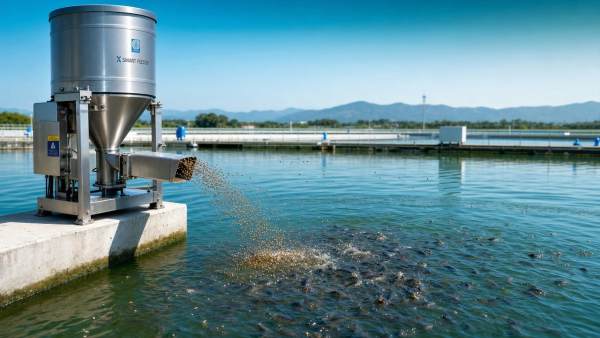
Feed waste in an automatic fish feeder commercial system is rarely caused by a single fault. In most cases, losses come from a combination of feeder settings, pellet consistency, fish appetite shifts, water movement, and routine maintenance gaps. When feed is thrown beyond the feeding zone, dispensed faster than fish can consume it, or released at the wrong time, uneaten pellets quickly turn into a cost burden and a water quality risk. In commercial aquaculture, even a small percentage of repeated waste can significantly reduce margins and weaken feed conversion performance.
Understanding what causes feed waste in an automatic fish feeder commercial setup is therefore essential for better stock growth, cleaner water, and more predictable operating results. This article breaks the issue into practical checkpoints, explains how waste appears under different farming conditions, and outlines actions that help optimize feeder accuracy without overcomplicating daily operations.
Why a structured review matters in an automatic fish feeder commercial operation
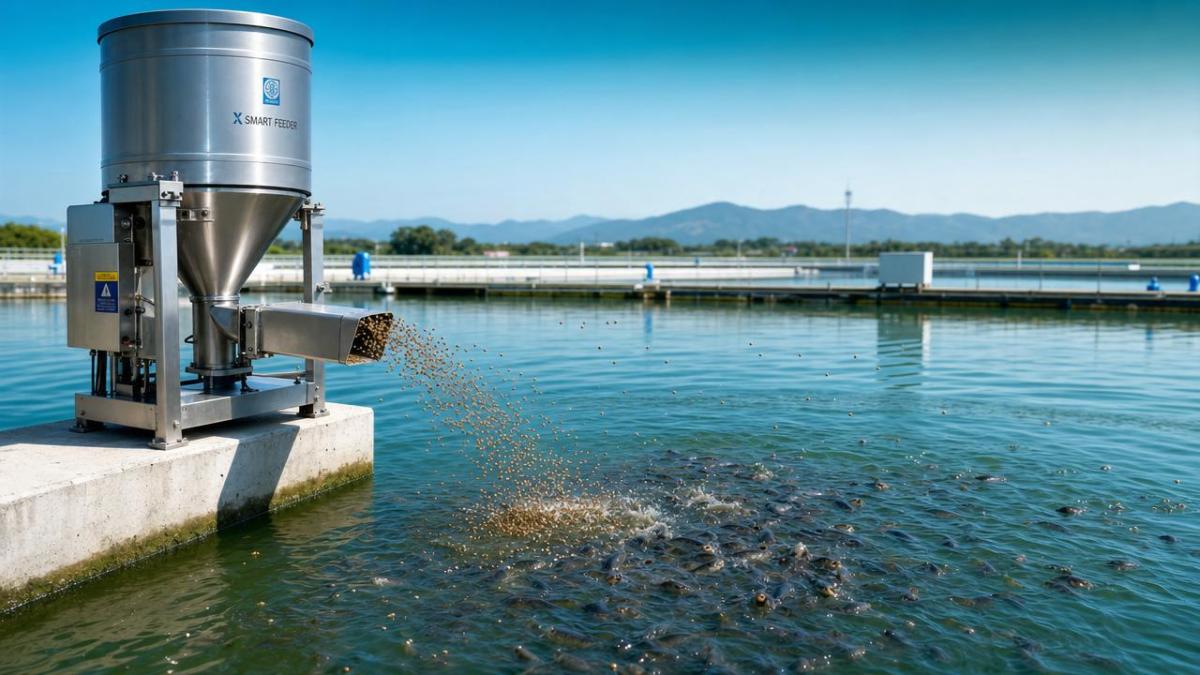
A structured review matters because feed waste is often hidden in plain sight. Operators may notice cloudy water, rising feed bills, or uneven fish growth, yet the root cause may be a poorly calibrated throw distance, pellet breakage inside the hopper, or a feeding schedule that no longer matches biomass and temperature. Without a step-by-step evaluation, adjustments tend to be reactive rather than precise.
For an automatic fish feeder commercial installation, a checklist-based assessment also improves consistency across ponds, cages, raceways, or tanks. It turns feeder optimization into a repeatable management process instead of a trial-and-error exercise. This is especially important where production scale, regulatory expectations, and water quality control all influence profitability.
Core checks to identify what causes feed waste in an automatic fish feeder commercial system
The following points provide a practical framework for diagnosing avoidable losses in an automatic fish feeder commercial environment. Each item should be reviewed against actual feeding behavior, not only against factory settings.
- Verify feeder calibration against real output weight per cycle, because programmed values often drift over time due to wear, vibration, humidity, and motor performance changes.
- Check pellet size uniformity and density, since inconsistent feed shape can alter flow rate, broadcast pattern, and sinking behavior in a commercial feeding system.
- Review feeding schedule frequency and duration to ensure the automatic fish feeder commercial unit matches fish appetite at current biomass, oxygen level, and water temperature.
- Observe whether pellets land inside the active feeding zone, because over-throwing feed beyond the aggregation area creates immediate physical waste and delayed decomposition.
- Inspect wind, aeration turbulence, current, or surface drift that may push floating feed away from fish before they can respond to the release event.
- Assess fish behavior during feeding, as stress, disease, grading differences, or hierarchy can reduce feeding response and leave part of the ration uneaten.
- Examine hopper condition for bridging, condensation, or fines buildup, because poor flow inside the feeder can cause surging, clogging, and irregular dose delivery.
- Confirm that feed type matches the feeder design, since fragile pellets may fracture in aggressive dispensing mechanisms and become inaccessible dust or fragments.
- Measure actual feed conversion trends and leftover feed patterns instead of relying only on visual estimates, which can overlook repeated low-level waste.
- Recheck controller logic after software updates or power interruptions, as timing errors and repeated cycles can quietly increase feed discharge in automated systems.
The main technical causes behind feed waste
1. Poor calibration and inaccurate dose delivery
Calibration failure is one of the most common reasons an automatic fish feeder commercial setup wastes feed. A feeder may be programmed to release a specific amount per minute, but the real output can change as augers wear, blower speed shifts, or feed characteristics vary between batches. If actual discharge exceeds the intended ration, fish cannot consume the surplus fast enough, and waste accumulates.
This problem is especially serious when managers assume that digital settings equal physical accuracy. They do not. Regular weighing tests are needed to compare target and delivered feed mass under real operating conditions.
2. Inconsistent pellet quality and size variation
Feed itself can be a major source of waste. If pellet diameter, moisture, buoyancy, or hardness varies too much, the automatic fish feeder commercial unit may not dispense uniformly. Small pellets can flow too quickly, dusty pellets may drift or dissolve, and oversized pellets may bridge in the hopper or be rejected by fish.
Commercial systems perform best when feed specifications stay within the mechanical tolerance of the dispensing mechanism. A mismatch between feed and feeder often looks like an equipment issue, but it is frequently a feed consistency issue.
3. Overfeeding and outdated scheduling
An automatic fish feeder commercial schedule that worked last month may be wrong today. Biomass increases, seasonal temperature changes, dissolved oxygen fluctuates, and feeding motivation shifts throughout the production cycle. If schedules are not adjusted, the system can repeatedly offer more feed than fish are biologically ready to consume.
Overfeeding is often gradual rather than dramatic. Small daily overages may go unnoticed until water quality weakens, sludge rises, or feed conversion worsens. Tracking appetite response is as important as tracking biomass.
4. Water movement and pellet displacement
In tanks, ponds, cages, and recirculating systems, feed can be physically moved away from fish before it is consumed. Surface current, wind, wave action, aerator spray, and inlet turbulence all affect pellet trajectory and residence time. Even a well-calibrated automatic fish feeder commercial machine can waste feed if the distribution pattern does not account for local hydraulic behavior.
This is why feeder placement matters. A slight change in mounting angle or outlet direction can reduce drift and improve access to feed.
5. Fish behavior, stress, and uneven feeding response
Fish do not always respond uniformly to automated feeding. Stress from grading, transport, disease pressure, low oxygen, sudden noise, or handling can sharply reduce appetite. Social hierarchy can also cause dominant groups to feed aggressively while weaker fish remain underfed. In an automatic fish feeder commercial setup, this can create the false impression that feed is being accepted overall, even when a portion is drifting or sinking uneaten.
How feed waste appears in different commercial aquaculture settings
Pond systems
In ponds, feed waste often results from broad throw patterns, wind drift, and difficulty observing actual consumption. An automatic fish feeder commercial machine may disperse feed over a larger area than fish can cover quickly, especially in low-activity periods. Check throw radius, shoreline accumulation, and changes in feeding response after weather shifts.
Cage farming
In cages, current speed and direction are critical. Feed may pass through or beyond the feeding zone before fish can intercept it. Here, an automatic fish feeder commercial strategy should focus on timing, pellet buoyancy, and positioning relative to current flow. Shorter pulses often perform better than long continuous release.
RAS and tank-based operations
In recirculating systems, waste is easier to detect through solids loading and water quality indicators, but turbulence from inlets and aeration can still carry pellets into drains. For an automatic fish feeder commercial installation in tanks, review feeder angle, sinking rate, and fish distribution before increasing daily ration.
Commonly overlooked risks that increase waste
Moisture inside the hopper: Condensation can make pellets swell, stick, and break apart. This creates irregular discharge and raises the chance of surges that overfeed fish unexpectedly.
Fines and pellet dust: Fine particles may not be eaten efficiently, especially in high-flow water. They also distort output calibration in an automatic fish feeder commercial system by changing flow behavior.
Delayed maintenance: Worn motors, damaged spreaders, loose fasteners, and dirty sensors can slowly change feed release patterns long before complete failure becomes visible.
Assuming stable fish appetite: Appetite can change daily. If operators use fixed schedules without checking behavior, the feeder may continue dispensing feed that no longer matches real demand.
Ignoring data trends: Rising feed input with flat growth, worsening FCR, or recurring turbidity often indicates hidden waste. These signs should trigger a feeder review immediately.
Practical steps to reduce feed waste in an automatic fish feeder commercial setup
- Run weekly output verification by collecting and weighing feed from timed discharge cycles under normal operating conditions.
- Match pellet specification to feeder mechanism, and avoid switching feed size or hardness without retesting calibration.
- Break total daily ration into smaller feed events so fish can consume more efficiently with less leftover material.
- Adjust feeding times based on temperature, oxygen, and fish response rather than fixed historical settings alone.
- Inspect feeder placement and throw pattern after major weather changes, aeration adjustments, or biomass redistribution.
- Clean hoppers, spreaders, and sensors routinely to prevent fines buildup, bridging, and timing errors.
- Use direct observation, camera review, or consumption sensors where possible to validate that fish are actually clearing the ration.
FAQ about feed waste in automatic fish feeder commercial systems
How often should an automatic fish feeder commercial unit be recalibrated?
A practical baseline is weekly verification, with additional checks after feed changes, maintenance work, unusual weather, or visible changes in fish feeding behavior.
Can better feed alone solve waste problems?
Not entirely. Better pellets help, but feeder settings, placement, fish health, and water conditions still determine whether the feed is consumed efficiently.
What is the first sign of hidden feed waste?
One of the earliest signs is declining feed conversion without a clear disease event. Water quality deterioration and uneven growth often follow.
Conclusion and next actions
What causes feed waste in an automatic fish feeder commercial system usually comes down to controllable factors: inaccurate calibration, pellet inconsistency, overfeeding, poor feeder placement, shifting water conditions, and unrecognized changes in fish appetite. Because these causes interact, the best results come from reviewing the entire feeding process rather than adjusting only one setting.
The most effective next step is to perform a short feeder audit this week: verify output weight, inspect pellet condition, observe feed landing and fish response, and compare the current schedule with biomass and water conditions. A disciplined review of each automatic fish feeder commercial unit can reduce waste, support cleaner production, and improve operational efficiency across the full aquaculture cycle.
Related Intelligence
- Feeding & Watering SystemsWhat causes feed waste in an automatic fish feeder commercialAutomatic fish feeder commercial systems can waste feed through poor calibration, pellet inconsistency, bad timing, and water drift. Learn the key causes and practical fixes to cut costs fast.
- Feeding & Watering SystemsDrip irrigation systems bulk buying mistakes that raise water wasteDrip irrigation systems bulk mistakes can quietly raise water waste and maintenance costs. Learn the key checks buyers need to compare suppliers, improve field efficiency, and avoid costly procurement errors.
- Feeding & Watering SystemsIs liquid adding machine feed worth it?Is liquid adding machine feed worth it? Explore ROI, accuracy, and line integration with feed grading sieve, double roller crumbler, feed pellet cooler, and more.
The Morning Broadsheet
Daily chemical briefings, market shifts, and peer-reviewed summaries delivered to your terminal.
