
When Aquatic Oxygen Generators Beat Liquid Oxygen Supply
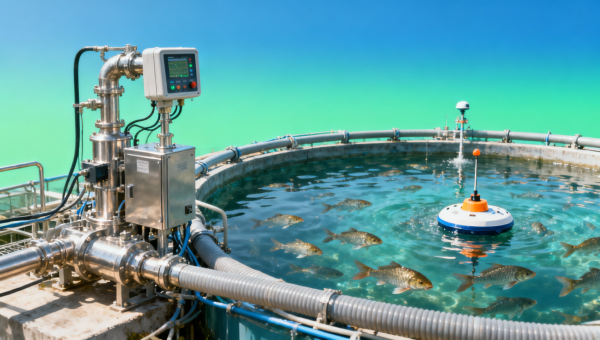
In intensive aquaculture, the choice between liquid oxygen delivery and aquatic oxygen generators can directly affect operating cost, biosecurity, and stock survival. For buyers comparing ozone generators for aquaculture, uv sterilizers for fish farms, smart buoys for aquaculture, and water quality online monitor aquaculture systems, this analysis explains when on-site oxygen generation offers a safer, more scalable advantage for modern fish farms and live seafood holding tanks.
For most farms, aquatic oxygen generators beat liquid oxygen supply when oxygen demand is steady or growing, logistics are unreliable, biosecurity control matters, and management wants lower long-term operating risk rather than just lower upfront complexity. Liquid oxygen can still make sense for short-term, mobile, or highly variable operations, but once a site needs predictable dissolved oxygen control every day, on-site generation often becomes the more resilient and economically defensible option.
What buyers are really trying to decide
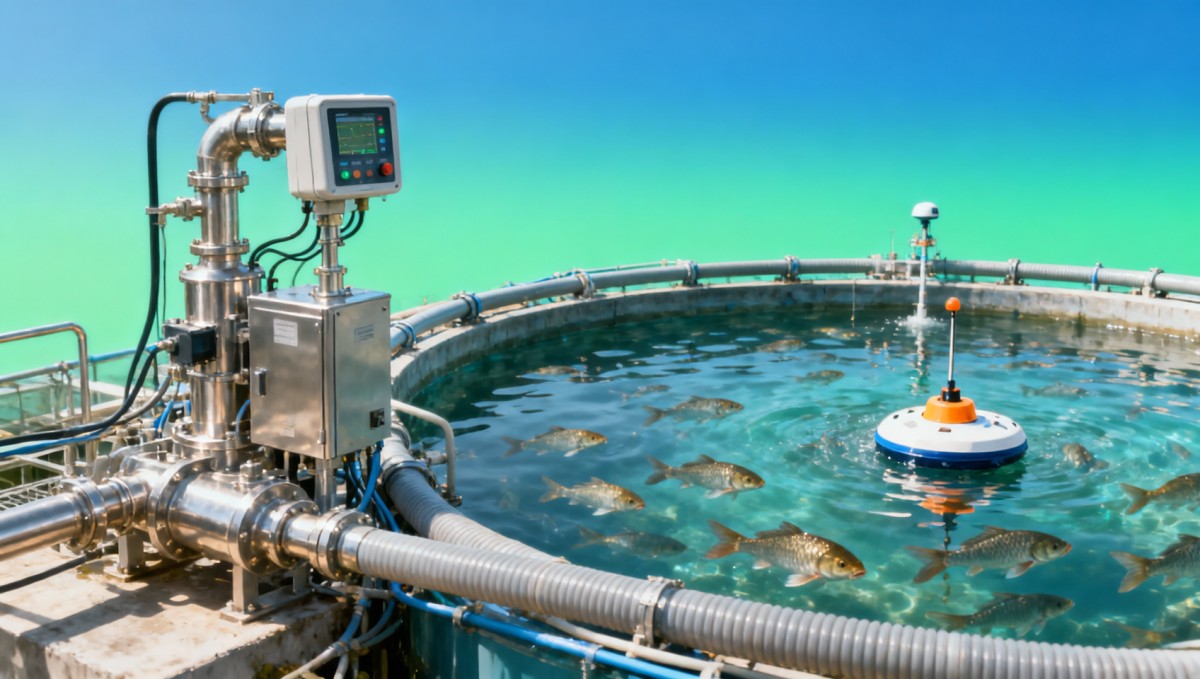
The real question is not simply “which oxygen source is better.” It is: which option gives the farm the safest oxygen availability at the lowest total risk and best long-term cost?
That is why technical evaluators, operators, finance teams, and decision-makers usually assess the issue through five practical lenses:
- Can the system maintain stable dissolved oxygen during peak biomass and stress events?
- What happens if deliveries are delayed, roads are blocked, or suppliers ration stock?
- How much labor, storage handling, and safety management does each model require?
- What is the real total cost over 3 to 5 years, not just the purchase price?
- How well does the oxygen strategy integrate with other aquaculture technologies such as ozone generators for aquaculture, UV sterilizers for fish farms, smart buoys for aquaculture, and water quality online monitor aquaculture platforms?
For commercial fish farms, shrimp systems, recirculating aquaculture systems, hatcheries, and live seafood holding tanks, oxygen is not a commodity alone. It is part of the site’s overall process control architecture. That is the context in which aquatic oxygen generators often outperform bulk liquid oxygen supply.
When aquatic oxygen generators usually beat liquid oxygen supply
On-site oxygen generation is usually the stronger choice in the following situations.
1. The farm has continuous oxygen demand
If your tanks, raceways, ponds, or RAS loops require oxygen every day, a generator can reduce dependence on recurring deliveries. This is especially relevant where stocking density is high and oxygen consumption is predictable. Instead of scheduling tank refills and managing supply interruptions, the site produces oxygen as needed.
2. Delivery logistics are expensive or unreliable
Liquid oxygen looks simple on paper, but that simplicity depends on a stable supply chain. Remote farms, island facilities, export-oriented live holding stations, and sites facing seasonal transport disruption often discover that delivery cost, delays, and emergency refill premiums erase the apparent advantage. In these cases, an aquatic oxygen generator can materially reduce operational vulnerability.
3. The business needs tighter biosecurity and site control
Every external delivery introduces movement, handling, and dependency. Farms investing in stronger biosecurity protocols often prefer more utilities to be controlled on-site. This matters even more when oxygen supply is linked to sensitive stock, quarantine lines, broodstock systems, or premium species with high mortality cost.
4. Management wants scalable capacity
As production expands, oxygen demand rises. A generator-based design often scales more cleanly than repeated increases in storage and delivery frequency. Buyers planning phased expansion, new tank blocks, or future RAS intensification often see better long-term flexibility with on-site generation.
5. The site already uses digital monitoring and automated control
Oxygen generators become especially valuable when paired with dissolved oxygen control, water quality online monitor aquaculture systems, and smart buoy data for pond operations. In those environments, oxygen is treated as a controllable process parameter, not just an emergency utility. That supports more precise feeding, lower stress, and more stable production performance.
Where liquid oxygen still makes sense
A balanced procurement decision should also recognize where liquid oxygen remains practical.
- Low or irregular consumption: If oxygen use is sporadic, buying liquid oxygen may avoid underutilizing a generator.
- Temporary or pilot operations: For short-duration projects or trial farms, rental or delivered supply can reduce initial capex.
- Space or power limitations: Some sites lack the electrical infrastructure or equipment footprint needed for efficient on-site generation.
- Backup strategy: Even farms with generators sometimes keep liquid oxygen as emergency redundancy.
In other words, liquid oxygen is often strongest where convenience matters more than long-term control, or where the operation is not yet large enough to justify generation equipment.
Cost comparison: the mistake many buyers make
One of the most common procurement errors is comparing only equipment price versus supply price. That approach misses the real economic picture.
Liquid oxygen cost usually includes:
- Recurring oxygen purchase expense
- Tank rental or storage infrastructure
- Delivery charges and fuel-related surcharges
- Emergency replenishment premiums
- Labor for delivery coordination and handling
- Potential production loss from delayed supply or oxygen instability
Aquatic oxygen generator cost usually includes:
- Upfront equipment investment
- Power consumption
- Routine maintenance and consumables
- Possible compressor or PSA system servicing
- Installation and integration with existing oxygen delivery lines
For finance approvers and business evaluators, the correct comparison is usually total cost of ownership per kilogram of usable oxygen delivered into water, not purchase cost in isolation. Once farms calculate this over multiple years, many find that generators become more attractive as utilization rises.
The break-even point depends on site-specific factors such as power price, oxygen purity requirement, daily runtime, biomass density, and local delivery economics. But the general pattern is clear: the more consistently a farm uses oxygen, the stronger the business case for on-site generation.
Operational risk: what matters more than theoretical oxygen availability
In aquaculture, oxygen failure is not a minor inconvenience. It can trigger feeding loss, stress response, disease susceptibility, poor conversion, or acute mortality. That is why operational risk often outweighs narrow price comparisons.
Aquatic oxygen generators can reduce several major risk exposures:
- Supply interruption risk: less dependence on truck schedules and external inventory availability
- Response-time risk: oxygen can be produced on demand rather than waiting for replenishment
- Expansion risk: capacity planning can be aligned with future production growth
- Control risk: easier integration with automation and dissolved oxygen setpoints
That said, generators must be specified correctly. Poorly sized equipment, inadequate redundancy, weak maintenance discipline, or mismatched purity/output expectations can undermine the expected benefit. For critical systems, buyers should evaluate:
- Actual oxygen output under site conditions
- Redundancy options
- Alarm and remote monitoring capability
- Service support and spare parts availability
- Compatibility with emergency backup systems
How oxygen strategy connects with ozone, UV, smart buoys, and online monitoring
Modern aquaculture buyers rarely assess oxygen systems in isolation. They are often building a broader water treatment and risk management stack.
Ozone generators for aquaculture help manage water clarity, oxidation load, and pathogen pressure, but they must be deployed with careful monitoring and process control. UV sterilizers for fish farms support pathogen reduction in recirculating or controlled water flows. Smart buoys for aquaculture provide pond-level environmental intelligence. Water quality online monitor aquaculture systems allow real-time visibility into dissolved oxygen, pH, temperature, ORP, ammonia-related indicators, and other parameters.
In this technology ecosystem, aquatic oxygen generators add value because they support a more controllable and data-driven oxygen management model. Instead of reacting to low oxygen events, operators can maintain tighter process stability. For intensive systems, that often leads to:
- More stable dissolved oxygen across feeding cycles
- Reduced stress during biomass peaks
- Better support for high-density cultivation
- Faster response during temperature swings or water quality deterioration
- Improved consistency in live seafood holding conditions
For decision-makers, this means the oxygen generator should be evaluated as part of the farm’s digital and biological risk-control system, not as a standalone utility purchase.
Questions technical and commercial teams should ask before choosing
To make a sound decision, cross-functional teams should test both options against a common framework.
For operators and engineers
- What is the site’s actual peak and average oxygen demand?
- How fast must oxygen supply respond during biomass or weather stress?
- What purity level is required for the application?
- How will the system integrate with diffusers, cones, injectors, or oxygenation chambers?
- What redundancy is needed to protect stock if one unit fails?
For procurement and commercial teams
- What is the five-year total cost of ownership?
- How exposed is the site to logistics disruption?
- What service support exists locally?
- How quickly can capacity be expanded?
- What contractual risks exist in long-term supply dependence?
For quality, safety, and compliance teams
- What storage and handling controls are required for liquid oxygen?
- How are alarms, maintenance records, and calibration managed?
- What are the site’s safety procedures for pressurized oxygen systems?
- Does the chosen design improve traceability and operational discipline?
A practical rule of thumb for buyers
If your aquaculture operation is intensive, year-round, quality-sensitive, and dependent on stable dissolved oxygen for growth or survival, an aquatic oxygen generator will often beat liquid oxygen supply on resilience, scalability, and long-term economics.
If your operation is small, temporary, highly intermittent, or located where liquid oxygen is cheap and reliably delivered, bulk supply may still be sufficient.
The strongest procurement strategy for larger farms is often a hybrid mindset: use on-site generation as the primary oxygen source and maintain backup planning for emergencies. That approach balances cost control with operational security.
Conclusion
When aquatic oxygen generators beat liquid oxygen supply, they do so for reasons that matter directly to commercial aquaculture performance: lower exposure to logistics risk, better process control, stronger scalability, and more defensible long-term operating economics. For fish farms, hatcheries, RAS facilities, and live seafood holding tanks, the decision should be based on oxygen demand profile, supply-chain reliability, integration with monitoring systems, and the biological cost of failure.
For serious buyers comparing oxygen solutions alongside ozone generators for aquaculture, UV sterilizers for fish farms, smart buoys for aquaculture, and water quality online monitor aquaculture platforms, the key insight is simple: oxygen is not just an input. It is a strategic control point. When that control point must be reliable every day, on-site generation often becomes the better choice.
Related Intelligence
- Aeration & Water TechFDA Updates Cybersecurity Guidance for Aeration & Water Tech DevicesFDA’s new cybersecurity guidance for aeration & water tech devices mandates immediate compliance—secure firmware, audit logs & password controls required for U.S. market access.
- Aeration & Water TechGlobal Alliances Hike Aeration & Water Tech Container Rates on Asia–Middle East RouteAeration & Water Tech container rates surge 18.5% on Asia–Middle East route—Maersk, CMA CGM & Hapag-Lloyd hike reefer/flat rack fees from 1 May 2026. Act now!
- Aeration & Water TechGlobal Shipping Alliances Hike Aeration & Water Tech Freight Rates on Asia–Middle East RoutesAeration & Water Tech freight rates surge 18% on Asia–Middle East routes as THE, Ocean & 2M Alliances align. Critical for RAS, aerators & water control exporters—act before May 1, 2026.
The Morning Broadsheet
Daily chemical briefings, market shifts, and peer-reviewed summaries delivered to your terminal.
