
Live Seafood Holding Tanks: Why Mortality Spikes Overnight
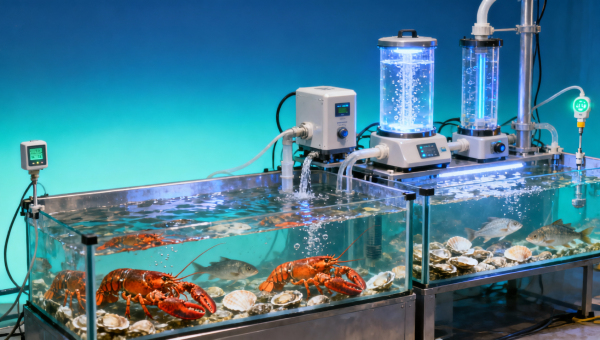
Unexpected overnight losses in live seafood holding tanks often trace back to invisible shifts in dissolved oxygen, microbial load, and temperature stability. For operators and evaluators comparing aquatic oxygen generators, uv sterilizers for fish farms, ozone generators for aquaculture, and water quality online monitor aquaculture systems, understanding why mortality spikes after dark is essential to protecting stock value, compliance, and operational continuity.
In commercial seafood retail, wholesale distribution, depuration, and temporary holding applications, fish and shellfish can appear stable during the day yet decline rapidly between late evening and early morning. This pattern is rarely caused by a single failure. More often, it results from a stack of manageable factors: oxygen depletion, carbon dioxide accumulation, ammonia stress, bacterial activity, circulation imbalance, and delayed operator response.
For technical evaluators, procurement teams, quality managers, and facility operators, the issue is not only biological. Overnight mortality affects inventory yield, food safety risk, labor efficiency, customer trust, and replacement cost. A 3% to 8% stock loss in one night can erase margin on premium lobster, crab, eel, grouper, or live shrimp systems. That is why live seafood holding tanks must be assessed as integrated life-support systems rather than simple water containers.
Why Mortality Often Peaks After Dark in Live Seafood Holding Tanks
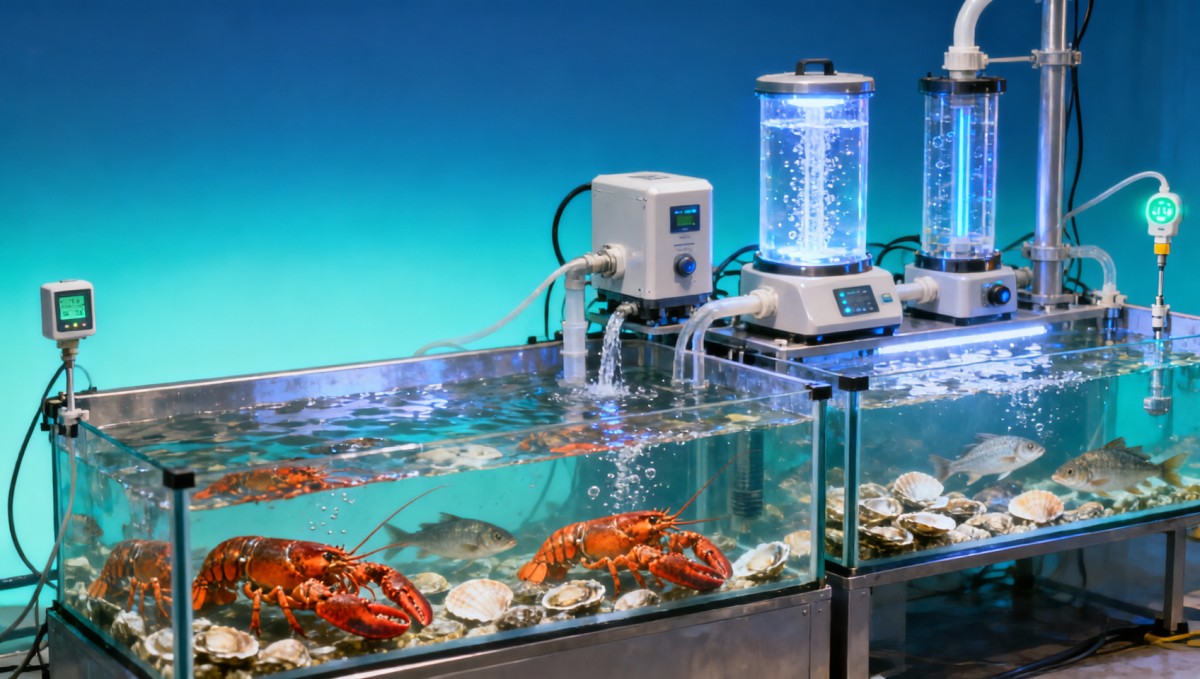
Nighttime mortality is common because the tank environment changes when supervision drops and biological demand continues. Fish, crustaceans, and shellfish keep respiring 24 hours a day. Microorganisms in the water, on biofilm surfaces, and inside filters also consume oxygen continuously. If aeration or oxygen injection is sized only for daytime conditions, the system can move from stable to critical in as little as 2 to 6 hours.
One major trigger is dissolved oxygen decline. Many live marine species begin to show stress when dissolved oxygen falls below 5 mg/L, while sensitive or high-density holding conditions may require 6 to 8 mg/L for acceptable survival. In heavily loaded tanks, oxygen can drop sharply after feeding residues, feces, and microbial bloom increase biochemical oxygen demand. Operators may not notice the decline until morning, when weak animals surface, cling to corners, or become unresponsive.
Temperature instability is another silent factor. In recirculating holding systems, a nighttime shift of even 1.5°C to 3°C can alter oxygen solubility, metabolic rate, and immune resilience. Warmer water holds less oxygen, while sudden cooling can shock tropical or subtropical species. When chilling units cycle incorrectly or room ventilation changes after business hours, animals may enter a high-stress window without visible warning.
Carbon dioxide accumulation is often underestimated. A tank may show acceptable dissolved oxygen at one point in the loop yet still suffer because CO2 stripping is inadequate. High CO2 interferes with respiration and acid-base balance, especially in dense holding loads. This is why oxygen generators alone do not solve every overnight die-off scenario. Gas balance, not just oxygen percentage, must be managed.
Microbial activity also intensifies risk. Organic residues create a favorable environment for heterotrophic bacteria, which increase oxygen demand and degrade water clarity. In systems without effective uv sterilizers for fish farms or controlled ozone application, bacterial load can climb overnight and elevate stress on gills, shell surfaces, and wounds created during transport. A mortality spike may therefore reflect cumulative system fatigue, not a sudden random event.
Typical Overnight Failure Chain
- Tank loading exceeds design density by 10% to 25% during late delivery or peak sales periods.
- Uneaten feed, mucus, or waste raises oxygen demand and microbial activity after lights-out.
- Circulation dead zones form in corners, baskets, or stacked crates, reducing gas exchange.
- Temperature drifts outside the preferred range for 3 to 5 hours.
- Morning inspection occurs after animals have already crossed a reversible stress threshold.
Operational implication
The most effective prevention strategy is not a single device upgrade. It is a coordinated design combining oxygen supply, sterilization, oxidation control, circulation management, and continuous water quality monitoring. Facilities that treat holding tanks as a monitored process line rather than a passive storage area generally achieve lower mortality, more stable compliance records, and better resale value.
The Four Water Quality Variables That Decide Overnight Survival
When live seafood holding tanks fail overnight, four variables usually explain most of the loss profile: dissolved oxygen, temperature, nitrogen compounds, and microbial pressure. These variables interact. A rise in temperature reduces oxygen availability, while organic loading increases ammonia generation and bacterial proliferation. For this reason, isolated spot checks are weaker than multi-parameter monitoring.
Dissolved oxygen should be measured at more than one location. In a 5 m³ to 20 m³ system, readings at the return line alone can look healthy while corners or bottom zones remain depleted. A practical inspection routine includes at least 3 points: inlet, mid-body, and low-flow zone. If the variation exceeds 1 mg/L, the tank may have circulation imbalance even before livestock show distress.
Ammonia and nitrite are slower-moving but highly relevant in repeated overnight losses. A system can survive one stressful night and then fail on the second or third due to cumulative toxicity. Total ammonia nitrogen should be tracked with species tolerance in mind, along with pH and temperature, because the toxic unionized fraction increases as pH rises. This is especially important in mixed-species or high-turnover retail holding systems.
Microbial control requires balance. UV treatment reduces pathogen and waterborne bacterial load, while ozone generators for aquaculture can help oxidize dissolved organics and improve clarity. However, under-dosing leaves the system unstable and overdosing can damage gills and stress sensitive species. Monitoring ORP, contact time, and degassing performance is essential when ozone is part of the design.
Key operating ranges for night protection
The table below summarizes common operating ranges used as reference points in commercial live seafood holding tanks. Exact targets vary by species, salinity, biomass density, and holding duration, but these ranges support practical screening during technical evaluation.
The main lesson is that no single threshold guarantees safety. Overnight survival depends on stability across several parameters for 8 to 12 continuous hours. This is why water quality online monitor aquaculture systems are increasingly selected not only for farms but also for urban seafood distribution centers and premium retail live displays.
What evaluators should verify
- Whether sensors log trends every 1 to 5 minutes instead of relying on manual testing once per shift.
- Whether alarms cover both high and low events, including temperature rise, low dissolved oxygen, and pump interruption.
- Whether probe placement reflects true tank conditions rather than only the cleanest recirculation point.
How Oxygen, UV, Ozone, and Online Monitoring Work Together
A common procurement mistake is evaluating equipment categories in isolation. Aquatic oxygen generators, uv sterilizers for fish farms, ozone generators for aquaculture, and water quality online monitor aquaculture systems perform different functions. They are not interchangeable. In live seafood holding tanks, the most reliable architecture combines them according to biomass density, species sensitivity, turnover frequency, and water reuse ratio.
Oxygen generators address respiratory demand. They are especially useful where ambient aeration cannot maintain dissolved oxygen during high stocking periods or transport recovery. However, oxygen addition without proper circulation can create localized high-oxygen zones while other areas remain stressed. System design should therefore consider diffuser placement, contact efficiency, and backup supply for at least 30 to 60 minutes of outage protection.
UV sterilization targets microbial control, helping reduce waterborne pathogen pressure and improve consistency in recirculating systems. UV effectiveness depends on flow rate, lamp condition, water transmittance, and sleeve cleanliness. A unit that is correctly sized on paper can still underperform if fouling reduces dose delivery after 6 to 8 weeks of operation. Maintenance planning is as important as initial specification.
Ozone generators for aquaculture are often selected where operators need stronger oxidation of dissolved organics, odor reduction, and better water clarity. Yet ozone must be carefully managed with contact chambers, residual destruction, and degassing. For crustaceans and some sensitive finfish, poor control can convert a quality tool into a stress source. That is why ozone systems are strongest when tied to ORP feedback and operator training.
Online monitoring closes the loop. A water quality online monitor aquaculture setup can track dissolved oxygen, pH, temperature, salinity, ORP, and in some cases ammonia or turbidity. Instead of waiting for morning losses, facilities can receive threshold alerts by local siren, SMS, or dashboard. For multi-tank operations, this shortens response time and supports traceable quality records for internal audits and buyer assurance.
Functional comparison of core system components
The following comparison helps technical and commercial teams distinguish where each technology adds value and where integration matters most.
The table shows why integrated procurement usually outperforms single-point purchasing. Oxygen handles immediate survival, UV and ozone influence water hygiene and organic control, and monitoring provides the visibility needed to act before mortality becomes visible. Decision-makers should therefore compare packages based on system logic, not individual equipment price alone.
Integration checklist
- Confirm peak biomass load, not average load, as the basis for oxygen and circulation sizing.
- Match UV dose and hydraulic flow to real recirculation rate rather than nominal pump nameplate only.
- Specify ozone safety controls, off-gas management, and operator response rules before commissioning.
- Require data logging intervals, alarm logic, and calibration procedures in the monitoring scope.
Procurement and Risk-Control Criteria for B2B Buyers
For business evaluators and financial approvers, the right question is not simply “Which unit is cheaper?” It is “Which configuration reduces loss events, labor burden, and compliance exposure over 12 to 36 months?” A lower upfront cost can become expensive if sensor drift, undersized sterilization, or unstable oxygen delivery contributes to recurring overnight mortality.
Buyers should begin with use-case segmentation. A supermarket live tank, a seafood wholesaler’s buffer room, and an aquaculture harvest center have different turnover speed, handling stress, and water replacement patterns. Systems designed for 24-hour display may not suit 72-hour holding, and equipment sized for one species may underperform in mixed lobster-fish-shellfish environments.
Risk control also depends on maintainability. If UV sleeves require frequent shutdown access, or dissolved oxygen probes drift after 30 days without easy calibration, the system may look advanced but be poorly adopted in practice. Procurement teams should ask for spare parts lead time, recommended service interval, and typical consumable replacement cycle. A useful benchmark is whether critical wear parts can be serviced within 24 to 72 hours.
Commercial review should include traceability and training. Quality managers increasingly expect alarm logs, calibration records, and maintenance checklists, especially where seafood is held before sale or redistribution. Facilities handling premium live stock benefit from systems that retain trend history for at least several weeks and support SOP-based response actions for night staff.
Practical supplier evaluation matrix
The matrix below helps procurement and technical teams compare offers beyond price. It is especially useful when multiple vendors propose different combinations of oxygen, UV, ozone, and monitoring hardware.
A disciplined selection framework helps distributors, operators, and enterprise buyers avoid false economy. In many cases, the value of preventing just one or two major mortality nights per season can justify investment in better monitoring, more stable oxygenation, or cleaner sterilization design.
Frequent buying mistakes
- Choosing oxygen capacity based on tank volume only, without calculating live biomass and peak respiration load.
- Installing UV or ozone without confirming contact time, pretreatment clarity, and flow-path compatibility.
- Using online sensors but failing to assign night alarm responsibility, escalation contacts, and corrective SOPs.
Implementation, Night Checks, and FAQ for Stable Operation
Even well-specified live seafood holding tanks can underperform without disciplined implementation. Commissioning should include baseline water mapping, alarm threshold testing, and a dry-run response drill. In practice, the first 7 to 14 days after installation or retrofit are the most important period for confirming sensor accuracy, circulation uniformity, and livestock response under real loading conditions.
Night checks should be standardized. Instead of relying on visual observation alone, operators should confirm dissolved oxygen, temperature trend, pump noise, UV status, ozone interlock status where applicable, and alarm connectivity before close of business. A 5-point checklist completed in under 10 minutes can prevent the most common overnight failures.
For sites holding premium species, a tiered response plan is recommended. Level 1 may be a parameter warning, Level 2 a corrective action such as increased oxygen flow or reduced biomass, and Level 3 an emergency response including partial transfer or water exchange. This structure helps night staff act consistently instead of improvising during a stress event.
Recommended pre-close checklist
- Verify dissolved oxygen trend and confirm no sensor point is approaching the site’s minimum threshold.
- Check chiller and circulation status, including unusual vibration, cavitation, or blocked returns.
- Inspect UV or ozone system operation and confirm any residual management devices are functioning.
- Remove excess waste and uneaten material to lower microbial and oxygen demand overnight.
- Confirm alarm routing to the responsible phone, control room, or security contact.
How do I know if mortality is caused by oxygen or bacteria?
Oxygen-related events usually develop quickly and may show gasping, surfacing, clustering near inflow, or sudden weakness across many animals at once. Bacterial or organic-load issues often build over several cycles and may present as cloudy water, odor, gill irritation, or recurring losses after handling. Logged dissolved oxygen, ORP, UV maintenance history, and water clarity trends help separate the two causes.
Are online monitors necessary for smaller holding systems?
For very small, low-value tanks with constant staff presence, manual testing may be sufficient. But if the system operates unattended for 8 to 12 hours, includes multiple tanks, or holds high-value live seafood, online monitoring usually delivers practical risk reduction. The benefit grows when one mortality event can exceed the monitoring cost.
When should ozone be preferred over UV alone?
Ozone becomes more attractive when water has persistent dissolved organics, discoloration, or odor that UV alone cannot address. UV is strong for microbial inactivation in clear recirculating water, while ozone adds oxidation capacity. In many operations, the best result is not choosing one over the other but using each within a controlled, species-appropriate treatment train.
Overnight losses in live seafood holding tanks are rarely mysterious once the system is evaluated as a whole. The decisive factors are usually measurable: oxygen stability, thermal consistency, microbial control, organic load management, and alarm-enabled response. For operators, engineers, and procurement teams, the most resilient strategy is an integrated design that combines appropriate oxygenation, UV and ozone where justified, and real-time water quality visibility.
If you are comparing system upgrades, new installations, or supplier proposals for live seafood holding tanks, now is the time to review your current risk points and specification gaps. Contact us to discuss your operating scenario, request a tailored solution framework, or explore more aquaculture and fishery technology insights aligned with commercial performance and compliance needs.
Related Intelligence
- RAS SystemsEU REACH Adds 3 RAS Biofilm Inhibitors to SVHC ListEU REACH adds 3 RAS biofilm inhibitors to SVHC list—urgent compliance action needed for exporters, component makers & chemical suppliers targeting the EU market.
- RAS SystemsEU REACH Adds 3 Biofilm Inhibitors to SVHC List for RAS SystemsEU REACH adds 3 biofilm inhibitors to SVHC list for RAS systems—urgent SCIP & SDS compliance needed by Oct 2026. Act now!
- RAS SystemsEU REACH Adds 3 Silane Coupling Agents for RAS Systems to SVHC ListEU REACH adds 3 silane coupling agents for RAS systems to SVHC list—urgent compliance actions for exporters, integrators & suppliers. Act before 1 Oct 2026.
The Morning Broadsheet
Daily chemical briefings, market shifts, and peer-reviewed summaries delivered to your terminal.
