
What Makes Live Seafood Holding Tanks Easier to Sanitize
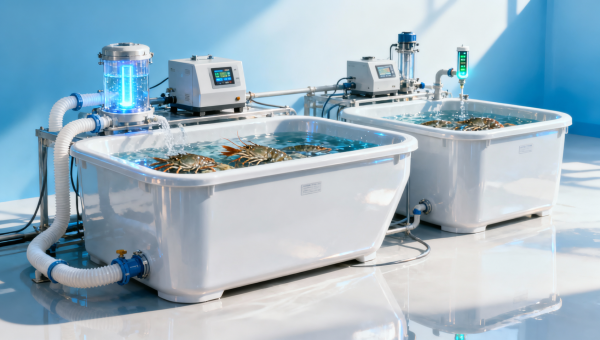
For operators and buyers evaluating live seafood holding tanks, easier sanitization is not just a maintenance issue—it directly affects water quality, compliance, and stock survival. In practice, tanks that are easier to sanitize share a few clear traits: smooth non-porous surfaces, rounded internal geometry, accessible plumbing, effective drainage, and support systems that keep microbial load under control between full cleaning cycles. When these design choices are paired with tools such as a water quality online monitor aquaculture system, uv sterilizers for fish farms, ozone generators for aquaculture, and aquatic oxygen generators, facilities can reduce contamination risk, shorten downtime, and maintain more stable holding conditions.
What actually makes a live seafood holding tank easier to sanitize?
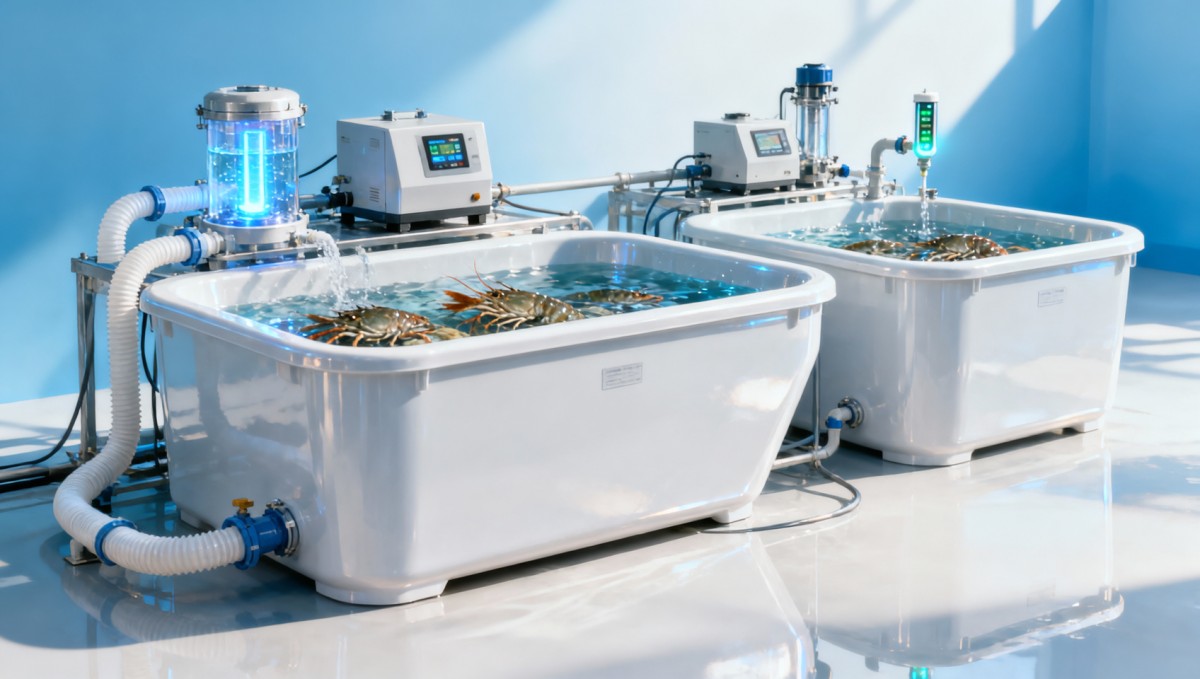
The short answer is design simplicity plus hygienic engineering. A holding tank becomes easier to sanitize when staff can fully clean, rinse, inspect, and restart it without hidden residues, inaccessible pipe sections, or surfaces that encourage biofilm attachment.
For most commercial users, the key factors are:
- Smooth, non-porous tank materials that resist staining, scaling, and bacterial adhesion
- Rounded corners and sloped bottoms that eliminate dead zones where waste accumulates
- Minimal crevices, seams, and exposed fasteners that trap organic matter
- Drainage that fully evacuates water and solids instead of leaving dirty residual pools
- Accessible plumbing and removable components for inspection and manual cleaning
- Filtration and sterilization support systems that reduce contamination pressure during operation
If buyers remember one principle, it should be this: the easiest tanks to sanitize are the ones designed to prevent buildup in the first place, not simply the ones sold with cleaning chemicals or disinfection accessories.
Why sanitization matters beyond basic cleanliness
In live seafood systems, sanitation is tied directly to business performance. Poorly cleaned tanks can lead to elevated microbial loads, unstable water parameters, odor issues, disease transmission, and avoidable mortality. That creates downstream losses in stock value, labor, energy, chemical use, and customer confidence.
This matters to different stakeholders in different ways:
- Operators care about faster cleaning, easier daily routines, and fewer emergency interventions.
- Technical evaluators focus on hygienic design, circulation efficiency, and compatibility with disinfection systems.
- Quality and safety managers need better contamination control and easier verification of cleaning effectiveness.
- Business decision-makers look at lower mortality, reduced downtime, and more predictable operating costs.
- Financial approvers want evidence that higher-spec tank designs reduce long-term maintenance and loss.
So when people search for what makes live seafood holding tanks easier to sanitize, they are usually not asking a cosmetic question. They are trying to assess operational risk, compliance confidence, and total lifecycle value.
Which tank materials are better for sanitation?
Material selection is one of the biggest predictors of cleaning difficulty. Surfaces that absorb moisture, scratch easily, or degrade under repeated cleaning become harder to sanitize over time.
In general, buyers should prioritize materials with these traits:
- Non-porous construction to reduce microbial harborage
- Chemical resistance for routine use of approved cleaning and disinfecting agents
- Corrosion resistance in saline or marine environments
- Smooth finish retention even after repeated washing
Common options include food-grade polyethylene, fiberglass with sanitary-grade finishing, acrylic viewing sections in selected applications, and corrosion-resistant stainless steel in support frames or processing-adjacent components. The right choice depends on species, salinity, temperature, cleaning frequency, and budget.
What buyers should avoid is assuming that a tank looks clean because it looks glossy when new. A truly sanitation-friendly material must stay stable, smooth, and easy to disinfect after months or years of commercial use.
What design details reduce hidden contamination points?
The most important sanitation improvements are often small structural details. These are the features that reduce residue traps and make inspection easier:
- Rounded internal corners instead of sharp 90-degree angles
- Welds or joins finished flush rather than raised or rough
- Sloped floors and bottoms for complete draining
- Open-access layouts that allow tools and hands to reach all internal surfaces
- Quick-release screens, covers, and filter housings for fast removal and cleaning
- Pipe routing designed to minimize dead legs where water stagnates
In many installations, sanitation failures do not start in the main tank body. They start in elbows, valves, spray bars, overflows, sump areas, and poorly designed filtration housings. That is why technical reviewers should assess the entire circulation loop, not just the display or holding basin.
How do support systems make tanks easier to keep sanitary between cleanings?
Even a well-designed tank benefits from systems that reduce organic load and microbial growth during operation. These tools do not replace cleaning, but they can extend water stability and reduce how aggressively contamination accumulates.
Water quality online monitor aquaculture systems help staff detect pH shifts, dissolved oxygen changes, temperature instability, ammonia buildup, and other warning signs before conditions deteriorate. Early visibility supports more disciplined sanitation and water management.
UV sterilizers for fish farms help reduce free-floating microorganisms in recirculating systems. When properly sized and maintained, they improve overall biosecurity and reduce pathogen pressure in the water column.
Ozone generators for aquaculture can support oxidation of organic matter and help control microbial load, though they require careful engineering, dosing control, and safety management. Ozone is effective, but misuse can create stress or harm for live stock.
Aquatic oxygen generators do not sanitize by themselves, but they support stock health and stable system performance. Better oxygenation can reduce stress-related losses and improve resilience in high-density holding conditions.
Together, these systems make sanitation easier not because they remove the need for cleaning, but because they reduce how fast water quality declines between cleaning cycles.
What should buyers inspect before choosing a tank system?
For procurement teams and technical evaluators, the best approach is to use a practical inspection checklist. Ask the supplier these questions:
- Can the tank be fully drained without manual tipping or residual pooling?
- Are all corners, outlets, and internal surfaces physically reachable for cleaning?
- What materials contact saltwater, cleaning agents, and disinfectants?
- Are there hidden cavities, double walls, or inaccessible plumbing sections?
- Can filters, diffusers, and covers be removed without special tools?
- What sanitation protocol does the manufacturer recommend between batches?
- Is the system compatible with UV, ozone, and online monitoring upgrades?
- Are there documented case references from seafood retail, wholesale, restaurant, or aquaculture facilities?
It is also worth asking for cleaning-time estimates under normal operating conditions. A tank that takes 20 minutes less to clean each cycle may create substantial labor savings over a year, especially across multi-tank installations.
How does easier sanitization translate into ROI?
For decision-makers, the value is usually measurable in five areas:
- Lower stock mortality from more stable and hygienic holding conditions
- Reduced labor cost because cleaning is faster and less repetitive
- Less downtime between batches or service intervals
- Lower chemical and water use when systems rinse and drain efficiently
- Reduced compliance and reputation risk in regulated or customer-facing environments
In other words, a sanitation-friendly tank is rarely just a maintenance convenience. It is a risk-control asset. In high-value live seafood operations, preventing even a small number of avoidable losses can justify investment in better hygienic design.
What features are less important than suppliers often claim?
Some features may sound impressive in marketing materials but have limited sanitation value if the core design is weak. Buyers should be cautious about overvaluing:
- Cosmetic finishes that do not improve cleanability
- High-tech add-ons without accessible plumbing and drain design
- Complex internal layouts that increase maintenance points
- Underspecified sterilization systems promoted as substitutes for cleaning discipline
A tank system should first be easy to empty, reach, rinse, inspect, and disinfect. Only after those basics are confirmed should buyers compare automation, monitoring, and enhancement options.
Conclusion
What makes live seafood holding tanks easier to sanitize is not one single feature but a combination of hygienic materials, cleanable geometry, complete drainage, accessible components, and well-integrated water treatment support. For operators, that means simpler routines and fewer contamination problems. For buyers and decision-makers, it means lower risk, better stock survival, and stronger long-term value.
When evaluating a system, focus less on broad marketing claims and more on whether the tank can be cleaned thoroughly, consistently, and quickly in real operating conditions. If the design reduces residue traps and works effectively with a water quality online monitor aquaculture setup, uv sterilizers for fish farms, ozone generators for aquaculture, and aquatic oxygen generators, it is far more likely to deliver the sanitation performance that commercial seafood holding operations actually need.
Related Intelligence
- RAS SystemsEU REACH Adds 3 RAS Biofilm Inhibitors to SVHC ListEU REACH adds 3 RAS biofilm inhibitors to SVHC list—urgent compliance action needed for exporters, component makers & chemical suppliers targeting the EU market.
- RAS SystemsEU REACH Adds 3 Biofilm Inhibitors to SVHC List for RAS SystemsEU REACH adds 3 biofilm inhibitors to SVHC list for RAS systems—urgent SCIP & SDS compliance needed by Oct 2026. Act now!
- RAS SystemsEU REACH Adds 3 Silane Coupling Agents for RAS Systems to SVHC ListEU REACH adds 3 silane coupling agents for RAS systems to SVHC list—urgent compliance actions for exporters, integrators & suppliers. Act before 1 Oct 2026.
The Morning Broadsheet
Daily chemical briefings, market shifts, and peer-reviewed summaries delivered to your terminal.
