

The Authority in Global Agricultural Chemistry & Bio-Resources
Solar water pumps agricultural systems: where payback is slower
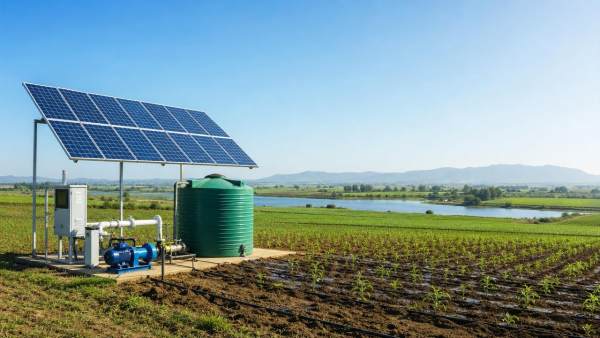
For finance approvers assessing irrigation investments, solar water pumps agricultural projects can present a more complex return profile than headline savings suggest. In regions with seasonal demand, low diesel displacement, or high upfront financing costs, payback may stretch well beyond standard capital approval thresholds. This article examines where returns slow, which cost variables matter most, and how to evaluate project risk with procurement-grade financial discipline.
Why do some solar water pumps agricultural projects fail to meet standard payback expectations?
The main reason is simple: savings are often estimated from ideal operating assumptions, while real agricultural pumping loads are uneven, seasonal, and constrained by water availability. A vendor may model strong fuel or grid savings across a full year, but the actual irrigation window may only last a few months. If the pump operates at partial load, below expected pumping hours, or with lower water demand than forecast, the economic return slows immediately.
For financial reviewers, the biggest mistake is treating solar water pumps agricultural systems like universally high-return energy projects. They are not. Their value depends on how much expensive energy they displace, how reliably they operate during irrigation peaks, and whether storage, pressure management, or backup power is needed. In many cases, the technology performs well technically, yet the capital efficiency looks weak because the baseline it replaces is already cheap, intermittent, or underutilized.
Another issue is timing. When capital budgets are under pressure, a project with a seven- to ten-year payback competes poorly against mechanization upgrades, post-harvest investments, or process improvements with faster and more measurable returns. That does not mean the solar option is poor; it means the project must be justified with a stronger whole-life cost argument rather than a narrow first-year savings narrative.
Which conditions usually make payback slower for solar water pumps agricultural investments?
Several conditions repeatedly push return periods beyond common approval thresholds. The first is low diesel displacement. If an existing diesel pump is used only occasionally, then replacing it with a solar-powered irrigation system saves less fuel than expected. The second is access to subsidized grid electricity. Where power tariffs are low or politically capped, direct energy savings may not justify the upfront spend.
The third condition is oversized design. Some projects are specified for future expansion, higher lift, or peak-season demand that may not materialize for years. Oversizing increases panel count, structural costs, controller capacity, and sometimes pipeline requirements. That raises capital expenditure without creating immediate cash benefit.
Fourth, water source variability matters. Borewell yield, seasonal pond levels, and fluctuating groundwater depth can all reduce actual pumping volume. A finance approver should ask whether projected output assumes stable hydraulic conditions. If not, the solar water pumps agricultural business case may be built on uncertain throughput.
Fifth, financing structure is critical. Projects that look attractive on an unlevered basis may weaken significantly once interest rates, import duties, insurance, maintenance contracts, and performance reserve assumptions are added. In higher-rate environments, capital-intensive pumping assets can lose ranking against simpler irrigation upgrades.
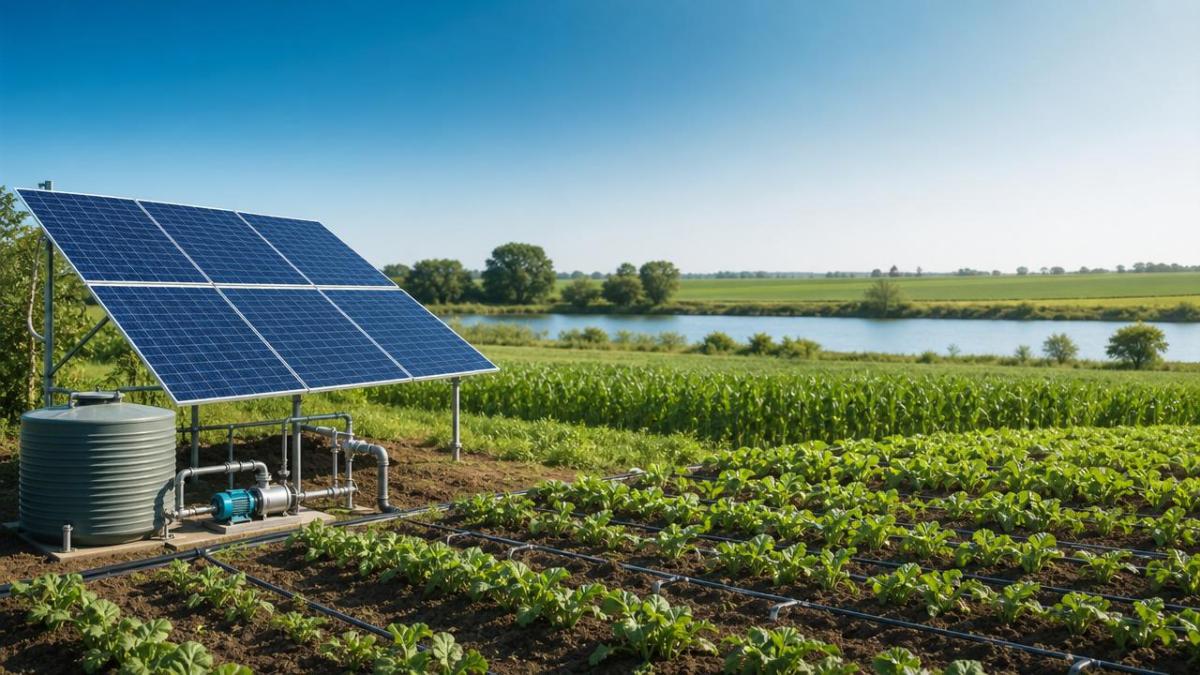
What cost variables should finance approvers examine before approving a solar pumping proposal?
Start with total installed cost, not module cost alone. Many under-reviewed proposals focus on photovoltaic hardware while underestimating civil works, mounting structures, cabling, controls, pump replacement, drilling adjustments, filtration, water storage, and commissioning. In agricultural settings, logistics and site preparation often represent a meaningful share of the final number.
Next, isolate the true operating baseline. What exactly is being displaced: diesel, grid electricity, rented pumping services, or labor-intensive water hauling? Each baseline has a different cost profile and volatility. Diesel replacement usually provides the strongest narrative, but only if fuel consumption data is real and current. If the proposal uses generalized fuel curves rather than field records, expected savings should be discounted.
Maintenance assumptions also deserve scrutiny. Solar water pumps agricultural systems generally require less daily intervention than combustion-based systems, but they are not maintenance-free. Pumps wear, inverters fail, panels accumulate dust, and security measures may be necessary in remote fields. A proper model should include cleaning frequency, service labor, spare parts, monitoring, and expected component replacement cycles.
Finally, ask whether there is a cost for operational flexibility. If irrigation is required at dawn, night, or during cloudy periods, the project may need water storage, hybrid controls, batteries, or a backup generator. That can materially change return calculations. For many finance teams, the turning point in project economics is not the pump itself but the cost of making water delivery reliable under imperfect solar conditions.
How can decision-makers compare fast-payback and slow-payback scenarios more consistently?
The best method is to compare scenarios using a standard approval framework rather than supplier-led estimates. Review annual pumping hours, dynamic head, energy source displaced, seasonal utilization, financing cost, and backup requirements side by side. This gives financial approvers a consistent basis for ranking proposals.
This type of comparison is especially useful when reviewing multiple solar water pumps agricultural proposals across regions or crop systems. It prevents one optimistic model from appearing superior simply because it excludes difficult assumptions.
Are slower paybacks always a sign of a weak project?
No. A slower payback can still be acceptable if the project reduces supply risk, stabilizes irrigation scheduling, lowers exposure to diesel price volatility, or supports expansion into higher-value crops. For institutional farms and processing-linked agricultural operators, resilience may justify investment even when the simple payback is not impressive.
The better question is whether the slower return is understood and priced correctly. For example, if a farm depends on timely irrigation to protect yield quality, the avoided risk of crop loss may matter more than direct fuel savings. Likewise, if a site suffers from power outages, a solar pumping system with storage may improve operational continuity in a way standard ROI formulas do not fully capture.
That said, strategic value should not become an excuse for poor financial discipline. Approvers should separate hard savings, risk-adjusted benefits, and optionality value. Once these are separated, the business case becomes more transparent. A slower-payback project may still pass, but it should pass for the right reasons.
What are the most common mistakes in evaluating solar water pumps agricultural proposals?
One common error is using simple payback as the only decision metric. Simple payback is useful for screening, but it ignores asset life, maintenance timing, financing cost, salvage value, and production risk. A net present value or discounted cash flow view is usually more appropriate for multi-year irrigation infrastructure.
A second mistake is assuming every liter of water pumped creates equal economic value. In reality, crop type, irrigation timing, and water productivity vary sharply. Water delivered during a critical crop stage may carry far greater financial importance than average annual volume figures suggest.
Third, many teams overlook degradation and field performance loss. Dust, heat, cable losses, pump wear, and suboptimal orientation can reduce actual output. If the supplier model assumes near-laboratory conditions, real-world returns may disappoint. Fourth, approvers may ignore compliance and warranty terms. In cross-border procurement, certification, after-sales support, spare parts lead time, and installer capability can materially affect project uptime and total cost.
Finally, some proposals bundle aspiration with economics. They present solar water pumps agricultural systems as sustainability assets, modernization symbols, and cost savers all at once. Those outcomes can coexist, but each should be tested independently. Strong procurement discipline means verifying what is measurable, what is probable, and what is merely promotional language.
What should finance approvers ask before moving from interest to procurement?
Begin with operating reality. Ask for at least one full season of pumping records, fuel or electricity bills, water demand by crop stage, and any data on bore depth or seasonal drawdown. Then request a sensitivity model showing best-case, base-case, and downside scenarios. If the return collapses under realistic utilization changes, the project may need redesign rather than rejection.
Next, confirm technical boundaries. Is storage included? What happens on cloudy days? Is there a manual or engine backup? What service response time is guaranteed? These questions matter because they shape the true delivered cost of water, not just the cost of installed equipment.
Also, ask for supplier accountability. Performance guarantees, pump curves, controller specifications, panel provenance, and warranty scope should be explicit. In a complex procurement environment, bankability depends as much on execution confidence as on projected savings. For ACC readers in primary industries and fine chemicals supply chains, this discipline is familiar: technical credibility and traceable performance assumptions are essential.
If you need to confirm a practical next step, prioritize these questions: What baseline cost is truly being displaced? How many annual pumping hours are validated, not assumed? What variables could extend payback by two years or more? What portion of the business case relies on grants, subsidies, or optimistic fuel pricing? And what procurement protections are in place if field performance underdelivers? Those answers usually determine whether a solar water pumps agricultural project is a disciplined investment, a strategic resilience play, or a proposal that should wait for better conditions.
Related Intelligence
- Aeration & Water TechGlobal Shipping Alliance Launches Green Corridor Asia-Europe Cold Chain RouteGreen Corridor Asia-Europe cold chain route launched: 22% lower surcharges, –25°C to +15°C control for agri-tech exports. Book now!
- Aeration & Water TechCommercial protein skimmers: what foam quality tells youCommercial protein skimmers reveal more than waste removal—foam quality helps operators spot loading shifts, imbalance, and maintenance needs early for steadier performance.
- Aeration & Water TechDissolved oxygen controller alarms that point to sensor driftDissolved oxygen controller alarms may signal sensor drift, not process upset. Learn key alarm patterns, faster field checks, and service tips to reduce downtime and protect compliance.
The Morning Broadsheet
Daily chemical briefings, market shifts, and peer-reviewed summaries delivered to your terminal.
