

The Authority in Global Agricultural Chemistry & Bio-Resources
Feed & Grain processing equipment bottlenecks often missed early
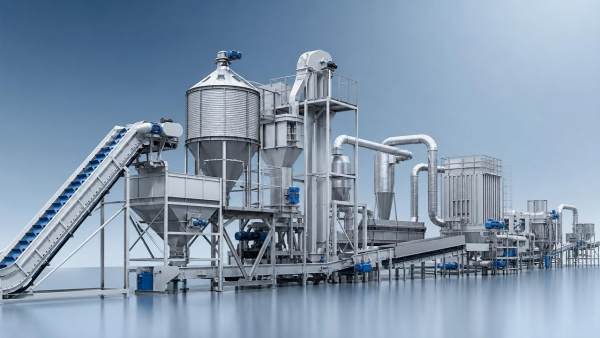
In large-scale milling and handling projects, Feed & Grain processing equipment failures rarely begin with dramatic breakdowns—they start with subtle design mismatches, overlooked maintenance variables, and weak process integration. For project managers and engineering leads, identifying these early bottlenecks can reduce costly downtime, protect throughput targets, and improve long-term operational reliability across increasingly regulated and performance-driven processing environments.
Why are early bottlenecks in Feed & Grain processing equipment so often missed?
The main reason is that most projects evaluate Feed & Grain processing equipment at the level of nameplate capacity, vendor scope, and commissioning deadlines, but not at the level of process interaction. A pellet mill may be correctly sized on paper, a conveyor may match expected tonnage, and a dust collection unit may meet a general specification, yet the entire line can still underperform because equipment response times, material variability, transfer points, and utility stability were not modeled together.
For project managers, this creates a dangerous blind spot. Early bottlenecks do not always show up in factory acceptance tests or during short commissioning runs. They emerge when the plant moves into real operating conditions: multiple product recipes, seasonal moisture changes, operator shift differences, unsteady upstream intake, or cleaning cycles that take longer than scheduled. In other words, the problem is less about a single machine and more about the operating envelope of the system.
Another common issue is organizational. Mechanical, electrical, automation, and production teams may all approve the same Feed & Grain processing equipment package from different perspectives, but no one fully owns line-wide performance risk. Procurement wants delivery certainty, operations wants output, maintenance wants accessibility, and quality wants control points. If those priorities are not integrated during front-end engineering, the bottlenecks remain hidden until startup or scale-up.
Which warning signs usually appear before a serious throughput problem develops?
The earliest signs are usually small and easy to dismiss. They include uneven load on motors, repeated trips at transfer points, inconsistent feeder behavior, higher-than-expected fines, unstable moisture readings, and operator dependence for routine balancing. None of these signals automatically means the Feed & Grain processing equipment is defective. However, they do indicate that the line may be operating with little buffer against disruption.
Project leaders should also watch for chronic “workarounds.” If operators frequently slow one section to protect another, manually clear buildup, bypass alarms, or change setpoints outside the original process window, that is not flexibility—it is a sign that the system was never properly harmonized. Over time, these workarounds increase wear, reduce predictability, and distort maintenance planning.
A useful rule is to treat recurring minor interruptions as data, not as isolated events. Three short stops per shift may look manageable, but they often indicate feeder imbalance, aspiration mismatch, poor magnet placement, inadequate screening efficiency, or control logic that is too slow for actual product flow. In high-volume feed and grain lines, these “small losses” can become the difference between contractual output and missed delivery.
What parts of Feed & Grain processing equipment are most likely to become hidden constraints?
Many teams focus on major assets such as hammer mills, pellet mills, dryers, coolers, or silos. Those are important, but hidden constraints often sit in the “in-between” equipment: feeders, diverters, elevators, airlocks, aspiration ducts, screens, magnets, reclaim systems, and control valves. These components are sometimes treated as standard accessories, even though they determine whether bulk material moves consistently through the line.
Transfer points are especially critical. A well-specified machine can still underperform if incoming material arrives with inconsistent velocity, angle, moisture, or particle size. Build-up, bridging, rat-holing, and segregation are not only materials issues; they are design issues. If a project team selects Feed & Grain processing equipment without validating these material behaviors, recurring downtime becomes highly likely.
Utilities are another underestimated area. Compressed air quality, steam stability, vacuum balance, electrical harmonics, and temperature variation can all affect machine reliability. In regulated or quality-sensitive processing environments, poor utility integration may also compromise sanitation routines, product consistency, or traceability. That makes utility design a core performance issue, not just a supporting engineering function.
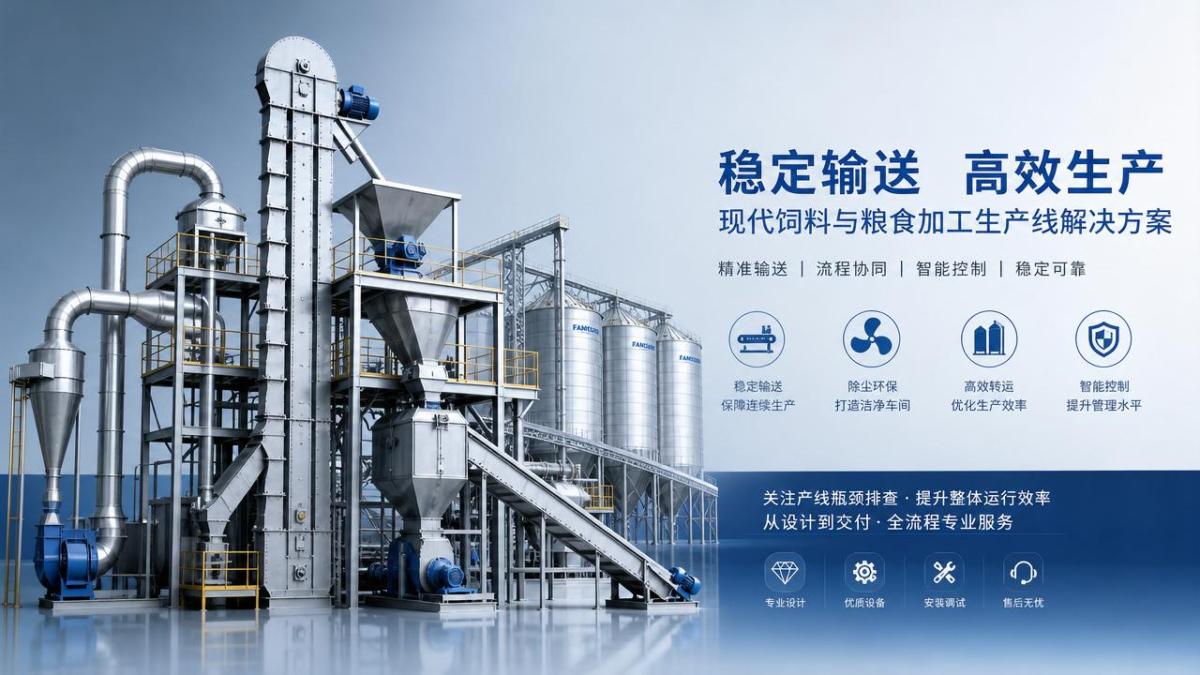
How should project managers evaluate Feed & Grain processing equipment before procurement?
The first step is to move beyond catalog capacity. Ask what the equipment can do under your actual product mix, ambient conditions, cleanliness expectations, shift pattern, and upstream variability. A supplier may state excellent throughput, but the relevant question is whether that throughput remains stable when ingredients change, when moisture drifts, or when the plant runs extended campaigns with minimal intervention.
Second, evaluate maintainability as seriously as output. Feed & Grain processing equipment that performs well but cannot be safely inspected, cleaned, adjusted, or rebuilt within your maintenance window will eventually become a bottleneck. Accessibility around bearings, screens, liners, sensors, and drives directly influences uptime. For engineering leads, this is where lifecycle thinking creates a competitive advantage over lowest-price buying.
Third, verify control integration early. Equipment packages often arrive with acceptable local controls but poor system-level communication. Alarm priorities, interlocks, recipe transitions, and startup/shutdown sequences must reflect the actual process, not a generic controls philosophy. Weak automation can make good mechanical equipment look unreliable, especially when operators must constantly intervene to prevent surge, blockage, or off-spec product.
Finally, ask vendors for evidence that relates to operational reality: similar material references, wear data, sanitation procedures, spare parts availability, service response times, and expected changeover duration. These details often reveal more about practical suitability than headline specifications do.
What are the most common planning mistakes during installation and commissioning?
A major mistake is treating installation quality as separate from process performance. Misalignment, poor support rigidity, vibration transfer, incorrect duct routing, and instrument placement errors can all reduce the effectiveness of Feed & Grain processing equipment before the plant even begins normal operation. Small installation shortcuts may remain invisible until the line runs at sustained load.
Another frequent error is commissioning with limited product scenarios. Teams may test only one formulation, one throughput level, or one shift condition. That can create false confidence. Real plants must handle variation, and bottlenecks usually emerge at the edges of the operating range. A stronger commissioning plan includes stress testing, upset recovery, product transition behavior, and maintenance access validation.
Documentation gaps also create avoidable risk. If baseline amperage, vibration, flow, moisture, temperature, and pressure readings are not recorded during stable startup, the site loses an essential reference point for later troubleshooting. For project managers, that means a line can drift into poor performance without anyone clearly proving when the deviation started or which subsystem caused it.
How can teams distinguish between an equipment problem and a process integration problem?
This distinction matters because replacing machinery rarely fixes a poorly integrated system. If the same Feed & Grain processing equipment performs well in short runs but fails during continuous production, the root cause may be process balance, operator practice, utility fluctuations, or control sequencing. Likewise, if one machine shows abnormal wear while upstream and downstream equipment appear stable, the issue may still originate in material presentation rather than the machine itself.
A practical method is to map symptoms across time and location. Does the issue happen after recipe changes, after cleaning, during humid weather, at high fill levels, or only on specific shifts? Pattern recognition often reveals whether the bottleneck is mechanical, procedural, or systemic. Engineering teams should combine maintenance history, SCADA trends, product quality data, and operator logs rather than relying on one source.
It is also useful to rank bottlenecks by recoverability. A mechanical fault usually worsens until repaired. A process integration issue often improves temporarily when throughput is reduced, when operators intervene, or when one variable is stabilized. That difference can help narrow the diagnosis before major capital decisions are made.
What practical checklist should be used before scaling, upgrading, or replacing Feed & Grain processing equipment?
Before approving any upgrade, teams should confirm whether the current bottleneck is truly capacity-related or whether it reflects poor flow discipline, inadequate controls, or maintenance constraints. Replacing a machine without correcting upstream inconsistency often shifts the problem rather than solving it. For example, a larger grinder or conveyor may simply overload the next section if surge handling and aspiration remain unchanged.
A strong decision checklist includes these questions:
- Has the actual material profile been validated across seasons and recipes?
- Are transfer points, feeders, and aspiration systems proven at full operating range?
- Do maintenance teams have enough access for inspection, lubrication, cleaning, and fast replacement?
- Are automation sequences aligned with real startup, shutdown, and upset conditions?
- Are spare parts, service support, and training available locally and within project timelines?
- Has the site defined measurable acceptance criteria beyond nameplate output?
This checklist helps project stakeholders avoid a common trap: assuming that more capital automatically means more reliability. In many facilities, the better return comes from redesigning flow paths, improving control logic, tightening preventive maintenance, or correcting utility instability before replacing core Feed & Grain processing equipment.
What should decision-makers ask suppliers and internal teams before moving forward?
The best closing question is not “Which machine is best?” but “Which variables could prevent this line from sustaining target performance after six months of operation?” That shifts the conversation from procurement to operational resilience. Internal engineering teams should be ready to explain material behavior, site constraints, automation standards, and maintenance capacity. Suppliers should be ready to explain how their Feed & Grain processing equipment performs under non-ideal conditions, how quickly wear parts can be replaced, and what process assumptions sit behind the quoted capacity.
For project managers and engineering leads, early bottleneck detection is really a discipline of asking better questions sooner. If you need to confirm a specific equipment route, performance target, project timeline, retrofit strategy, budget range, or supplier fit, start by clarifying material characteristics, throughput variability, control philosophy, maintenance windows, compliance requirements, and acceptance criteria. Those discussions will usually reveal whether the next step should be redesign, staged optimization, pilot validation, or full procurement of new Feed & Grain processing equipment.
Related Intelligence
- Commercial Feed PelletSingapore’s Aquaculture Tech FastTrack Extends to Commercial Feed PelletsAquaculture Tech FastTrack now covers Commercial Feed Pellets — unlock 72-hour Singapore clearance with CNAS test reports. Key for China-Singapore feed exporters, labs & importers.
- Commercial Feed PelletFeed & Grain processing technology that cuts raw material lossFeed & Grain processing technology that cuts raw material loss helps processors improve yield, moisture control, traceability, and ROI—see which systems deliver measurable savings.
- Commercial Feed PelletSinking fish feed machine and the cost of poor water stabilitySinking fish feed machine selection affects feed waste, water quality, and ROI. Learn how better pellet stability cuts hidden aquaculture costs and improves long-term performance.
The Morning Broadsheet
Daily chemical briefings, market shifts, and peer-reviewed summaries delivered to your terminal.
