
Ozone Generators for Aquaculture: Where Problems Start
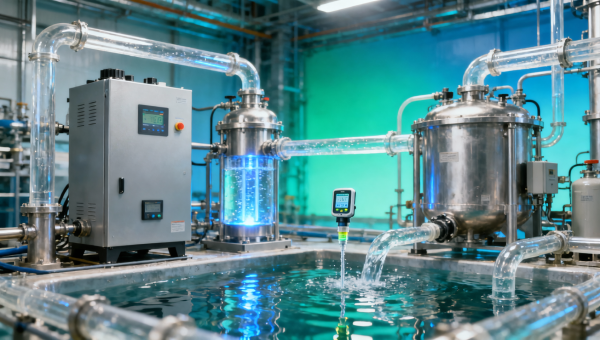
Ozone generators for aquaculture promise cleaner water and lower pathogen loads, yet many system failures begin with poor integration, unstable dosing, or overlooked interactions with uv sterilizers for fish farms and water quality online monitor aquaculture tools. For operators, evaluators, and buyers, understanding where these problems start is essential to protecting stock health, compliance, and long-term return on investment.
Why do aquaculture ozone generator problems usually begin at the system design stage?
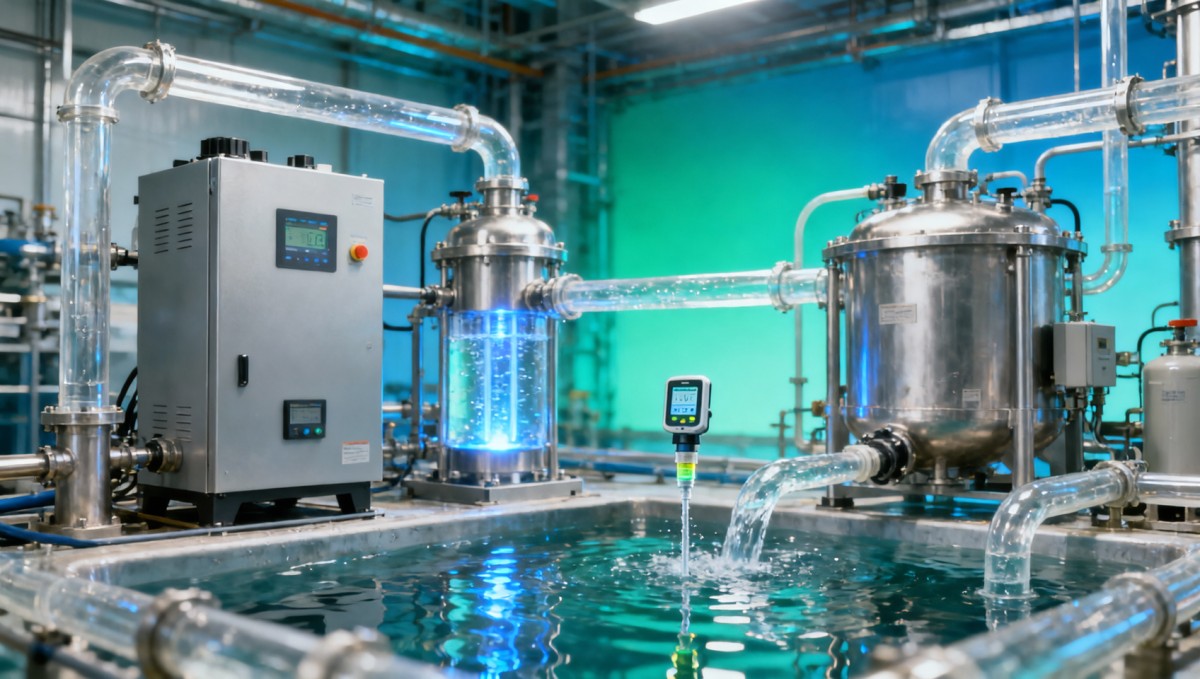
In commercial aquaculture, ozone is rarely a standalone device decision. It is part of a treatment chain that may include oxygen preparation, venturi injection, contact tanks, degassing, protein skimming, biofiltration, uv sterilizers for fish farms, and a water quality online monitor aquaculture platform. Problems often start when buyers compare only generator output and purchase price, while ignoring contact time, off-gas destruction, sensor placement, and the hydraulic behavior of the full loop.
This matters across freshwater hatcheries, marine recirculating aquaculture systems, shrimp production, and live holding units. A nominal ozone generator sized for 5 g/h, 20 g/h, or 100 g/h may appear suitable on paper, but the effective dose in water depends on feed load, dissolved organics, salinity, temperature, turnover rate, and gas transfer efficiency. A mismatch at any of these points can turn a sanitation tool into a fish health risk.
Technical evaluators usually see the first warning signs in unstable oxidation-reduction potential, inconsistent water clarity, or unexplained fish stress after startup. Operators often notice a different pattern: odor around the skid, foam behavior changes, erratic alarms, or repeated need for manual adjustment during 24-hour operation. Financial approvers notice it later, when the expected reduction in mortality or water exchange does not show up within one or two production cycles.
For B2B buyers, the practical lesson is simple. The most common failure point is not that ozone itself is unsuitable for aquaculture. It is that integration is treated as a secondary task. In regulated and technically sensitive sectors, that is the wrong order. ACC consistently sees stronger outcomes when procurement teams define the treatment objective first, verify the process train second, and only then compare equipment suppliers.
What gets overlooked in the first 3 planning decisions?
The first decision is dose objective. Teams need to distinguish between improving water color, reducing dissolved organics, lowering pathogen pressure, or supporting a high-density recirculating system. These are related goals, but they do not always require the same ozone concentration, retention time, or control strategy. A vague target such as “better water quality” usually leads to poor specification.
The second decision is where ozone enters the process. Injection before mechanical solids removal can waste oxidant. Injection without sufficient contact volume may produce poor transfer. Injection too close to animal exposure points can elevate residual risk. In many systems, a difference of 2–5 minutes in actual contact time is operationally significant.
The third decision is control architecture. A water quality online monitor aquaculture package may include ORP, dissolved oxygen, pH, temperature, and ammonia-related monitoring, but the value depends on correct calibration interval, sensor location, and alarm logic. If the probe is installed in a turbulent or poorly representative point, a stable reading can still be misleading.
Core design checks before procurement
- Confirm the treatment goal in operational terms: pathogen reduction support, water polishing, color reduction, or organic load control.
- Map the process chain from gas generation to off-gas destruction, including contact tank volume and degassing point.
- Review whether existing uv sterilizers for fish farms are upstream or downstream, and whether the combined sequence is technically justified.
- Set a maintenance plan with weekly checks, monthly calibration tasks, and spare parts assumptions for the first 6–12 months.
Where do ozone, UV, and online monitoring interfere with each other?
Many aquaculture treatment failures are not caused by a single bad component. They result from reasonable technologies being connected in the wrong sequence or controlled with the wrong assumptions. Ozone generators for aquaculture, uv sterilizers for fish farms, and water quality online monitor aquaculture systems each solve different problems. When teams treat them as interchangeable “water treatment upgrades,” they create blind spots.
Ozone primarily oxidizes organics and can reduce pathogen pressure indirectly or directly depending on system design. UV primarily disinfects by irradiation and depends heavily on water transmittance, fouling condition, and hydraulic exposure. Online monitoring provides visibility, but it does not correct poor process design. If ozone raises oxidation conditions but leaves unstable residuals or byproducts unmanaged, downstream UV performance and biological stability can still suffer.
A common integration issue appears when teams expect ORP alone to validate disinfection effectiveness. ORP is useful, but it is not a direct measure of every biological outcome. Another issue appears when UV is installed downstream of poorly degassed ozonated water without enough separation and verification. In those cases, the treatment train looks sophisticated, yet the operating team spends 2–4 weeks troubleshooting alarms and fish behavior instead of stabilizing production.
The table below helps procurement and engineering teams compare the role of each treatment element in a realistic aquaculture setup rather than in isolation.
The key interpretation is that these systems are complementary, not mutually substitutable. Ozone can improve UV conditions by reducing some dissolved load, but only when contact, degassing, and control are correct. Monitoring can reveal drift, but only if the site defines alarm limits, response actions, and weekly validation routines. Strong aquaculture projects treat integration as a process engineering task, not as a shopping list.
Which sequence is often safer in practical projects?
There is no universal sequence for every species or system, but many operators achieve better control when solids are reduced first, ozone is applied in a controlled sidestream or treatment zone, gas is separated and destroyed where required, and UV is used on clarified water with verified hydraulic conditions. This reduces the chance that one device compensates for another device’s poor operating environment.
For technical teams, one useful rule is to validate the process in 3 steps: dry review of piping and control logic, wet commissioning with conservative setpoints, and a 7–14 day stabilization phase under real load. Skipping the middle stage is a common reason why systems appear fine during installation yet become unstable once biomass or feeding rates increase.
ACC’s editorial advantage in this area is cross-sector interpretation. Because its coverage spans aquaculture technology, biochemical processing, machinery, and compliance-sensitive sourcing, it is well positioned to help procurement teams assess not just the device, but the operational context, documentation quality, and long-term supplier credibility behind the device.
What technical indicators should buyers and evaluators verify before selection?
When selecting ozone generators for aquaculture, buyers often focus on headline capacity and neglect supporting metrics. A more reliable approach is to review at least 5 core dimensions: ozone output range, feed gas requirement, control method, materials compatibility, and safety architecture. For systems expected to run continuously, serviceability and spare part access should be included as a sixth dimension rather than treated as an afterthought.
The first indicator is output stability across operating hours, not just maximum rated output. The second is the feed gas strategy, such as dry air or oxygen-enriched supply, because it affects efficiency, maintenance, and consistency. The third is integration with ORP or related process controls, including whether the unit supports staged output rather than only simple on-off operation. These details matter more during month 6 than during commissioning week.
Material compatibility is also crucial. Ozone is highly reactive. Piping, seals, injector materials, and contact vessel components must be chosen for oxidative service. In parallel, safety managers should verify off-gas handling, leak awareness, ventilation, and lockout procedures. A unit that looks economical in the quotation can become expensive if the site must retrofit compatible components after installation.
The following table organizes the most practical pre-purchase checkpoints for technical, commercial, and quality teams.
The practical takeaway is that selection should combine process fit and lifecycle fit. A technically acceptable machine is not necessarily a good purchase if local service, commissioning guidance, documentation quality, or replacement part availability are weak. This is especially important for distributors, EPC participants, and multinational buyers managing several sites with different water chemistries and compliance expectations.
A 4-part checklist for cross-functional approval
- Operations: confirm daily maintenance burden, alarm behavior, and ease of adjustment over 8–24 hour production windows.
- Technical: verify hydraulic integration, control logic, contact time, and compatibility with uv sterilizers for fish farms already installed.
- Quality and safety: review calibration, ventilation, off-gas handling, and process records for audits or incident review.
- Commercial and finance: evaluate total cost across procurement, commissioning, consumables, downtime risk, and replacement planning over 12–36 months.
Common delivery and implementation timing
For standard configurations, buyers often see lead times in the range of 2–8 weeks, while engineered systems with custom skids, control panels, or integrated monitoring may require longer. Commissioning windows are commonly planned over 3 phases: installation check, wet test, and biological stabilization review. Procurement teams should ask for this timeline early so budget approval aligns with site readiness.
How can buyers reduce operating risk, compliance gaps, and total cost?
Reducing cost in aquaculture water treatment does not mean buying the lowest-priced ozone generator. It means reducing avoidable loss across fish health, labor, maintenance, and process disruption. A cheap system that requires constant manual intervention can cost more than a higher-grade solution within a single season, especially in facilities where stocking density, feed cost, or biosecurity sensitivity is high.
Compliance and documentation also affect cost. While the exact regulatory expectations vary by market and facility type, buyers should expect clear technical documentation, electrical safety conformity where relevant, materials information, commissioning records, and operating procedures. In many projects, quality and safety teams need documented calibration and maintenance intervals, not just a sales brochure. This is particularly relevant when the water treatment line supports export-oriented aquaculture operations.
A strong procurement package typically includes 6 items: process description, equipment list, control philosophy, maintenance plan, spare part list, and commissioning scope. Without these, it is hard for enterprise decision-makers or financial approvers to compare quotations fairly. One supplier may seem less expensive simply because off-gas treatment, sensor calibration tools, or service visits are excluded.
For many businesses, the best alternative is not replacing ozone with another technology. It is using ozone more selectively. In some cases, a smaller ozone stage combined with solids control, appropriate UV, and more disciplined online monitoring delivers a better cost-to-control ratio than a large generator running aggressively. The right answer depends on system load profile, species sensitivity, and the skill level available on site.
Common mistakes that increase cost within the first 6 months
- Buying based on nameplate output without validating the actual treatment objective and hydraulic conditions.
- Using a water quality online monitor aquaculture system without a written calibration frequency, alarm response plan, or trend review routine.
- Assuming uv sterilizers for fish farms can compensate for poor solids control or unstable ozonation upstream.
- Ignoring operator training and shift-to-shift consistency, especially in 24/7 facilities with multiple technicians.
FAQ for technical buyers, operators, and commercial evaluators
How do I know if an ozone generator for aquaculture is oversized or undersized?
Look beyond rated output. Review system volume, recirculation rate, organic loading, fish density, contact time, and control flexibility. An oversized unit often shows unstable control and frequent manual correction at low load. An undersized unit tends to run continuously without reaching the intended water quality effect. A proper assessment usually compares at least 3 operating conditions: startup, average biomass, and peak feeding period.
Can ozone replace UV in fish farms?
Usually no. They address different parts of the treatment challenge. Ozone generators for aquaculture support oxidation and can help lower pathogen pressure, while uv sterilizers for fish farms are generally used for direct irradiation-based disinfection. In many systems, they work best as coordinated stages, not as one-for-one replacements. The correct choice depends on water clarity, species sensitivity, biosecurity target, and operating discipline.
What should a water quality online monitor aquaculture package include?
The exact configuration varies, but buyers commonly assess pH, dissolved oxygen, temperature, and ORP, with additional parameters depending on the production system. More important than the parameter count is the monitoring strategy: representative sensor location, calibration interval, alarm threshold, and action protocol. A monitoring package without response logic is only partial risk control.
How long does commissioning usually take?
For a standard installation, initial mechanical and electrical checks may take a few days, while process stabilization can require 7–14 days under operating load. More complex recirculating aquaculture systems may need longer observation, especially if multiple treatment technologies are being tuned at the same time. Buyers should ask suppliers to separate installation completion from biological stabilization in the project schedule.
Why work with ACC when evaluating aquaculture ozone systems and treatment-chain suppliers?
AgriChem Chronicle is built for buyers and technical stakeholders who need more than general market noise. Its editorial focus across aquaculture and fishery technology, fine chemicals, machinery, ingredients, and compliance-sensitive supply chains allows it to interpret water treatment equipment within the larger reality of industrial procurement. That means better questions, sharper supplier comparison, and more useful risk framing for cross-functional teams.
For information researchers, ACC helps clarify terminology, process interactions, and technology trade-offs. For operators and engineering teams, it highlights where implementation actually fails: poor sequencing, incomplete commissioning, weak monitoring discipline, and misaligned expectations between supplier and site. For commercial evaluators and financial approvers, it brings structure to cost, service scope, and lifecycle exposure rather than limiting review to quotation totals.
If your team is comparing ozone generators for aquaculture, reviewing uv sterilizers for fish farms, or planning a water quality online monitor aquaculture upgrade, ACC can support the decision process with industry-grounded analysis. Useful discussion points include parameter confirmation, treatment sequence review, delivery windows, spare parts assumptions, supplier documentation quality, and practical commissioning scope across 3 stages.
Contact ACC if you need help shortlisting suppliers, refining procurement specifications, evaluating whether a proposed system matches your production scenario, or preparing an internal comparison for technical, commercial, and finance approval. The most productive inquiries usually include system type, water source, target species, current treatment train, expected lead time, and the main decision issue such as sizing, integration, certification expectations, or quotation alignment.
Related Intelligence
- Aeration & Water TechAsia–Middle East Aeration & Water Tech Container Freight Up 18%Aeration & Water Tech container freight surges 18% on Asia–Middle East route—urgent implications for exporters, OEMs & forwarders. Act now.
- Aeration & Water TechFDA Updates Cybersecurity Guidance for Aeration & Water Tech DevicesFDA's new cybersecurity guidance for aeration & water tech devices mandates UL 2900-2-1 and SBOM compliance by Q1 2027 — act now to secure U.S. market access.
- Aeration & Water TechFDA Updates Cybersecurity Guidance for Aeration & Water Tech DevicesFDA’s new cybersecurity guidance for aeration & water tech devices mandates immediate compliance—secure firmware, audit logs & password controls required for U.S. market access.
The Morning Broadsheet
Daily chemical briefings, market shifts, and peer-reviewed summaries delivered to your terminal.
