
Do UV Sterilizers for Fish Farms Harm Beneficial Microbes?
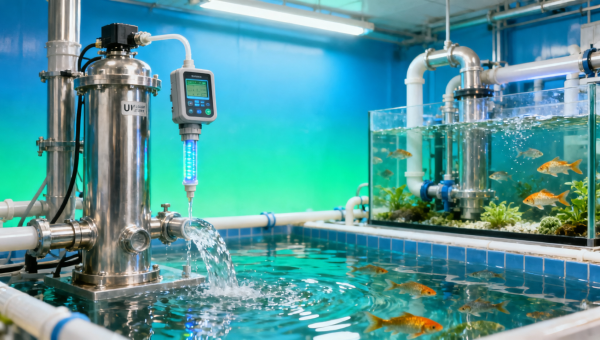
Do uv sterilizers for fish farms undermine the microbial balance that supports fish health and biosecurity? For aquaculture operators comparing smart buoys for aquaculture, water quality online monitor aquaculture systems, ozone generators for aquaculture, aquatic oxygen generators, and aquaculture probiotics bulk, the answer affects treatment strategy, compliance, and ROI. This article examines the evidence, trade-offs, and operational factors behind effective microbial and water management.
In most fish farming systems, UV sterilizers do not “wipe out” all beneficial microbes in a harmful way. Their main effect is to disinfect water passing through the unit, especially free-floating algae, bacteria, and pathogens in the water column. They do not directly sterilize biofilms attached to tank walls, media, pipes, sediments, or biofilter surfaces. That said, poor system design, excessive UV dosing, or using UV without understanding the farm’s biological treatment strategy can create unintended side effects, including reduced probiotic carry-through, altered microbial competition, and unnecessary operating cost. For farm managers and technical evaluators, the real question is not whether UV is good or bad in isolation, but when it improves biosecurity and when it interferes with the biology your system depends on.
What fish farm operators really need to know before installing UV
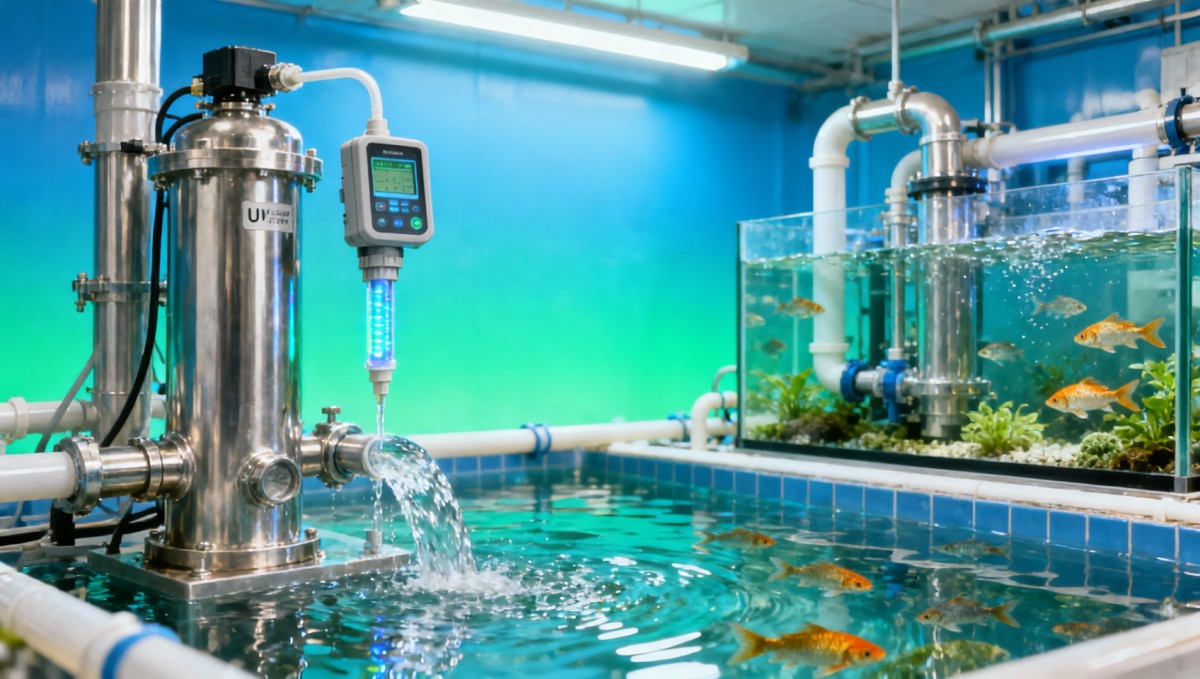
The core search intent behind this topic is practical and decision-oriented: operators, engineers, and buyers want to know whether UV sterilizers for fish farms will harm beneficial microbes enough to reduce fish health, destabilize biofiltration, or make probiotics less effective. They are usually not looking for a general textbook explanation. They want a reliable answer they can use in purchasing, process design, and risk control.
For most commercial aquaculture systems, the key decision points are:
- Will UV reduce disease pressure without harming system biology?
- Does UV affect nitrifying bacteria in biofilters?
- Should UV be used together with aquaculture probiotics bulk programs?
- How does UV compare with ozone generators for aquaculture?
- What operating conditions determine whether UV helps or hurts ROI?
The short answer is straightforward:
- UV is usually beneficial for controlling suspended microorganisms and improving water clarity.
- UV is usually not the main threat to beneficial biofilter microbes, because those microbes are surface-attached rather than free-floating.
- UV can reduce the effectiveness of water-applied probiotics if probiotics are dosed upstream of the sterilizer or circulated through it immediately.
- UV performance depends heavily on water quality, contact time, flow rate, lamp condition, and target organism.
Do UV sterilizers kill beneficial microbes in fish farms?
Yes, but only in a limited and system-specific sense. UV irradiation damages microbial DNA and prevents many microorganisms from reproducing. If beneficial microbes are free in the water column and pass through the UV chamber, some portion of them will be inactivated depending on dose and exposure.
However, this is where many oversimplified discussions go wrong. In aquaculture, a large share of the most important beneficial microbial activity does not occur as free-floating cells. It occurs in:
- Biofilters
- Tank and pipe biofilms
- Bead filters and moving bed media
- Pond sediments
- Surface-associated microbial communities
Because UV only treats the water that physically passes by the lamp, it does not directly penetrate and sterilize these attached microbial zones. This is why well-designed recirculating aquaculture systems can use UV while still maintaining nitrification and biological stability.
So if the concern is, “Will UV sterilizers destroy all the good bacteria in my farm?” the evidence-based answer is no. If the concern is, “Can UV suppress some beneficial planktonic microbes and interfere with microbial management strategy if applied poorly?” the answer is yes.
Does UV harm the biofilter bacteria that control ammonia and nitrite?
This is one of the most important operational questions, especially for RAS facilities and high-density production systems. In normal installations, UV sterilizers are far less damaging to nitrifying bacteria than many users fear.
Nitrifiers such as Nitrosomonas and Nitrobacter-related groups primarily colonize surfaces. Their population is concentrated on biofilter media, not drifting freely in large amounts through the sterilizer. That means a UV unit installed on a recirculation loop is not directly “sterilizing the biofilter.”
Still, there are indirect effects to monitor:
- If the system is newly cycling, microbial establishment may be slower if the design depends on waterborne inoculation.
- If excessive sanitation is combined with unstable solids management, the system may show reduced microbial diversity.
- If operators assume UV replaces proper biological filtration, ammonia control can deteriorate.
For technical assessment teams, the takeaway is simple: UV is a pathogen and water-column management tool, not a substitute for biofiltration. If your farm relies on nitrification, biofilter sizing, oxygen availability, alkalinity control, and hydraulic retention time still matter far more than the presence of UV alone.
When UV creates real problems for beneficial microbial programs
The most common conflict is not with biofilters, but with probiotic dosing strategies. Farms increasingly use aquaculture probiotics bulk products to improve water quality, suppress opportunistic pathogens, enhance digestion, or support pond ecology. In these cases, UV can indeed work against the intended microbial program if the microbes are introduced into water that quickly passes through the UV unit.
UV is most likely to be counterproductive when:
- Probiotics are dosed upstream of the UV sterilizer
- The recirculation loop returns treated water through UV immediately after dosing
- The target benefit depends on live free-swimming microbial persistence in water
- The system is small enough that turnover through UV is very rapid
To reduce this conflict, operators often use one or more of the following approaches:
- Dose probiotics downstream of the UV unit
- Temporarily reduce or bypass UV during and after probiotic application when safe to do so
- Apply probiotics to biofilter media or localized treatment zones rather than only the main water column
- Separate pathogen-control timing from microbial-seeding timing
This is where a water quality online monitor aquaculture setup becomes valuable. Real-time monitoring of turbidity, ORP, dissolved oxygen, ammonia, nitrite, and temperature helps teams judge whether the farm is actually benefiting from UV, probiotics, or a combined strategy rather than relying on assumptions.
UV vs. ozone generators for aquaculture: which is harsher on microbes?
Buyers often compare UV sterilizers with ozone generators for aquaculture because both are used to improve water quality and reduce microbial load. But they work differently, and the implications for beneficial microbes are also different.
UV sterilization is localized and line-of-flow dependent. It only treats water passing through the reactor and leaves no lasting disinfectant residual in the system. That makes it relatively controllable.
Ozone is a stronger oxidant and can have broader effects on dissolved organics, color, odor, and microbial populations. When used correctly, it can significantly improve water quality, but when poorly controlled it may create more biological stress than UV, including oxidation of sensitive tissues and impacts on system chemistry.
In practical terms:
- UV is often the lower-risk option when the goal is targeted microbial control with less chemistry complexity.
- Ozone may be preferable in systems with heavy organic loading, but requires tighter process control and safety management.
- Both technologies can be compatible with biofiltration, but both must be integrated carefully.
For quality and safety managers, the decision should include not only pathogen reduction, but also residual risk, operator safety, maintenance burden, and regulatory expectations for water treatment records.
What determines whether UV is effective or wasteful?
A UV sterilizer is only as good as its real delivered dose. Many underperforming systems are not failing because UV is the wrong technology, but because the reactor is mismatched to the actual hydraulic and water-quality conditions.
The main performance variables include:
- Flow rate: Excessive flow reduces exposure time.
- UV transmittance: Suspended solids and colored water reduce penetration.
- Lamp intensity and age: Output declines over time even if lamps still appear to work.
- Quartz sleeve fouling: Scaling and biofilm lower delivered dose.
- Target organism: Some pathogens require higher UV doses than others.
This means a farm with poor solids control may install UV and still see disappointing pathogen outcomes. In such cases, pretreatment, filtration, and hydraulic design matter as much as the sterilizer itself. If your system already includes smart buoys for aquaculture, online sensors, and automated alarms, UV can be integrated into a more data-driven control strategy rather than treated as a stand-alone fix.
How to use UV without disrupting fish health strategy
The best results come when UV is positioned as one layer in a broader health-management framework. Fish farms that rely on a single intervention often overestimate what that intervention can do. UV works best when combined with disciplined management of oxygen, solids, stocking density, feeding rate, and microbial balance.
A practical framework looks like this:
- Clarify the goal. Is UV being installed for hatchery biosecurity, algal control, water clarity, pathogen pressure reduction, or discharge treatment?
- Map microbial dependencies. Identify where beneficial microbes live and whether live probiotics are part of the program.
- Place UV strategically. Install it where it reduces pathogen transfer risk without neutralizing intended microbial additions.
- Monitor outcomes. Use water quality online monitor aquaculture tools to track actual impact.
- Coordinate with oxygen management. Aquatic oxygen generators and aeration systems should support the biological processes UV does not replace.
- Review economics. Measure lamp replacement, energy use, labor, mortality reduction, and treatment savings.
For enterprise buyers and financial approvers, the ROI case is strongest where disease prevention costs are high, stock value is high, biosecurity sensitivity is high, and water reuse makes pathogen recirculation a serious risk.
When should a fish farm use UV, and when should it be cautious?
UV is usually a strong fit for:
- Hatcheries and nurseries
- RAS facilities with controlled hydraulics
- Systems needing lower pathogen transfer risk
- Operations requiring better water clarity and lower suspended microbial load
- Sites seeking a non-chemical disinfection step
UV should be evaluated more carefully for:
- Ponds or systems with very high turbidity
- Operations relying heavily on water-column probiotics
- Facilities with weak maintenance discipline
- Projects where the underlying issue is actually solids, overstocking, or oxygen limitation
In other words, UV is not inherently harmful to beneficial microbes, but it can be poorly matched to farms that have not clearly defined their microbial and water-treatment objectives.
Conclusion: do UV sterilizers for fish farms harm beneficial microbes?
Usually, not in the way people fear. UV sterilizers for fish farms mainly inactivate microorganisms suspended in the water passing through the unit. They do not directly eliminate the attached beneficial microbial communities that drive biofiltration and much of the system’s biological stability. The bigger concern is not blanket microbial destruction, but misalignment: using UV in a way that undermines probiotics, ignores water quality limitations, or substitutes for proper system design.
For most operators, the best conclusion is this: UV is a useful biosecurity and water-management tool when integrated correctly. If your farm also uses smart buoys for aquaculture, water quality online monitor aquaculture platforms, ozone generators for aquaculture, aquatic oxygen generators, or aquaculture probiotics bulk inputs, UV should be evaluated as part of a coordinated treatment architecture rather than a stand-alone purchase. That is the approach most likely to protect fish health, preserve beneficial biology where it matters, and deliver a measurable return on investment.
Related Intelligence
- Aeration & Water TechAsia–Middle East Aeration & Water Tech Container Freight Up 18%Aeration & Water Tech container freight surges 18% on Asia–Middle East route—urgent implications for exporters, OEMs & forwarders. Act now.
- Aeration & Water TechFDA Updates Cybersecurity Guidance for Aeration & Water Tech DevicesFDA's new cybersecurity guidance for aeration & water tech devices mandates UL 2900-2-1 and SBOM compliance by Q1 2027 — act now to secure U.S. market access.
- Aeration & Water TechFDA Updates Cybersecurity Guidance for Aeration & Water Tech DevicesFDA’s new cybersecurity guidance for aeration & water tech devices mandates immediate compliance—secure firmware, audit logs & password controls required for U.S. market access.
The Morning Broadsheet
Daily chemical briefings, market shifts, and peer-reviewed summaries delivered to your terminal.
