
When recirculating aquaculture systems make sense over flow-through
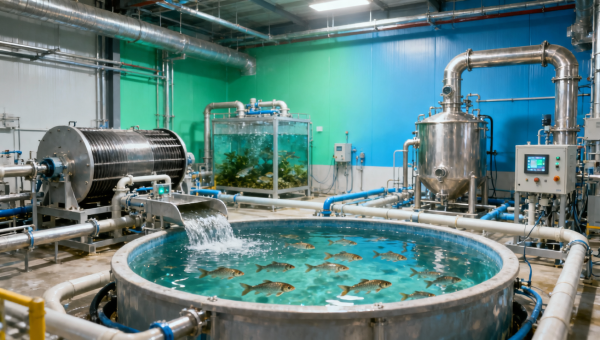
Recirculating aquaculture systems make sense over flow-through when producers need tighter biosecurity, predictable water quality, and lower discharge risks. For operators evaluating recirculating aquaculture systems, the choice often depends on how aquaculture drum filters, commercial protein skimmers, and biofilter media for RAS improve control, efficiency, and long-term operating costs. This guide outlines when RAS delivers stronger technical and commercial value.
When does RAS outperform flow-through in practical farming decisions?
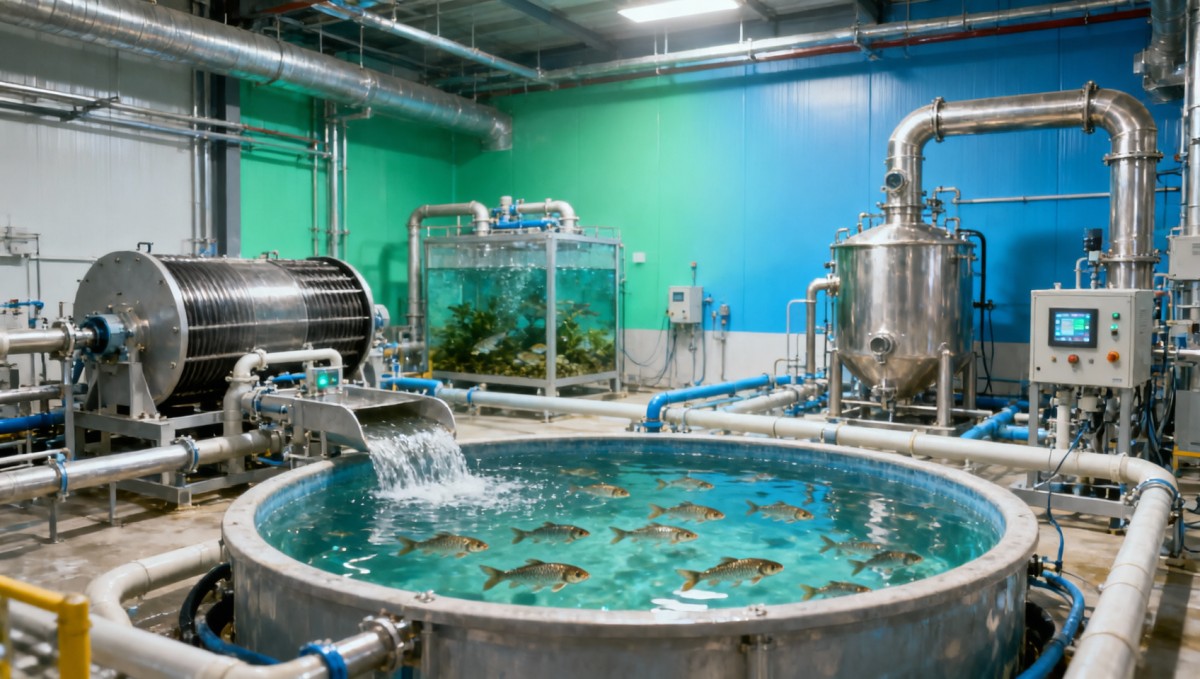
For many fish farms, the real question is not whether recirculating aquaculture systems are more advanced, but whether they solve a production constraint that flow-through cannot. In sites with limited water access, strict discharge permits, or frequent seasonal fluctuations, RAS often becomes the more workable option. The value is strongest when stable output matters more than low initial simplicity.
Flow-through systems can still be attractive where water is abundant, low cost, and consistently clean across 12 months of operation. However, once intake quality becomes variable, operators start paying for instability through slower growth, health events, emergency treatments, and uneven harvest schedules. In those conditions, tighter control inside a recirculating aquaculture system can improve planning accuracy and reduce avoidable losses.
From a procurement view, the decision usually turns on 3 core factors: water security, biological risk, and unit economics over a 3–7 year horizon. Technical evaluators may focus on solids removal, nitrification capacity, oxygen management, and redundancy. Finance teams, by contrast, often compare CAPEX, energy demand, labor intensity, and the cost of non-compliance or production volatility.
This is where a structured industry source matters. AgriChem Chronicle serves readers who do not need generic claims; they need a decision framework grounded in aquaculture engineering, compliance logic, and supply chain realism. For institutional buyers, project managers, and OEM channel partners, the key is understanding when RAS creates measurable operational control rather than simply adding technological complexity.
Typical situations where recirculating aquaculture systems make sense
- Sites with limited freshwater allocation or rising intake costs, where reusing 90% or more of system water can materially improve long-term viability.
- Regions with stricter discharge expectations, especially where suspended solids, nitrogen load, or treatment obligations increase the risk profile of flow-through operations.
- Species or life stages that benefit from tighter environmental control, such as hatchery, nursery, broodstock, or high-value intensive grow-out phases.
- Operations supplying premium buyers who demand consistency in size, health status, harvest timing, and traceable production conditions.
RAS vs flow-through: which differences matter most to operators and buyers?
The strongest comparison is not “modern versus traditional.” It is control versus dependence. A flow-through design depends heavily on incoming water quality and external conditions. A recirculating aquaculture system depends more on engineered treatment steps such as drum filtration, foam fractionation, biological conversion, gas management, and monitoring discipline. That shift changes both risk and staffing requirements.
For operators, predictable water quality can mean fewer sudden swings in solids, ammonia, and oxygen. For quality and safety managers, a more enclosed system can support stronger biosecurity routines and cleaner separation between production zones. For project owners, the trade-off is clear: higher design complexity and higher upfront investment in exchange for tighter process control and potentially more reliable output.
The table below highlights decision points that usually matter during technical review, procurement evaluation, and capital approval. These are not universal outcomes for every farm, but they reflect common commercial differences between recirculating aquaculture systems and flow-through production.
For decision-makers, the key insight is that RAS generally earns its place where instability is expensive. If a farm loses margin due to disease risk, inconsistent grading, discharge treatment burdens, or source-water uncertainty, then the added engineering can be commercially justified. If clean water remains abundant and cheap year-round, flow-through may still be rational.
What buyers should compare beyond headline cost
A common mistake is comparing only tank and equipment purchase price. Serious buyers usually assess at least 5 dimensions: water intake risk, energy profile, labor skill requirements, mortality sensitivity, and discharge obligations. A system with lower initial cost can become more expensive if it creates unstable harvest timing or repeated corrective interventions over 2–4 production cycles.
This is especially relevant for distributors, integrators, and engineering project leaders who must support installation after delivery. A suitable system is not simply one that can run; it must match operator capability, maintenance discipline, utility reliability, and the biological demands of the species being produced.
A practical comparison checklist
- How stable is source water across wet and dry seasons, and can the site tolerate a 24–72 hour disruption?
- What is the farm’s acceptable threshold for discharge treatment, solids handling, and environmental reporting?
- Does the team have the technical depth to manage sensors, backwash cycles, biofilter loading, and emergency response protocols?
- Will the target market pay for supply consistency, tighter health control, or production near end-consumption markets?
Which RAS components drive technical performance and long-term cost?
Not all recirculating aquaculture systems deliver the same value. Performance depends heavily on component integration. Three elements often influence both biology and economics more than buyers expect: aquaculture drum filters for solids capture, commercial protein skimmers for fine organic removal in relevant salinity conditions, and biofilter media for RAS that supports stable nitrification under realistic loading rates.
Drum filters matter because suspended solids should be removed early, before they break down and increase oxygen demand or ammonia pressure. In many systems, mesh selection, hydraulic loading, and backwash reliability are more important than headline branding. Poor solids management can undermine downstream units and raise maintenance frequency from weekly service checks to daily corrective cleaning.
Commercial protein skimmers are often discussed in marine and brackish applications where foam fractionation can help strip dissolved organics before they become a wider water-quality burden. Their value depends on salinity, feed loading, and system design. They are not a universal substitute for mechanical filtration, but in the right setting they can support clearer water and more stable treatment performance.
Biofilter media for RAS is another decisive area. Buyers should examine protected surface area, clogging behavior, carrier movement or fixed-bed characteristics, cleaning practicality, and how the media performs under variable feed loads. In commercial reviews, it is wiser to assess design loading ranges and maintenance logic than to rely on simplified brochure claims.
A component-level view for technical evaluation
The following table summarizes how core RAS components relate to operational outcomes. This is particularly useful for technical evaluators, procurement teams, and project engineers who need to connect equipment selection with measurable farm behavior over 6–12 months of continuous use.
A careful reading of component logic helps prevent under-sizing and over-promising. For example, a strong biofilter cannot compensate for poor solids removal upstream, and a capable drum filter does not replace the need for biological treatment. In procurement terms, RAS should be evaluated as an interdependent process train rather than a shopping list of standalone machines.
Operational thresholds that deserve early attention
Four checks before finalizing a specification
- Confirm whether the supplier’s design basis reflects your expected feed load, stocking density, and water exchange profile instead of ideal laboratory conditions.
- Review maintenance intervals for screens, pumps, blowers, and sensors over a 7-day routine and a quarterly preventive service cycle.
- Check power reliability and backup strategy, because a recirculating aquaculture system is more sensitive to interruption than many flow-through layouts.
- Ask how quickly replacement consumables and technical support can be supplied, especially for remote projects or cross-border installations.
How should procurement teams assess cost, compliance, and project risk?
Procurement in aquaculture rarely fails because one specification is missing. It usually fails because teams underestimate how engineering, biology, and compliance interact. A recirculating aquaculture system may require more upfront coordination, but it can reduce future exposure when discharge limits tighten, intake quality worsens, or disease events make open water dependence too risky.
Financial approvers often want a direct answer: does RAS save money? The better answer is that it can protect margin under specific constraints. If the business model depends on stable annual output, harvest timing, and lower biological shocks, then predictable conditions may be worth the extra capital. If the farm has robust water access and low environmental burden, flow-through may remain the lower-cost route.
Compliance also matters. Depending on geography and project design, buyers may need to review environmental discharge expectations, wastewater handling, worker safety, materials compatibility, and import documentation for equipment. For internationally sourced systems, project managers should align technical files, commissioning scope, spare parts planning, and acceptance criteria before shipment, not after arrival.
AgriChem Chronicle is positioned for this level of evaluation because its readership spans technical operators, procurement directors, and regulated-industry buyers. That editorial perspective is useful in aquaculture, where supplier claims must be tested against operating reality, implementation risk, and chain-of-custody expectations.
A practical procurement matrix for recirculating aquaculture systems
Before final approval, teams can use a structured matrix to compare offers. This helps align technical, financial, and compliance priorities during a typical 4-step review process: requirement definition, technical clarification, commercial negotiation, and pre-commissioning verification.
This type of matrix helps finance and technical teams speak the same language. It also reduces the common B2B risk of approving a system on nominal capacity alone. In practice, the most cost-effective recirculating aquaculture system is often the one with the clearest assumptions, support plan, and maintenance logic rather than the lowest quoted equipment bundle.
Common mistakes that increase cost later
- Selecting equipment without matching it to the intended species, feed schedule, and production stage.
- Assuming a commissioning period of a few days when biological stabilization may need several weeks depending on startup strategy.
- Ignoring sludge handling, backwash water routing, and service access around filters and pumps.
- Treating operator training as optional instead of including it in the implementation budget and acceptance plan.
FAQ: what do teams usually ask before choosing RAS over flow-through?
Is RAS always better for intensive aquaculture?
No. Recirculating aquaculture systems are usually better when control, biosecurity, and water efficiency are economically important. They are not automatically better for every project. If source water is abundant, low cost, and stable throughout the year, and discharge conditions are manageable, flow-through can remain a sound option with lower complexity.
The strongest reason to choose RAS is not trend adoption; it is risk reduction under constrained conditions. Farms should compare likely outcomes over at least 2–3 production cycles rather than one purchase event.
What should buyers look at first in a recirculating aquaculture system?
Start with the design basis. Confirm species, biomass target, feed load, salinity, temperature range, and intended stocking profile. Then review how aquaculture drum filters, commercial protein skimmers, and biofilter media for RAS are sized relative to that biological load. If the sizing assumptions are vague, the risk of underperformance rises quickly.
After that, evaluate utility demand, redundancy, instrumentation, maintenance routine, and operator training. In many projects, these factors determine actual success more than the nominal tank volume.
How long does implementation usually take?
Delivery and commissioning timelines vary by project scale, customization level, import route, and site readiness. In many commercial projects, equipment supply, installation, and startup can span several weeks to several months. The biological side also needs planning, because biofilter maturation and operational tuning do not happen instantly.
Project leaders should separate 3 phases: equipment delivery, mechanical and electrical installation, and biological commissioning. Delays often occur when these phases are combined into one unrealistic schedule.
Are protein skimmers necessary in every RAS design?
No. Commercial protein skimmers are most relevant in systems where salinity and organic load make foam fractionation useful. They should be evaluated as part of a broader treatment train, not as a default requirement. Some freshwater applications may prioritize other treatment steps first, depending on species and water-quality goals.
The main procurement question is functional fit. Buyers should ask whether the skimmer addresses a real water-quality burden in their system and how it interacts with the rest of the process design.
Why consult AgriChem Chronicle when evaluating commercial aquaculture systems?
Commercial aquaculture investment sits at the intersection of biology, engineering, compliance, and capital discipline. That makes surface-level product descriptions insufficient. AgriChem Chronicle supports industrial readers by translating technical system claims into procurement-relevant judgment: what is credible, what needs verification, and what questions should be asked before contract commitment.
For information researchers and technical evaluators, ACC offers a framework that connects water treatment logic with real operational constraints. For procurement teams and financial approvers, it clarifies where cost sits beyond equipment price, including utility demand, serviceability, training, and implementation risk. For distributors and OEM partners, it helps position solutions around documented use cases rather than broad marketing language.
If your team is comparing recirculating aquaculture systems with flow-through designs, the most productive next step is a structured review of application conditions. That usually includes 6 items: species and life stage, target output, site water constraints, discharge requirements, preferred component configuration, and expected delivery schedule. With those inputs, it becomes easier to narrow suitable options and identify technical gaps early.
Contact AgriChem Chronicle to discuss parameter confirmation, product selection logic, component matching, implementation timelines, documentation expectations, and quotation comparison. This is especially valuable if you need support reviewing aquaculture drum filters, commercial protein skimmers, biofilter media for RAS, or complete recirculating aquaculture systems for a regulated or high-value production environment.
Related Intelligence
- RAS SystemsIndia Removes Import Tariff on RAS Systems for AquacultureIndia removes import tariffs on RAS systems for aquaculture—unlocking $170M+ equipment demand. Key opportunity for exporters, technical documentation & after-sales providers.
- RAS SystemsLFP Battery Recycling Enters Deep Water: RAS & Feed Pellet Firms Tap Regenerated PhosphateLFP Battery Recycling breakthrough: Regenerated phosphate now powers RAS systems & feed pellets—EU/US-compliant, 20% cheaper, live since April 2026.
- RAS SystemsIntel Launches World’s Thinnest GaN Chip, Boosts RAS Power ModulesIntel's world’s thinnest GaN chip (19μm) boosts RAS power modules—40% smaller, 22% more efficient. Key for aquaculture exporters, equipment makers & supply chain partners.
The Morning Broadsheet
Daily chemical briefings, market shifts, and peer-reviewed summaries delivered to your terminal.
