
Recirculating aquaculture systems and the hidden cost of stability
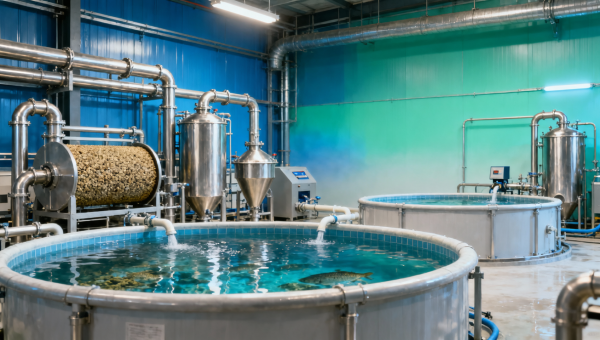
Recirculating aquaculture systems promise tighter control, better biosecurity, and predictable yields, yet their real economics depend on every linked component—from biofilter media for RAS and aquaculture drum filters to commercial protein skimmers, surge wave aerator performance, and automatic fish feeder commercial integration. This article examines the hidden cost of stability behind system design, operating efficiency, compliance, and long-term procurement decisions.
Why stability in recirculating aquaculture systems costs more than it first appears
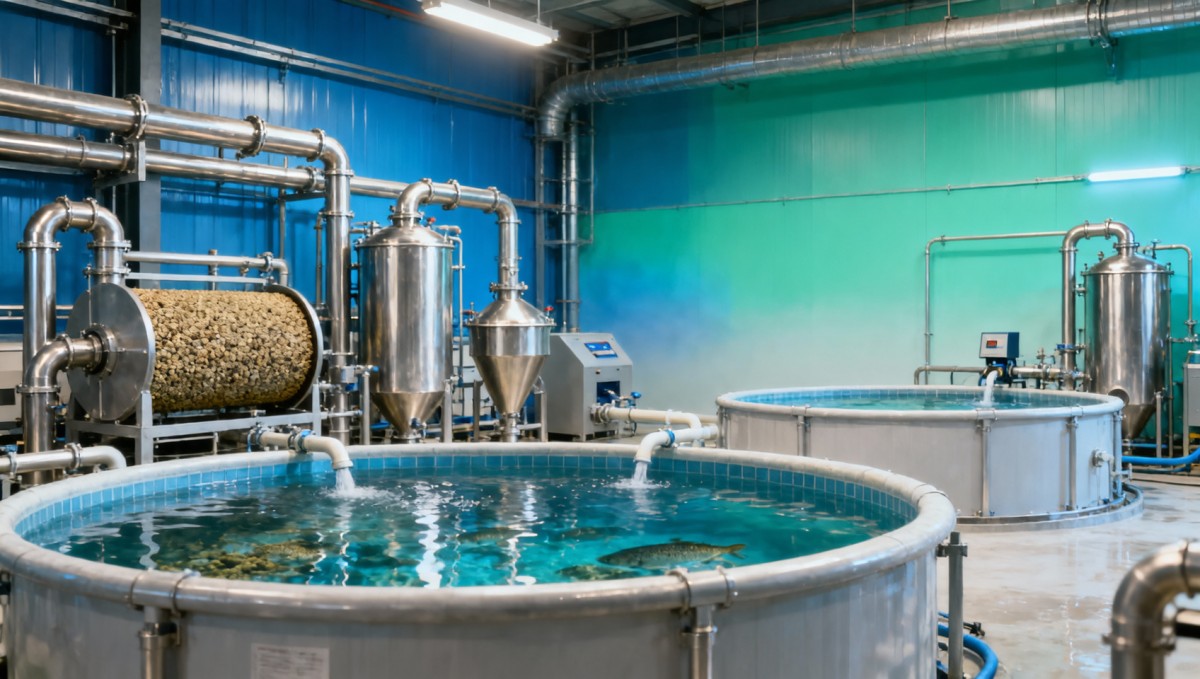
In commercial aquaculture, stability is often described as a technical advantage. In practice, it is also a cost center. A recirculating aquaculture system, or RAS, does not buy stability with one machine or one treatment step. It buys stability through a chain of dependencies: water treatment, solids removal, oxygen transfer, foam fractionation, feeding control, monitoring, redundancy, and operator discipline. If one link underperforms for even 12–24 hours, the whole production curve can shift.
This matters to multiple stakeholders. Operators want steady dissolved oxygen and manageable maintenance intervals. Technical evaluators need predictable hydraulic loading and biofilter behavior. Procurement teams must compare total ownership cost over 3–7 years, not just purchase price. Finance approvers need to know why a lower upfront bid may produce higher energy use, more media replacement, or more emergency service calls.
The hidden cost of stability usually appears in four places. First, oversimplified system sizing. Second, weak component matching between drum filters, biofilter media, skimmers, aeration, and feeding. Third, compliance gaps involving discharge, chemical use, food safety, or traceability. Fourth, supplier opacity around consumables, spare parts, and post-installation support. These are common pain points in both greenfield projects and retrofit programs.
For readers of AgriChem Chronicle, the issue goes beyond technical curiosity. Institutional buyers and project owners need procurement intelligence that connects equipment claims with operating realities. In sectors where environmental controls, raw material consistency, and regulatory discipline affect margins, stability should be treated as a managed economic outcome rather than a marketing promise.
Where the hidden cost usually starts
- Underestimating suspended solids loading, which increases backwash frequency and raises water loss in aquaculture drum filters.
- Selecting biofilter media for RAS based on nominal surface area only, without checking fouling behavior, carrier retention, and cleaning strategy.
- Treating commercial protein skimmers or surge wave aerators as optional accessories instead of key process stabilizers under variable biomass conditions.
- Adding an automatic fish feeder commercial package without integrating feeding logic into oxygen demand, solids capture, and alarm response.
A stable RAS is therefore less about buying premium hardware in isolation and more about designing process balance. Even when two suppliers quote similar tank volume and throughput, their cost profile may diverge sharply once service intervals, spare parts availability, and water-quality control margins are mapped in detail.
Which components drive operating risk and lifetime cost most?
Not every component has the same financial weight. In many systems, the recurring burden comes from energy, maintenance labor, consumables, and biological instability rather than a single capital item. A drum filter that blinds too quickly can force more wash cycles per hour. Poorly chosen biofilter media can lose performance under high solids carryover. Weak aeration or skimming can shift water quality from manageable to reactive within a few feeding cycles.
The most useful approach is to assess components by operational consequence, not just list price. For example, commercial protein skimmers can appear secondary in freshwater-focused discussions, yet in many high-density loops they reduce dissolved organics and foam-related instability that would otherwise affect gas exchange and downstream treatment. Likewise, a surge wave aerator may be justified where mixing, oxygen transfer, and low dead-zone design matter more than basic air injection.
Automatic fish feeder commercial integration deserves the same scrutiny. Feed timing, ration control, pellet handling, and communication with sensor alarms are not cosmetic features. Over a 24-hour cycle, poor feeding control can increase fine waste, deteriorate filter loading, and create avoidable swings in ammonia and oxygen demand. In short, feed delivery logic influences system stability as much as feed formulation itself.
The table below compares common RAS component groups by the kind of hidden cost they can trigger. It is intended as a procurement discussion tool for technical, financial, and operational teams evaluating commercial-scale aquaculture systems.
The key lesson is that hidden cost is usually created by interactions. A buyer can save on one component and lose more through energy, wash water, labor, emergency maintenance, or reduced growth consistency. That is why cross-functional review matters: operators see workload, engineers see process margins, and finance sees life-cycle exposure.
Three technical checks before comparing quotations
- Verify design conditions at both normal load and peak load. Many systems behave acceptably at 60% biomass but struggle at 90%–100% loading.
- Ask for consumables and maintenance intervals over the first 12 months, including mesh, seals, pumps, sensors, and media handling requirements.
- Check whether component control logic is integrated or isolated. A feeder, aerator, and alarm system that do not communicate can turn a minor upset into a stock risk event.
For technical assessment teams, these checks often reveal more than broad efficiency claims. They also help distributors and project integrators present clearer value to end users who need justifiable CAPEX and controllable OPEX.
How should buyers evaluate RAS procurement beyond upfront price?
A sound procurement process for recirculating aquaculture systems should examine at least five dimensions: process fit, operating cost, compliance exposure, serviceability, and supplier transparency. This is especially important in cross-border projects, where delivery windows often run 8–16 weeks for standard components and longer for custom process packages. Delays in one subsystem can affect civil works, commissioning, and biological startup.
Buyers often focus on line-item reductions because capital approval is immediate and visible. Yet financial risk frequently appears after installation, when emergency freight, unplanned shutdowns, and extra operator hours become difficult to recover. A cheaper quote can become expensive if critical spare parts have 4–8 week lead times or if control documentation is weak. For project managers, these are schedule risks as much as equipment risks.
AgriChem Chronicle’s editorial advantage lies in connecting technical literature, supply chain credibility, and regulated procurement logic. For institutional buyers in aquaculture and adjacent primary industries, this matters because vendor claims must be interpreted alongside environmental expectations, traceability requirements, and service capacity. Good selection is not simply choosing equipment; it is choosing operational predictability.
The table below provides a practical evaluation framework for procurement teams assessing commercial aquaculture systems, whether for a new installation, phased expansion, or replacement of underperforming process units.
This framework helps align technical and financial stakeholders before purchase orders are issued. It also creates a common language between distributors, EPC teams, and end users. When the procurement file includes process assumptions, service expectations, and compliance records, later disputes over scope and performance become easier to prevent.
A practical 4-step procurement path
- Step 1: Define the operating envelope, including target species, stocking density, feed rate, water temperature range, and allowable downtime.
- Step 2: Shortlist suppliers based on technical compatibility, not brochure claims, and request a 12-month spare and service schedule.
- Step 3: Compare life-cycle cost over 3–5 years, including energy, cleaning labor, consumables, water loss, and training.
- Step 4: Finalize commissioning responsibilities, alarm testing, and acceptance criteria before shipment and installation.
When procurement is structured this way, decision-makers can defend the investment internally and reduce the chance of buying a system that looks complete on paper but behaves unpredictably in production.
What compliance, quality, and implementation issues are often underestimated?
RAS projects sit at the intersection of environmental management, food production discipline, and industrial equipment reliability. Because of that, compliance is not a final checklist item. It affects material choice, cleaning procedures, chemical handling, sensor calibration, wastewater management, and operating records from day one. For quality managers and safety officers, these details are often where hidden cost becomes visible during audits or incident reviews.
In many facilities, the pressure points are practical rather than abstract. Are wetted materials suitable for repeated cleaning cycles? Are pumps, blowers, and feeders documented clearly enough for preventive maintenance? Can the site show traceability when feed changes, biomass shifts, or sanitation actions alter water chemistry? These questions are especially important where export markets, retailer specifications, or local environmental limits require reliable documentation over each production batch or each quarter.
Implementation planning also affects cost. A biological stabilization phase can take 2–6 weeks depending on loading strategy and inoculation approach. If commissioning is rushed, systems may appear mechanically complete yet remain biologically immature. That gap often leads to emergency interventions, conservative feeding, or delayed stocking. Project owners therefore need schedules that distinguish mechanical completion, wet testing, control validation, and biofilter conditioning as separate milestones.
The most resilient projects define responsibilities early. Operators need training on normal, high-load, and alarm conditions. Procurement must confirm spare availability for the first 6–12 months. Quality teams should map recording points for water quality, sanitation, and maintenance logs. Engineering leads need acceptance criteria that cover not only equipment start-up but also stable operation over agreed observation periods.
Common implementation mistakes
- Treating commissioning as a one-day event instead of a staged process that includes dry checks, wet checks, control verification, and biological conditioning.
- Ignoring operator workload during the first 30–60 days, when alarms, cleaning frequency, and manual adjustments are often highest.
- Failing to define acceptable ranges for oxygen, solids, feed timing, and alarm response before commercial stocking begins.
- Overlooking documentation needed for environmental review, food safety systems, or internal capital approval closeout.
Why this matters to mixed stakeholder teams
A project manager sees schedule risk. A finance approver sees delayed productivity. A quality lead sees documentation gaps. An operator sees more manual intervention per shift. These views are different, but they point to the same conclusion: stability in recirculating aquaculture systems must be planned, documented, and supported, not assumed from equipment labels.
This is one reason specialized industry intelligence matters. AgriChem Chronicle helps buyers and technical teams interpret equipment and process decisions in the context of regulated supply chains, engineering practicality, and long-term operational trust. In capital-intensive sectors, credible analysis is itself a risk-reduction tool.
FAQ: how do experienced buyers reduce the hidden cost of stability?
The questions below reflect common search and procurement intent around commercial aquaculture systems. They are particularly relevant to technical reviewers, purchasing teams, and farm operators comparing RAS configurations with different levels of automation and process control.
How do I know whether biofilter media for RAS is correctly specified?
Start with expected ammonia production, solids carryover, and the biological startup plan. Do not compare media only by advertised surface area. Ask how the media performs after fouling, what fill fraction is recommended, how carrier retention is handled, and what cleaning routine is required every week or month. A realistic review also considers the stabilization window, often 2–6 weeks, before the system reaches reliable nitrification under commercial loading.
Are aquaculture drum filters mainly a maintenance issue or a process issue?
They are both. A drum filter affects solids capture, water loss, labor time, and downstream biofilter stress. If wash frequency spikes during peak feeding periods, the cost is not limited to cleaning. It can change hydraulic balance and increase instability elsewhere in the loop. Buyers should ask for expected micron selection, wash-water demand, and maintenance intervals under both average and peak solids loads.
When is an automatic fish feeder commercial system worth the extra investment?
It becomes valuable when labor consistency, ration accuracy, traceability, and multi-tank control matter more than simple feed delivery. In medium to large facilities, automated feeding can support 24-hour programs, reduce underfeeding or overfeeding, and improve record integrity. The real question is integration: can the feeder interact with alarms, oxygen management, and feeding schedules during biomass changes or partial shutdowns?
What is a realistic delivery and implementation timeline for commercial aquaculture systems?
For standard items, delivery may fall in the 8–16 week range, while custom assemblies and control integration may require longer. After equipment arrival, installation, wet testing, and commissioning can add several more weeks. Biological conditioning may extend the practical startup window by 2–6 weeks. Project teams should separate procurement lead time, mechanical completion, control validation, and biological readiness rather than treat them as one milestone.
Why work with AgriChem Chronicle when evaluating RAS investments?
In a market where buyers face technical complexity, long lead times, and rising compliance pressure, decision quality depends on more than vendor brochures. AgriChem Chronicle provides a professional environment where aquaculture, biochemical, and primary industry intelligence is interpreted through engineering, procurement, and trade-compliance lenses. That perspective is useful when the cost of a wrong assumption can continue for years after installation.
For manufacturers, OEMs, and solution providers, ACC offers a channel to present validated capabilities, technical papers, and manufacturing logic to institutional audiences that care about process fit and procurement transparency. For buyers and evaluators, ACC helps bridge the gap between component marketing and operational reality. That is especially important when reviewing biofilter media for RAS, aquaculture drum filters, commercial protein skimmers, surge wave aerator options, or automatic fish feeder commercial integration as parts of one stable production system.
If your team is assessing a new recirculating aquaculture system or troubleshooting the hidden cost of an existing one, the most useful next step is a structured technical review. This can include parameter confirmation, component matching, delivery-cycle assessment, compliance documentation needs, maintenance planning, and quote comparison across 3–5 year ownership scenarios.
Contact AgriChem Chronicle to discuss specific evaluation topics such as drum filter sizing, biofilter media selection, feeder integration, aeration strategy, expected spare parts planning, certification and documentation questions, custom publishing support for technical whitepapers, or quotation-stage due diligence. A focused consultation can help your team move from general interest to procurement-ready clarity.
Related Intelligence
- RAS SystemsIndia Removes Import Tariff on RAS Systems for AquacultureIndia removes import tariffs on RAS systems for aquaculture—unlocking $170M+ equipment demand. Key opportunity for exporters, technical documentation & after-sales providers.
- RAS SystemsLFP Battery Recycling Enters Deep Water: RAS & Feed Pellet Firms Tap Regenerated PhosphateLFP Battery Recycling breakthrough: Regenerated phosphate now powers RAS systems & feed pellets—EU/US-compliant, 20% cheaper, live since April 2026.
- RAS SystemsIntel Launches World’s Thinnest GaN Chip, Boosts RAS Power ModulesIntel's world’s thinnest GaN chip (19μm) boosts RAS power modules—40% smaller, 22% more efficient. Key for aquaculture exporters, equipment makers & supply chain partners.
The Morning Broadsheet
Daily chemical briefings, market shifts, and peer-reviewed summaries delivered to your terminal.
