
How long does biofilter media for RAS take to mature?
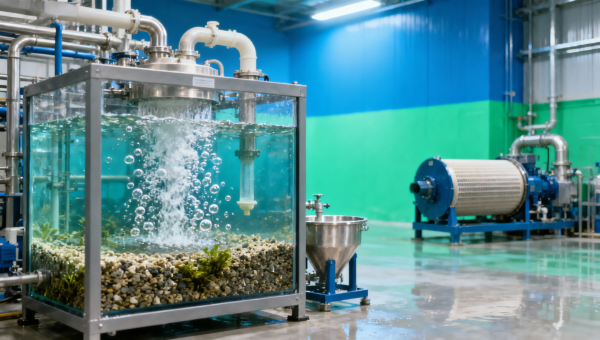
In recirculating aquaculture systems, understanding how long biofilter media for RAS takes to mature is critical for stable water quality, fish health, and cost control. For operators, buyers, and project teams evaluating aquaculture drum filters, commercial protein skimmers, automatic fish feeder commercial setups, or floating fish feed extruder lines, biofilter maturity directly affects startup risk, stocking timelines, and overall system performance.
How long does biofilter media for RAS take to mature in real operating conditions?
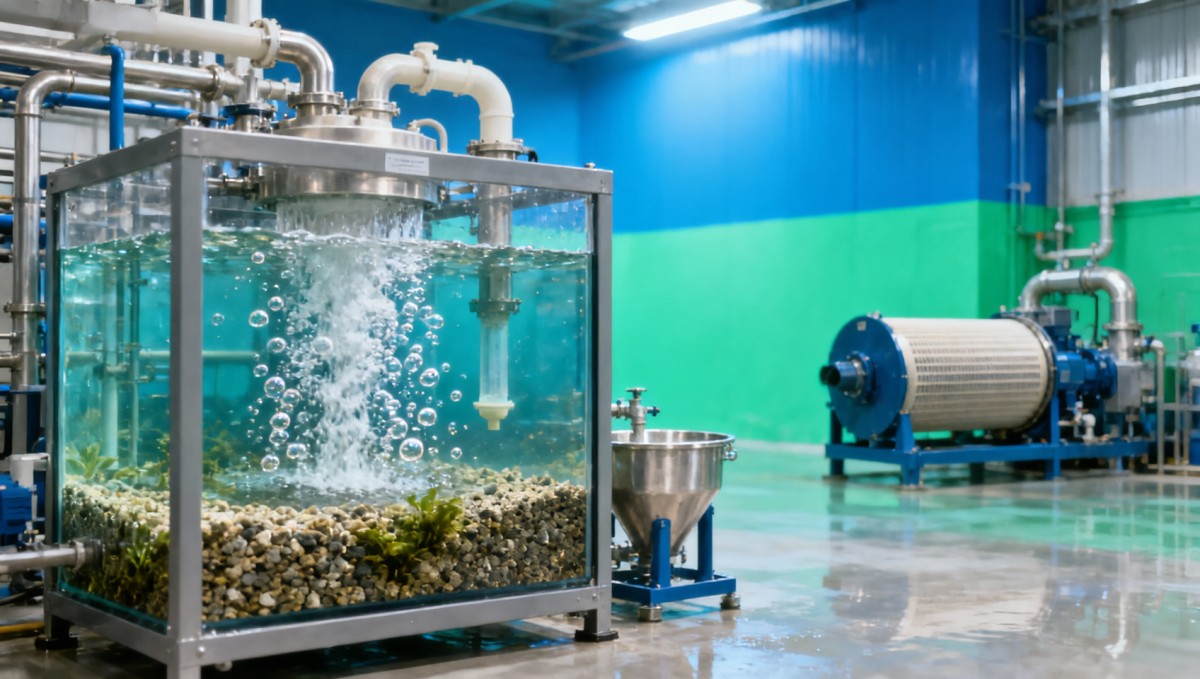
The short answer is that biofilter media for RAS usually needs several stages rather than a single fixed date. In many commercial systems, early bacterial attachment may begin within 7–14 days, partial nitrification often appears in 2–4 weeks, and more stable maturation commonly takes 4–8 weeks. In colder water, low alkalinity, or inconsistent loading, the timeline can extend further.
For technical evaluators and procurement teams, the important distinction is between “wet and circulating” media and genuinely mature media. Media is not mature just because water is flowing through it. It is mature when ammonia oxidation and nitrite conversion remain stable under planned stocking density, feed loading, and daily operating fluctuations.
This matters because RAS projects are often commissioned under commercial pressure. A farm may have fish arrivals scheduled, feed contracts signed, and financial approval tied to a startup calendar. If the biofilter is treated as ready too early, ammonia spikes, nitrite stress, oxygen demand, and emergency water exchanges can quickly erode the expected return on investment.
AgriChem Chronicle focuses on exactly this kind of operational decision point. Across aquaculture and primary processing sectors, the difference between a paper design and a working plant often comes down to verified timelines, load assumptions, and compliance-minded execution. That is why biofilter maturity should be assessed as a measurable commissioning phase, not as a vague expectation.
Three practical maturity stages that buyers and operators should separate
A useful way to evaluate biofilter media for RAS is to divide maturity into 3 stages. This gives project managers and financial approvers a clearer basis for planning fish introduction, feed increases, and contingency budgets. It also reduces conflict between equipment suppliers, farm operators, and internal engineering teams.
- Stage 1, colonization: bacteria begin attaching to media surfaces, but treatment capacity is still weak and unstable.
- Stage 2, functional startup: ammonia conversion improves, yet nitrite may accumulate when feed rates rise too quickly.
- Stage 3, operational maturity: the system responds more predictably to normal loading, cleaning cycles, and routine feeding changes.
In many projects, operators begin seeing encouraging test results at Stage 2 and assume the biofilter is mature. That is one of the most expensive mistakes in RAS commissioning. A media bed that handles a light test load for 3 days is not the same as one that reliably processes production feed volumes over 2–3 weeks.
What usually changes the timeline?
The maturity period depends on media surface area, water temperature, dissolved oxygen, pH stability, alkalinity, solids control, and whether the system is seeded. Good pretreatment with an aquaculture drum filter and commercial protein skimmer can shorten startup instability because excessive suspended solids and organics compete with nitrifying performance.
Feeding strategy also matters. An automatic fish feeder commercial program that ramps feed too aggressively can outpace bacterial development. On the other hand, a controlled loading protocol with incremental feed increases every few days often supports a more predictable biofilter maturation curve and lowers emergency intervention costs.
Which operating factors most strongly affect biofilter media maturation?
When information researchers compare systems, they often ask whether one media type matures faster than another. The more accurate question is broader: under what process conditions will the chosen biofilter media for RAS reach stable nitrification in the target production window? Media design matters, but process control matters just as much.
Below is a practical reference table for project teams planning commissioning schedules. The values are not universal guarantees. They are common operational ranges used to guide discussion, risk review, and staged startup planning in commercial aquaculture environments.
The table shows why no serious buyer should accept a maturity claim without discussing actual operating conditions. A supplier may cite 2–3 weeks, while the farm’s water temperature, solids load, or startup feed plan makes 5–8 weeks more realistic. Procurement quality improves when maturity claims are tied to load, temperature, and pretreatment assumptions.
This is especially relevant in integrated projects that also include floating fish feed extruder output targets. If feed formulation, pellet stability, and daily feeding volume change rapidly during startup, the nitrogen load profile also changes. Biofilter media for RAS must therefore be evaluated together with the feeding program, not as an isolated component.
Operational checkpoints during the first 4–8 weeks
For quality control teams and safety managers, the first month is a data period. Daily or near-daily tracking of ammonia, nitrite, pH, alkalinity, temperature, and dissolved oxygen helps confirm whether the biofilter is maturing or simply surviving. Trend direction often matters more than any single reading.
- Week 1–2: confirm circulation, aeration, and media movement or flow distribution.
- Week 2–4: watch for first measurable ammonia conversion and possible nitrite rise.
- Week 4–6: test response to moderate feed increases under normal cleaning schedules.
- Week 6–8: verify whether performance remains stable across daily operating variation.
If these checkpoints are documented, project owners gain a stronger basis for approving expansion from trial stocking to commercial density. Without that discipline, the system may appear ready simply because loading remains too low to reveal the real treatment limit.
What should procurement teams compare when selecting biofilter media for RAS?
Procurement decisions should not focus only on media price per cubic meter. In commercial aquaculture, the true cost of biofilter media for RAS includes startup delay, water quality instability, emergency chemical adjustment, labor intensity, and lost production time. A lower purchase cost can become the more expensive option if maturity takes longer or system control becomes harder.
For buyers, distributors, and engineering contractors, the most effective comparison method is to link media characteristics to site conditions. A hatchery, nursery, and grow-out RAS may all use biofiltration, but they do not necessarily need the same media geometry, hydraulic pattern, or expansion margin.
The table below helps organize selection questions that are relevant to technical assessment, budgeting, and delivery review. It is especially useful when multiple vendors offer similar claims but provide different levels of process detail.
For finance and management stakeholders, this table highlights a central point: media should be evaluated as part of system architecture. If the farm also needs an aquaculture drum filter upgrade or improved protein skimming, then media alone cannot solve startup instability. The procurement package has to reflect the full treatment train.
A 5-point procurement checklist for commercial projects
Before issuing a purchase order, commercial teams should review at least 5 points. This is useful for OEMs, agents, and distributors who need a clear and transferable framework when comparing multiple suppliers or preparing internal approval documents.
- Confirm the target biomass and feed load for the first 30, 60, and 90 days.
- Check whether maturation guidance assumes seeded media or natural colonization.
- Review compatibility with existing solids removal and oxygen supply equipment.
- Request a startup monitoring plan with parameter frequency and action thresholds.
- Assess whether spare capacity exists for future feed increases or species changes.
When these points are documented, procurement becomes more than price comparison. It becomes operational risk control. That is the standard expected by institutional buyers and industrial farming operators who cannot afford avoidable startup losses.
What mistakes delay maturation and increase commissioning risk?
Many startups fail not because the selected biofilter media for RAS is inherently poor, but because the maturation process is misunderstood. The most common error is pushing stocking density or feed input faster than the bacterial community can adapt. In practical terms, a 10-day gain in stocking schedule can create 30 days of water-quality instability.
Another common mistake is neglecting upstream treatment. If the aquaculture drum filter is undersized, maintenance is irregular, or the commercial protein skimmer is not tuned correctly, dissolved and suspended organics can increase oxygen demand and interfere with stable nitrification. Biofilter performance then appears weak even though the root issue lies elsewhere.
Some projects also overlook water chemistry. Nitrification consumes alkalinity, and pH drift during the first 2–6 weeks can stall maturity. This is why safety managers and quality personnel should treat alkalinity replenishment and pH review as routine startup controls, not optional refinements.
Finally, there is the documentation gap. Without a startup log, teams argue from memory rather than evidence. That creates disputes over equipment sizing, media quality, operator behavior, and vendor accountability. A documented commissioning file protects both the buyer and the supplier.
Common misconceptions to correct early
- “If ammonia drops once, the biofilter is mature.” In reality, nitrite stability and load response over time matter just as much.
- “More feed always helps bacteria establish faster.” Excessive loading can destabilize the system and lengthen recovery time.
- “Media performance can be judged independently.” Biofilter media for RAS must be assessed with solids control, aeration, and feeding management.
- “Startup is mainly an operator issue.” In fact, design margin, commissioning planning, and realistic procurement assumptions are equally important.
How to reduce startup risk in 4 practical steps
First, use a staged loading plan rather than immediate full production. Second, keep pretreatment equipment stable from day one. Third, monitor the key chemistry set on a routine schedule. Fourth, tie fish introduction and feed increases to measured biofilter response, not to a fixed calendar alone.
These steps are simple, but they are where many commercial projects gain or lose predictability. For project leaders accountable to budget, delivery date, and biological performance, disciplined startup control is usually cheaper than post-failure correction.
FAQ and decision support for buyers, engineers, and farm operators
The following questions reflect common search intent around biofilter media for RAS. They also support internal discussions among operators, technical assessors, procurement officers, and financial approvers who need a concise but practical reference before finalizing a system plan.
Can biofilter media mature in less than 2 weeks?
Initial colonization may occur within 7–14 days, especially with favorable temperature and seeding support. However, that usually does not mean the media is fully mature for commercial loading. Most farms should still expect a longer stabilization period before moving to normal feed rates and planned biomass.
Does seeded media always justify a higher purchase cost?
Not always. Seeded strategies can reduce startup time, but the value depends on project timing, biosecurity policy, source reliability, and whether the rest of the RAS is ready. If pretreatment, aeration, or control logic is weak, seeded media alone will not deliver the expected benefit.
What should be monitored during the maturation phase?
At minimum, monitor ammonia, nitrite, pH, alkalinity, dissolved oxygen, and temperature. In many systems, daily review is appropriate during early startup, then frequency can be adjusted as performance stabilizes. The key is consistency, trend interpretation, and documented corrective action.
How do feed systems influence biofilter maturity?
An automatic fish feeder commercial setup can improve consistency, but only if feeding rates are aligned with treatment capacity. Likewise, pellet output from a floating fish feed extruder affects fines generation, digestibility, and waste load. Feed technology and biofilter maturation should therefore be planned together.
When is it time to consult an external technical review?
If ammonia and nitrite remain unstable after several weeks, if feed increases repeatedly trigger water-quality setbacks, or if different suppliers are blaming different subsystems, an external review is justified. It is often more efficient to validate assumptions early than to keep absorbing hidden startup losses.
Why work with AgriChem Chronicle when evaluating RAS biofilter maturity and equipment decisions?
AgriChem Chronicle supports decision-makers who need more than generic product language. Our editorial and industry coverage connect aquaculture engineering, biochemical process understanding, compliance awareness, and supply-chain scrutiny. That perspective is especially valuable when biofilter media for RAS must be assessed alongside drum filtration, protein skimming, feeding systems, and wider plant economics.
For manufacturers, distributors, integrators, and industrial buyers, ACC provides a stronger basis for comparing claims, interpreting technical documents, and identifying the real commissioning risks behind startup timelines. Our approach is aligned with the information needs of chief agronomists, industrial farming operators, procurement directors, and cross-functional project teams.
If you are assessing how long biofilter media for RAS will take to mature in your application, you can consult ACC on specific decision points: parameter confirmation, startup sequencing, media selection logic, compatibility with aquaculture drum filters, commercial protein skimmers, automatic fish feeder commercial systems, expected delivery windows, documentation needs, and quotation comparison criteria.
Contact us if you need a structured review of your RAS startup plan, a side-by-side evaluation of supplier proposals, guidance on commissioning checkpoints for the first 30–60 days, or support in defining what questions to ask before approving purchase, budget release, or site implementation.
Related Intelligence
- RAS SystemsIndia Removes Import Tariff on RAS Systems for AquacultureIndia removes import tariffs on RAS systems for aquaculture—unlocking $170M+ equipment demand. Key opportunity for exporters, technical documentation & after-sales providers.
- RAS SystemsLFP Battery Recycling Enters Deep Water: RAS & Feed Pellet Firms Tap Regenerated PhosphateLFP Battery Recycling breakthrough: Regenerated phosphate now powers RAS systems & feed pellets—EU/US-compliant, 20% cheaper, live since April 2026.
- RAS SystemsIntel Launches World’s Thinnest GaN Chip, Boosts RAS Power ModulesIntel's world’s thinnest GaN chip (19μm) boosts RAS power modules—40% smaller, 22% more efficient. Key for aquaculture exporters, equipment makers & supply chain partners.
The Morning Broadsheet
Daily chemical briefings, market shifts, and peer-reviewed summaries delivered to your terminal.
